Your bag is empty.


Thanks, science.
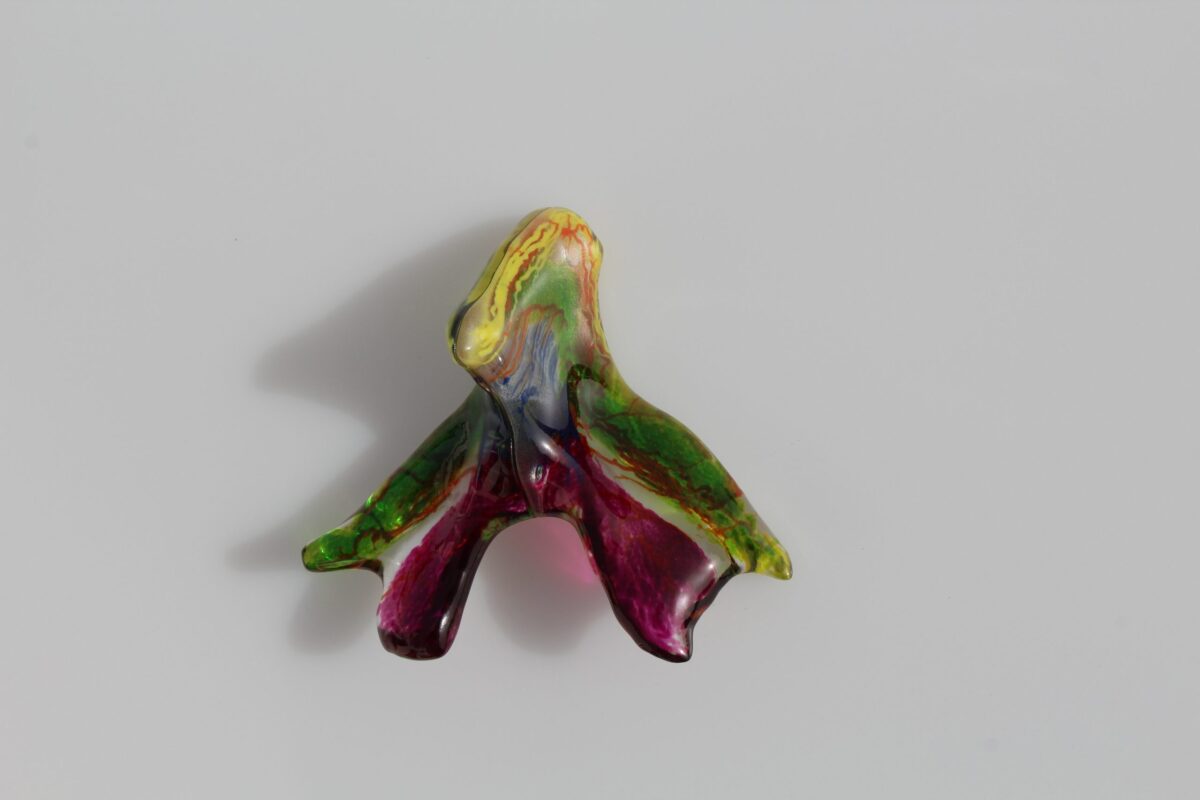
Ju Young Lee knows the clitoris doesn’t get enough respect in scientific circles. As she points out in her new study, “Neuroanatomy of the clitoris,” a 16th century French anatomist described the sexual organ as the “shameful member.” Most anatomy textbooks didn’t make room for it until the 20th century and, when the 38th edition of Gray’s Anatomy was published in the mid-1990s, it erroneously referred to the clitoris as a “small version of the penis.”
But now, a study led by Lee, a research associate at Amsterdam University Medical Center in the Netherlands, is giving the clitoris its time in the sun.
“I was ecstatic to work on the clitoris, because it fit well with my neuroscience background and my passion for women’s health,” Lee told Playboy.
Using a high powered x-ray called a synchrotron, researchers have captured a much more detailed map of the entire clitoris than ever before seen in human history. Previous renderings of the clitoris had been done at the MRI level, which uses a millimeter — or, one-thousandth of a meter — scale. But the type of x-ray researchers used to map the sexual organ rendered pictures down to the micron: that’s one-millionth of a meter.
These images together comprised a 3D map of the clitoris’s nerve system in “unprecedented detail” including the clitoral glans, clitoral hood, mons pubis and posterior labial nerves.
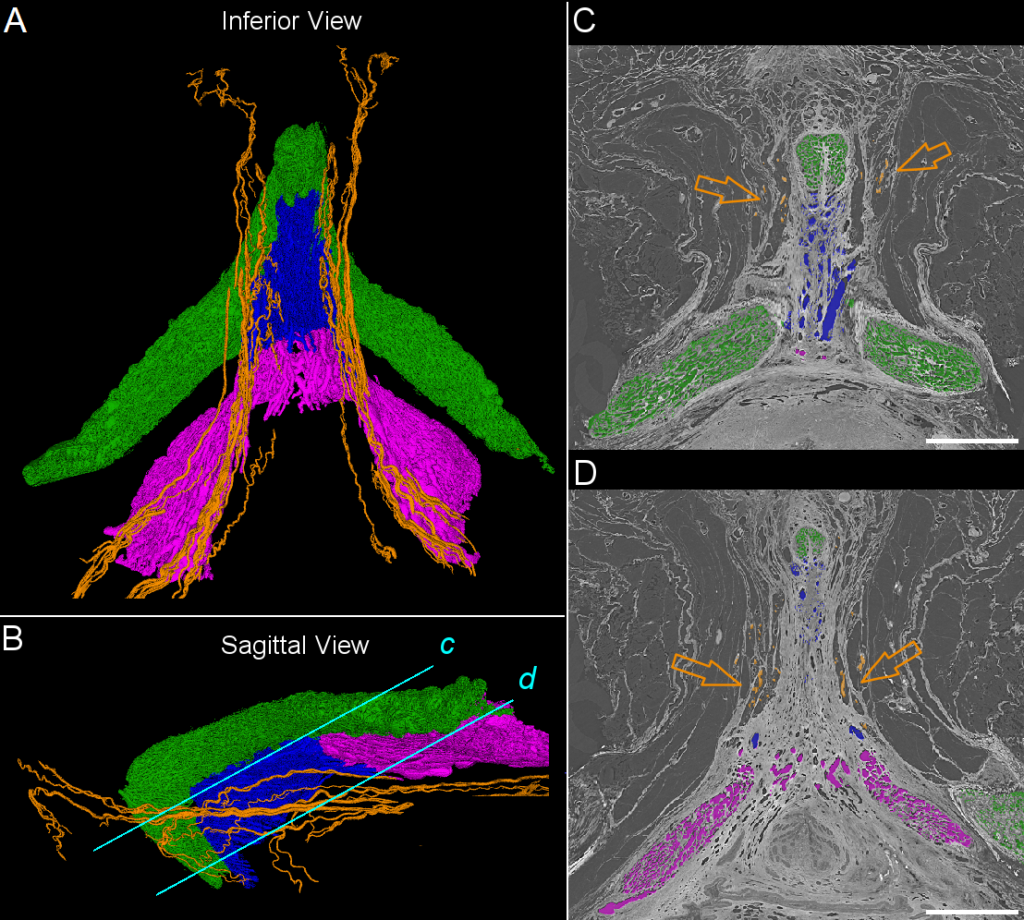
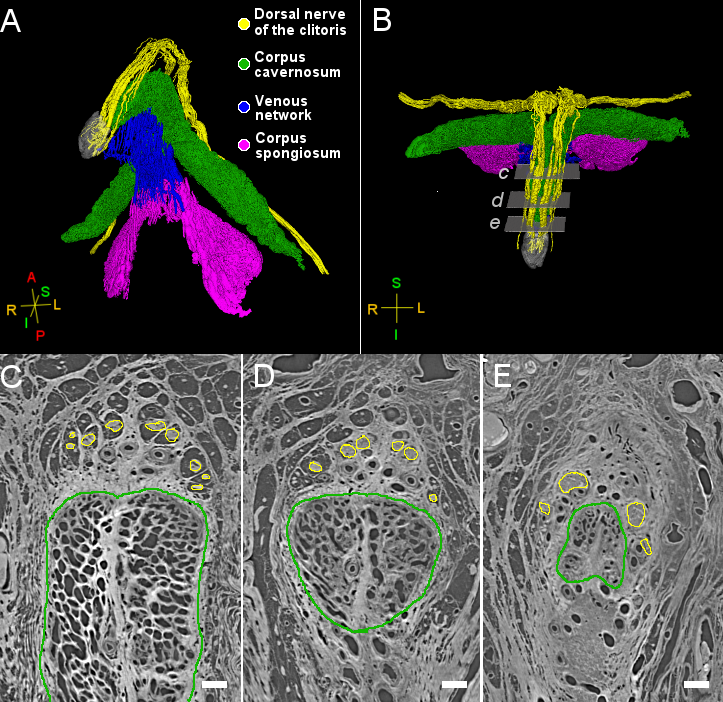
The research corrected previous misconceptions around the nerves in the clitoris, which is responsible for sexual pleasure. Previous research said that the dorsal nerve, the organ’s main sensory nerve, “gradually diminishes” as it approaches the clitoral glans, which is the external, visible portion of the clitoris. However, that’s not the case.
“By utilising 3D imaging with micrometre-scale voxel sizes, we have demonstrated that the DNC does not diminish but instead exhibits a complex tree-like branching pattern within the clitoral glans,” researchers wrote. Put frankly, the nerve stretches all the way to the most visible part of the clitoris.
Lee and her fellow researchers published their findings, which are yet to be peer reviewed, on the preprint server bioRxiv. Their work was part of the Human Organ Atlas initiative, a project seeking to render all of the body’s dozens of organs at such a minute scale, in hopes that the images “will provide new insights into our biological makeup.”
The project was completed with two post-mortem donors, leaving some gaps, which lead researcher Dr. Ju Young Lee said others could build on.
“I would love to see follow-up validation studies with larger sample size and with a spectrum of women across different dimensions,” Lee said. One such dimension would be age, given that both donors were postmenopausal. And while Lee’s study focused on anatomy, she’d love to see subsequent research focus on physiology, meaning how it works.
Researchers wrote that they hoped their imaging would help in a myriad of ways, including a need to revisit the “danger zone” in female genital cosmetic surgeries, such as labiaplasty and vaginal rejuvenation. These procedures have risen in popularity in recent years. These new images, they wrote, could help doctors avoid nerve damage during such an operation. They could also help doctors who perform reconstructive surgeries on people who have experienced female gential mutilation, which affects over 230 million women and girls worldwide and is considered a human rights violation.
Researchers noted that this study could help address the fact that about one-fifth of women have fewer orgasms after reconstructive surgery.
Lee also said that the study could help better understand post-partum complications.
The paper calls the clitoris one of the “least studied organs of the human body,” a status Lee said is due to a “stigma around female sexuality” that her research hopes to combat.
“The stigma has led to ignorance,” she said. “I had several encounters where I said my research is about the clitoris and the answer was ‘Oh, you study the vagina’. It seems like ignorance had led to many not knowing the difference between vagina and clitoris.” She continued, “I am hopeful that changes are coming.”
By contrast, the mapping of the penis’s neural network was done over 30 years ago, per The Guardian.
Lee has also tried to speak more extensively about her work with the clitoris on the podcast “IGWA Women International,” which she hosts. “The massive public and media interests is the evidence. I think the public has been waiting for this conversation.”
And they certainly have: Lee’s work has gained much media attention, which she said, as a scientist, is “amazing.”
“It is the most rewarding experience as a scientist to see the impact beyond just a small academic circle,” she said. “I hope my work inspires others and helps start the long overdue renaissance of clitoris science.”