Your bag is empty.


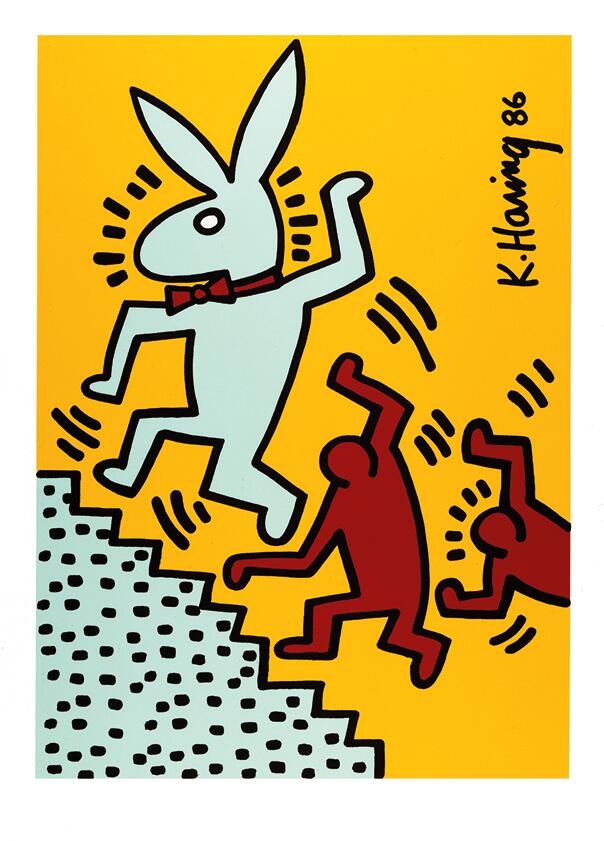
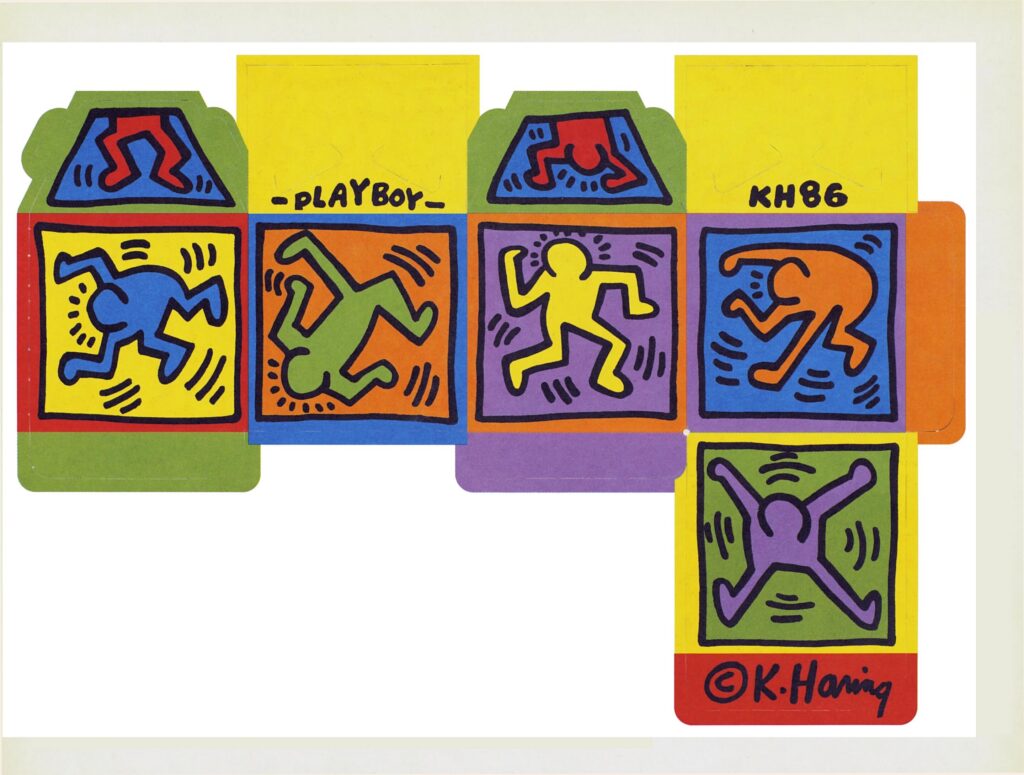
In 1986, at the height of the AIDS epidemic, Haring illustrated for Playboy.
I recently took my mother to see Keith Haring: Art Is for Everybody at The Broad in Los Angeles. At some point we stopped in front of a large, unmistakably explicit safe sex poster and I watched my mother take it in. She did not say much at first, but her face changed. She looked at the bold urgent lines and seemed to understand something about AIDS, about the gay community, about her son, that no conversation had fully reached before. The discomfort gave way to recognition. That was Keith Haring. He got through in a way that words hadn’t. And standing there in that museum, watching it click for her, I felt fully visible—maybe for the first time.
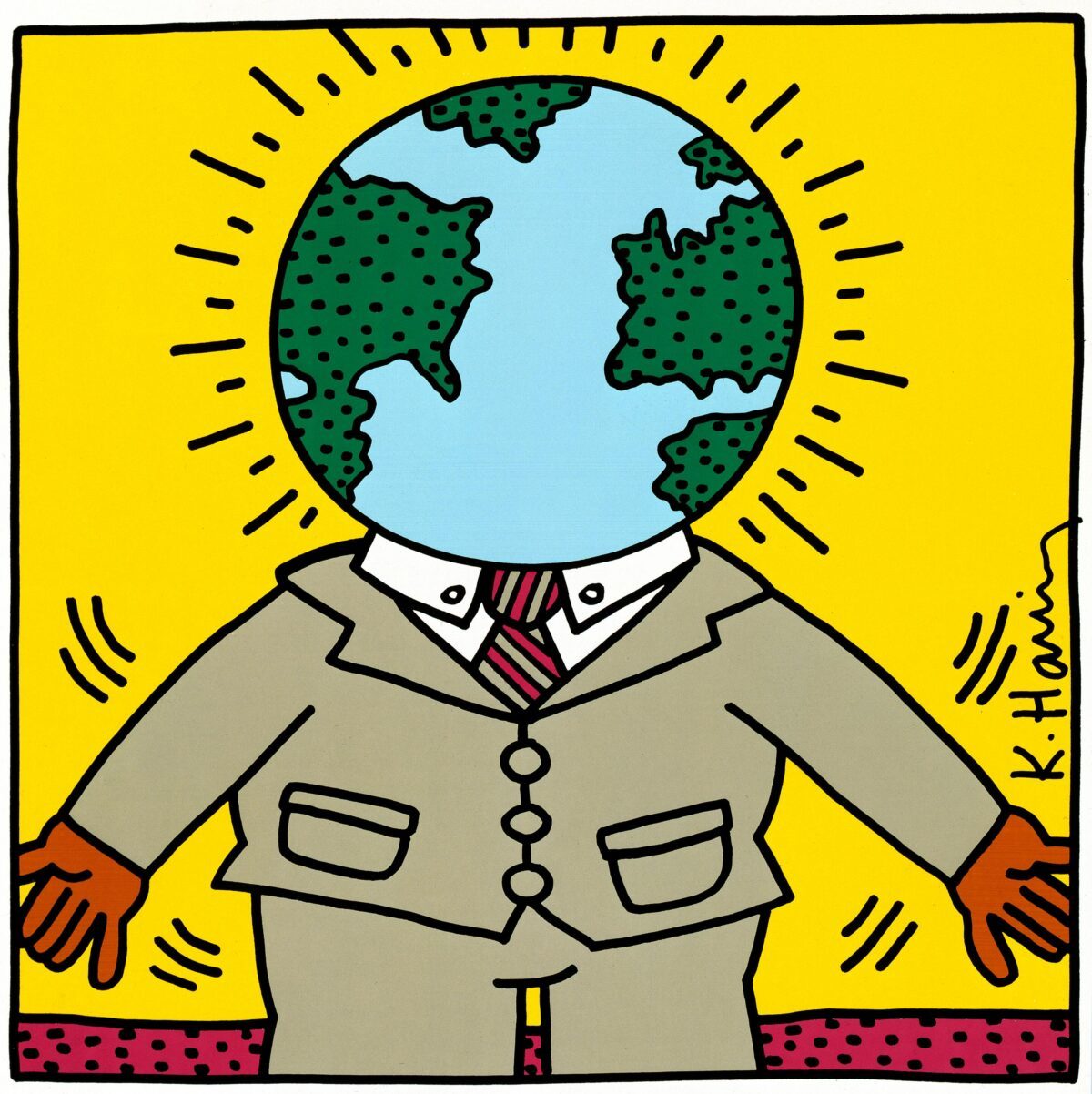
Keith Haring was a young gay artist from downtown New York who turned simple lines, public walls, and urgent images into a language people could not ignore. His work came out of street culture, queer nightlife, protest, and a city already being reshaped by AIDS. When Haring’s work appeared in Playboy numerous times in 1986, AIDS was already tearing through a generation. Most Americans didn’t yet understand what they were witnessing. Our government was slow to respond, and much of the country preferred not to talk about it. In light of the silence, fear outweighed facts. Entire communities were stigmatized. Too many people looked away.
Through his art, Haring put difficult subjects in places where ordinary people couldn’t avoid them: on subway walls, on city streets, in galleries, in magazines. His dancing figures and radiant babies looked joyful on the surface. Underneath, they carried messages about power, inequality, sex, fear, and the value of human life. He used the accessibility of his art to force hard conversations into public squares, living rooms, and everywhere in between. Before people will solve a problem, he understood, they have to be willing to see it.
That is why Playboy’s platform mattered. His work for the magazine wasn’t necessarily tied to his AIDS activism, appearing alongside a comedic fiction and a profile of self-help marketer Tom Peters. But that’s beside the point. It carried Haring’s work into a different kind of public space, one that mixed sex, politics, culture, and mass readership at a moment when AIDS was still being pushed to the margins. Playboy helped carry his message into the mainstream. For Haring, visibility was about forcing people to pay attention.
Haring didn’t live to see how the story turned out. He died of AIDS-related complications in 1990, at 31. But the movement he inspired — loud, visible, impossible to ignore — helped force a response. It took too long and cost too many lives. But the science came. The treatments came. New prevention options came. Millions of people are alive today because enough people refused to look away.
Forty years later, it is tempting to treat that era as a closed chapter. It isn’t. Today, the threats look different, but the failure is familiar. HIV programs are being cut. The CDC and FDA are under political attack. Scientific research is losing support just as new breakthroughs are within reach. And our government, once again, is looking away.
That’s why Haring’s work still feels contemporary. The colors are still bright. The figures are joyful. But beneath them is a challenge that is very much alive.
HIV will not disappear just because our elected officials want to stop talking about it. Nearly 40 million people worldwide are living with the virus. Ending the epidemic is still possible, but it will not happen on autopilot. It requires funding, science, strong institutions, and political will. Most of all, it requires all of us to keep looking.