Your bag is empty.

The author of 'For the Love of Men' is perfectly at home in the land of hot wings and booty shorts
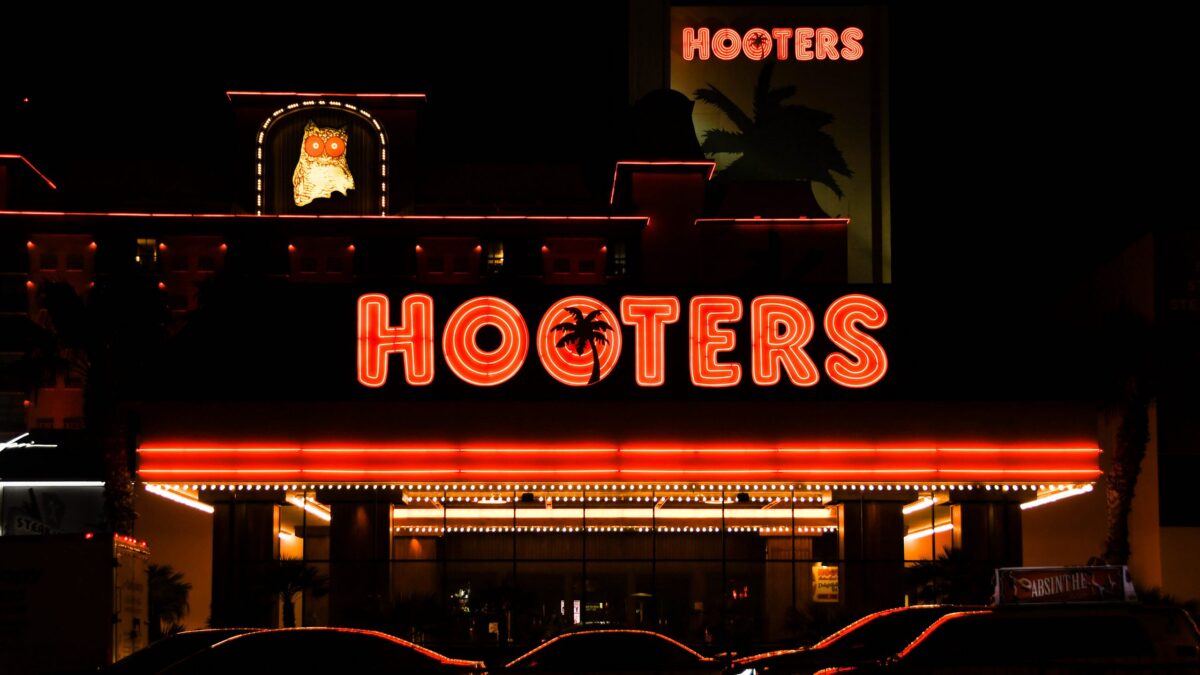
Sitting in a crowded Hooters near Penn Station at peak hooting hours, Liz Plank and I ask our server if we can order off the “Spa Menu.”
The server eyes Plank, a Canadian who waits for people to speak with a curiosity and enthusiasm so genuine that, in New York, it can come across as suspicious, and says she’s never heard of the “Spa Menu.” I explain that I read an article online that claimed there was a secret healthy menu that Hooters staff ordered from, but then nervously make a joke about how I probably shouldn’t believe everything I read on the internet. The server laughs, a giggle that could easily be replaced with a coy wink, and leaves to get our drinks.
Plank turns to me, aghast: “Did you see that?” I’m confused as to what I was supposed to have seen. “She was totally lying.”
I look around for our server to assess if she has the look of someone who just tried to signal that she was secretly on our team without overtly betraying her team, but can’t find her in a room full of other women corporately mandated to wear the exact same tiny orange shorts and white tank tops. It doesn’t help that the restaurant is sonically, visually and olfactorily loud: the ambient noise is bassy, like even the walls are trying to sound tough; there are big bodies everywhere; the buffalo-sauced air slightly burns sensitive nostrils.
I tell Plank I think our server has truly never heard of the “Spa Menu,” and if she acted weird, it was because we acted weird. Plank persists: “There was a pause where it was very clear she didn’t know what to say. We were just lied to, Gideon.” She grabs the menu and says, “It’s for our own good, though. We should definitely get tater tots and nachos.”
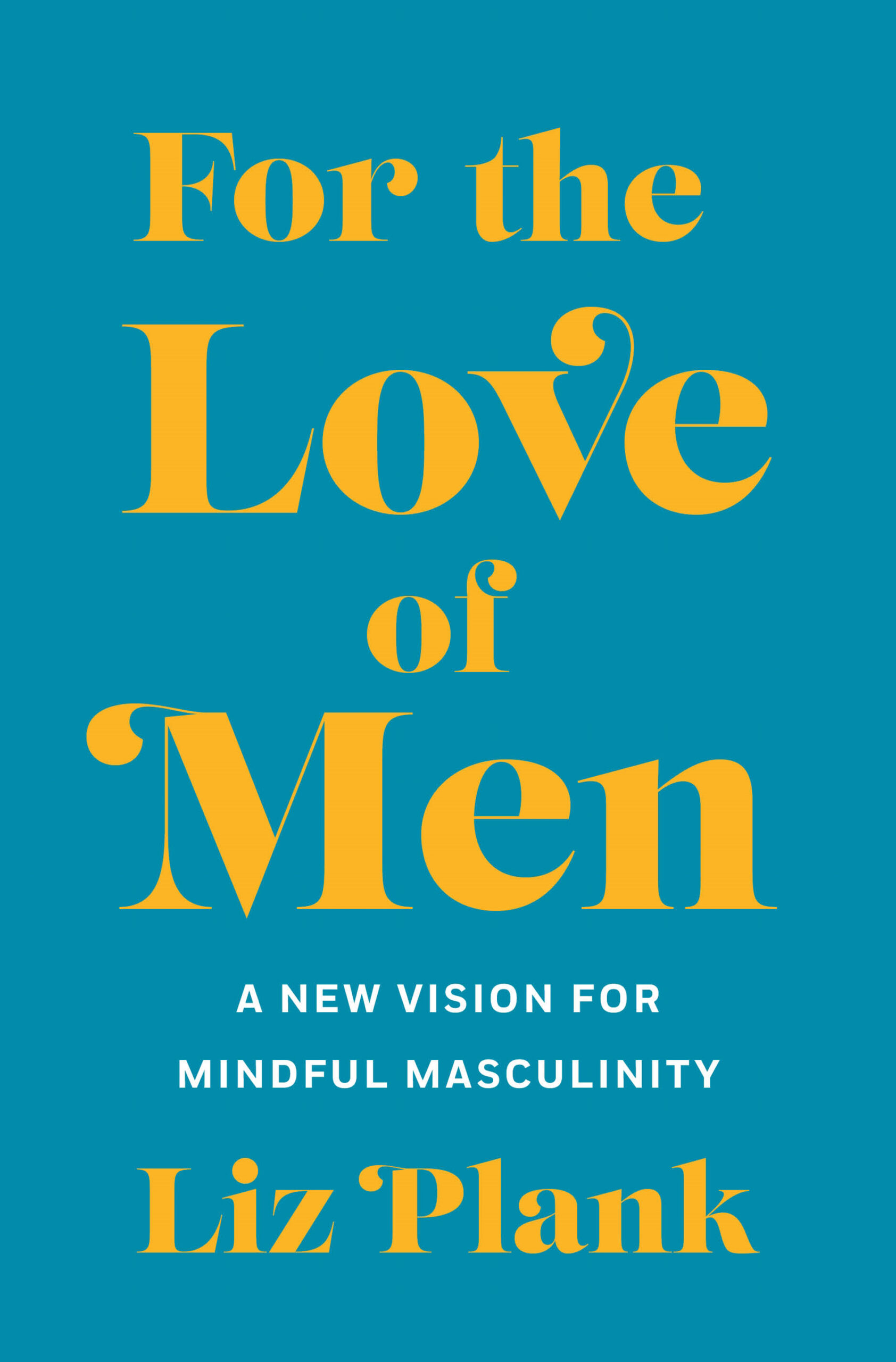
If we were, in fact, deceived, then well done, Heather [name changed; earlier she had written her real name with a heart around it on my napkin]. Plank and I are, after all, narcs. We are dining in an iconic bastion of retrograde masculinity because the Playboy editors thought it would be a good arena in which to discuss Plank’s new book, For the Love of Men: A New Vision for Mindful Masculinity. They imagined that Hooters, with its ogle-while-you-eat premise, would give us plenty of fodder for a conversation about the destructive gender norms men face and propagate daily, the systemic inculcation that has landed our society in this #MeToo moment.
When it comes to the bad behavior of men, from microaggressions to macro-atrocities, Plank, a journalist who once cracked the Forbes 30 Under 30 list, is appropriately direct. The first sentence of For the Love of Men ends, “…there is no greater threat to humankind than our current definitions of masculinity.” The book is full of staggering stats showing just how disproportionately responsible men are for the world’s problems, from mass shootings to domestic violence to climate change.
Men are our neighbors. If your neighbor is being a dick or is sick or depressed, it’s going to suck for you.
What makes Plank’s voice different from many others in the genre is her belief that we must focus more on the disease than its symptoms, and it’s clear she believes the disease has a lot to do with “male suffering.” For the Love of Men is, in a way, a book about mental health and how our traditional ideas and stories around masculinity prevent men from getting what we need to be happy, functioning, peaceful members of society. This mentality sometimes asks for a level of sympathy toward bad actors that opens Plank up to criticism. Is she really saying don’t hate the player, hate the game?
I mention this to Plank, suggesting that some readers might have little patience with a book so focused on men’s pain when we live under brutal patriarchy whose very DNA is coded with the suffering of women and all non-male-identifying people. She responds that while she completely understands this sentiment, it seems “individualistic to think we just need to take care of women. Men are our neighbors. We are all here. If your neighbor is being a dick or is sick or depressed, it’s going to suck for you.” This logic, simple and realistic or reductive and naive depending on your politics, is based on her belief that feminism doesn’t exist in a vacuum. In the book, she goes as far as to say that “the biggest lie is that the fight to address male suffering is separate or at odds with the battle to liberate women.” That paragraph concludes, “We are all on the same team.”
Plank seems at ease in the environment … hyper-cognizant of the many ways Hooters is a problematic vestige of a less woke era.
It’s clear that Plank recognizes that to make a dent in a problem as ubiquitous as it is insidious, she has to reach the mass market. That means writing about men without alienating them. It also means doing your research without getting bogged down in theory. It’s worth noting just how little mention there is of titans like Judith Butler, bell hooks, Simone de Beauvoir or Julia Kristeva. Plank seems to be aiming for accessibility, perhaps hoping that For the Love of Men is a text that someone can comfortably gift a man who may have never heard the phrase “gender is a construct.” It’s an admirably pragmatic approach, but reading it I wondered if a sharper intellectual bite would increase its odds of changing hearts and minds.
A little later in the evening, as Plank and Heather discuss just how underrated they consider tater tots to be, I text myself: “Awareness doesn’t absolve us of responsibility.” I think what I mean is that even though Plank and I are eating at Hooters under anthro-touristic pretenses, and even though the locale wasn’t our idea to begin with, we are still contributing to the gender politics the business perpetuates. That is, whether I stare at Heather’s booty shorts with an unexamined male gaze or with sincere dismay that booty shorts are a go-to strategy for selling chicken wings in 2020, I’m still staring at Heather’s booty shorts.
I consider bringing this up with Plank, consider asking if it was possible we were guilty of hiding behind some veil of self-awareness to justify our little adventure. I even consider asking if we should switch venues. But Plank seems at ease in the environment, so I relax too, remembering that she is likely hyper-cognizant of the many ways Hooters is a problematic vestige of a less woke era. If For the Love of Men taught me anything, it’s that the proverbial “way forward” involves diving headfirst into the tot-filled belly of the beast. Plank and I could have met at a bar where everyone was reading Rebecca Solnit under a chandelier of Edison bulbs, but to do so would have been to miss her point.
So I order wings—what you’re supposed to get at Hooters—and observe a middle-aged man attempt to flirt with Heather, seemingly hoping to get her number, and I take meticulous notes.