Your bag is empty.


In many movies and TV shows, nukes are hollow threats a superhero defuses at the last minute.
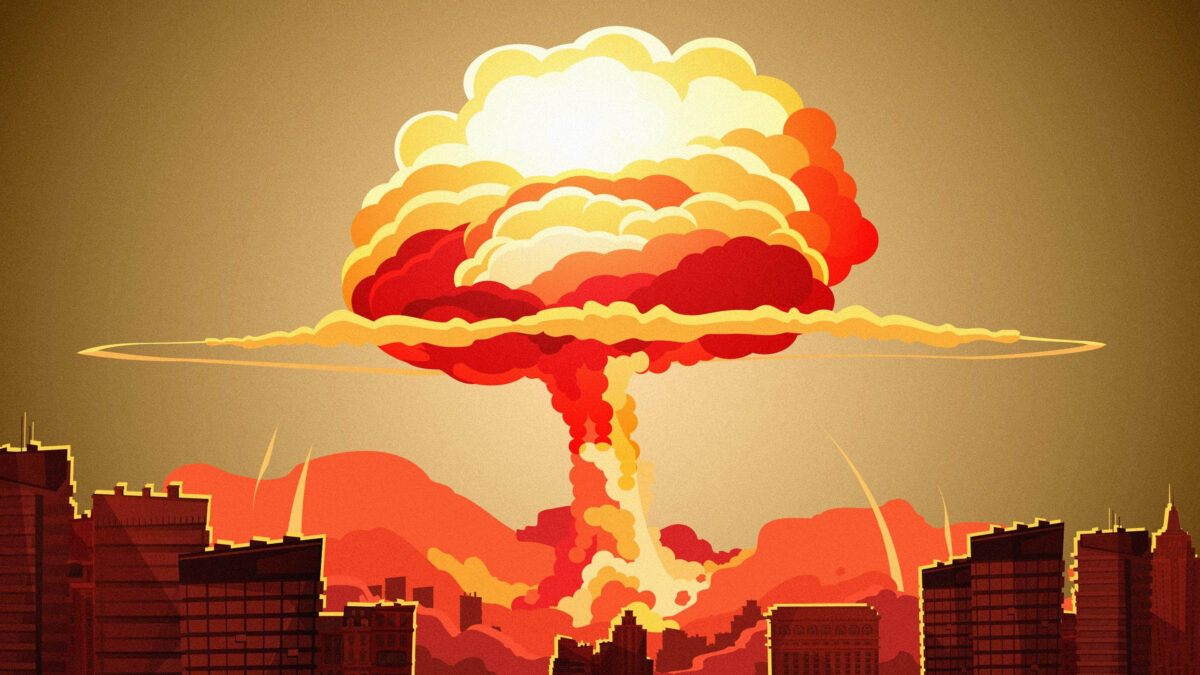
We don’t tell great stories about nuclear weapons anymore—and that’s a problem. When the armageddon engines do show up, they’re typically a tool of a bad guy or a plot device wielded with little regard for their real-world effects. 24 repeatedly uses nuclear weapons as a MacGuffin to drive the plot. In The Avengers, Tony Stark uses the world’s most deadly weapon to seal a portal to space with a nuke. In video games such as Fallout and movies such as The Book of Eli, the aftermath of nuclear war becomes a playing field.
In the world of pop culture, nuclear weapons are, at best, hollow threats a superhero defuses at the last minute when they stop the bad guy. They’re not scary anymore. They have no impact.
It wasn’t always like this. Nuclear weapons themselves used to be the villains, and the stories about them frightened and informed the public. In the decades after World War II, the threat of nuclear war was tangible and real. Schools trained children to duck and cover under their desks. Russia—ostensibly America’s greatest enemy—had the bomb and would use it if it could. Movies such as Doctor Strangelove, Threads and The Day After taught entire generations about the consequences of nuclear war, and spread messages of disarmament and peace. Since the collapse of the Soviet Union and the end of the Cold War, Americans have had the luxury of forgetting those lessons.
In 2018, however, we no longer have that luxury. It’s time to make nuclear pop culture scary again.
In January, residents of Hawaii panicked when an emergency alert system sent a push notification to their phones warning of an impending ICBM attack. People sent messages to their loved ones and prepared for the worst. Thankfully, it was a false alarm, but the reaction to the event—especially in its aftermath—is telling.
In August 2017, President Donald Trump said that any provocation from North Korea would be “met with fire and fury like the world has never seen.” In the days after his comments, online searches for the phrase “nuclear bomb” spiked in Google Trends. After the Hawaii incident, however, searches for the phrase only reached about a quarter of their peak in August.
Nukes are fantastical, abstract weapons. We don’t understand them and their threat because we never see them used.
The average American is so far removed from nuclear problem that, at best, we meet the idea with gallows humor about the over-under of surviving Trump’s presidency and, at worst, dismissiveness about the idea of perishing in nuclear fire. But it’s a real possibility. Even if Trump meets with King Jong-Un and deescalation talks go well, there will still be more than 10,000 nukes in the world. The threat persists as long as anyone possesses nukes. We need to remember their power.
In January, the Bulletin of Atomic Scientists—the folks who set the Doomsday Clock—published an essay from a 9th grader named Cassandra Williams. “Nuclear war is, and will be, a threat for as long as nuclear weapons exist,” Williams wrote. “Everyone needs to understand this threat, especially millennials.”
The American people, especially those who didn’t live through the Cold War, apparently no longer understand that threat. We’re all aware of it. We know it exists, but the last time the world saw a nuclear weapon used was more than 70 years ago. We understand gun violence and its consequences because many of us see it every day. We understand the opioid crisis because many of us have friends and loved ones who suffer with chronic pain and drug addiction. But nukes are fantastical, abstract weapons. We don’t understand them and their threat because we never see them used. Short of detonating a nuke, the best way to educate ourselves is through story.
The stories a society tells itself often reveal more about that society than its histories, and such is the role of pop culture, an often ridiculed genre that many align with TMZ, the Kardashians and red carpet events. But stories, even fictional ones, can inform an ignorant public. The great nuclear war stories of the of the Cold War did just that.
“We need a movie for this generation what The Day After did for the 1980s,” says Jeffrey Lewis—a nonproliferation expert at the Middlebury Institute of International Studies and host of the Arms Control Wonk podcast. The movie—a made-for-TV drama that aired in 1983 and was watched by more than 100 million viewers—depicts the residents of Lawrence, Kansas struggling to survive after war destroys almost everything. The film even moved then President Ronald Reagan to write that the story had left him “depressed” and convinced him “to do all we can to have a deterrent and to see there is never a nuclear war.”
“I have never been a big fan of fear. On the other hand, particularly with the end of the Cold War, a kind of complacency has set in.”
Lewis believes that we need stories that reflect what he sees as the central lesson of the nuclear age. “Everybody thinks they’re the good guy,” he says. “Our differences compared to the dangers the weapons pose are actually pretty tame. What nuclear weapons teach us is that the past couple of hundred years—where we’ve decided to settle political disputes with large scale, mechanized violence—that’s a dead-end. You need a story that show that hard it is for individuals to control this massive system of destruction they’ve created.” We don’t make movies like that anymore.
He admits that might be a tough sell for viewers. “Diplomacy’s not sexy. I get it,” Lewis says. “It’s better to imagine a scary terrorist guy who gets a bomb and Jack Bauer shoots him in the head.”Lewis also believes films that do nothing but frighten will cause viewers to shut down, even though fear is an essential part of making people aware of nuclear war’s real effects. “I have never been a big fan of fear. On the other hand, particularly with the end of the Cold War, a kind of complacency has set in.”
He explains that every day we live with nuclear weapons is a day someone might use nuclear weapons. It’s a small risk, but, “mathematically, it won’t all be fine,” he says. “Even if a small risk, if you run it long enough, will catch up to you…panic is a bad thing, but so is complacency. We’re going for an enlightened concern.”
Enlightened concern was the goal of Mick Jackson, director of 1984’s Threads. Another made-for-TV movie, it aired in the UK and, like The Day After, followed working-class families in the wake of nuclear war. Unlike its American counterpart, Threads went further. It’s more graphic in its depiction of society’s collapse and depicts two generations of a family growing up in an England reduced to feudalism after the bombs flew.
“I think politicians in power at the moment lack all kinds of depth in their vision,” Jackson says. “Certainly not imagining the world around you, as if nuclear weapons had been used. That’s kind of a no-go area for every one of us. Just psychologically, we don’t want to go there. What Threads does is take you there and rub your nose in it. I don’t think people realize what it is that they don’t know.”
Today’s nuclear weapons make the ones that hit Nagasaki and Hiroshima look like firecrackers.
Lewis agrees. “The people who get killed in the flash of light are the lucky ones,” Lewis says. “It’s the schoolchildren who have to get dug out of the rubble of their elementary schools and walk home dying slowly of radiation sickness. That’s the horror of the thing.”
He adds, “There’s going to be a blast fire. If a nuclear weapon missed Pearl Harbor just a bit and hit Honolulu—more than half of those houses are wood frame houses—they would go up like matchsticks… In Hiroshima, the blast did a small percentage of the damage. What really did it was the ensuing firestorm that then consumed the city. Something like that could easily happen in a place like Honolulu.”
Today’s nuclear weapons make the ones that hit Nagasaki and Hiroshima look like firecrackers. The death tolls after their use would be unlike anything we’ve ever seen; the ensuing humanitarian crisis—as irradiated survivors look for food, water and shelter—would be a logistical nightmare. After all, Puerto Rico has still not recovered fully after Hurricane Maria. A nuclear attack on Hawaii would make that crisis seem easy to manage.
That only reinforces the notion that realistic depictions of nuclear war’s effects must go beyond stylized mushroom clouds—and that ignoring those effects is incredibly dangerous for humanity’s future.
“[Prime Minister Winston Churchill] decided, after World War II, that he would not let anyone discuss nuclear war…or even make documentaries about it,” Jackson says. “The broadcasting authorities in Britain went along with that…Churchill was afraid that, if we got really into the details, and people became aware of how thin the veneer of Civil Defense was. That it was either criminally naive or cruelly cynical to believe that you could protect a population from any of these effects of nuclear war, therefore, let’s not go there.”
But we have to go there, and in the years after World War II both Britain and the United States did. The films and documentaries of the Cold War helped society reckon with the power and devastation of nuclear weapons. Movies such as Threads and The Day After were frightening, but they helped people understand the threat they lived under.
Nuclear weapons needs to stop being a plot device supervillains use to scare the bad guy. In times like these, we need fear to remind us of what’s at stake.