Your bag is empty.
“Having that social structure around you, you don’t feel alone anymore.”
Specialist Jason Elix remembers the moment well. He was walking his service dog in a dog park when he became overwhelmed with thoughts of suicide. Not even his wife knew. It was then that he received a phone call. On the other end was a friend from his local VETSports chapter who had been bugging him to come out and join a tournament that weekend. Getting that call, reminding him of his teammates and his accountability to them, Elix, a U.S. Army Combat Engineer, says, saved his life.
“He kept calling me: ‘I want you to come play, I want you to come play,’” Elix says. “He knew something was up.”
Elix is the leader of the Katy, Texas, chapter of VETSports, an organization that exists to get veterans active through team sports. This sort of life-sustaining dynamic is part of the DNA of the organization, which was founded in 2012 by Retired Army Staff Sergeant Randy Tharp.
“If you’re a part of a team again and you have a VETSports uniform, you’re accountable to the team every week to show up for a game or to show up for a practice,” Tharp says. “Having that social structure around you, you don’t feel alone anymore.”
Tharp first deployed to the Army in 2005 during the Iraq War, as part of the First Infantry Division, notably known as “Big Red One.” In 2006, after being stationed in Germany, Tharp deployed to Ramadi, Iraq, during the ongoing Second Battle of Ramadi. His tour in Iraq would last 15 months, after which he would take the Basic Leadership Course as part of the United States Army Sergeants Major Academy before attending the Army’s sniper school, where he was trained in marksmanship as well as fieldcraft and intelligence gathering, before returning to Baghdad.
But, when Tharp thinks of what he calls “probably the hardest job I’ve ever had,” he doesn’t think of Iraq, snipers or armed conflict. Instead, he thinks about his desk at Walter Reed National Military Medical Center, adorned with mountains of paper. He was in charge of helping wounded soldiers transition out of the Army and return to their lives. Their struggles became his own, and weighed on him like the paperwork encumbering his workspace.
“I met and took care of soldiers at their lowest point in life,” he says. Their challenges included figuring out new careers or how they would go to college. Others faced challenges that were more physical, like how to feed themselves without arms. During Tharp’s tenure at Walter Reed, the Department of Defense began the Warrior Games, an annual Paralympic-style game in which injured members of the nation’s military branches competed against one another. What Tharp saw inspired him: soldiers with one arm shooting bows in archery, or swimmers who had lost multiple limbs taking laps in large swimming pools.
“It was truly amazing what they were accomplishing,” he says.
Rather than re-deploy, Tharp founded VETSports with the hopes of setting up a nationwide network of leagues that could help veterans stay physically active and enjoy community with one another—a much-needed outlet. There are over 15 million veterans currently living in the United States, and about one-third of them self-report experiencing moderate to severe symptoms of depression, per the Wounded Warrior Project. The number of veterans living with PTSD varies by the era of their service, as well as other factors, including whether or not they were deployed. The highest rates of PTSD are reported among those who served during the Iraq War, with almost 3 in 10 experiencing symptoms at some point in their lives. In a 2020 survey of veterans, over 56% reported feeling lonely sometimes or often.
According to one 2024 study, the truth is that playing on a sports team is just as much of a social and communal boon as it is a physical one. Each veteran who spoke to Playboy talked about the way that being part of a team mirrors some of the dynamics that became de rigueur for them during their time in the Armed Forces.
Tharp knows the struggles of reintegration with an injury personally; he returned from his deployment with post-traumatic stress disorder (PTSD), as well traumatic brain injuries from IEDs and a “quite jacked up” back following his Iraqi tour.
“It really helps me with my own mental state, knowing that I’m helping others have a great reintegration,” Tharp says. “This gave me purpose.”
Reintegration after time spent in the military often involves a shift from being part of a defined unit into being seen as an individual in a place from which they’ve essentially been removed. Such a change can be a severe “recalibration,” according to Michele Paiva, a trauma therapist who works with veterans.
“Vets have been removed from society,” she says. “Everything about their lives while serving is dictated, and they are indivisible but taught teamwork as a priority.” She continues, “Upon arrival home, they are just left to segue themselves back, as individuals, often alone without anyone that can truly relate to their experiences.”
For John Mark Wilson, a veteran who is now host of the vet-themed podcast “The Beaten Zone,” reintegration is not a return to normal, but about “how to translate yourself into a different world.” After the military offers people structure, a mission, an identity and a community, where trust and accountability are immediate and paramount, being cast out of that takes a huge psychological toll.
“You train together, suffer together, deploy together, and rely on one another in ways that are difficult to replicate elsewhere,” he says. “Then one day that environment disappears.”
A 2023 study on reintegration underscores Paiva’s point. Calling the moment of re-entry “a crucial phase for many veterans,” the study found that difficulties during the transition back to civilian life, including a lack of social support, corresponded with worse mental health outcomes and “lower flourishing.”
“There’s a difference between supporting veterans materially and fully integrating veterans socially and culturally back into society,” Wilson says. “America genuinely respects veterans, but often in a symbolic way more than a relational one. People say “thank you for your service,” and most mean it sincerely. But as a country, we sometimes struggle to maintain deeper engagement with veterans once the wars fade from public attention.”
Being around other veterans was a big draw toward joining VETSports, says Petty Officer 3rd Class Steven Ureña, a chapter leader in Tampa, Florida.
“When I tried to interact with civilians, it was different,” he says. “They didn’t understand me, or I couldn’t understand them.” Ureña, a Master-at-Arms in the U.S. Navy, says some civilians found the way he spoke after leaving the military to be too “aggressive,” but that other veterans understood. “That’s just our norm,” he says.
Some examples he gave included using military acronyms and last names to refer to people instead of their first names.
“That’s how we show respect to each other,” he says. “Once I started getting more involved with sports and making more friends with veterans, I felt more comfortable, being able to hang out, being who I am without having to pretend.”
Part of the problem, Wilson contends, is that veterans need spaces where they are not “reduced to stereotypes” or forced to hide difficulties they experienced while deployed. Civilians, he adds, often have flattened ideas about veterans, as well, buying into mythology that sees them as either damaged and unstable or superhuman and heroic.
“Most veterans are neither,” he says. “They’re people trying to integrate meaningful and sometimes difficult experiences into ordinary life.”
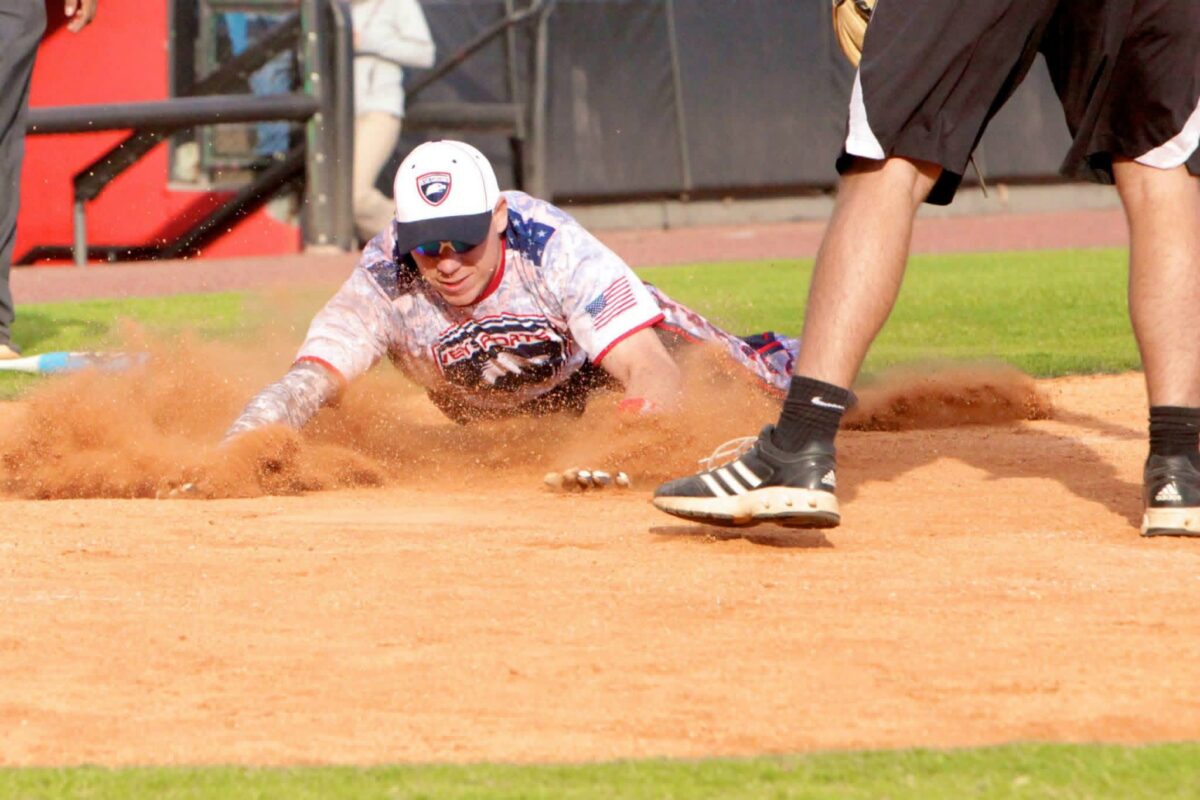
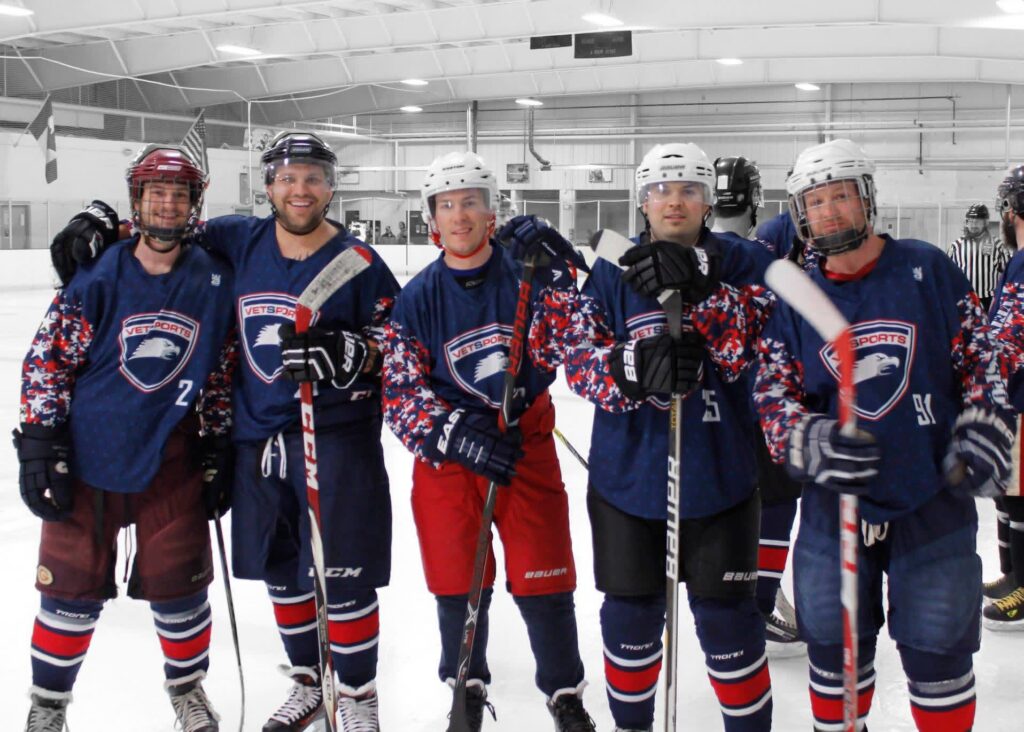
At Ureña’s chapter in Tampa, Florida, members can participate in softball, volleyball and golf, while Elix’s offers softball. There are currently over 15,000 veteran members, each of whom pays nothing to join. Local chapters often work with their city’s respective parks departments and will play sports based on the facilities of individual towns. Aside from the offerings mentioned above, some chapters offer fishing, hockey, cycling, archery, and even pickleball.
Wilson adds that, often, what veterans miss is not active combat, but the connections fostered during active duty.
“They miss belonging. They miss responsibility,” Wilson says. In contrast to the way the armed forces operate, civilian life can be “fragmented” and “individualized.”
As Paiva mentioned, many veterans crave the camaraderie that comes with being a part of the military and often have trouble being a part of civilian life, likening the experience to feeling as if “society has a secret handshake they didn’t even know existed.” She adds, “That alienation experience brings a feeling of isolation.”
That sensitivity to veterans’ specific mental health needs is crucial to Elix’s work as a chapter leader; after leaving the Killeen, Texas, chapter in 2021, he became the leader of another chapter in Katy, Texas. Now, he says, he’s on the other side of the equation, looking for signs in his fellow veterans and reaching out to help others who might be suffering in silence.
“I can pick up when my teammates are off,” he says. Ureña agrees and says that he sees his job as a chapter leader is more than just facilitating team sports, but helping people know that they are loved and cared for.
“If I know that I’ve helped at least one veteran not become a statistic,” he says. “I know I’ve done my job.”
The statistic that weighs on Ureña’s mind is that 22 veterans per day in the United States die by suicide. That number is based on a Veterans Affairs’ report from 2012, per the organization 22 A Day, but also included active-duty troops, the National Guard and U.S. Military Reserves. A 2018 VA report updated the number per day to 20—though this number, too, has been challenged, with some reports estimating it at as many as 44 deaths by suicide per day.
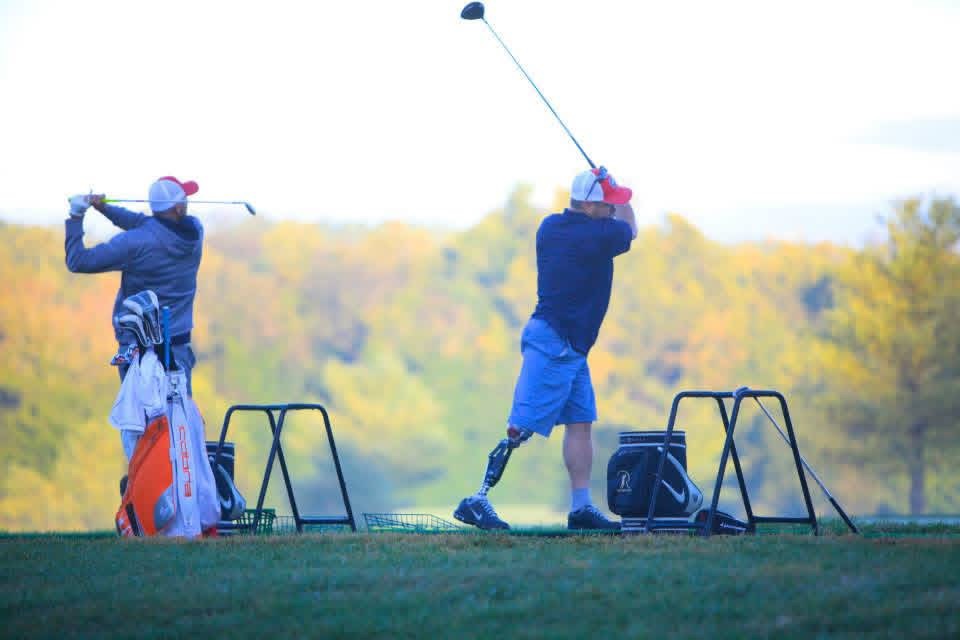
A large part of creating community for veterans is assuring that the sports offered are accessible to people of all abilities. Elix, who was medically separated from the army due to a knee injury, said that he once had a participant in his chapter, who has since died, who came with prosthetic legs and, after hitting the ball and getting to base, asked for a pinch runner to step in for him. Playing the game any way you can is part of Elix’s philosophy.
“If you come with one arm, we will find a way to get you out there with the bat and everything else,” Elix says. “We don’t discriminate.”
To help make sports accessible to people at any ability level, Tharp adds that part of their organizational structure includes a person who works with chapter leaders to make sure veterans have what they need in order to participate.
That dedication to getting people involved stems from the firsthand knowledge that often, for veterans, structure and support can be hard to find after the Army, including how hard it can be to foster community with people who have never been inside the Armed Forces.
“The military is one of the few institutions in American life where people are deeply embedded in shared hardship, shared standards, and shared identity. There’s a very strong tribal component to it,” he says. “Many veterans leave an environment where they were constantly surrounded by people who instinctively understood them and enter one where they suddenly feel culturally out of sync.”
That feeling of misalignment was strong with Ureña, who says he was often uncomfortable around civilians.
“They don’t know the stress, the struggles that we’ve been through,” Ureña says. “It was easier to be around other veterans. I didn’t feel like I was trying to pretend.”