Your bag is empty.

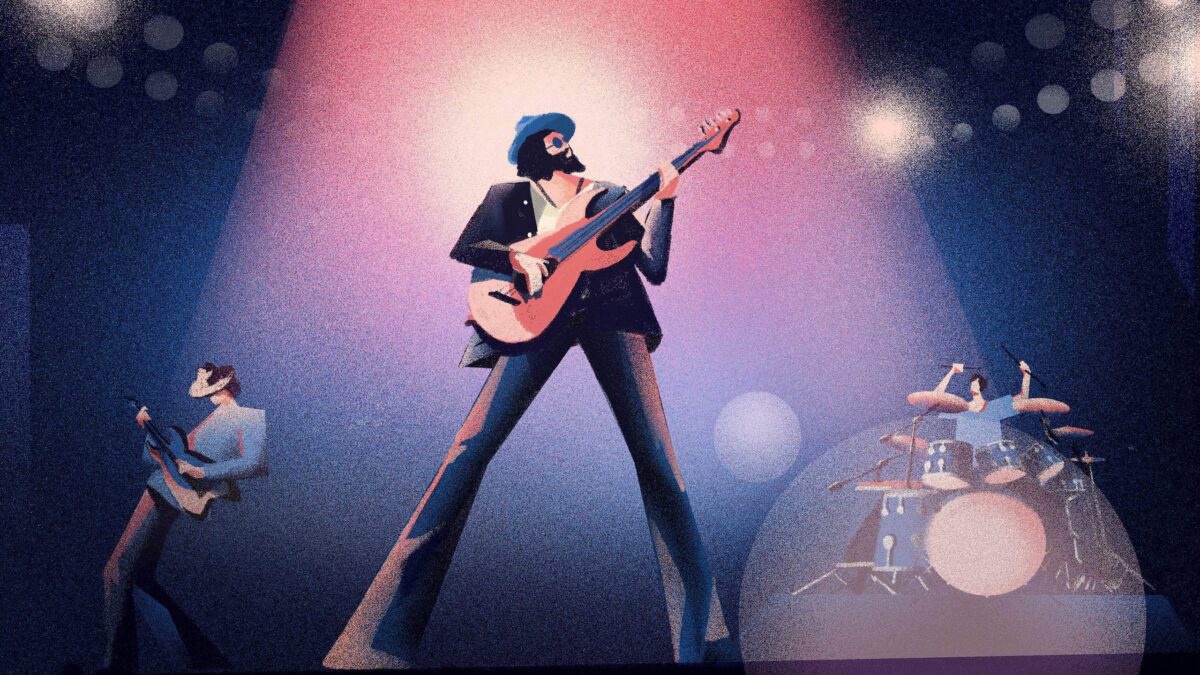
A journey into the heart of the all-American art form, with the help of jazz-pop legend Don Was
Don Was is nervous. We’re in his room at the Bowery Hotel, sitting next to three-time Grammy-winning singer-songwriter Lucinda Williams. It’s the first time she’s hearing Vanished Gardens, her new album with the legendary jazz saxophonist Charles Lloyd and his group the Marvels. Was produced the album and is putting it out on Blue Note Records, where he has served as president since 2012.
Meeting with Williams was not part of today’s plan. We were in the middle of an interview when Was spotted her in the lobby of the hotel. “This is so kismet, it’s ridiculous,” she said, reaching up to embrace him. Williams, a Southern-bred artist who has spent more than three decades exploring the Americana landscape, had been at the Bowery for weeks, putting together a deal for her forthcoming memoir. Was had been trying to contact her for her blessing on a final mix. “Got any time now?” he asked.
We headed up to Was’s suite, and Williams settled into a mohair-upholstered lounge chair. He handed her headphones and watched as she listened to the first track. Her face was inscrutable.
“This is intense,” says the 65-year-old producer, who’s in New York to work on a new project for the Rolling Stones. (He doesn’t want to reveal too much but offers this: “It’s really early. What I can tell you is that they’re certainly inspired, they’re definitely not done making music, and they’re writing songs together. And they’re good.”) He’s wearing a fedora, his face framed by a mess of natty dark hair. A black Armani overcoat hangs over an outfit that’s all athleisure—a Columbia Sportswear zip-up and Nike Tech fleece sweatpants. A tangle of necklaces circle his neck, including one stamped with the words fuck yeah.
Was produced Williams’s 2011 record, Blessed, but the stakes are different this time. It’s Williams’s first album for Blue Note, and she has never done a collaboration like this before. Due out June 8, the album was Was’s idea. Tour dates are booked, including a headlining slot at the Playboy Jazz Festival.
Before Was took the helm, the storied jazz label was on life support. “They were going to close Blue Note down and sell the catalog from a website with some Blue Note T-shirts, and there would be no new music,” Was later tells me. He proposed to his future bosses that the label broaden its aesthetic. One of them asked Was how far his vision for the label extended.
“I said, ‘I don’t see any reason why we couldn’t have Ryan Adams or Lucinda Williams on the label.’ ” Was pauses. “And here we are.” (Blue Note has released Adams’s last four albums.)
For the moment, the label has been rescued. Was has delivered just what he promised: an infusion of energy from outside the jazz establishment, bringing in well-known names with both edge and commercial appeal. He has also been in Miami, recording a collaborative album for the label with Iggy Pop and Dr. Lonnie Smith. “It was Iggy’s idea,” Was says.
Projects like these raise a question that is all but ubiquitous in this world: When it comes to crossover, where is the line between art and mere marketability? Peruse recent year-end lists of best-selling jazz albums, and you’ll see that straight-ahead jazz no longer rules the charts; it’s artists like Norah Jones, Michael Bublé and the team-up of Lady Gaga and Tony Bennett.
Sitting in this hotel room, in this company, with this recording playing, the beauty of what I’m hearing makes that line seem, for the moment, irrelevant.
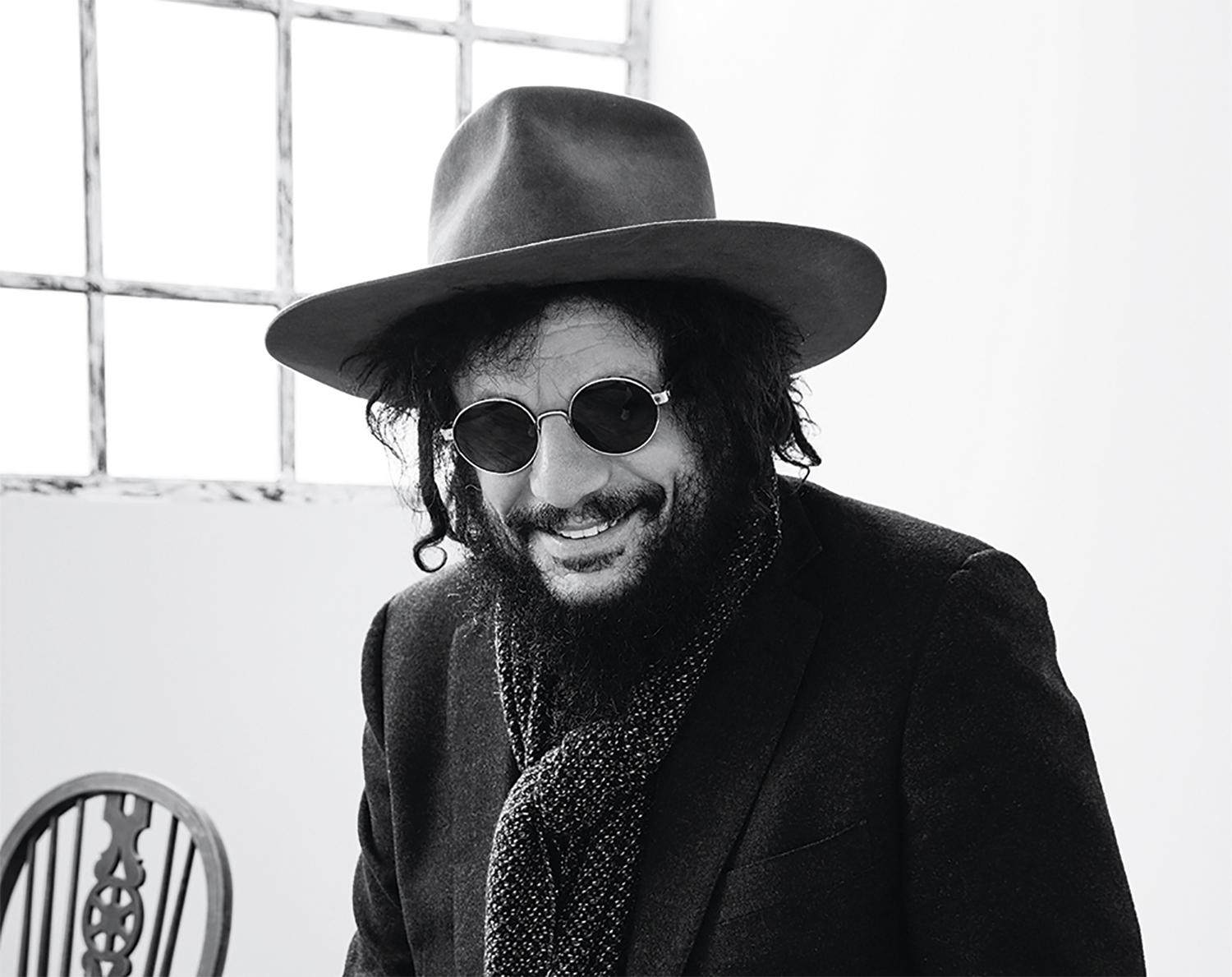
In 2012, Don Was (born Donald Fagenson), became the third president in the history of Blue Note Records. Founded in 1939 by German émigrés Alfred Lion and Francis Wolff, the label helped launch the careers of Art Blakey, Herbie Hancock and Lee Morgan. Was is the first musician to head Blue Note—not as a “failed saxophonist,” as his predecessor Bruce Lund-vall described himself, but as a player who spent close to a decade doing straight-ahead jazz gigs in Detroit, went on to share stages with Bob Dylan and Elton John and is still called upon by the Stones. (The sartorial contrast is similarly marked: Lundvall was rarely seen without a suit and was known for his aesthetic attention to detail that included a pinkie ring.) In the early 1980s Was co-founded the band Was (Not Was), a group with a big hit—1987’s “Walk the Dinosaur,” with its indelible refrain “Boom! Boom! Shakalakalaka boom!”—and a revolving door of guests including MC5’s Wayne Kramer and trumpeter Marcus Belgrave. He went on to produce Dylan, the B-52s, Carly Simon and Bonnie Raitt. He has been producing the Rolling Stones since 1994’s Voodoo Lounge.
Before becoming Blue Note president, Was didn’t trust record companies. “I wasn’t looking for a job,” he says. “In fact, I was really hoping to never have a job.” Yet he was attracted to the label, which had meant a lot to him as a young man. Was connected deeply with the sound of Charles Lloyd, a musical shape-shifter who has played with the Beach Boys and the Doors. Lloyd’s rock-infused 1966 live album, Forest Flower, was one of the first jazz albums to sell more than a million copies, turning a generation of rock fans toward the genre. In his personal collection, Was has more records by Lloyd than any other musician.
While Lloyd is often referred to as one of the first jazz crossover artists, the saxophonist sees his music as part of a continuous expression that has emerged from the blues: “Dylan, the Doors, the Beach Boys, the rock groups of the 1960s come out of the great tradition of the blues,” Lloyd tells me over e-mail. “My earliest gigs in Memphis were with the great blues masters—Howlin’ Wolf, B.B. King, Johnny Ace, Bobby Blue Bland, Big Mama Thornton, Rosco Gordon. I came through them on my way to Bird, Lady Day and Prez (a.k.a. Lester Young). The thread of that experience is in my musical DNA.” Lloyd was one of the first musicians Was invited to the label.
Was uses the word frivolity repeatedly to describe his decision-making process, but he does so with the knowing glimmer of an artist attuned to the wisdom of chance and the absurd. His newest endeavors for Blue Note reflect this sense of whimsy. Take the subscription-based Blue Note Review, a limited-edition boxed set designed to bring tactile romance back into music consumption. The first edition, Peace, Love & Fishing, includes a vinyl double album by current artists, a reissue of an out-of-print album by Blue Mitchell, a “lifestyle zine” with a foreword by Ram Dass, lithographs by Francis Wolff, a scarf designed by John Varvatos and a turntable mat dreamed up by Ryan Adams. Was blurted out the title in a meeting. “Fishing is what improvisational musicians do every day. Sometimes it’s a marlin, sometimes it’s a boot,” he says. “Peace and love—well, that’s obvious.”
The next Review, tentatively titled Spirit & Time, is drummer-centric. Was commissioned drummers currently on the label, including Tony Allen, Chris Dave, Brian Blade and Kendrick Scott, to reimagine the overlooked records of drumming legend Tony Williams.
In an era when every label in every genre has had major struggles with declining album sales, Was sees the freedom to reinvent. The next album from Wayne Shorter, the senior member of the Blue Note roster, will be released in tandem with a graphic novel; the CDs will be packaged inside the book. “It’s pretty abstract,” Was says. “It’s not just a graphic novel; it’s Wayne Shorter’s graphic novel.”
“Do you discriminate on the basis of different notes? No, you go by something that either touches you deeply or it doesn’t.”
Over e-mail, Shorter explains that Was is one of the few “chance-takers in the business…. His dedication to the real meaning of ‘business’ is the business of life as the ultimate art, which transcends the quest for attaining awards and fame. On the contrary, Don Was has the strength of character to be faithful to the process of questing the means to an end, rather than the other way around.”
Was tells me that the company is profitable and it has “incredible support from Capitol.” (Capitol Music Group, which encompasses Blue Note and several other labels, is in turn part of Universal Music Group.) The Blue Note at Sea cruise brings in enough money to pay for a year of jazz albums. The label has also partnered with Vans sneakers and Sonos speakers. Ventures like this allow Was to tell artists they can go in the studio and do whatever they want.
I ask him how projects like Shorter’s pencil out for Blue Note. “It’s just worth doing,” he replies. “I don’t necessarily believe that you do a profit-and-loss projection for each record. I think you look at the overall picture of how the company is doing and make allowances for someone to do something extraordinary.”
Beyond the walls of Blue Note, other major players have taken different tacks. Roy Hargrove, a trumpeter with a pair of Grammys and a level of respect usually reserved for artists far beyond his 48 years, spearheaded the genre’s reach outward toward hip-hop and neo-soul, particularly through his RH Factor albums and his work with artists such as D’Angelo, Erykah Badu and Common. But these days Hargrove tours with an acoustic quintet. He’s playing some of the most straight-ahead jazz of his career.
“I’m coming more into the traditional style now that they’re forgetting about the roots,” he says. “The most challenging way to play, to me, is acoustically; the most challenging way to catch people’s ear is with the bare necessities.”
Hargrove is a fixture at jam sessions where he encourages young musicians to get back to the real work: a militant regimen of practice until the tightrope walk of improvisation sounds effortless. “Don’t dog out the tradition,” he says. “This is the fabric of the music that you play. I don’t want the young generation to forget it, so I’m putting more food into it.”
The newcomers at the sessions, he says, “need to learn to take themselves out of the equation. It’s not about you; it’s about drawing people in with your brilliance. You have to become brilliant in order to do that. The truth is, when you play jazz, it’s a spiritual connection to people, but you have to do it right.”
It’s a sentiment Was would most likely agree with, even as his projects stray beyond the conventional boundaries of jazz. To hear him tell it, there’s a moral imperative behind such explorations: “Do you discriminate on the basis of different notes? No, you go by something that either touches you deeply or it doesn’t.”
In the weeks before taking the gig at Blue Note, Was spent several hours a night trying to locate the scene’s pulse. His searches kept drawing him to the Revivalist, the jazz-oriented hub housed on the music site Okayplayer. This led Was to the Revive Music Group, a genre-bending agency that specializes in promoting jazz artists steeped in the language of hip-hop, and its founder, a tenacious New York transplant named Meghan Stabile. “I told her, ‘You seem to be at the center of all the music that’s exciting to me.’ And so we got together. I just loved her energy and her vision for something new within the music.” That meeting led to a partnership between Blue Note and Revive Music. They released three albums together between 2014 and 2016.
Stabile, now 35, is still at the epicenter of this scene. If you want to catch a glimpse of the energy that won Was over, it’s on display every Tuesday in New York’s Greenwich Village, where she runs a Revive session called Blue After Dark.
Down the steps at the Zinc Bar is a dark crimson room with a long, narrow bar. On Tuesdays after 11, the bar is usually lined with off-duty jazz musicians. The doorman, himself a musician, lets these guys (and yes, they’re mostly men) in for free.
On a recent night, you could catch the 33-year-old drummer Justin Brown perched next to the bass player Ben Williams, also 33, nursing a bourbon. In and out is 22-year-old James Francies, a pianist who plays with the Roots, just days away from stepping into the studio to record his first album for Blue Note. Beyond the bar at the turntables is the multi-instrumentalist Casey Benjamin spinning the sort of soul, funk and R&B that tickles ears raised on sample-heavy hip-hop. Onstage, the drummer–indie rapper Kassa Overall leads a short, eclectic set before opening up the session to the audience.
The hang seems improvised, but the vibe—from the low-key lounge setting to the DJ to the high-caliber jazz by young musicians fluent in hip-hop—was orchestrated by Stabile.
“A lot of the guys who come through are off tour for a minute,” she tells me over coffee in Harlem, her brown hair tucked under an army-green baseball cap. “They don’t want to do the same shit they’ve been playing for three months. Some don’t want to play; others just want to sit in, let loose and have fun.” Half Mexican, half Italian, Stabile stands around five feet tall, with expressive eyes framed by thin, 1920s film-star eyebrows—but with hoop earrings and a modern swagger.
When bassist Christian McBride first checked out a Revive session a few years back, he couldn’t believe what he saw. “It was absolutely amazing,” he says. “All these jazz musicians were in there, almost all of them millennials. Meghan had brilliantly captured this generation that grew up loving hip-hop but that could really play jazz.”
Stabile remembers that it all happened quickly. She’d just arrived in New York and was handing out flyers in the back of the original Zinc Bar, where she met Robert Glasper, still years away from releasing his Grammy-winning Black Radio. Within a year she was booking shows for Glasper and members of his band in New York. Guests like Yasiin Bey (a.k.a. Mos Def) would show up unannounced.
For her first international show, she took the Robert Glasper Experiment and Bey to South Africa in 2009. It was Bey’s first trip to that country; he ended up moving there in 2013 and staying for three years.
Back then, few people took Stabile seriously. She remembers hounding Jayson Jackson, Mos Def’s manager at the time. “He wouldn’t answer my e-mails,” she says. “He wouldn’t answer my calls. I had to stalk this dude. To him I was this little girl trying to book Mos Def. These guys deal with legit, legit people, and I was in my early 20s.”
She ended up getting the deal done through another connection—but not without leaving an impression on the man who had ignored her.
“I’m onstage in front of 10,000 people,” Stabile says. “It was the first time we met. I tap him on the shoulder and I’m like, ‘Hey, I’m Meghan. This is what I called you for,’ and I pointed to the crowd.”
Jackson would become her business partner.
Stabile still has to struggle for recognition, but it’s different now. Her consultancy has grown to include veteran jazz musicians and cultural institutions like Carnegie Hall, Jazz at Lincoln Center and the Kennedy Center, all of which look to her for advice on how to stay relevant and draw in more diverse audiences.
Her momentum is unmistakable. On an average day, she shuttles between handling conference calls with artists, planning concerts and tours, working on a business plan and plodding through a never-ending treadmill of proposals. She’s a champion of the backing musician whose talent is often overshadowed by the marquee names. “They’ll talk about Bilal or Jill Scott, but will they talk about the artists behind them? They are the ones making artists sound the way they sound,” she says.
She uses words like urgently and immediately to talk about musicians she believes deserve a broader audience, as in “People need to know who the fuck they are immediately.”
Stabile, who grew up in Dover, New Hampshire, enrolled at the Berklee College of Music as a vocal-performance major. By the time she left, she had switched to a music-business major. She never met her father, and she survived an abusive relationship with her mother—experiences that, looking back, fueled her ambition, maybe to a fault. Her aunt gave her a guitar for her 14th birthday, and music became her refuge. “I guess you could say I was playing the blues,” she says.
Working behind the bar at Wally’s Cafe, a small, beloved jazz bar in Boston, she fell in love with the form and absorbed the struggles of its practitioners, especially trumpeter Igmar Thomas.
“I found myself explaining a lot of things, foundational questions,” says Thomas. “She would ask, ‘Why is it such a struggle? Why aren’t more people attracted to jazz instead of the watered-down thing?’ I had to explain to her that a jazz musician in this day and age has made a decision. This is not financial-investment school.”
Stabile felt a sense of anger that was “probably not healthy,” she says. She resented that she hadn’t been exposed to jazz growing up in Dover and was infuriated that jazz musicians, full of talent and discipline, were often paid little and treated like shit. She knew how to throw parties and had a knack for talking her way into booking venues. One day, as they were walking past a club in Cambridge, Thomas challenged Stabile to get him a gig there. She walked right in and walked out with a date and a budget of $700.
Things got rougher after she moved to New York. Craig “Butter” Glanville, a Harlem-based producer and drummer whose great-uncle is Dizzy Gillespie, mentored Stabile once she arrived. “She was very green. How green is green? Fluorescent green,” he says. “This game isn’t for everyone. It’s tough, and then you’re going to put it probably times five or 10 being a female. I know dudes be dumb as motherfuckers, super dicks. You got to be a woman and then deal with this?”
Stabile rarely goes out these days, not unless there’s a real reason to. She tries to be up at six a.m. for prayers and meditation. It’s all preparation for the next phase of her journey. “What just happened, that was the warm-up,” she says.
She still advises a number of emerging young musicians. And she keeps the Tuesday night sessions going—not for the money but for the music.
Back in Was’s suite at the Bowery, Williams is concerned about the vocals. She wants more compression. She’s after that Tammy Wynette sound. “It would be one thing if I were Billie Holiday,” she says.
Was suggests listening to the rest of the album without headphones, so she takes them off. The mood in the room shifts as the music comes over the speakers, Lloyd’s breathy tenor saxophone in a dance with Williams’s charred, sinewy voice.
They went through a lot to keep the sound natural on the album, Was explains. There’s no overdubbing, no fixes. Most tracks were recorded in one or two takes.
After a gravelly vocal passage, Williams gives a thumbs-up and grins, rocking back and forth with approval. “I’m so in love with Charles and his band,” she says. “It’s right where I wanted it to sit. It feels real.”
By the end, her eyes are misty. “I don’t want to go to Austin. I want to stay and play with the Don,” she says. But she has a flight to catch. She hugs us, and she’s off.
We marvel at what just happened.
“There’s a scenario in which that led to the whole record never coming out,” he says, “and it’s not a far-fetched scenario. If she hated it, it would be over. But you just have to be fearless about it. Also, it’s really fucking good. If I thought she wasn’t awesome on it and it didn’t stand up with her best work, we would have scrapped it. I would never dream of a situation that would have compromised her.”
He trails off, pauses and looks out the window. “So many things could have gotten thrown off. I don’t think it’s out of line to say there was a potential half a million dollars in damages,” he says.
He pauses to register the pressure and releases it with laughter. The future, it seems, must be improvised.