Your bag is empty.
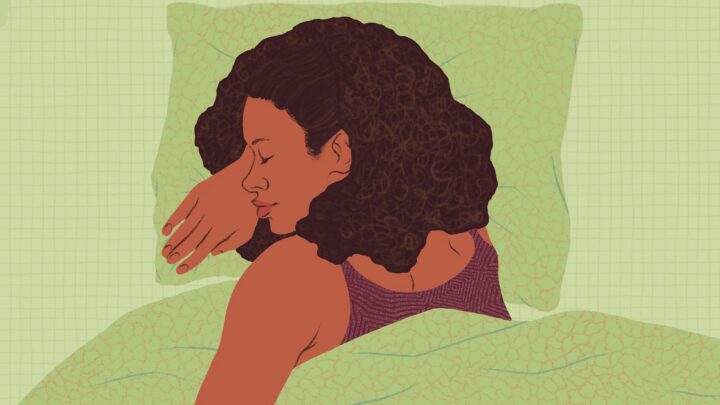
Dr. Leana Wen—emergency room physician, visiting professor at the George Washington University School of Public Health and former health commissioner for the city of Baltimore—asks us to reimagine racism as a public health crisis
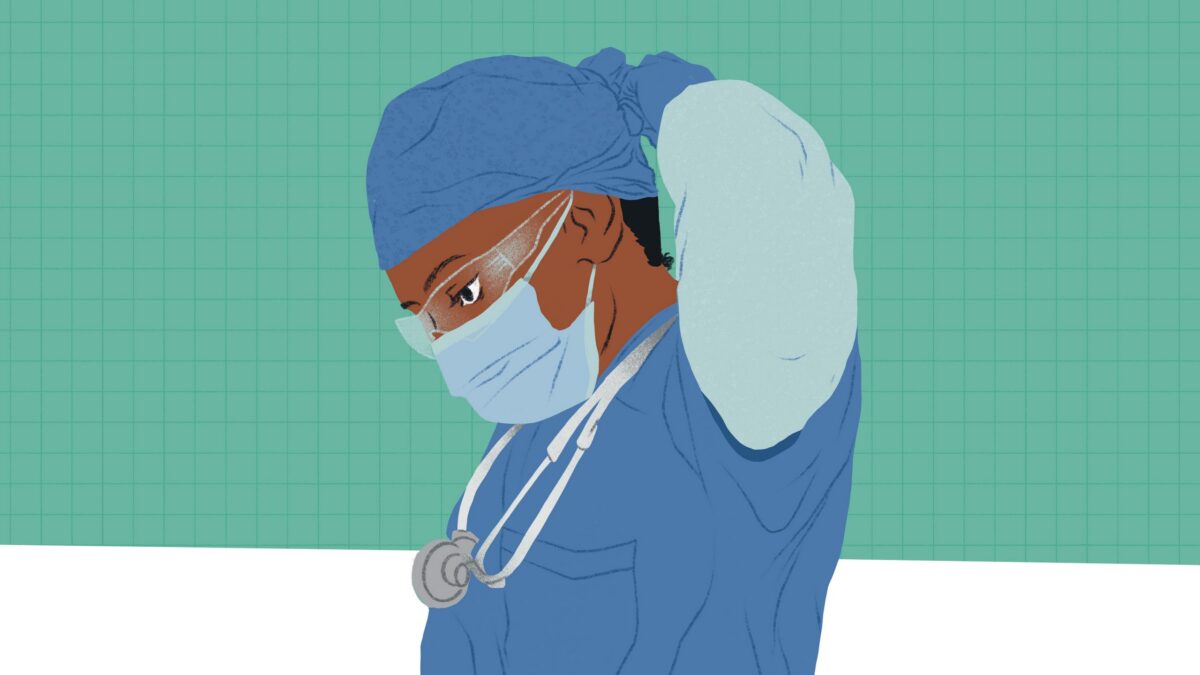
When I was 10 years old, a young boy lived next door to me. He was a few years younger than me, but we had some things in common: we were immigrants and we both had asthma. One day he had a severe asthma attack. I knew what it felt like to not be able to catch your breath, and I was terrified for him. It escalated to the point where he needed emergency medical attention. But his family was terrified to call 911 because they were undocumented and feared deportation. The boy died, right in front of my eyes, while I stood helplessly by.
This was one of many childhood experiences that made me aware of how systemic inequities creates disparate health outcomes for certain groups. And it’s often the difference between life and death.
Fast forward and I’m in medical school. Once again, I encounter a young boy suffering from an asthma attack. This time I wasn’t as helpless. I was in a well-quipped emergency room with nebulizers, inhalers, steroids and everything my patient needed to feel better. However, the boy kept returning to the emergency room with asthma attacks. I began to dig. Why was he having so many asthma attacks? I found out that he and his mother were experiencing homelessness. They were in and out of different shelters where everyone smoked. They also had been living in an abandoned rowhouse that was full of mold and other allergens. What we could do in the hospital wasn’t enough. So much of what determines someone’s well-being is the air they breathe and the other conditions of their lives. In my city of Baltimore, there are neighborhoods just a few miles apart where the life expectancy differs by 20 years. It’s not health care alone that determines how long people live, but many other social factors. I grew passionate about public health because it’s one way to address these issues.
Now here we are in 2021. The Covid-19 pandemic has taken nearly 400,000 lives in the U.S., and the economic fallout has negatively impacted millions of people. But the burden hasn’t been experienced by everyone equally. Racism is finally being understood as the public health crisis it has always been. This was something I was already deeply familiar with, as I was the health commissioner for Baltimore in 2015 when Freddie Gray died while in police custody and the ensuing unrest rocked the city to its core. The lessons I learned back then about the intersection of inequity, poverty, indifference and health have been laid especially bare in this pandemic.
For many, public health is a safety net, and racism cuts holes in that net.
These problems are not new. Last year just stripped away the veil, and society was forced to look deeper. Why is it that African Americans in Baltimore suffer disproportionately from diabetes, heart disease, obesity, hypertension and now Covid-19? Structural inequities and indeed racism itself are the underlying factors behind the health disparities that plague many communities.
No genetic evidence suggests that the coronavirus is picking one group over the other. The virus is not what is doing the discriminating. It’s our systems that are discriminating. Individuals with underlying conditions like heart disease are more susceptible to severe cases of Covid-19. But when you look at the people who have those conditions, people of color are overrepresented, which goes back to structural inequity. In Baltimore, one in three Black Americans lives in a food desert, compared to one in 12 white people. It’s no surprise they’re dealing with more preexisting health problems when they can’t even access decent nutrition.
People of color are also overrepresented among essential workers, meaning they don’t have the privilege of social-distancing. And people of color and low-income Americans are more likely to live in multigenerational housing or crowded housing where, again, they can’t effectively social-distance, and coronavirus can spread like wildfire.
The impact of this is devastating. According to a revised report from the Centers for Disease Control and Prevention, Black and Hispanic Americans are dying of Covid-19 at almost three times the rate of white Americans. Native Americans are dying at 2.6 times the rate of white Americans.
We need to identify these causes and speak plainly about them. These Covid-19 disparities exacerbate underlying inequities. They won’t just go away with vaccination, and the burden will be felt for years to come.
To be clear, it’s wonderful we now have two authorized vaccines and several others that are showing great promise. But more than 3,000 people a day are still dying. For many vulnerable people, by the time the vaccine makes it to them, it will be too late. And that’s further compounded by the fact that some communities have an understandable distrust of the medical establishment due to unethical experimentation in the not-too-distant past, like the Tuskegee studies. So if our vaccine rollout doesn’t do targeted outreach to those groups that acknowledges and addresses those fears, we are once again perpetuating these deadly disparities.
History will judge our previous leadership very poorly for their indifference and nonresponse to this global health crisis. Other countries were willing to put in the work with public health measures, but America wanted an easy fix. We should have avoided indoor gatherings but it was “too hard.” We should have worn masks, but that wasn’t something we were used to and thus was “too hard.” These were measures our government should have had a national strategy and clear messaging around from day one, but it just wasn’t done. We had many preventable deaths because of these failures. It’s a slap in the face to medical workers on the frontlines, to the patients who are dying and to the millions of people who are sacrificing so much to do the right thing.
We are lucky that science appears to have triumphed with a vaccine, but what if it didn’t?
There’s a saying that “public health saved your life today, you just don’t know it.” When public health is properly supported, it’s invisible. You don’t think about it until something terrible happens. Well, now something terrible has happened. This moment has showed our country and the world what manifests when we do not invest in public health.
Our investment in public health shouldn’t stop at preventing the next pandemic, even though that’s obviously very important. There needs to be wider recognition that public health is key to addressing all the structural inequities that exist in people’s lives as well.
For many, public health is a safety net, and racism cuts holes in that net. The pandemic should be our wake-up call to give new attention to long-standing problems
From Dr. Leana Wen, as told to Anita Little