Your bag is empty.
Fifteen minutes of ecclesiastical fame for Andy Warhol, the prodigal son
Samuel Pepys, famous English diarist and Member of Parliament, recorded on November 11, 1666 that he had masturbated in church (“God forgive me”). A month later, he rubbed out another one, aroused at Christmas Eve High Mass by the queen and her ladies. “God forgive me for it, it being in chapel,” he wrote in his 10-volume diary. The following year, a merchant’s daughter sitting nearby in church inspired him—this time sans guilt. “That was a common English response to Catholicism,” says University of California, Berkeley historian Thomas Laqueur, author of Solitary Sex: A Cultural History of Masturbation.
Catholicism’s sensuality doesn’t always leap to mind among the masses, but from an artistic perspective the connection runs deep. Since the beginning of Catholic history, artists have created works for the church that carry erotic undertones. According to Richard Townsend, executive director of Chicago’s Richard H. Driehaus Museum and former director of New York’s Museum of Biblical Art, “Erotic art has always been more or less present within the precincts of sacred art, intentionally or otherwise.” Tourists visiting Roman churches today inevitably find themselves face-to-face with homoerotic and sexualized depictions of saints and biblical figures from centuries past. At San Luigi dei Francesi, Caravaggio’s Martyrdom of St. Matthew treats the soon to be killed saint as an afterthought, while a young executioner clad only in a loincloth occupies the composition’s central position. Just over a mile away, at Santa Maria della Vittoria, Bernini’s Ecstasy of St. Teresa depicts a kind of pleasure that appears to be more than just spiritual.
These historical precedents immediately leapt to mind following the announcement that the Vatican Museums would co-host a Warhol exhibit with Pittsburgh’s Andy Warhol Museum in 2019. “We are very interested in exploring the artist’s spiritual side,” Vatican Museums director Barbara Jatta told The Art Newspaper in January 2018.
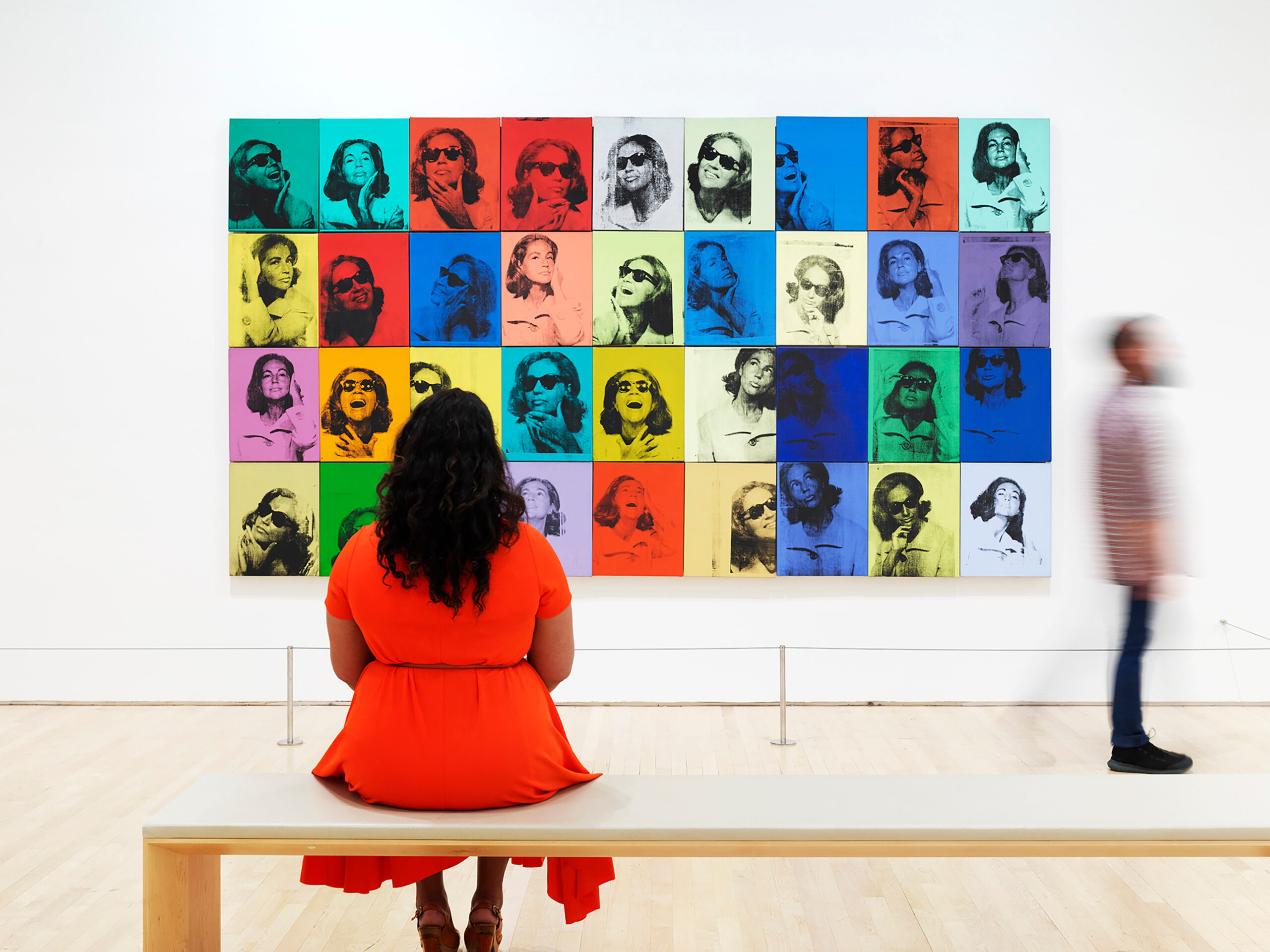
The Vatican Museums have featured a contemporary art museum since 1973, but its collections tend to be conservative, says Townsend. “Warhol represents a new but logical frontier for them,” he says. “The artist was deeply religious throughout his life, practicing an Eastern European brand of Catholicism and going to mass almost daily.” However, shortly after the initial announcement, the Vatican Museums canceled the exhibition, citing scheduling conflicts due to an upcoming show centered on Leonardo da Vinci’s depiction of St. Jerome.
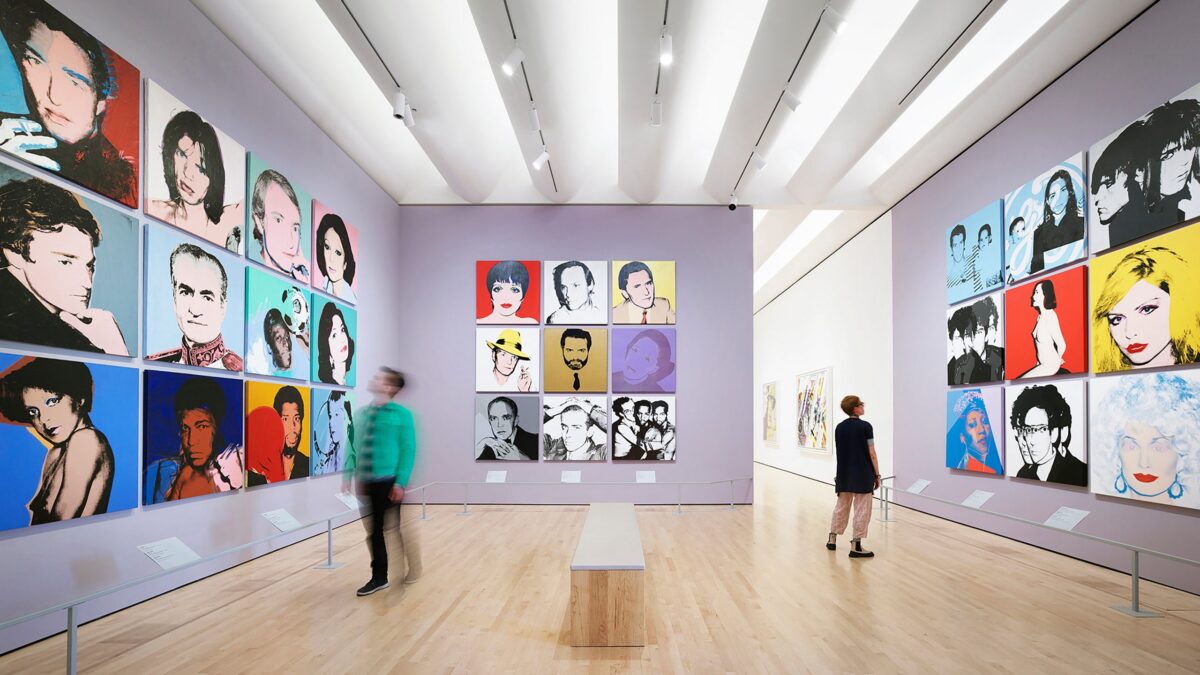
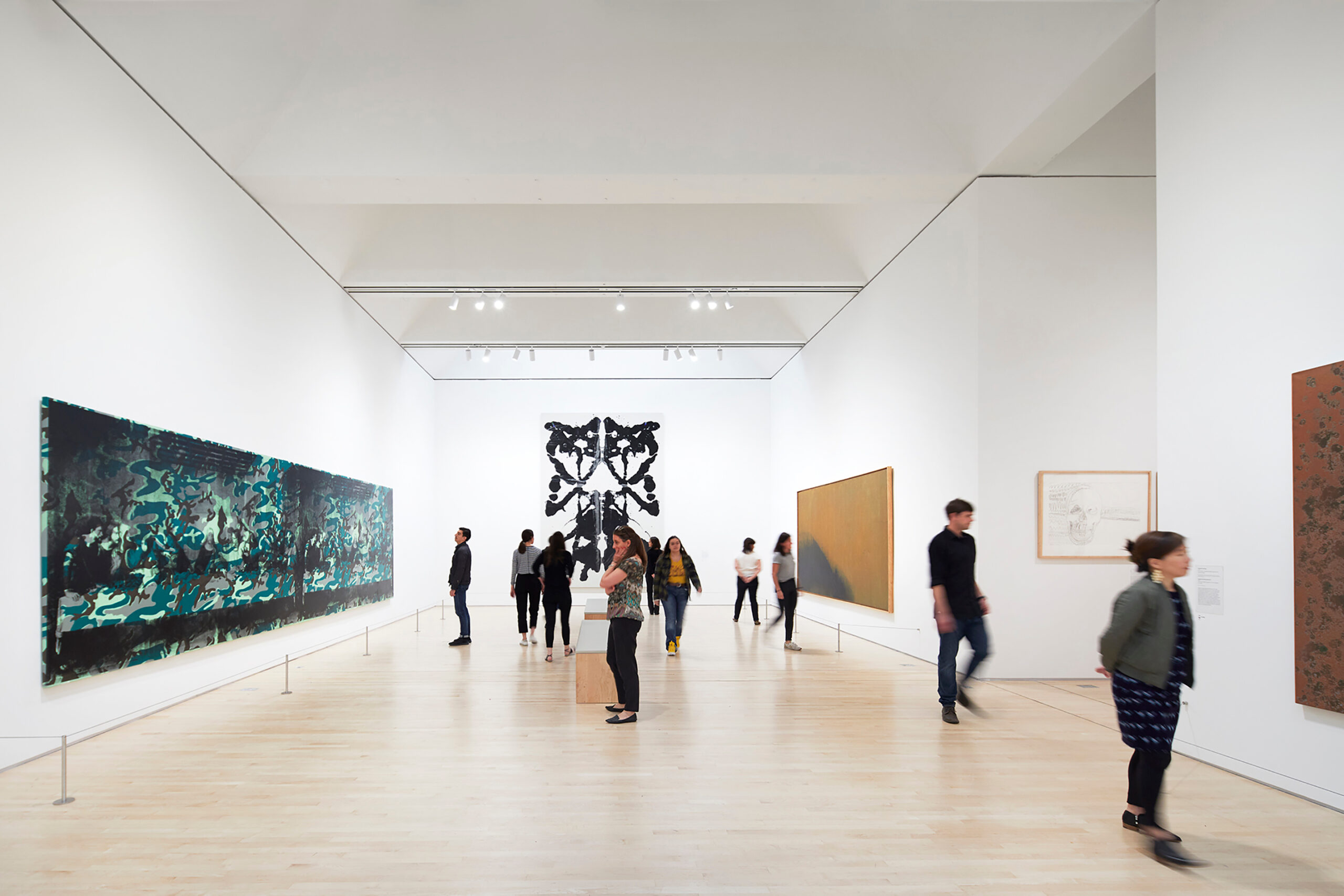
While the Vatican Museums failed to make good on their commitment, many other institutions explored Warhol’s divinity in great depth over the past year. While not the centerpoint of the installation, Warhol’s divine nature was explored in the Whitney Museum of American Art’s recent exhibit Andy Warhol—From A to B and Back Again, which included the artist’s * Last Supper (Camouflage)*. Following the success of the New York show, the San Francisco Museum of Modern Art elected to introduce it to a West Coast audience. Now through February 16, the Andy Warhol Museum is hosting Andy Warhol: Revelation, an exhibit that “examines the Pop artist’s complex Catholic faith in relation to his artistic production,” according to a press release.
Amid crosses and drawings of angels, as well as a series on Marilyn Monroe that the museum claims draws on religious iconographic traditions, Warhol’s Cum (1977–78), a kind of ochre take on Gumby, is made of “semen on cotton” and would make any number of saints squirm. It hangs beside a drawing of two heads and clasped hands, perhaps in prayer, and Ornate Cross and Foot (1950s), from a “personal erotic sketchbook.” Warhol’s Last Supper riffs on the famous painting by Leonardo da Vinci while adding shocking new pop art elements.
Like his art, Warhol’s relationship with religion was anything but traditional. The artist grew up attending a Catholic church in Pittsburgh, met popes (including John Paul II in 1980) and was buried under Catholic rites. But Warhol also lived as an openly gay man and once called himself “a deeply superficial person”—antithetical to a devoutly religious worldview. “As a queer man living in a world of sex and drugs, Warhol did not live according to the doctrine of the Church, and this kept him from fully immersing himself in the faith,” one label at the Pittsburg show argues.
Warhol’s nuanced relationship with religion was aptly captured in 1975 when he discussed his faith with his friend and muse Lee Radziwill, sister of Jacqueline Kennedy Onassis, for Interview magazine. In their conversation, Lee turned the tables on Warhol and asked him if he had gone to church that day. “Yes, but I only stayed a minute,” he responded. Asked if he takes Communion, Warhol said, “Well—I never feel I do anything bad. But I do take Communion sometimes.” And when Radziwill wondered if he abstained from anything during Lent, Warhol’s business manager Fred Hughes volunteered, “He gives up things for his figure.”
Erotic art has always been more or less present within the precincts of sacred art, intentionally or otherwise.
So what does it mean that the Vatican almost awarded Warhol, an openly queer and overtly sexually expressive artist, a stamp of kosher certification? Does it suggest an aesthetic open-mindedness that ought to afford the church a fresh look by its critics, or is there more propaganda than sexual and political progressivism here?
One historical precedent is the artist Giovanni Antonio Bazzi (1477–1549), known as Il Sodoma, or “the Sodomite.” The nickname was apparently meant to mock Bazzi’s homosexuality, but he embraced the epithet. Bazzi’s reputation never got in the way of his abundant religious commissions, many of which remain in churches today. If the Catholic Church had no problem commissioning, in the 15th and 16th centuries, an openly gay artist known as the Sodomite, perhaps its later embrace of Warhol isn’t as suprising as one might think.
But Townsend isn’t ready to hand out any awards for tolerance here. The Catholic Church has never purposely welcomed gay artists, in line with its “repressive theological and ideological policies,” he says. “Michelangelo working in the very heart of the papacy—painting in the pope’s chapels—is proof positive of this cognitive dissonance, though, since the sculptor-painter didn’t hide his inclinations. Nor did Leonardo.”
When considering the works of Michelangelo and others, says Laqueur, modern viewers need to remember that these artists worked at a time in Europe when there was no real divide between the religious and the secular. There would also have been no discussion of homoeroticism, because it wasn’t a subject of discussion to begin with. (References to “special friends,” however, come up quite often in the writings of medieval monks.)
The political climate has changed significantly since the Middle Ages, though. And ultimately a lot of the changes have to do with how society thinks, and talks, about sex. “What the church, and other conservatives, ended up rebelling against is what all this stuff means today, which is basically saying, ‘Sex is not something ordained by God to maintain the species’” Laqueur says.
Today, sex isn’t about reproduction. “It’s about being friendly. It’s about a neo-liberal creation of yourself. You can be any kind of self you want. It’s actually a real threat to a kind of world order,” he said. “You may or may not approve of the threat, but the fact that it’s a threat is beyond question.”
By almost hitching its aesthetic wagon to Warhol, the Vatican is making a political move, Laqueur believes. “They’re saying, ‘Okay, we can handle this. We can incorporate the Warhol story into our world.’ They’re essentially trying to align themselves more with the modern world.”