Your bag is empty.
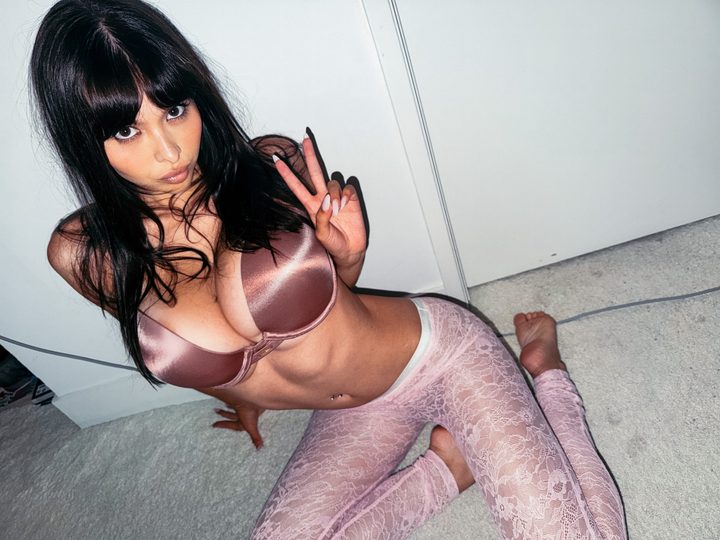
Now sober, the Jackass star recounts coming back from the brink with the help of psychedelics and inventing new tricks at age 47.

Bam Margera is back on top of the world. The Jackass and Viva La Bam icon experienced the kind of meteoric rise and spectacular crash that few people on the planet can relate to, plummeting from superstardom and vast wealth at the peak of his career in the late 2000s into a decade-plus downward spiral of legal battles and burned bridges precipitated by his addiction to drugs and alcohol.
Today, with his wife Danii Marie’s encouragement, Bam has managed to overcome his addiction issues and recapture the attention of his fanbase. He has new brand partnerships. appears in the latest edition of the Tony Hawk Pro Skater video game franchise, and just released a line of skate shoes with Fallen Footwear.
We caught up with Bam in between his speaking tour stops to learn about what the second act of the superstar’s life looks like.
One day I looked out at the driveway at my castle and I’m looking at a red Ferrari, a purple Lamborghini Gallardo, a blue Lamborghini Murcielago, a black Audi R8, a murdered-out Hummer, a Bentley Bentayga, a Bentley Continental, 1928 Mercedes, a fucking DeLorean and a silver Porsche Panamera. I just looked at all these cars while sipping on a beer, and I said, “You know what? I ran out of fucking goals.”
When my show Viva La Bam just ended, I was 33 years old and just decided I was going to party all the time. I got carried away for like 10 years or longer to the point where alcohol became such a fucking problem that I went to literally 13 treatment centers back to back, at 90 days apiece.
I thought I was going to just die from drugs and alcohol, honestly.
When we first met, I saw a lot of pictures of her doing runway, but she was really focused on me getting off drugs and alcohol and stretching my legs back to being able to skate again.
After us being together for two years, she’s like, “All right, I’m going to pick back up my modeling thing.” And boy, she sure did.
She just got flown to Aberdeen, Scotland, to stay with 10 other models in a castle and while there she was selected to be on the cover of FHM New Zealand magazine, and now we’re flying all over the place together for different events.
On September 28th, 2024, my actual birthday two years ago, I stopped drinking and alcohol hasn’t touched my lips since. Today I have all my skateboard sponsors back, Tony Hawk put me back in the video game, I’ve got a new skate shoe out and I’m doing meaningful artistic collaborations like the recent Phoenix Rising blotter art collaboration with music industry executive Edward Crowe.
So I feel like a Phoenix rising from the ashes—from the death and hell of where I put myself.
I created my own language. It was originally called “Laskian Striggoi,” which means “Fat Vampire” in Romanian, but now I just shortened it to Striggoi because it’s easier to remember.
I just like creating all these symbols. The blotter art is loaded with symbols that are all personally significant to both Edward and me. He’s like my creative soulmate. I came up with a new symbol that’s like a cardiogram, but it’s two snakes that meet in the middle. So this is my new logo that I’m going to be sticking with for a long, long time.
I have to be in a very controlled environment and with a shaman for guidance; it’s not like you go out to a club and start tripping balls. It’s the exact opposite of that, and it really mentally helps you.
In a nutshell, what it does for me is break down every negative thought; you really go through a mental war with yourself for about 10 hours, and then the ceremony is finally over. Everything just comes together in such a way of love that you just become a fucking better person, 100%. That’s been my experience.
I would say it’s never too late, and never lose hope. Because I did—to the fullest. I lost all hope. I thought I would be a lifer. I thought I was never going to stop. But even I managed to clean up.
You have to replace drinking with something way more positive, such as going to the gym or skateboarding or walking dogs or doing art, whatever it is. My passion is skateboarding and art, and I love my dogs. Now I’m up at six in the morning. I’m just ready to rock today. I’m excited to be in a new town, finding a new skate spot and doing new things all the time.
I think I don’t even have to say it anymore. They know. Every time I see somebody now, they just say, “Congratulations on your sobriety. You’re really killing it. It’s very inspiring to watch.”
Right now, it’s not a good idea for me to be on a tour bus or touring just because that life is really hard. But I worked on an album with a band from Puerto Rico called Amore Ad Lunam. It’s gothic rock, believe it or not, from Puerto Rico. The album is finally done, and it’s something that I can say that I did. It’s a timeless record that I will forever love.
I’m always looking for new bands and I like older music, new music, all kinds of music. A lot of people are stuck in their ways and only want to hear the same stuff over and over. I want to hear everything. All kinds of things. I want to shout out the new Yelawolf album, 45, that’s dropping soon.
Sometimes I don’t know how big Jackass is, or maybe the Tony Hawk video game, or just Bam in general. But when you go to a faraway place and they know that you’re probably not going to be there again ever or any time soon, it becomes a really, really big deal.
I was in Costa Rica recently for an appearance where we put out a couple flyers and, oh boy, the whole fucking town knew about it. It was chaotic. It was supposed to be a two-hour autograph signing followed by a two-hour demo. The autograph signing wound up being five hours, never-ending, and it got so chaotic that the police had to escort us out.
Right now I really just want to focus on skateboarding and getting all my tricks back and learning new ones at the age of 47, which I have slowly been doing. But recently Shane Gillis hit me up and said he had the Guinness Book of World Records for the most comedy tickets ever sold, with 76,000 [for one show]. He wanted me to come and introduce him [there].
The first time he ever did any kind of act was at my club I owned, The Note, in Westchester, Pennsylvania. We used to prank and crack jokes and laugh our asses off. I never put two and two together that Shane was actually the guy from my town until much later.
The same thing goes with the singer Pink. I went to the MTV video music awards Awards in the early 2000’s to present an award to Eminem, and she just comes walking up to me and she goes, “You know who I am?” And I’m just like, “Oh yeah, you’re the singer, Pink.”
She’s like, “Alecia, with the green hair. We used to skate together in Doylestown when we were fucking 12 years old.” I was like, “Shut the fuck up. That’s you?” So then I went to her house in Venice, California and skated her mini ramp, and we just became friends again. Weird shit like this, man. You can’t write it.
My wife is a stretch coach and she stretches me an hour a day. My legs are back to feeling like I’m 20 years old again, and I’m skating more than ever.
As long as I’m out at the park and I’m doing any kind of trick, I post it on Instagram. I show people that I’m skating, and all they really want to do is see me skate, whether it’s hard, easy, gnarly or whatever. I’m out at the skate park now instead of being at an Irish pub getting fucked up all day.
In Costa Rica with the Plan B skateboarding team guys, I randomly did this trick, which is basically a Fakie 50-50 Bigspin. So I call it the Jaco Shuffle because I learned it in Jaco, Costa Rica.
There’s another one that I just learned in Charleston, South Carolina. It’s a 50-50 to Fakie rock to frontside Willie grind, which I now call the Charleston Shuffle because it’s quicker and easier to say.
When we were filming with MTV, we had a crew of 40—the dolly guy, the key grip, the producer, the boom mic, you name it. For Viva La Bam We had $300,000 a week for 65 weeks to spend on flights, blowing shit up, fixing it, etc.
If you have a film camera or something big and you see a fight break out or something, you’ve got to get it out of your suitcase, unzip it, put the battery in, turn it on. By then the fucking fight’s over.
With the phone, you just flick it right on and hit record, and you capture so much gold that way. That’s why I like just having an iPhone in my pocket. I’ve captured so much spur-of-the-moment awesome gold that way.
I sold a million copies of CKY through word of mouth at the age of 16. It was the internet before the internet. We didn’t have YouTube back then.
So everything you see on the internet now of me doing crazy shit like being pushed off the roof in a shopping cart and so on and so forth, that was all from CKY, which is eventually what led to the making of Jackass. We started it.
When I’m trying to skate a trick, I commit so hard to landing this thing because I know that film is rolling and it’s expensive to shoot with. Now with digital you can have like four hours to land a trick. So with the sound of the film, it makes me land things way, way quicker.
Yeah. I’ve actually got 13 terabytes of footage of everything I’ve ever done, whether it’s a skate trick or a Jimmy Fallon interview or whatever, all on one hard drive. I said, I’ll save this for one day when maybe Netflix wants it. And I actually talked to them recently, and they do want it.
“Unearned wisdom is poison.”