
Your bag is empty.

In the heart of a region that faces aggression from all sides, a night out can be death-defying. Here’s how a handful of locals do it—from rooftop bars to the underground drag scene
In Erbil, the capital of Iraq’s semiautonomous Kurdish region, even locals admit that the summer heat is a kind you never really get used to. People go out only if they have to for work, sweating as the sun beats down through a pale blue sky. On the hottest days the breeze feels like a hair dryer blowing in your face.
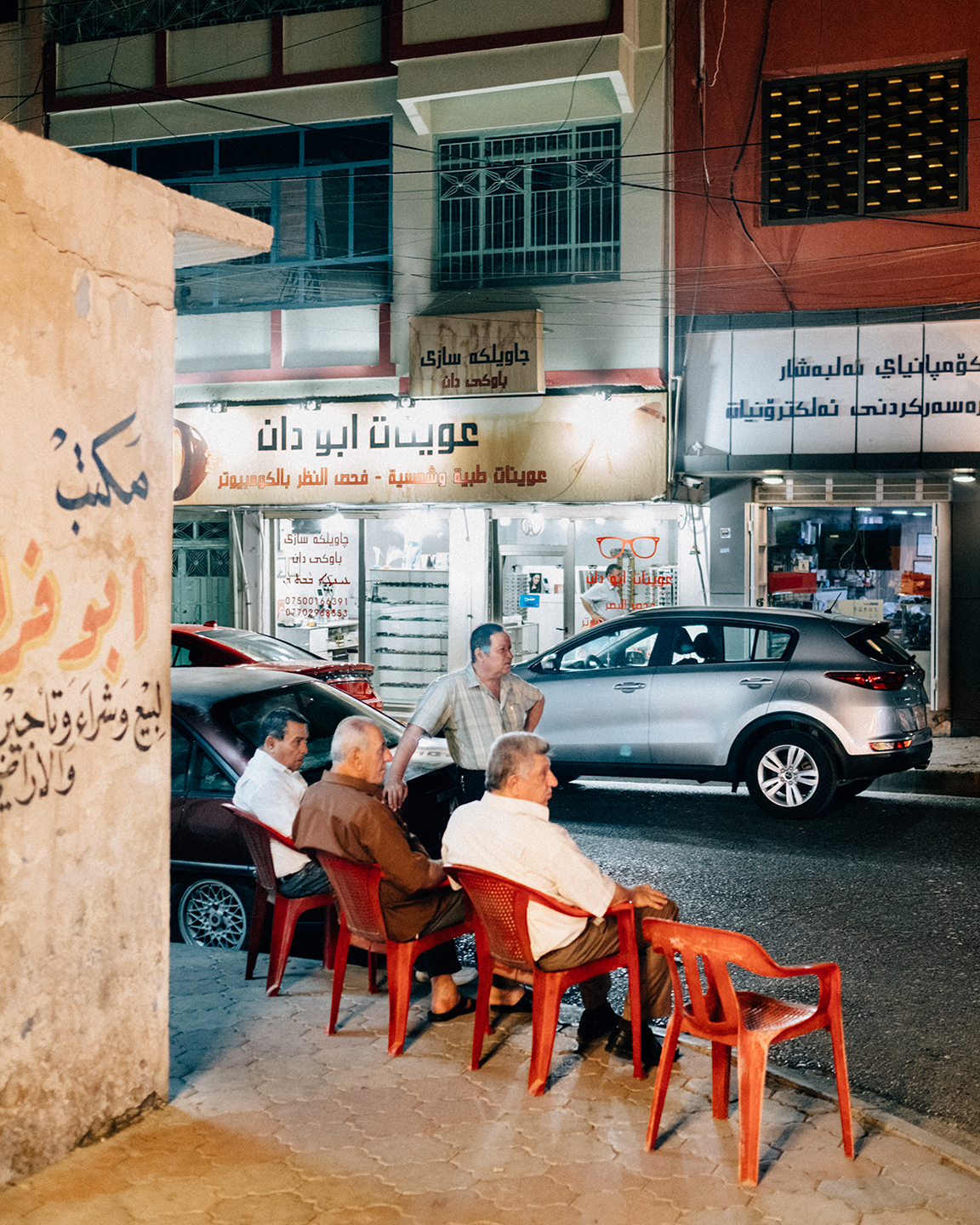
But as the sun begins to set, the city comes to life. Families and children make their way out into the streets and the parks. Old men break out cards and dice, tea sets and shisha (water pipes better known to Westerners as hookahs). Kebab and fruit stands appear on the sidewalks and in the streets.
As the darkness spreads, young people congregate. From street corners you can catch glimpses of young women applying their makeup. Soon enough, the streets get louder and more kinetic. Despite being situated in a deeply conservative—and sometimes volatile—region, this city of roughly 880,000 is known for its bars and nightclubs.
At White Erbil, a rooftop bar above a hotel overlooking the city, a DJ cranks M.O.P.’s “Ante Up” as patrons lounge around a pool. To enter, you first have to get past an armed security detail of men in black military-style uniforms adorned with Kurdish flags. On the roof, local club goers and Western aid workers down beers and cocktails as the pool glows and soft lights illuminate the space.
One of the Westerners is an Iraqi American woman who grew up in northern California after Saddam Hussein’s regime cracked down on southern Shia communities and turned her family into refugees. She returned to Iraq a year ago to work with Iraqis and Syrians displaced by the most recent waves of conflict. Dressed in a traditional Arab dress and drinking a gin and tonic, she’s debating whether a speakeasy could be successful in Erbil. Kurds and Arabs wouldn’t embrace a small, quiet nightlife space, she says, though she concedes that marketing it as an exclusive venue might draw interest. “Iraqis do love the VIP thing,” she says.
Then the lights go out and the music stops. Erbil’s power grid is a ramshackle patchwork of generators that frequently fail, especially during the summer. But after a quick laugh, patrons go on chatting and drinking as though nothing has happened.
“Welcome to Kurdistan,” a fellow patron says with a chuckle.
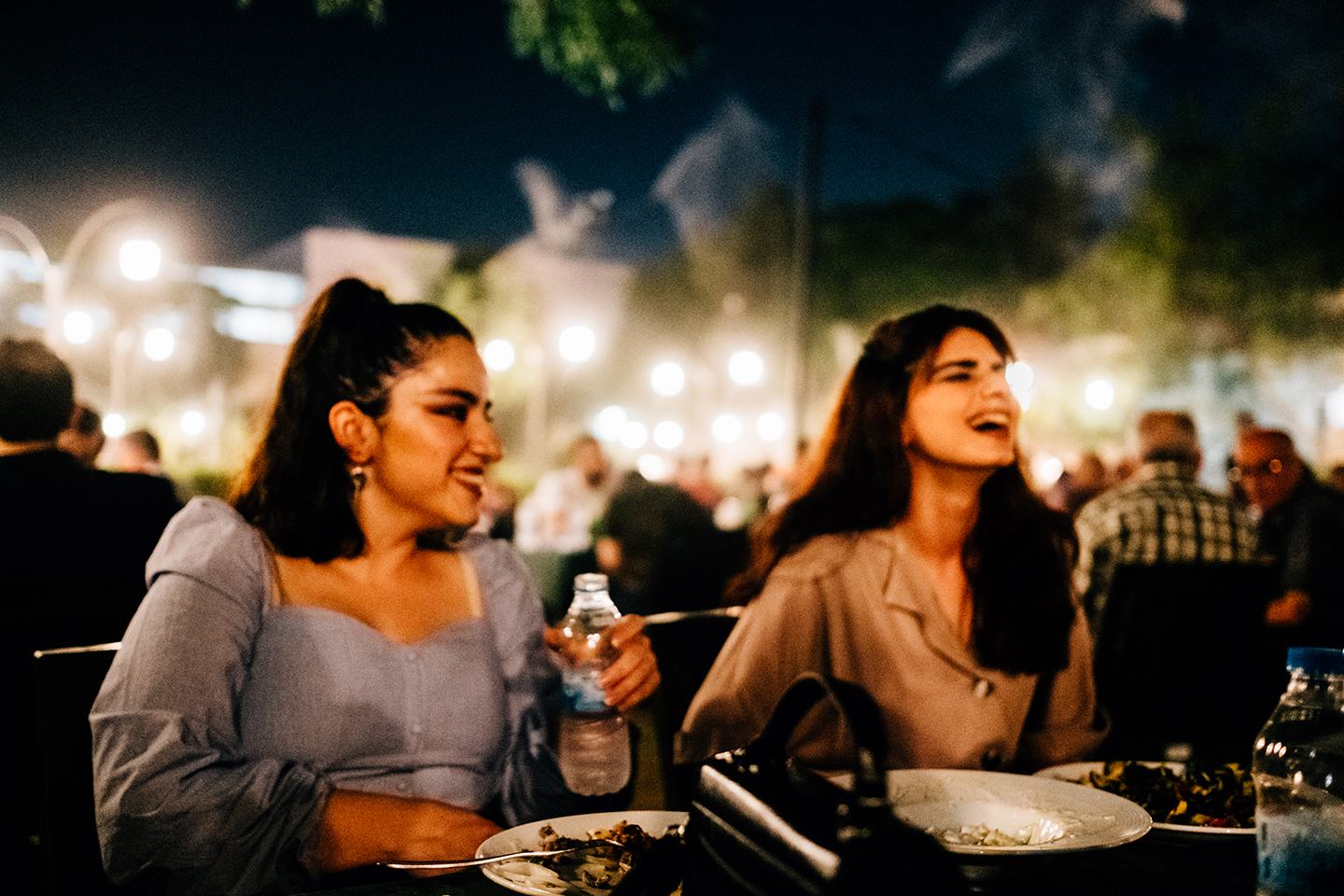
Iraqi Kurdistan is surrounded by countries and groups that oppose its autonomy and occasionally bomb its population. Its people have survived displacement and genocide. That gives every moment special meaning as they pursue life’s pleasures—both the simple and the forbidden.
When Western powers carved up borders in the modern Middle East after World War I, the Kurds were not a priority. Today as many as 45 million Kurdish people are spread across Iraq, Syria, Turkey, Iran and the sizable diaspora that exists in the West. They’re widely considered the world’s largest cultural and linguistic group without a country of its own.
A mountain people, the Kurds are mostly Sunni Muslims. With borders dividing them and few friends, they’ve faced repression from regional governments for generations. Their homeland’s topography has given them refuge from the armies that at various times have tried to kill or subjugate them—hence the Kurdish saying “No friends but the mountains.”
From the south, Saddam Hussein subjected the Kurds to genocidal campaigns that included what has been described as history’s largest chemical-weapons attack against a civilian population. Iraq’s Kurds have also fought among themselves: The brutal Kurdish civil war of the 1990s pitted the Kurdistan Democratic Party against the Patriotic Union of Kurdistan, the two dominant parties in the Kurdish government today. But the establishment of an American-led military-enforced safe zone, increasing foreign investment and a booming oil industry all came together to allow Iraqi Kurdish cities to grow and prosper, resulting in a stability that has eluded other areas in the region.
This haven for its namesake population is surprisingly diverse: Kurds make up a firm majority in Kurdistan, but it’s also home to long-established communities of Arabs, Chaldean and Assyrian Christians, Turkmens and Yazidis—and more recently a hodgepodge of immigrant workers and expats.
Of the Kurdish cities that have flourished since the first Gulf War, perhaps none has grown as much as Erbil. It comprises several neighborhoods that serve as rough nerve centers for various groups—notably the Christian enclave of Ankawa—but the borders are fuzzy, and communities tend to intermingle and spread out. Iranians regularly cross the border for work and leisure, taking advantage of laws that allow them to drink and dress much less conservatively than at home.
Even four years ago, you just didn’t see women going out and smoking shisha like now—forget about drinking.
In coffee shops and cafés, people sip tea and smoke shisha. Live music colors the evening air, a mix of traditional fare and more Westernized offerings that regularly overlap in beguiling ways. There are salsa nights, a jazz club, burgeoning rooftop bars and lots of outdoor patios designed for the hot summer nights. There are also fancy restaurants that cater to wining-and-dining businessmen, diplomats and Western aid workers charging the bills to their organizations’ expense accounts.
“It can get crazy,” says Viyan, a young Kurdish woman with long curly hair and pale green eyes. She’s wearing a low-cut floral sundress and sipping a Mexican beer at Dusk, a crowded rooftop bar aglow with moody orange lighting. Local art decorates the walls, along with more international influences and pop art. At one table a woman in a pink hijab—the only person in the room wearing one—sits smoking shisha at a table shared by much less modestly dressed patrons drinking booze.
Erbil’s bar scene is diverse, but the number of alcohol-serving establishments is limited. That means each venue can draw large crowds. Drinks can be expensive and lines can be long. Viyan explains that young locals often drink before heading out to a bar—or even on the way. “Sometimes we mix cocktails in the back of the car while we’re driving to the bar,” she says.
The Middle East is both less and more puritanical than many Westerners understand. The cultural and historical dynamics are rife with nuance: When the United States government officially put alcohol prohibition into effect in the 1920s, some Iraqi newspapers ran editorials expressing bafflement and condemnation of Americans’ embrace of a policy that denied their fellow countrymen the long-accepted delights of spirits.
Although conservative movements have since become much more entrenched and powerful in the country, when the Iraqi parliament attempted to pass an alcohol ban in 2016, Iraqis forcefully opposed it. “If they had banned alcohol, everyone would have started doing drugs,” one Iraqi Christian woman living in Erbil says—though she concedes that there’s already a fair amount of drug use in Kurdistan. She says party drugs like ecstasy and cocaine aren’t hard to get, but hashish is by far the most popular, even if no one admits it: “Everyone I know smokes hashish.”
Still, Kurdistan remains a land very much steeped in tradition. At its best, honor motivates people to remain honest and fair in business transactions and in personal relationships so as not to bring shame upon family, tribe or community. At its worst, honor can be used to justify violence and repression. “Immoral” behavior such as sex outside marriage or even dating without the approval of one’s family can result in steep punishments—including “honor killings” of those deemed to have insulted the family or tribe.
Needless to say, the region’s LGBTQ community is distinctly challenged by local tradition.
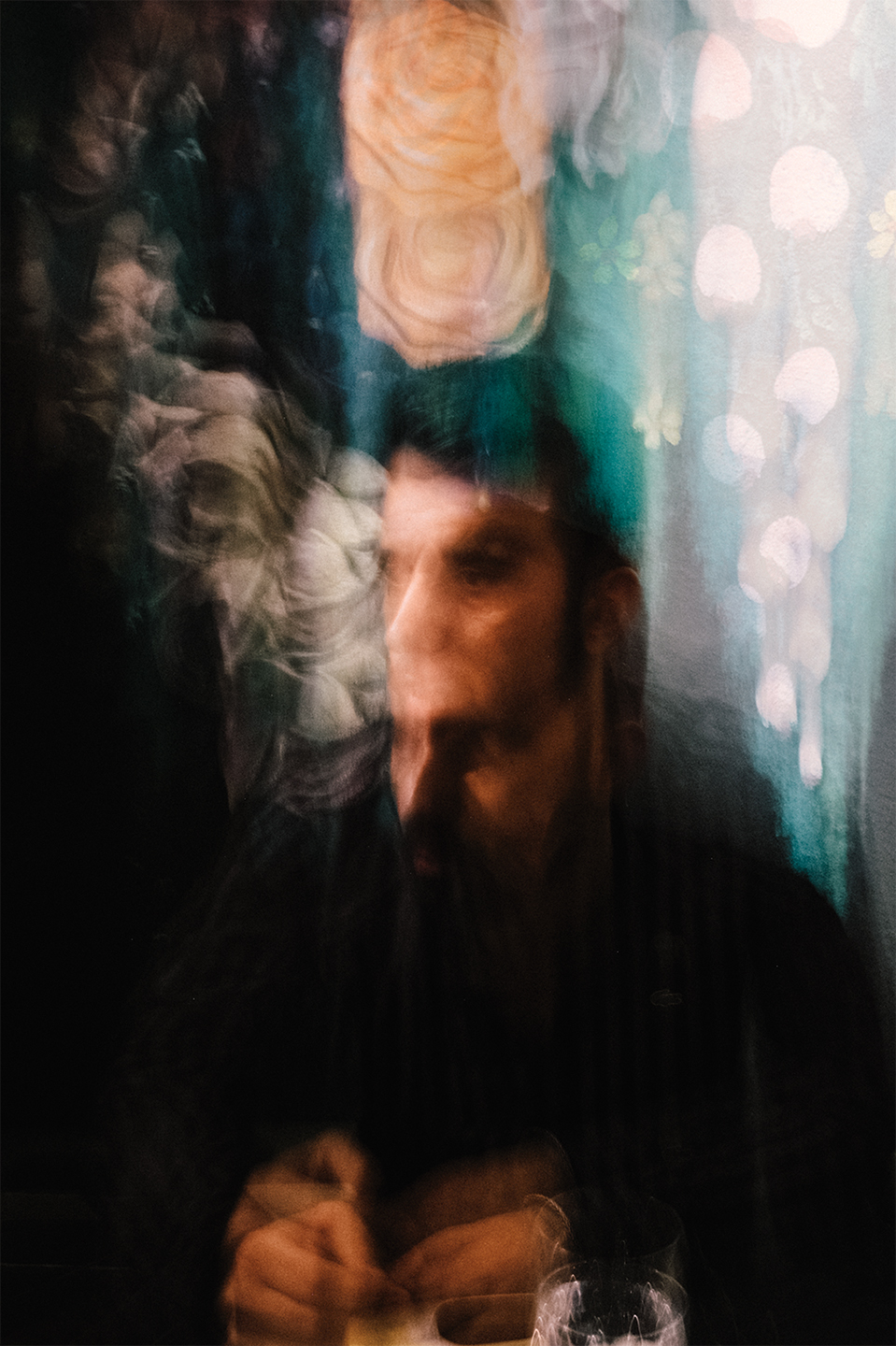
“In my tribe, everything is dishonorable,” says Dante, a Kurdish college student and budding fashion designer who comes from a deeply religious and particularly traditional tribe. We meet at a café beneath Erbil’s upscale Park View apartments. Dante wears a bandanna and a colorful patterned shirt unbuttoned to show off a silver pendant. He explains it was difficult for him when he reached his sexual awakening and realized he was gay. “There were definitely points when I resented myself for it, but I came to realize there was nothing wrong about it,” he says. “I wasn’t hurting anyone.”
Dante grew up in Duhok, a city bordered by Kurdistan’s idyllic mountains and close to hiking trails that attract tourists from all across Iraq. “It’s a very conservative place,” he says of his hometown. “The infrastructure there has gotten more modern, but the ideology hasn’t changed much. People there fear change.” He longed to go to Erbil, but when he arrived for college he was at first overwhelmed by the city’s diversity.
That changed once he found his community. Today Dante is involved in the drag scene and, increasingly, LGBTQ organizing efforts. Although he’s aware that there are people in Erbil who disapprove of homosexuality, he says they don’t care enough to cause problems for the gay population. “People just don’t mind you here,” he explains. “They’re focused on their own lives.”
Dante has been designing clothes for a year and a half, fueled by a quiet but potent ambition: “I kind of want to break barriers here in Kurdistan.” He says his family has yet to accept his passion for fashion design—let alone his sexuality. He’s out to his friends but still absolutely not out to his family. He lives a double life, switching between Erbil and Duhok modes. “It really splits you in half,” he says.
Kurdish women face their own challenges, especially those who live public lives. On September 27, 2018, a group of unknown gunmen killed Iraqi Arab model and social-media star Tara Fares as she drove her convertible in Baghdad. Fares, who split her time between Erbil and Baghdad, was one of Iraq’s most popular internet personalities; she was deeply controversial for speaking openly about her divorce after an arranged teenage marriage and for displaying a fashion sense that her critics deemed sinful. Although her lifestyle brought her condemnation, several Iraqi women living in Erbil tell Playboy it was likely Fares’s increasingly outspoken criticism of conservative religious clerics that led to her death.
Fares’s was the most high profile of several murders of female celebrities and activists in Iraq last year—along with countless nonfatal attacks. Not long after Fares’s death, Kurdish model Jehan Hashim announced that she feared for her safety and was leaving Kurdistan, telling her followers on Instagram, “I love my country and I hope to see change when I get back, good-bye Erbil.”
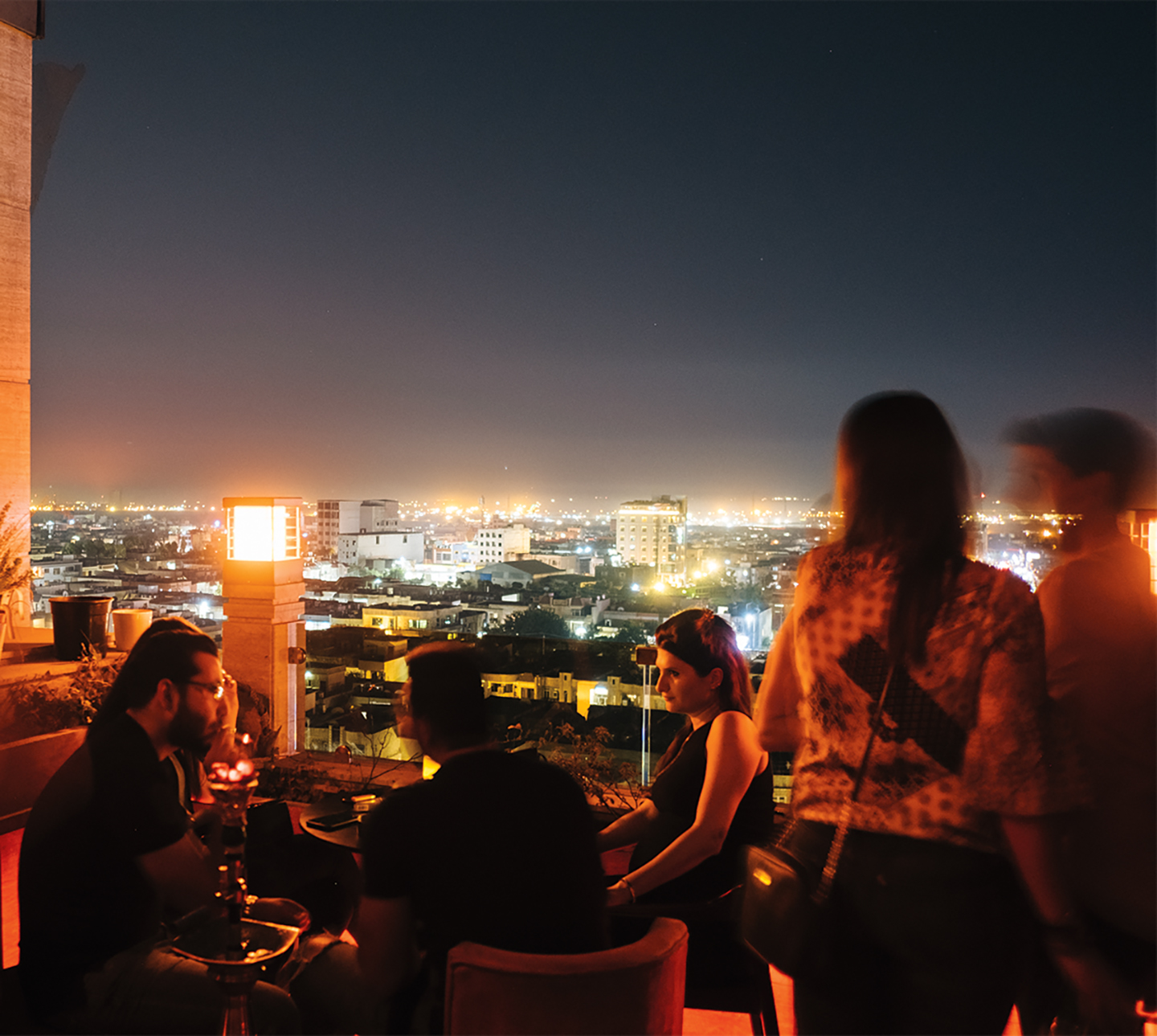
That sort of danger means Erbil’s bars and clubs tend to be very male spaces. Yet despite the social and physical risks, young women haven’t stopped challenging tradition and pushing boundaries. Viyan says that in a way she has taken advantage of—and even sort of enjoys—the lopsided gender representation in the city’s nightlife. “To be honest, I like looking at men, and I like having them look at me,” she says with a mischievous grin. It allows her to stand out in the crowd as a woman who dares to assert control over her sexuality.
Viyan explains that the women who venture into nightlife spaces have typically been Westerners working for international NGOs, local Chaldeans and Assyrians or particularly adventurous women from Iran. But, she adds, that’s changing fast. “There are a lot more girls out here than there used to be, especially Kurdish ones,” she says.
Others have noticed a shift too.
“Even four years ago, you just didn’t see woman going out and smoking shisha like now—forget about drinking. And the skirts are getting shorter,” says one young Chaldean man visiting home from studying in the West. He adds that young men and women of all groups seem to be getting bolder in their pursuit of pleasure: “Coming back to visit, it almost seems like a different country. Kurdistan has changed.”
You have a mix of mercenaries and people who have survived the most extraordinary hardships. They’ve found a common culture here.
American troops and contractors occasionally make their way out to bars and clubs, much to the chagrin of American officials presumably fearing unwanted attention. Last New Year’s Eve, two U.S. marines and one Navy corpsman reportedly brawled with a Green Beret turned contractor outside an Erbil bar and are now being investigated in his death.
“To me, this bar is on Tatooine,” says Matt, a scruffy American tech contractor who wears his silver hair tied in a pony-tail. We talk as he pounds a drink at Ankawa’s T-Bar, a rowdy sports pub. Most of the servers are young Filipina women (workers with roots in the Philippines, Bangladesh and other nations to the East are common here) and the crowd is a mix of locals, Western aid workers and contractors. An American flag hangs in the far corner. Matt came to Iraq eight years ago on a contract in the southern city of Basra and eventually moved north to Kurdistan. He has since traveled the region extensively and has an Iranian girlfriend.
Kurdistan’s cultural complexities—and long-standing tensions—are never far from the surface in Erbil’s bars and clubs. Most of the venues have armed security details, occasionally manned by battle-hardened ex-militiamen who have fought against the Iraqi army, ISIS and others. Some have a reputation for harassing or denying entry to members of other ethnic and religious groups. Erbil isn’t a war zone, but it is surrounded by war. There’s hardly a single person living here whose life hasn’t been touched by violence in some way.
When ISIS invaded Mosul in 2014, the Kurdish region was flooded with displaced people, adding to the already large number of refugees who had come from Syria. ISIS forces also invaded several Kurdish towns—coming close to Erbil itself—and waged genocidal campaigns against Yazidis and Christians. In 2017 the Kurdish government held a referendum on declaring independence from Iraq, leading to a brief military conflict between the Peshmerga (the region’s de facto military) and the Iraqi army that resulted in casualties on both sides. Some Arab residents of Erbil reported facing harassment and even assaults from friends and neighbors during these conflicts, as well as lingering resentment long after.
And yet Erbil enjoys relative stability, which, combined with its proximity to combat zones, makes it an ideal place for foreign militaries to set up shop—and their presence is evident. The Kurdish government in Erbil is considered a key American ally, and the Peshmerga have received arms and training from the U.S. military since the 2003 invasion of Iraq. The roar of coalition helicopters flying overhead is almost background noise, and military contractors coming and going are a common sight at Erbil International Airport.
“It’s a strange place where you have a mix of mercenaries and people who have survived the most extraordinary hardships,” says Matt. “They’ve found a common culture here, and what they have in common is that they feel comfortable at the edge of the world.”
Kurdistan is in a constant state of change as its internal cultures and neighboring nations clash. Western politicians, academics and pundits have projected their own hopes, fears and values onto the region. But the people who call it home have to struggle to figure out what these changes mean for themselves and the people they care about—and how they’ll go about their own lives and write their own stories.
“I know this double life will end someday,” Dante says. He explains that he won’t be able to hide his sexual orientation from his family forever—nor does he want to. And when the day comes, his family will have to either accept him or not. He says he’s prepared to live his life without them if that’s what it takes. But in a society that values family ties and honor and has yet to truly accept people like him, that could be a challenge.
In February a Kurdish LGBTQ activist tweeted at Kurdish deputy prime minister Qubad Talabani, challenging him on his beliefs about whether queer people in Kurdistan deserve equal rights and asking what, if anything, he had done to support them. “I believe all citizens, regardless of race, religion, gender (and or gender preference), ethnic identity and sexual preference deserve equal rights, all over the world, and especially in Kurdistan,” Talabani responded. His tweet sent a stir across the region.
Dante says he knows politicians’s words can be flowery and their promises fickle, and he’s not so naive as to think anything is guaranteed. But the fact that anyone in a position of authority anywhere in the Middle East would make such a statement, openly and publicly, matters to him. Dante’s response echoes the stirrings of countless denizens of this beautiful and complicated city:
“He gave me hope that this place can change.”
Editor’s note: Names have been changed for the sake of anonymity and safety.