Your bag is empty.
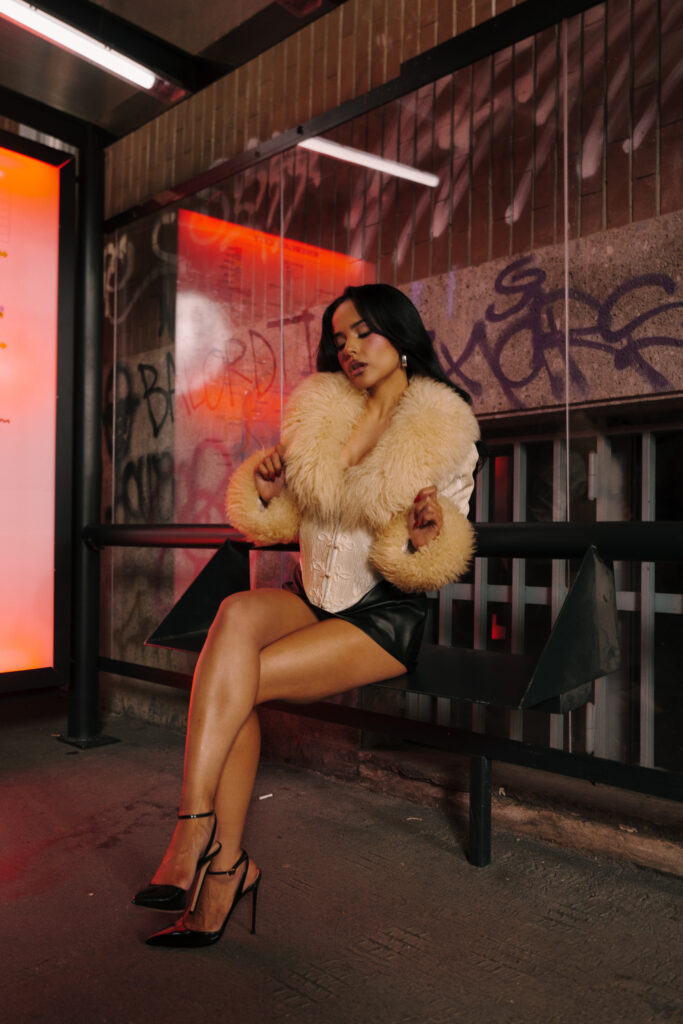
She’s got a new dance club-friendly album, megatour tour with Karol G, and another movie (starring the “Avengers of Latino actors”) in the works. But Becky G is more aware than ever of where she came from.

When Mexican-American superstar Becky G teamed with Bad Bunny on the 2019 song “Mayores,” she helped flip the script on reggaeton machismo. On that year’s “Sin Pijama,” featuring Natti Natasha, she managed to infuse a seductive track with girl-power energy.
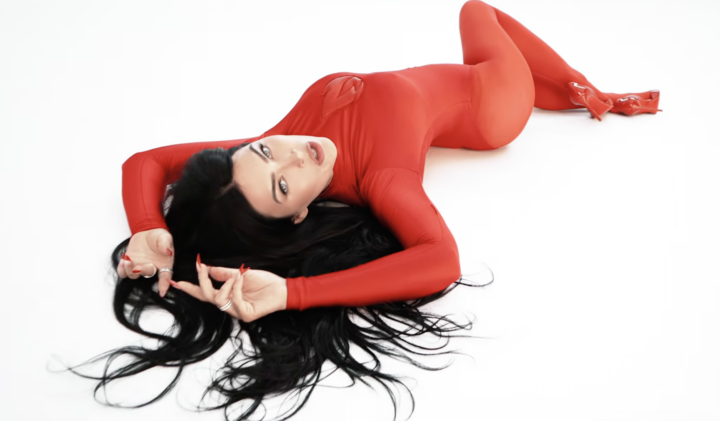
Becky G has since blended reggaeton with mariachi music in the breakup banger “Mamiii” with Karol G and explored her Mexican heritage in two deeply personal albums. Now 29, she is stepping into the club for her sexiest album yet, Baraja Bendita, which mixes house music with Latin rhythms and even takes her back to her rap roots. She’s also opening on Karol G’s current tour and recently dropped a collaboration with Selena Gomez and Benny Blanco.
I think that’s very accurate. I would love to say I remember who the fuck I am. I’m so happy and excited about this album and I think you can tell I just had so much fun making it, and I feel like that’s why I have so much fun listening to it.
I enjoyed every second of it because I feel like with the last two albums [Esquinas and Encuentros], I had the opportunity to do some really deep necessary reflecting and healing and that I was able to embrace and make peace with parts of myself. It left so much more room for discovery. A result of that was then exploring new sounds and, like, disruptive production for certain songs. By the end of the album, you’re definitely like, “Oh my God, where are we going out tonight?”
It means everything to me. I really wouldn’t be where I am today if it weren’t for the LGBTQ+ community. I think nothing would be where it is today without them. They’re at the core and the spirit of dance music and soul music. I feel they definitely inspired a lot of the sounds I explored and they are a huge source of inspiration for this album.
Obviously, the literal translation is the blessed deck of cards, but for me it was less literal, and more a fun way to name how blessed my journey has felt. I think that I have made the most out of every opportunity that I’ve been given, and I’m really proud of that. There’s that quote that says, “We can’t control the cards we were dealt but we can control how we play them.” This being my fifth studio album, to get to this place where I really can own all of my journey—it just feels so divinely guided from a bigger picture. It’s demystifying the idea of beginners’ luck and understanding that there’s nothing lucky about what’s earned.
I was showing people that the Becky G that they’ve known is very much real. It’s not to say that one is more me than the other. It’s that Rebbeca really needed Becky G as a young girl. I became the person that I needed most, and in a sense Becky G saved Rebbeca. Rebbeca can now show up in these spaces as a collaborator and show a more vulnerable and more sensual side and a softer side that I don’t feel I was able to really share or show as much as Becky G.
Why is it that she’s a lady in the streets and a freak in the sheets, but God forbid she talk about it, you know? It was always so intriguing to me why it was so complicated for the industry and for our community to fully embrace the idea of womanhood and and support it as well. Like, “I love Latina women,” but we don’t want them to express themselves in this way. We don’t want them to dress in this way and they can’t speak in this way.It wasn’t until I started growing up and actually having life experiences myself that I can now see it from such a personal place. I think that that’s the difference that people are hearing in this music. Now, I’m not just talking about women in general. This is me as a woman. This is what I’m experiencing.
I remember who the fuck I am.
It’s liberating. A part of me feels extremely liberated and really empowered. I think that some of our most vulnerable moments are the most imperfect moments. Those moments are actually the most beautiful ones because people then have an opportunity to go deeper.
It’s tough growing up on the internet. I don’t think you have to be a pop star to feel the pressures that come with that. It is a different journey when you’re living your life under a bit of a magnifying glass, but I don’t think I’d take any of it back. I’m really proud of every single version of myself I’ve needed to be up to this point and I hope to feel that way, you know, 20 years from now about the version that I am today. There’s always been a better me on the other side of all of it, so I’m really thankful for that.
It’s been so fun how excited everybody is that I’m coming back to my rap roots. I think maybe for a few years in my younger years, I kind of transitioned out of it not because I didn’t want to rap anymore, but, you know, the influence and industry pressures that maybe it wasn’t as marketable or easy to package. It was always a part of me and so I never denied that part of myself. It was just a tool in my toolkit that I didn’t get to use as often and as I have. Having grown up, I’ve realized who’s the real patrona, who’s the real boss of this project. I got to do what makes me happy and what makes me happy is making music that represents all those parts of me.
Thank you for reflecting on that. I’m going to take it back to the first single for this album, “Marathon.” Even though we shot that music video in Milan during Milan Fashion Week, it was to remind everybody that I can be “Becky from the Block” regardless of the block that I’m on, because we take where we’re from wherever we go. But then the next song is “Epa. That song for me really was like a battle cry, in a sense like there was such deep conversations that we were having as a team and a reality outside of the studio in the real world that did not look like the safety of the four walls that I was experiencing as a creative who can, you know, make music and express myself with no retaliation and no reservation. I felt like we needed to prioritize Latino joy. We really need to see that we’ve always been deserving of safe spaces. It feels like those are being taken away from us. Why can’t we just create something that will give us what it is that we need right now?
“Epa” was born from this place of pain and frustration for my community and it turned into celebration and joy. There’s this beautiful moment towards the end of the video when the ice finally breaks when we all just break out into dance and you can feel the genuine joy that everybody was experiencing. It was to really showcase that part of our resistance is our ability to celebrate. It is our ability to be the people who dance in the rain. Historically there is the resilience of our Black and brown communities and queer communities, people who have constantly been attacked to be able to have those safe spaces. It’s something to never take for granted.
I always talk about being a 200 percenter [100 percent Mexican and 100 percent American] and I think that being a 200 percenter goes so much further than just being Mexican-American and proud. It’s two flags and two languages and in this sense, it’s my art and my advocacy. I shouldn’t have to choose between one or the other, and so embracing both parts in the streets when it comes to actually doing boots on the ground work and collaborating with community leaders who are doing this important work day in and day out is something that I do personally. Rebbeca was able to bring that into this song and say, “Hey, we’re going to use the Becky G platform to elevate this and we’re going to do it in a badass pop star way, in some vintage designer shoes, and in a way that you know is empowering for our community.” It was a bit of a cathartic and emotional experience to create that moment with the video’s director Olivia [De Camps]. It really is about following your gut and following your heart.
I’m honored to get to be the third wheel to one of the chillest couples on the planet. They’re just so amazing. I’ve known Benny since I was like 15, when I first got signed and started working in the industry. He’s always been so kind and obviously incredibly talented.
Absolutely! Yes. I actually have these Bonbon shirts, and we have Mexicana Bonbon and 200 percenter Bonbon. I had made her a custom Chicana Bonbon t-shirt, so now we have matching ones. Being Chicana for me, it’s so nuanced in the same way that it is for all the Latin American 200 percenter experiences. This kind of one-size-fits-all mentality for Latinos cuts the rest of the world short of all the amazingness that we are and have always been. When we get to represent specifically Chicano culture and what it means to be Mexican-American and the differences between an L.A. Chicana versus a Tex-Mex Chicana, from the food to the music we grew up listening to, it’s all different but it’s also all the same. I think it’s pretty badass that you have two Chicanas doing a cumbia together.
Her fans are amazing and in all honesty, like it’s such a dream to get to go on the road with your friend and live your dreams together. Seeing her through Coachella and then getting to go on the road together, she’s so deserving of it all.
Our friendship is definitely not something that was a given. Through experiences growing up as women in this industry, it’s through those vulnerable conversations that you do become closer. Even if it’s just observing her through some of like the greater challenges of putting the Coachella show together and then actually presenting it to the world and then putting it on the road—all of those things are so inspiring to me. But more than anything, I think it’s just how giving of a person she is and how excited she is genuinely to share things with the people that she loves.
I think it’s so important because unfortunately there is a system right that was made without us in mind. It’s hard sometimes to not take it personally that there was only one seat at the table, and there’s this unspoken thing of if someone gets to it before you, you’re supposed to be angry. Instead, I’ve always seen it as, if someone got to something that I had always wanted to achieve, it’s only proving to me more that it’s possible. When we come together, when we collaborate, when we celebrate each other’s wins, when we see each other through hard times and show that support, that is what’s healing all of those generations of women that had to go through these things alone because that’s what we were taught.
It was so much fun to get back on set as an actress. Obviously, working on the album has been my main focus and getting to take a break from that role to then jump into the role of, you know, as an actress, it’s just like another source of inspiration as a storyteller. It’s such an amazing cast of people that I know we’re really excited to share it with the world very soon.
I feel like [Danny] pulled up the Avengers of Latino actors. Me and Danny go way back. I remember actually the day we shot the “Mercedes” music video was the day that he mentioned the project to me, so to see it come to fruition, makes me really proud.
I’ve been so present in my life, it’s kind of hard to to think about what is next. Tthe album getting released is just going to be me focusing on connecting with all my Beasters and seeing what their thoughts are and what their favorite songs are. Getting to perform them live on different stages, that’s going to be really fun.
Oh my God! I was doing the math. I started working when I was 9 and now I’m 29. I’ve been doing this for 20 years. That’s crazy. One of the greatest things that I’ve learned is that I don’t know enough. I think that younger me thought she knew it all and in reality, I feel younger than ever because I’m realizing that I still have so much to learn and that’s what’s been keeping my creative spirit so driven and so excited. One of my favorite quotes is “What’s not growing is dead.”