Your bag is empty.
The Mexican American band is transforming U.S. pop.
This story appears in our Fall 2026 issue featuring cover star Charli XCX, on newsstands September 28th. Want us to come to your place? Subscribe here to get it delivered to your door.
Fuerza Regida, the band that took regional Mexican music mainstream over the past year, is not the sound of the moment. At least, not according to Moisés López, a producer and tololoche (acoustic bass) player for the group. “We’re in 2032 right now,” López says. “Six years ahead of the game.”
In the last few years, Latin music has transformed American pop more than any other genre—except it’s not a single genre, but a profusion of different ones from different parts of the world. Regional Mexican itself is an umbrella name for the traditional and fusion folk sounds originating from Mexico that have bubbled under at backyard cookouts, local markets, and neighborhood parties in the U.S. for decades. Fuerza Regida, though, brought its corridos-heavy take on the music to stadiums and the Billboard 200 album chart with last year’s 111xpantia, which reached No. 2—not unlike when Bad Bunny first brought Latin trap to the U.S. masses in 2018. This fall, Fuerza Regida will release new music, taking regional Mexican to even greater heights.
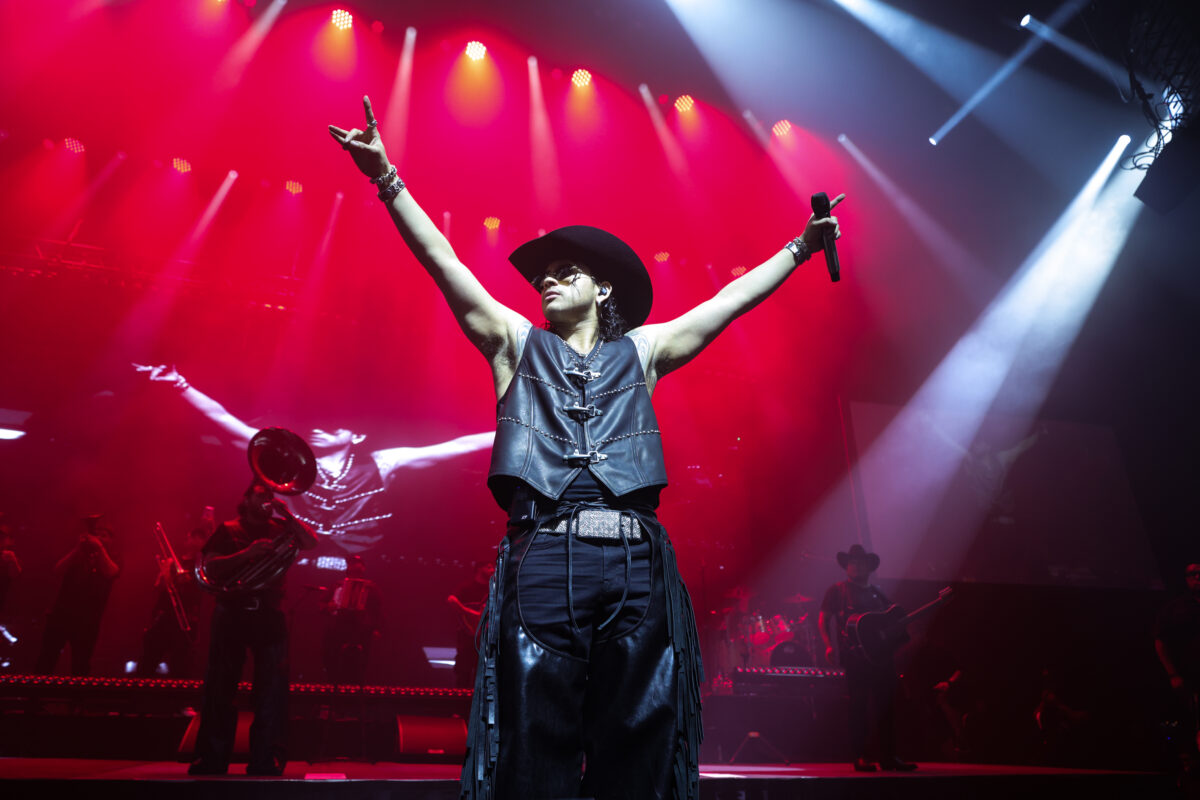
During one of the hottest summers in America, the band, which formed in San Bernardino, California, in 2015, crossed the country for nine dates, playing nearly three hours of music at each show, with stops at New York’s Citi Field and L.A.’s Dodger Stadium. Front man Jesús Ortiz Paz, better known as JOP, insists he saw it all coming. “I always just envisioned this,” he says. “I always knew this was gonna happen.”
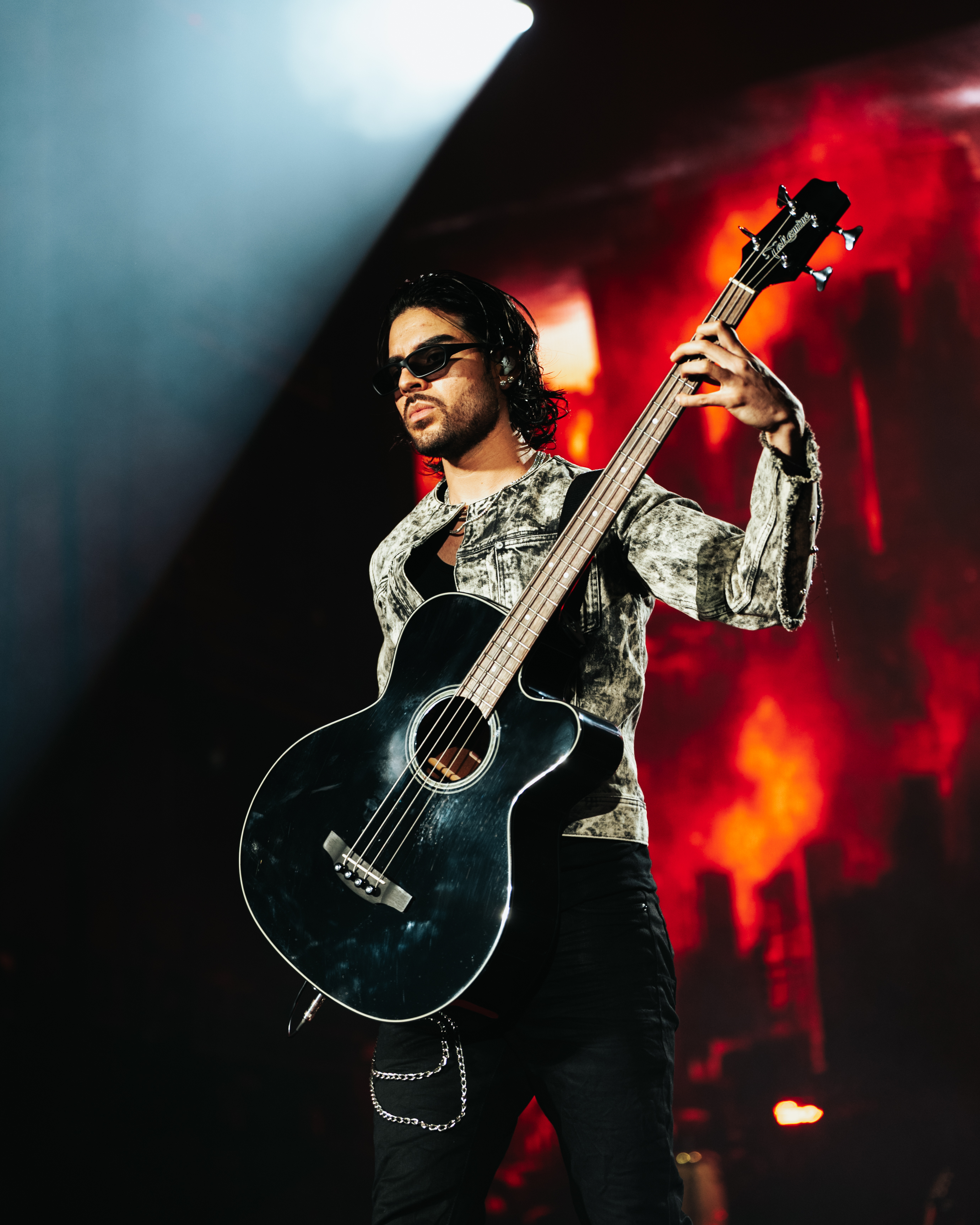
López, who joined Fuerza Regida in 2021, witnessed the band’s early rise from the outside, watching the group move from clubs to theaters to arenas to eventually stadiums.
“Back then, I would just look straight down,” López says, referring to playing the clubs, where the entire audience stood in front of the stage. “Now I gotta look up to the sky to see the fans”—the ones extending up into the nosebleed seats. The sight still gives him goosebumps.
As Mexican Americans, the band members experience cultural borders considerably more fluidly than the music industry’s traditional categories suggest. For JOP, navigating both identities has sometimes been a challenge.
“It’s having two cultures and two hearts,” he says. “I love Mexico, and I love the U.S.” In America, he says, people sometimes mistake him for a Mexican native; in Mexico, he is sometimes regarded as a gringo.
Fuerza Regida uses that tension to its advantage. The band can draw from corridos while moving comfortably through reggaeton, house, cumbia, and even country. “I don’t have a genre,” JOP says with customary swagger. “We’re generational.” He remembers when people hearing the music for the first time might simply say, “What the fuck is this?” Now he watches fans who don’t even speak Spanish sing along. “We’re gonna make [regional Mexican] as mainstream as it is gonna ever be, till everybody’s fucking bobbing their heads to this shit at the club.”
Fuerza Regida has traveled a long way from mixtapes and flyer parties, landing on American late-night television and becoming the first regional Mexican group nominated for Album of the Year at the American Music Awards. To mark this journey, the band made its stadium show a sort of retrospective of nearly a decade of grinding with early records, shifting eras and aesthetics, and a time-traveling Chevrolet 454 truck and a KidSuper runway show embedded into the performance.
The irony is that a band obsessed with the future spends much of its biggest show looking backward. Staying Fuerza Regida, López says, means occasionally invoking 2018 so longtime fans never forget where the group came from. He keeps that in mind as Fuerza Regida’s producer. When the band first came up with “Marlboro Rojo,” López insisted they add a tuba to better evoke the Fuerza Regida of the early days.
JOP says the nostalgia element is simply a reminder that whatever the band did yesterday has to be surpassed tomorrow. He says his father taught him that someone better will eventually come along. “But right now we’re the ones killing it,” JOP says. “We’re ahead of the game.”