Your bag is empty.
Kenneth Connell moved through the Grateful Dead’s world like a character out of one of their songs: dealer, fugitive, daredevil, disaster. His relatives, reconnected through an ancestry DNA test, are just now piecing together the life he kept hidden.

This story appears in our Fall 2026 issue featuring cover star Charli XCX, on newsstands September 28th. Want us to come to your place? Subscribe here to get it delivered to your door.
Kenneth Connell is standing on a dusty runway in northeastern Lebanon. He’s far from home and a quarter million dollars into the biggest gamble of his life.
In the morning haze of August 29, 1970, a twin-engine plane banks hard on the approach to a secret airstrip in a narrow valley. It touches down and turns around on the inclined runway. At the controls is a retired U.S. Air Force lieutenant colonel.
The retrofitted Martin 202 idles near the Roman ruins of the ancient city of Baalbek, and Connell’s four accomplices climb out. The hidden runway sits beside the home of a Lebanese parliamentarian. Two dozen armed local drug lords are waiting. The Americans get to work, swapping cigarettes for three and a half tons of Lebanese hash.
Gunshots. Lebanese Army troops on patrol have come upon the scene and make a fateful mistake: They believe they are looking at an Israeli raid. They open fire. The fusillade rings out for five minutes. One of the local connections implores Connell and company: “You got to go now.”
The plane, leaking engine oil, uses the downhill to catch speed and lifts through a hail of bullets. Interpol is alerted when the aircraft exits Lebanese airspace.
Nine thousand feet over the Mediterranean Sea, Royal Air Force fighters scramble after the smugglers, who are ordered by radio to jettison their load. Connell, who flies Mexican weed into the United States and is known to air-ditch contraband when the law is on him, refuses. Two Mirage supersonic jets then fly in front of the Martin 202 and signal the smugglers to follow them down. Connell wants the haul back in the States. But the plane is low on fuel, and the crew makes for the island of Crete.
Using his one real hand and his other, a bejeweled prosthetic, Connell drops his pants and moons the pursuers.
D ecember 25, 2018. For Christmas, Tre Foor’s daughter gives her an Ancestry.com kit; the girl wants to know about her family’s Irish roots. Foor, a real estate agent in Idaho, takes the test and mails it back. “Connecting with anyone wasn’t even on my mind,” Foor says. “It was just this curiosity for her, really.”
Weeks later, an email arrives from a man named Carlo Baart, a wine importer in Amsterdam. “It was a very exciting feeling once I saw where he was from,” Foor says. She writes back: “Oh my gosh, are you Chucky?”
“I think I am,” Baart replies. “I have a picture of us!” Foor says. She is still attaching it when Baart messages her: “I have the picture too.”
They had met once, as kids, in California in the late ’70s. In the photograph, taken on a castle drawbridge, they stand in front of a hulking bearded man in white slacks, a dark-blue shirt unbuttoned down his chest, and aviator sunglasses. Baart leans into him. His right hand is hidden behind Foor. No one smiles. All three are redheads. The man is Foor’s uncle and Baart’s biological father, Kenneth Connell, who called his son Chucky.
“It was spring break and Ken said, ‘Hey, you’re gonna need to spend the week with me. My son is coming from Amsterdam. We’re gonna do Disneyland and a bunch of fun things,’” says Foor, who grew close to her uncle while living in Southern California. Connell translated between the two kids. Neither of them knows why they both kept a picture from that day.
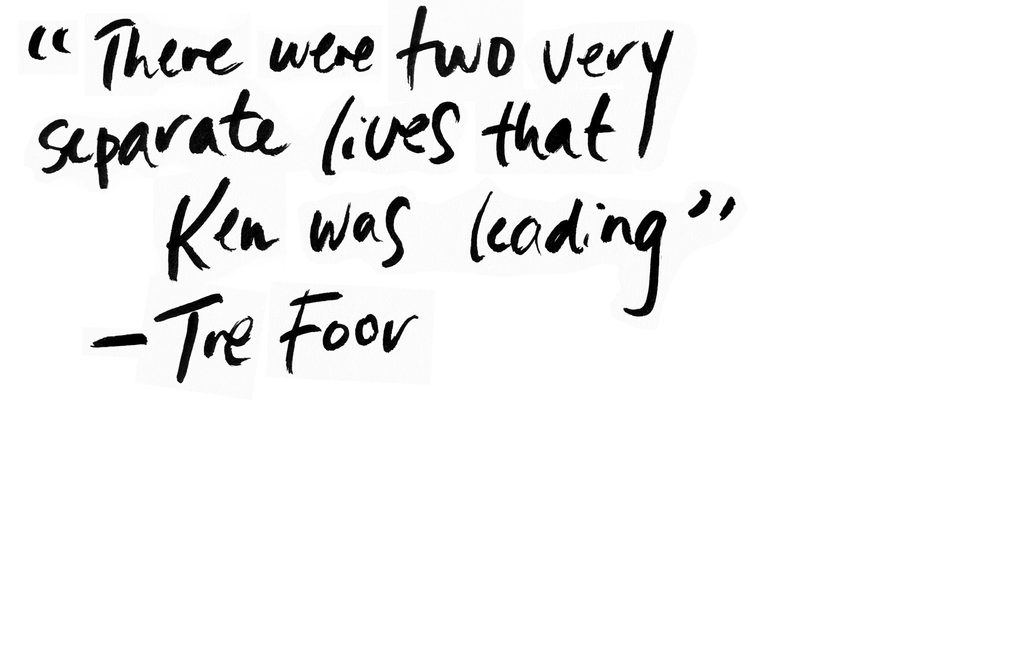
Since finding each other, the cousins have been reconstructing what Baart calls the family’s “fucked-up” past. At its center is Ken, a.k.a. Goldfinger, who lived behind aliases and handshake deals and kept his stashes in false-bottomed trunks and his cash in other people’s safe deposit boxes. He liked his hundreds ironed. He slid through the idealistic ’60s, the sped-up ’70s, and the hungover ’80s as a different man in each. “There were two very separate lives that Ken was leading,” Foor says. Now his few surviving relatives are assembling him in real time.
Baart’s mother was never straight with him about his dad. “They did not tell me that he was my father,” Baart says. It came out only because Connell forced it: He wouldn’t take the boy to Disneyland unless she told him the truth first. “I’m quite thankful and grateful that he did that because I think my mother would have lied the rest of her life,” he says. She died in 2011.
Baart met his father exactly once. What he has instead is legend—chiefly the Lebanon hash run, Connell’s great gambit. “I know so little,” he says. Baart knows the man is a mythic figure in the American counterculture. “But he stayed a mystery to me.” After Connell fled Amsterdam in the ’70s, an international fugitive, “people did not like to speak about him too much here.” Baart figures the missing hand has something to do with the myth. “But is there more to it?”
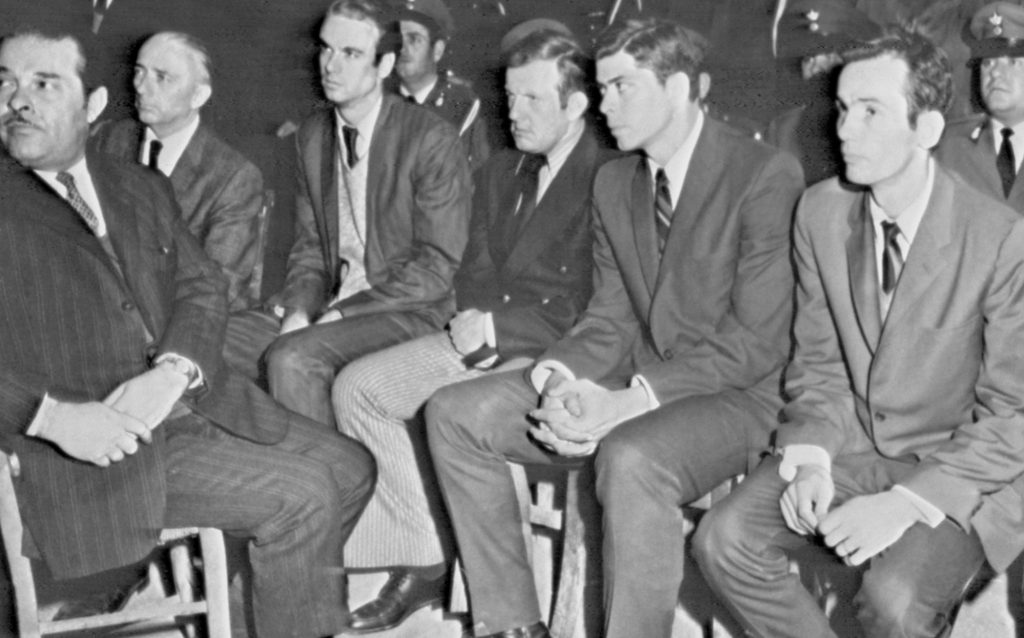
The family, Baart says, never really came back from what happened to Gary: “This must have caused a huge trauma.”
It’s 1948, and Ken Connell is six. He and his sister, Sandra—Foor’s future mother—and younger brother, Gary, are roughhousing at the Navy base where their father is stationed. They goad Gary into scaling a climbing wall. The structure topples and crushes him. Gary dies. Their father is at sea; their mother comes apart. Connell grows up a Navy brat, learning to open-water navigate and fly—training he’ll one day deploy toward criminal ends.
Twenty years later, he has moved from his parents’ Anaheim home to San Francisco. He’s selling cannabis and gaining a swashbuckling reputation flying Mexican weed across the border. With a shock of red hair, he resembles Goldfinger from the James Bond film—hence the nickname—and, like the Bond villain, he keeps a sideline in gold bullion, jewels, and antiquities. Only this Goldfinger speaks nine languages and pilots his own smuggling plane. “He was like a fuckin’ folk hero, and he played it to the hilt,” says Raechel Donahue, a pioneering free-form radio disc jockey and a friend of Connell’s.
A mutual friend introduces him to Diane “Birdie” Dibble, and the two become “like brother and sister,” Dibble says. He gives her keys to it all—his bank accounts, a safe deposit box. “I was kind of like a bag lady, in the criminal sense,” she says. “I’d carry the money around to people who needed to get paid.”
She minds his stash too. At Helios, the Marin County psychedelic shop that Connell owns in the late ’60s, that means pulling out, say, 25 pounds of opium from a trunk with a false bottom—a trunk he mailed himself from overseas and had cleared through San Francisco International by an insider on the customs side. “Back in the old days, we could do that,” Dibble says.
Connell’s path is also colliding with the Grateful Dead. He’s around as early as 1966, during the band’s communal stint at Rancho Olompali, the sprawling Victorian estate in Marin and site of legendary early Dead shows, where Connell and the Bay Area’s freak set eat LSD and swim naked in the pool while the group jams on the lawn. In January 1967 Connell turns up grinning at the Human Be-In as one of 20,000 heads gathered in Golden Gate Park.
He becomes a fixture in the Dead’s Pleasure Crew, a cadre of well-connected friends who arrive with the best drugs in whatever town the band is playing. Connell carries a satchel of his wares, from which anyone can have anything they want—after first taking a hit of acid.
He is one of just three individuals to whom Owsley Stanley, the Dead’s soundman, patron, and house chemist, sells his world-famous LSD. “Owsley was particular about who he used as dealers,” says Rhoney Stanley, the late acid king’s former partner. Connell “had the best cannabis,” she adds. “That’s part of the reason Owsley got close to him.” Girthy, square-jawed, with piercing blue eyes and a custom smuggling vest (to hide cash and gold bars), Connell turns heads and exudes authority. He isn’t tall. He’s big.
Then, on a weed run to Mexico, his luck falters. In March of ’69, Connell is high on his own supply on a dirt airstrip south of the border. He walks into the propeller of the plane owned by his smuggling partner, John Moore, a former Strategic Air Command pilot. The blade takes off his right hand at mid-forearm. Connell orders all the weed unloaded. Then he places his severed limb in a plastic bag and flies to San Diego, certain that surgeons will sew it back on. But the mass of flesh and bone is beyond saving.
Connell collects a reported $35,000 insurance settlement, which helps fund the Lebanon trip. He’ll pay Moore $5,000 to fly that mission, though Moore, wracked with guilt over the accident, feels he owes it to Connell anyway. Owsley outfits Connell with the first of his devices, a hook with a leather sleeve that slides over the stump.
More follow: a fake hand, a bejeweled prosthetic, a gold hand, one with a coke spoon affixed to it, and one rigged with a butane torch for freebasing. It depended, it seems, on which Ken Connell you got on a given day.
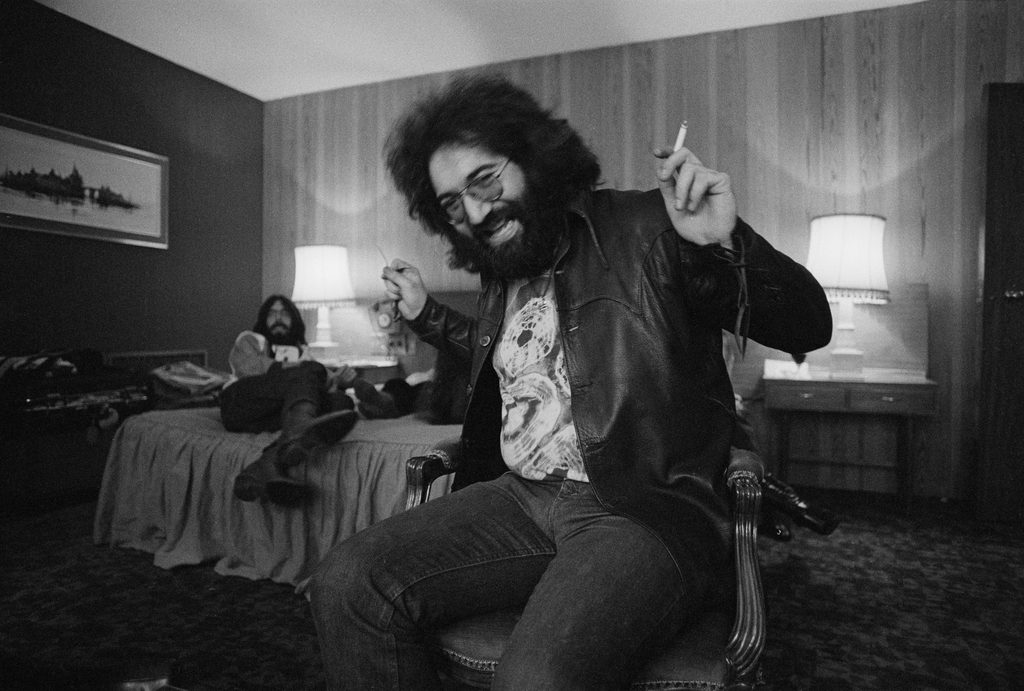
June 8, 1969. Backstage at the Fillmore West, Connell sits at a table with a half-gallon jug of apple juice beside him.
The jug is already spoken for. Dead recording engineers Betty Cantor-Jackson and Bob Matthews have enhanced it with a few drops of Owsley acid, on top of the LSD that Owsley himself has put in. “That was our drink,” Cantor-Jackson says. She and Matthews face the stage for sound check before the band’s show.
When they come backstage, there’s Goldfinger. Dead manager Rock Scully walks in, takes a few slugs, and hands it to Cantor-Jackson. She takes a pull, then notices the jug is half full of undissolved Orange Sunshine acid tabs. The solution had reached saturation long before Connell had his turn with it. Oh crap, she thinks. She asks Owsley what they’re in for.
“Well, that’s about four or five thousand [micrograms] a swallow,” he tells her. About 20 times higher than the average dose.
The jug now holds something like $50,000 worth of crystal LSD. Hundreds sip from it and temporarily lose their minds. “That whole place was totally fucked up,” Cantor-Jackson says. Dead drummer Mickey Hart remembers the jug “glowing.” Bassist Phil Lesh later recalled being able to taste all that LSD, and the instruments, amplifiers, and his bandmates “grinning at me with alien features superimposed on their own.” Lyricist Robert Hunter goes naked in the street and attacks Owsley, blaming him for the chaos. Out of that night, Hunter writes “Black Peter,” a dirge about a man alone on a sickbed, listening to friends gather outside while he counts his days.
Connell, meanwhile, is gone. Owsley wants to know why. Rhoney says, “We go over to Goldfinger’s”—a big Victorian where he’s living at the time. “We had to drag Hunter up all these stairs because he can’t walk.” Nicki, Connell’s wife, tries comforting Hunter. Owsley searches the kitchen for something to eat, finding only peanut butter. They call Dead guitarist Jerry Garcia at home; they want him to come get Hunter. “We’re not leaving until we talk to Goldfinger,” Owsley says.
Garcia arrives near dawn, after what he’ll call “the big freak-out.” Connell has still not come home.
A s the mythology grows, Connell expands into blow. He is soon to become the source of the first pharmaceutical-grade cocaine to hit San Francisco, by Lesh’s account. At parties, he balances a platter of coke on his fake hand and encourages people to snort as much as they can off it. He starts eyeing Lebanese hash—slip enough of that potent cannabis concentrate into the U.S. and the rewards would be great.
He is tight with the Rolling Stones, with Janis Joplin—who sings at his and Nicki’s wedding—and with the bands, artists, and tastemakers of a cultural revolution. Ahead of the Altamont Free Concert in December 1969, Connell tips off the Stones, co-organizers of the event with the Dead, about a sketchy character presenting himself as a promoter and providing “security” in the form of off-duty cops with cocaine. The guy, Connell tells the Stones, is an East Coast mafioso working with the FBI, which is actively trying to undermine the counterculture. It’s also true that Connell wants to be the Stones’ sole hookup. “He was a lot of very influential, wealthy people’s dealer for a long while,” Foor says.
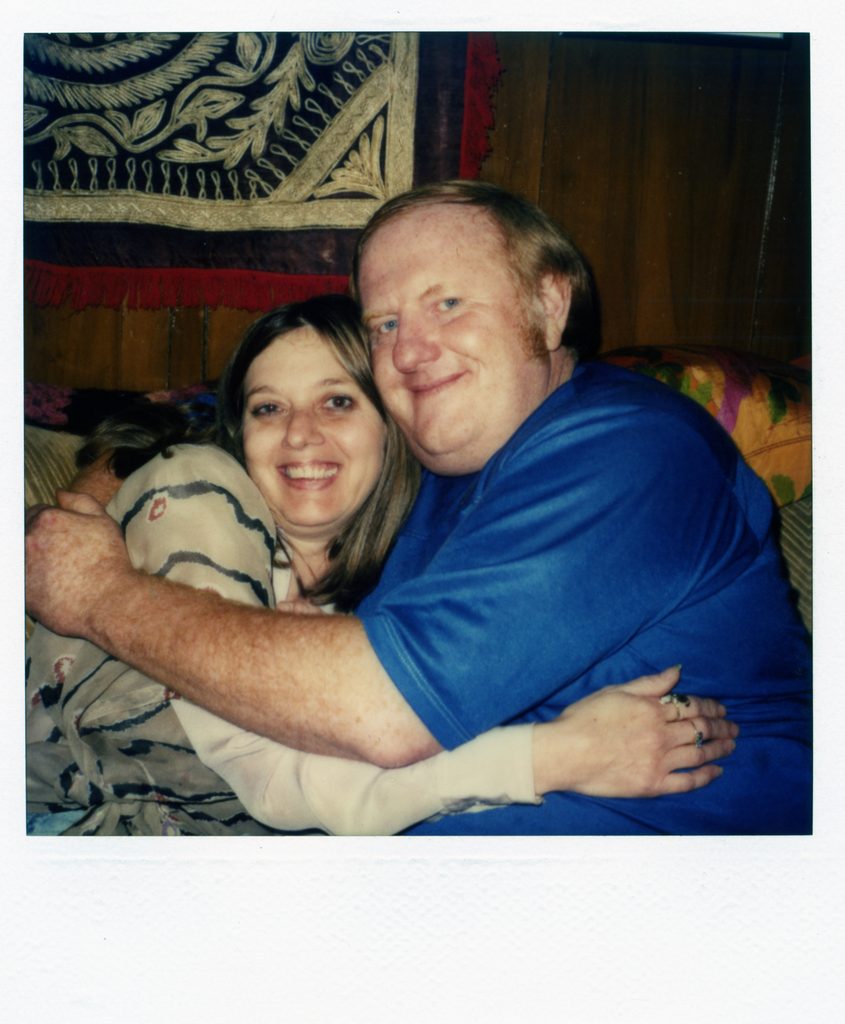
Connell’s parents describe their son simply as “a manager for the Grateful Dead.” The title is a stretch, but he orbits that band closely enough to stoke real paranoia inside it. “Guilt by association,” Cantor-Jackson says. “[The band] didn’t want that.” And yet “he was significant. He touched a lot of people with his distributions.” He could also carry a brooding, creepy vibe. Kathy Mason Lerner, a former smuggler and early friend of the band, remembers him as “totally scary.”
The Dead’s songbook is filling up with men like Connell, rogues and gamblers both charming and doomed. He is the real thing, close enough to touch, standing backstage with a satchel.
He is getting in over his head, literally. In June 1970 Connell is in Hawaii to see the Dead, the Dead-adjacent New Riders of the Purple Sage, and Quicksilver Messenger Service, and to throw a party. He goes scuba diving and gets stranded 150 meters offshore in heavy chop. Hank Harrison, the Dead’s short-lived first manager, and David Nelson of the New Riders watch Connell flounder—a “wallowing hippopotamus,” in Harrison’s words. The two of them swim out, scoop him up, and tow him in. “Thank you, I won’t forget this,” Connell says. “You saved my life.”
Harrison never saw him again.
Two months later, Connell is high above the Mediterranean in a plane leaking oil.
The feds are already onto him, tipped by an informant—a relative of one of his co-conspirators. Connell and his accomplices know they are being tailed. They laugh it off and fly to Lebanon anyway. He had reportedly put up $250,000—over $2 million today—to make the run happen. Low on fuel, they decide to set down on Crete. What they don’t realize is that Crete is part of Greece.
Their arrest makes the front page of The New York Times. “It took a fucking Air Force jet to take that motherfucker down,” Donahue says.
They had company. In 1971 some 45 foreigners, mostly Americans, were sitting in jails on the Greek islands of Crete and Corfu and in Athens on drug-smuggling charges—among them Playboy’s December 1969 Playmate, Gloria Root, caught moving Middle Eastern hash. But Connell’s effort is different in kind.
The hunt for Connell & Co. presaged the high-profile anti-narcotic crackdowns that would become the norm for federal and global law enforcement. It was a flash point at the outset of the U.S.-led War on Drugs, which Richard Nixon formally declared the following year. U.S. Customs called Connell’s play “the most ambitious example of the use of private aircraft in a smuggling adventure.” The hash load was the biggest-known haul of America-bound Middle Eastern product ever intercepted, per the Associated Press, and worth over $1 million wholesale and $2 million retail, or between $8.5 and $17 million today. The scandal pushed Lebanon to open an investigation into its own hash production.
By early 1972 Connell’s accomplices—Bob Black, Philip Amos, David Mantell, and Moore—are released from Greek prison, and U.S. officials fly them back to the States to face conspiracy charges. Connell draws a 10-year sentence, gets it reduced, and is released the same year. But before anyone can put him on a plane to the States, he slips away. Connell is then arrested in Switzerland, gets loose, and makes for Amsterdam.
A fugitive, he gallivants. In Munich, on the Dead’s Europe ’72 tour, Connell pulls one on the fire marshals hassling the band and their roadies: “Hell, let’s dose ’em!” For someone “who had just evaded the air forces of five countries, this is child’s play,” Scully writes later. (Though British fighter planes escorted the smuggling plane down, per U.S. Customs, nine nations were active in tracking the Americans, a source of diplomatic squabbles.) Connell spikes bottles of beer and hands them around to the fire brigade, who are rendered puddles. “One of them is standing in a pool of piss,” Scully says.
Connell befriends the Dutch poet Simon Vinkenoog, a fixture of Amsterdam’s LSD and hash scene, and moves into his four-story house. At a party there, Connell meets Louise, a woman living in Morocco. “She was very impressed by him,” Baart says. “The way he dressed, the way he behaved, his wealth, the renegade feeling he had to him.” She is married to an Italian man. In 1973 she gives birth to Connell’s son, Carlo.
The law catches up with him that August. Connell is extradited to the States and sentenced in federal court in Sacramento alongside three of his accomplices. Amos pleads guilty and offers to testify against the others, and gets five years’ probation. Black, Moore, and Connell each get three years. Mantell had been acquitted in Greece.
Then Connell is gone again—an appeal bond, maybe, and a run to Canada, “the land of hard wood forest,” as he writes to Dibble in a cryptic letter that October. He asks her to make him a fake travel ID. “It is great to be alive and free,” he writes.
He might not know it, but his days are numbered.
“Rather than the jovial, rosy-cheeked redhead, he was a gray, one-armed asshole toward the end.”
C onnell resumes business. He brings his kid niece on runs. There is international drug smuggler Ken, and “then there was Ken when he was home,” Foor says, “and he was just Uncle Ken.” Not having to blend in, he removes the prosthetic. The family understands that the two are close and that Connell will protect Foor. “He wasn’t gonna put me in danger, which, I think in hindsight, probably still was a dangerous situation,” she says. She wonders why her mother let her go.
In San Francisco high-rises and Malibu houses, Connell cuts lines and samples the product with his buyers. “They do their business, hand him a bundle of cash, and off we go,” Foor says. “He’s like, ‘Where do you want to go to lunch?’”
That sense of protection is not extended to everyone. He “abused most of the women in his life,” Dibble says, “although he never abused me, I think, because he trusted me. … He knew I wasn’t gonna run off with all his money.”
Meanwhile, Connell is taking up with his own younger brother’s wife. After Gary died, Connell’s parents raised another son, Rob, who went to work for his older brother and wound up in jail on drug charges himself. “The language was kind of ‘Hey, I’m just taking care of my brother’s family while he’s away,’” Foor says. “But it was more than that.”
Connell is similarly in and out of lockup until 1980, when he is caught again, along with Rob, on international smuggling charges—this time involving a $200,000 load of cocaine intercepted by Orange County narcotics officials and the recently formed U.S. Drug Enforcement Administration. “Everyone knew it was bad,” Foor says. “He was scared.”
To make bail, Connell’s parents put up their home with a bondsman and sell a high-ticket ruby that their son had given them for safekeeping. He repays them by running. “He just turned into a chickenshit and jumped bail,” Foor says. “My grandpa and grandma lost everything. The bail bondsmen took their house. And Ken was gone.” She has never regretted not making amends with him: “I don’t understand how you can do that to your own family.”
Bounty hunters find Connell sunning himself in Belize and haul him back to California. He’s put away for a few years. At the former state prison in Tracy, in San Joaquin County, race riots erupt, and he writes to Dibble, “The shots that were fired there on the yard to quell the initial disturbance passed right over my head, although I had nothing to do with it.” The prison locks down; his outlook is grim. “I don’t know what to do next,” he writes. “Being in an eight-by-five-foot space 24 hours a day doesn’t help either.”
He gets out in 1987, at age 45, and lands in the hospital with a lung illness. By now freebase has him. “It was an expensive and arcane habit,” Donahue says. One that discolors the skin. “Ken was a shadow of his former self. Rather than the jovial, rosy-cheeked redhead, he was a gray, one-armed asshole toward the end.” He checks himself out against medical advice. He is found dead the next day, after what the family assumed was an overdose.
O ne night a little over a year later, Foor, then a teenager, is closing her shift alone at a baked potato bar in Southern California. A man comes in. He looks exactly like her dead uncle. Same build. Red hair. One hand and a man purse under his arm, just as Connell always had. He makes conversation that is strangely familiar without being creepy. He tips her a crisp $100 bill, looks at her, and says, “This is for you, and all is well.” Then he turns and walks out.
Foor believes it was a message from her uncle. She doesn’t think it’s evidence of some crazy conspiracy. As a religious person, she allows that she sees signs and has visions that can be explained only through a spiritual lens. “That was real,” she says of the encounter, “and somehow or another, that was inspired by Ken.”
The story is news to Baart. “Incredible,” he says. After the “misery” Connell put his family through, “he paid it back with a hundred dollars,” Baart says, winking. Nobody resembling his father has ever approached him. But a few years ago, walking under a clear sky, he felt Connell’s presence telling him, “All is fine. Have a great life. I love you.”
But Foor had been carrying a darker explanation, a weight she held for decades.
Two or three years after Connell died, she says, her uncle Rob got drunk and told her what he had done to his brother. To this day, she doesn’t know why he chose to tell her. “It was a pretty emotional conversation,” she says. The brothers had been partying the night Connell left the hospital, according to what Foor says Rob confessed. Connell had already passed out when Rob injected him between the toes with a dose he knew would kill his brother. It was revenge for the affair with his wife. “He told me exactly what he did,” Foor says.
Nobody had asked. Connell’s death certificate mentions neither overdose nor murder: The cause was listed as “pending investigation,” and people assumed that a man who hadn’t partied in some time simply took more than he could handle. “Nobody questioned it,” Foor says. Connell was cremated, and there was no memorial service.
Foor and Rob swore each other to secrecy. She feared that she would be implicated and that the truth would destroy her grandparents. The last time she and Rob spoke, “he said, ‘I just want you to forgive everyone in the family,’” Foor says. Rob died of liver failure in 1996.
For more than three decades, she tells no one. She doesn’t let Baart in on the secret until years after the cousins find each other. In July 2022, during Baart’s visit to the Bay Area to see Foor and the rest of the family, she asks whether the two of them can talk privately. “I felt like I needed to tell Carlo,” she says. “He [understood] that no one else knew.” She has since told Rob’s eldest son.
Baart never knew Rob, so the admission was a lot to process. “To kill your own brother is, of course, an old Greek tragedy,” Baart says. “I can really not judge how probable it is. I really don’t know.” And yet “it could all be possible.” But for him and Foor, kept apart by deception and half-truths and reunited by a Christmas present, maybe now they can move on from the shadows. “You get trapped in a world of lies,” Baart says. “There comes a time when you stop asking and make your own life.”