Your bag is empty.
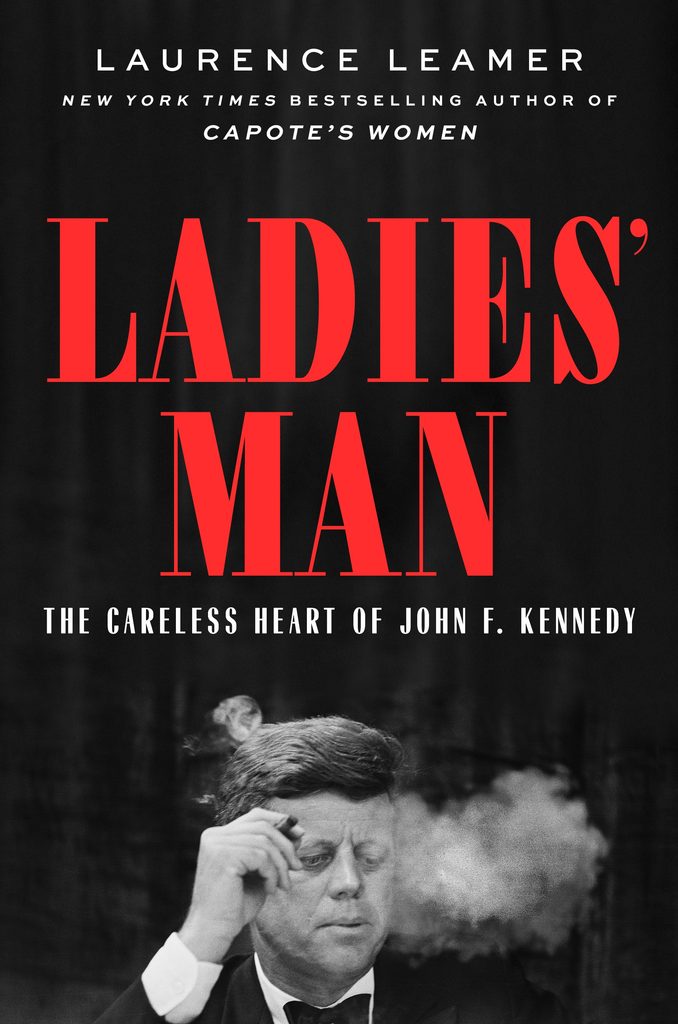
Laurence Leamer sits down with Playboy to talk about the former president’s extramarital affairs and their place in history.

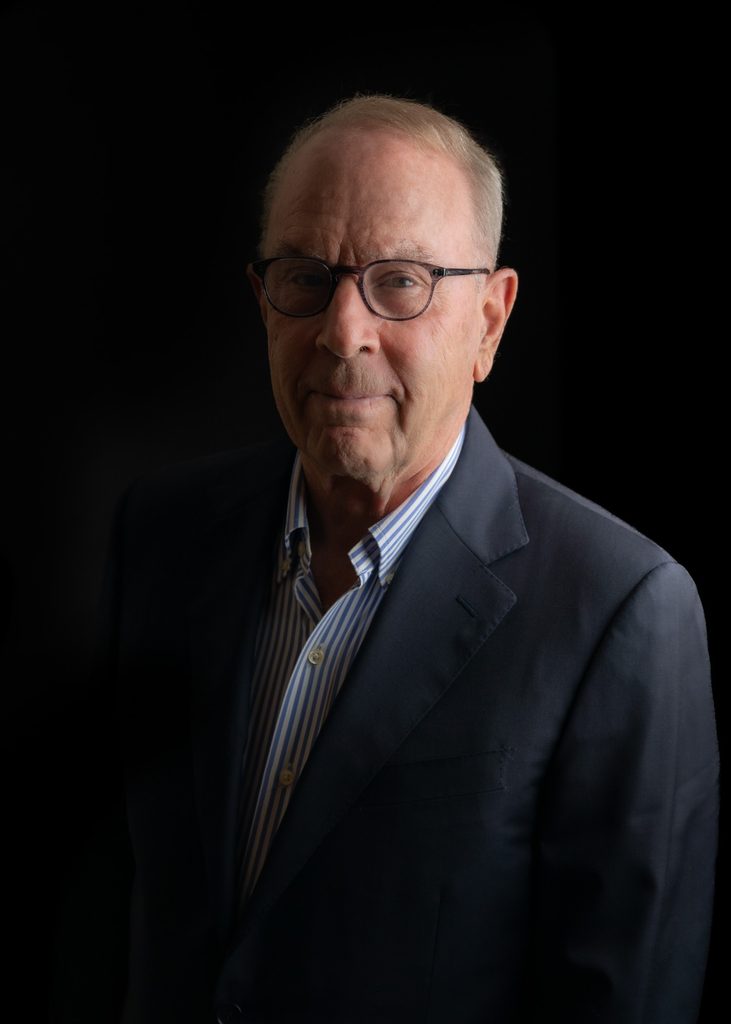
There is perhaps no living person who knows more about the Kennedys than Laurence Leamer. The author has written three bestselling books about the fabled family — The Kennedy Women, Sons of Camelot, The Kennedy Men — and has amassed a staggering archive related to the family’s complex dynamics and political ambitions. He thought he was “through with” writing about the Kennedys, until he realized that no one had definitively tackled an underreported aspect of President John F. Kennedy’s life: His relationships with women.
The result is the comprehensive and unsparing Ladies’ Man: The Careless Heart of John F. Kennedy, which was recently released by the publisher Putnam. Through dozens of interviews, Leamer argues that the fascinating and brilliant women who crossed into Kennedy’s orbit, particularly the people he had extramarital affairs with, are crucial to both presenting a fuller version of history and of Kennedy himself. “Conventional establishment history doesn’t even deal with this,” Leamer says. “I don’t think you could understand the man without understanding that part of his life.”
Leamer spoke with Playboy about unraveling this overlooked aspect of the late president’s life and what it tells us about the present moment we’re living through.
This interview has been edited for clarity and length.
You use the word careless to describe Kennedy’s heart and his attitude towards women. Why did that description feel apt for this book’s title?
Because he was careless of the feelings of women. I’m not even sure he liked women. In the Kennedy White House, the women either served coffee or they were for sex. There were no women in the cabinet, no women in positions of power. He just wasn’t comfortable with them that way. He basically didn’t think women were intellectually on the same level as men. Barbara Ward was his brilliant economist; he could deal with her on the same level, but she was almost unique.
Who was the first woman you spoke with for the book?
Gunilla von Post. I know her because she [lived] in Palm Beach in the winter, and so do I. She would go around telling about her affair with Kennedy, and people didn’t believe it. They either didn’t believe it or they thought it was kind of sleazy for her to talk about it. I believed her. Then, she wrote a book and she sold her letters, so it was clearly true.
Did you encounter resistance from the Kennedys when you were putting this book together?
I didn’t go interview them this time, because they didn’t really know anything about this. It was their uncle or whatever. I’m sure they’re probably not too happy about it, but it’s the truth and we can’t avoid it. I tried to write it in an empathetic way. That’s really important to me. I’m not exploiting this. I’m trying to have understanding out of it.
How much of an open secret were these affairs during his presidency? What do you recall about that?
Well, [the late Washington Post editor] Ben Bradlee was one of his closest friends. They knew, to an extent. People emulated him. They tried to be like Jack Kennedy, so they screwed around too. And then when they say they would have thrown themselves in front of him and taken a bullet, they’re not just saying that. They really would have. That’s how much they loved him.
You touch often on Kennedy’s health issues and the pain he was in for most of his life. Was that something that was also whispered about during his presidency? It seemed like he worked incredibly hard to keep that under wraps.
That was more under wraps, but it is just devastating. One of the things in the book is that one of his doctors, Dr. Cohen, I believe in December of ’61—that’s the most likely date—sends a letter to the president saying, “Mr. President…you can’t be taking these drugs. You’re taking amphetamines. You can’t do this. You can’t take a risk like this.” And Kennedy threw the letter in the wastebasket, and Evelyn Lincoln, his secretary, took it out and saved it. When she died…all this stuff was given to Robert White, who was a Kennedy collector, and he started the museum in Florida. The Kennedys didn’t like it; I don’t know why, because it was such a positive museum. But they insisted on getting all these papers back. You won’t find this letter at the Kennedy Library, which is very strange.
In your book, you argue that Kennedy used sex and his affairs as a way to perhaps detract from his many health issues. I was struck by the story about how he was jaundiced at several points, but people thought he had just gotten a great tan. Do you think that that was more for himself, or do you think that it was about projecting a certain image, given his political ambitions? Or was it both?
I think it was both. The irony is that they made fun of old grandfather [Dwight] Eisenhower sitting in his wheelchair. Well, Kennedy needed a wheelchair because of his back. There was a famous picture of him leaning on his desk in thought; he was leaning on the desk because he was in pain.
I was also struck by his callous attitude towards women. Were you surprised to hear these stories?
Well, one of the keys to his success was that women liked him, and that he didn’t really care for women. He liked to use them, but was he truly capable of loving? … Inga Arvad was a Danish woman that he knew at the beginning of World War II. When he fell in love with her, it was difficult for him to love and to be vulnerable. He couldn’t stand being vulnerable.
Do you think that had to do with his upbringing and his relationship with his father?
Yeah, his father—he learned so much. He was afraid of his father. They taught them that’s the way a man acted. Remember, the men and the women in the family were brought up totally differently. The men went to Harvard. The women were basically, usually, educated by nuns of the Sacred Heart, and they went to church, and were religious. They were the bearers of morality. The men went out and did whatever they wanted to do.
Kennedy would bring women to his house in Georgetown, and then to the White House, to carry out his affair. Why was he so brazen about it?
He got off on it. He was reckless. It made him feel alive to do these things.
You make the point that Jackie Kennedy fully knew what was going on with her husband. There’s an anecdote in your book about how she would toy with him—such as seating an attractive woman next to him at a dinner and watching him sweat.
First of all, Jackie was away from the White House about half the time. She wasn’t going to sit there. She made her own way … She knew precisely what was going on. People that say she didn’t know—it’s absurd. This was a highly intelligent, sophisticated woman.
I’m curious what you think this part of history can tell us about the present moment we’re living through.
Well, the Trump administration does not like the Smithsonian’s view of history. The Smithsonian talks about slavery, talks about what was done to Native Americans, it talks about the conflicts in American society. They don’t want that. They want to sanitize it, okay, and they think that’s what Americans want to take from history. I disagree. I think Americans are grown up. I mean, I was brought up in elementary school with a fairytale vision of America. I think we can integrate all this into our thinking, and it’s still a great country. It’s a greater country if it’s an honest country.
This book will almost certainly complicate the public’s understanding of John F. Kennedy. How did you grapple with that while writing this?
Look, I’m 84 years old, and I went to Columbia Journalism School in ’69, and I was concerned with truth. Truth was a crucial thing to me and it still is. But this material has to be, I believe, integrated into any biography of John F. Kennedy. So far, academics don’t want to deal with this.
Why is that?
Because they want to stand up in their class at Harvard and talk about the Bay of Pigs, and not oral sex.