Your bag is empty.
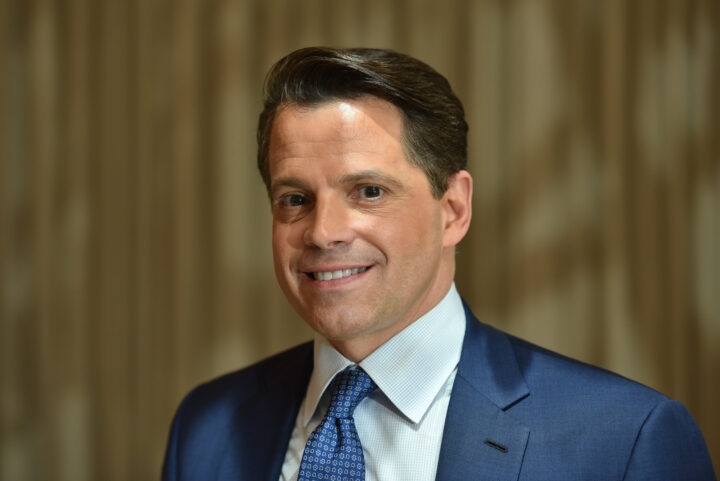
The All-American Rejects' frontman on how to promote music in 2026, the band's first album in 14 years and his unexpected OnlyFans account.

Tyson Ritter didn’t set out to be a working-class hero. Yet as American creative industries continue to contract, the frontman of the All-American Rejects—the hitmakers behind beloved 2000s hits like “Dirty Little Secret,” “Move Along” and “Gives You Hell”—is hellbent on democratizing the music industry.
In the years since the Rejects put out their final record on Interscope Records, 2012’s Kids in the Street, they independently released a smattering of singles. Ritter explored acting in TV series such as Parenthood, Preacher and Lodge 49; in 2013 he married Cowboy Bebop star Elena Satine, and in 2021, he became a father. Now, he’s focused on helping artists who go into debt to tour, all while corporate juggernaut Live Nation Entertainment squeezes fans for more money. He and the band have done their part by embarking on a D.I.Y. “house party tour” across the U.S. in 2025—rocking in fans’ backyards, and nearly getting arrested in the process. Ritter even started his own OnlyFans page to promote the new record.
“These big monopolies [keep] out people like me, who grew up in a trailer home,” Ritter, 42, told Playboy. “I didn’t go to my first concert, as a ticket holder, until I was 18. How are we going to support new music in [the] crazy, post-COVID, roaring ’20s?”
Ritter spoke to Playboy about his audacious new approach to music promotion, parenting both children and aging parents, and how he sharpened his pop sensibility with blue-collar wit in Sandbox, the band’s first album in 14 years.
This interview has been edited and condensed for clarity.
Q1: So much has changed since you released your last album. What got you to come back and write Sandbox?
RITTER: I got signed when I was 17, and when we put out our first record, I thought, “Oh, I’ll be making music all the time.” Really, you’re performing music all the time. You’re not necessarily getting a chance to make it all the time, especially if [you don’t] like to write on the road. Fourteen years is a long enough time to ask yourself if you have anything else left to say. A lot of bands that I loved growing up, the moment that they get to record four or five, they regurgitate versions of themselves that you liked in the beginning, without the soul. It feels like they’re just sort of recycling some expectation that might be waiting for them on the fan side.
Q2: The fact that you signed your first deal at 17 is nuts, but it reflected how powerful your songwriting was from the beginning. Was there a moment in your career that made you wake up to the business side of things?
RITTER: We toured so much through our 20s. In 2010, we played 280 shows in a year—and came home still depending on our records for income. We would lose money on the road touring! Now, fast forward to 2026, and you don’t get paid on streaming. You only make money on the road. New bands are told [that] touring is a promotional deficit until you make it. So unless you have some financier baron, even if you have the best music in the world… [the odds are] against you. What’s happening in our economy with the haves and have-nots, that’s happening in our artist economy.
There’s so much great music in the lower, middle class [of bands]—they have a million Spotify monthly listeners, half a million followers. On paper, they look [successful], but nobody wants to take a bet on them. My personal mission is to be an artist advocate in these times. People are so focused on the fan experience being difficult, that they’re not realizing [that] bands are dying every day because they can’t get out on the road.
Q3: When you started your house-party tour, it was a savvy way to push back against the Live Nation monopoly. Did you plan this with the thought that this could be a bigger movement?
RITTER: Man, we like any idea that I think catches fire like that. If it’s calculated, it won’t work. Labels spend money on what’s called “creator buys,” which is basically a false-reality purchase of having somebody endorse your music and do a fucking dance to it on TikTok. And those are anywhere from like $2,500 to like 10 G’s a pop. Music that you see trending on TikTok, some of it’s organic, but [some] of it has been paid for by a major label to seed into your feed. It’s kind of like payola on the radio in the 1950s.
We played [the Kroger Wellness Festival in downtown Cincinnati] and got 50 grand, which gets you a week’s worth of content. [But] we’re like, “Let’s just get a bus, let’s get a trailer, let’s play in willing fans’ backyards” to get eye level with an audience who otherwise has to pay some dynamic pricing ticket to catch us in an amphitheater.
What do we do about affordability in the one thing that is non-denominational, non-political, that brings people together? We’re doing everything we can to make sure our concerts are accessible to [people] that want to see us, not just people who can afford to. A lot of bands that I loved growing up, the moment that they get to record four or five, they regurgitate versions of themselves that you liked in the beginning, without the soul. It feels like they’re just sort of recycling some expectation that might be waiting for them on the fan side.
Q4: Another big stride towards democratizing your music was hiring a fan, Megan Kraemer, to replace your old management. What made you put that trust in her?
RITTER: We call her a fanager. The [old managers] were just trying to get us to sell our catalog and play amphitheaters for the rest of our lives. She’s a firecracker, man. She’s a part of this new guard of managers that are creative. She had great, inventive ideas, one of which was the house party tour. We took a bet on it and we’ll eat off that for the rest of our lives.
Q5: Economics aside, what was your wildest house party show?
RITTER: The most fun, cinematic one was when the cops came and shut us down in Columbia, Missouri. We got their [body]-cam footage, [and] they were like, “Wait, you guys are All-American Rejects? All right, you can play one more song.”
Q6: Do you believe in divine interventions?
RITTER: Honestly, I feel like that whole house-party tour was fated (laughs). UTA did some big diagnostic on how much [the videos were] circulated, and they pulled out the number as 31 billion impressions for our house party tour. We’ve won VMAs and did the “TRL” thing, but that tour was the biggest thing that’s ever happened to my band.
Q7: You started an OnlyFans account to promote “Easy Come Easy Go,” which was a playful way to engage with the shifting music economy, and grab a lot of attention. What was your biggest takeaway from that experience?
RITTER: When we were doing meetings with OnlyFans, they were like, “This is really a fan-generated platform that is about fandom.” So, it was funny how many people came out of the woodwork to be like, “Yo, are you really whipping your dick out on OnlyFans?” I was like, “No, we’re just having fun.” But it’s good to know that I always have a place to go in case times get [tough]…I can always go back to OnlyFans to get a little freaky.
Q8: Was there anyone in particular—any male beefcakes, perhaps—that you modeled your content after?
RITTER: Oh no, I knew nothing about it. In fact, I kept getting DMs about, “Hey, we’d love to collab with you on OnlyFans.” And I didn’t realize that collabing on OnlyFans is very different than collabing on Instagram. I said to my wife, “Honey, all these girls wanna collab with me on OnlyFans!”
Q9: Wife check! What was that conversation like?
RITTER: Like, “Honey, that’s not what you think it is.” [I don’t] respond to DMs, but I may have blushed a few times. It was confidence-building.
Q10: You’ve talked about playing nostalgic festivals such as When We Were Young, which was like “Warped Tour, Part Two: Electric Boogaloo.” You said you felt like the black sheep in that scene, so what made you feel like the odd band out back then?
RITTER: A lot of our scene wasn’t radio-contingent, and we were the band that was hammered on the radio. It wasn’t cool back then to be on the radio, but it sure was cool to us. We’re from the Midwest. I grew up dubbing cassettes [from] the radio [because] I couldn’t afford CDs. For that scene, people loved the things that nobody else at school knew about. But the fact that kids [were] singing “Dirty Little Secret” in high school? We made catchy music that a lot of people liked. Now that I’m a little longer in the tooth, I’m grateful.
Q11: You’ve had major headlining tours, you toured with Blink-182 and Weezer, but you do come from this tradition of emo and pop-punk bands from “flyover country,” like The Get Up Kids and Jimmy Eat World. What is it about that music that stays evergreen?
RITTER: One good thing Spotify did is that if you like metal, you can go to a metal playlist and listen to music from today — then Black Sabbath will come into the shuffle, seamlessly enter your radius of listening and feel brand new. I think good music lives forever. When we [turned on] oldies radio, we knew we were gonna get one-hit wonders from the ’50s, ’60s, and ’70s, right? That was dated. The kids hearing our music for the first time [are] discovering it as if it’s brand new. They don’t find out if it’s nostalgic or not; they just get to hear it without the pretense of, “And here’s one back from the old 2002!”
Q12: Your new songs “Eggshell Tap Dancer” and “Search Party” are upbeat as ever, with your signature dry humor. But there’s this folk song, “For Mama,” which struck me as your most sobering song yet. What compelled you to take this deeply reflective direction?
RITTER: I came home to a very different family. When you’re young, you’re so full of exploration that you don’t really focus on the family of it all. And in the stillness of Oklahoma, I got to hear what my heart was calling me to talk about. “Search Party” and “For Mama” are songs about my mother. I sent her the demo [and] was like, “Hey mom, this is a song from my heart to yours. I hope it hits you and I hope you feel loved.” She [was] like, “You’re not going to put this out, are you?” I was like, “I think I should, Mom.”
She gave me her blessing, and I think it’s the realest song I’ve written. I’m interested in growing as an artist, or else this band is going to die trying to make another “Move Along.” So many bands [are] shaking the purse strings of their fans. You’re trying to recycle your own farts and make more music out of it!
Q13: What about going back to Oklahoma helped you grow as an artist?
RITTER: I lived in New York, I lived in LA. I got the taste of the big-city life before it gobbled me up and I ran home. There’s something about the rat race of a big city that breathes down your neck… I had to chase some [outside] expectation, [so much] that I couldn’t even hear what my [own] voice was saying.
When I got home, peeling that off was like a hangover. Because if you sit down with a guitar and say, “I want to write a song and it’s got to be great,” then you’ve already fucked up the process. When good things come, it’s because you’re a passenger to it, like somebody else is holding your hand.
Q14: The title track to the new album, “Sandbox,” has this dark dimension—it’s about children playing war. What is the story behind that song?
RITTER: I wrote that after I saw the war [in Gaza] start to come together—that [October 7th] rave in Israel, and then the result was what it has been. And the words just kind of fell out. We all seem to accept war because adults fight it. So what if war was fought by children?
Q14: It’s heartbreaking to see the images of children in these war zones. In every war, children suffer and they become collateral.
RITTER: [That’s why] I put the war on a playground! It’s not pointing fingers, it’s just saying, “War: what is it good for, man?” Absolutely nothing.
Having kids, I realized that they’re the ones who got it figured out. The older we get, the more conditioned and programmed we get… and we really fucking didn’t do it right. We just want to hate. We’re going to feed that beast. But it feels like it’s been a long time since collectively we’ve actually taken a pause and considered how we are the architects of this world.
I’m interested in growing as an artist, or else this band is going to die trying to make another “Move Along.” So many bands [are] shaking the purse strings of their fans. You’re trying to recycle your own farts and make more music out of it!
Q15: What kind of music are you passing along as a parent?
RITTER: Austin Scaggs interviewed me for Rolling Stone and I felt so pressured to [talk about] fucking Beach Boys. I didn’t tell the truth at all. I grew up with a grandmother who had such a beautiful music taste… My sense of melody comes from musicals—like Chitty Chitty Bang Bang and Willy Wonka.
Whether it’s current hits or Little Shop of Horrors, melody was always my favorite thing about music. I’m giving that to my kid.
Q16: You reminisce on your upbringing in the song “Green Isn’t Yellow.” You also reflected on a 1996 issue of Playboy with Jenny McCarthy on the cover. Where did you even find that back then?
RITTER: Oh dude, I had a Honda Trail 70 scooter, right? I stole money out of the dryer and zipped down to the store, because this was when [McCarthy] was on Singled Out. This was sexual awakening stuff for us youngsters here in Oklahoma. The neighborhood boys would Huckleberry Finn to this wooded area, and there would be buried treasure of the worst smut magazines you’ve ever seen.
I remember going down [to the store] and my uncle worked the cash register. I thought, “I’m going to get a new Playboy for the boys.” I threw a pack of bubblegum on top of it, and he was like, “Alright.” There was something endearing about that memory to put it into a song. It is Oklahoma as fuck.
Q17: Your first acting role was in The House Bunny. What was the casting process like for that movie?
RITTER: It was interesting. I was painting my girlfriend’s new apartment at the time, and I was wearing board shorts. Somebody called me from CAA and was like, “Hey, Adam Sandler wants you to read for him. Zip down there as soon as you can.”
I didn’t even change. I went over there, read the first scene and then Adam just talked about music. And at the end of it, they were like. “You wanna play Colby?” I was like, “Oh my God, I’m gonna be in an Adam Sandler film? With Anna Faris and Emma Stone?” That was a wishbone moment. And I got the greatest memento at the wrap party.
Q18: What was the memento?
RITTER: Emma Stone passed me a note. I put it in a box, because my girlfriend at the time was super uncomfortable with me having kissed a girl onscreen. But it was cute. It said something to the effect of: “You’re not a bad kisser.” That was a huge compliment. Maybe I’m biased, but I love that movie. I love it every time somebody brings a DVD for me to sign at a show.
Q19: How have you developed your craft as an actor? Is it something that you also intend to keep doing?
RITTER: You have to be present on set. Whether it’s just working with really talented actors or getting curious about character work, how do you make somebody live and breathe inside yourself? It’s fun to get weird, like that ridiculous role for Preacher, being somebody who’s unafraid like that. I long to do another role that I care about.
Q20: I heard that you were working on a musical. How is that going? And do you think your house parties will factor into this in some way?
RITTER: It’s great. I’ve been working on it for like, eight years. It’s called “Shit Show.” I miss the popsicle stick and yarn world that Rocky Horror Picture Show kind of introduced us to. There are still other landscapes to explore. I [want] to challenge an audience that is like, “I hate musicals,” [with] a musical for a modern experience.
I would love to do a full musical on a house-party run. I think it would be a gas. Rodgers and Hammerstein never did that shit, man!