Your bag is empty.
A conversation with Stephen Rebello, author of the dishy and delightful new ‘Dolls! Dolls! Dolls!'
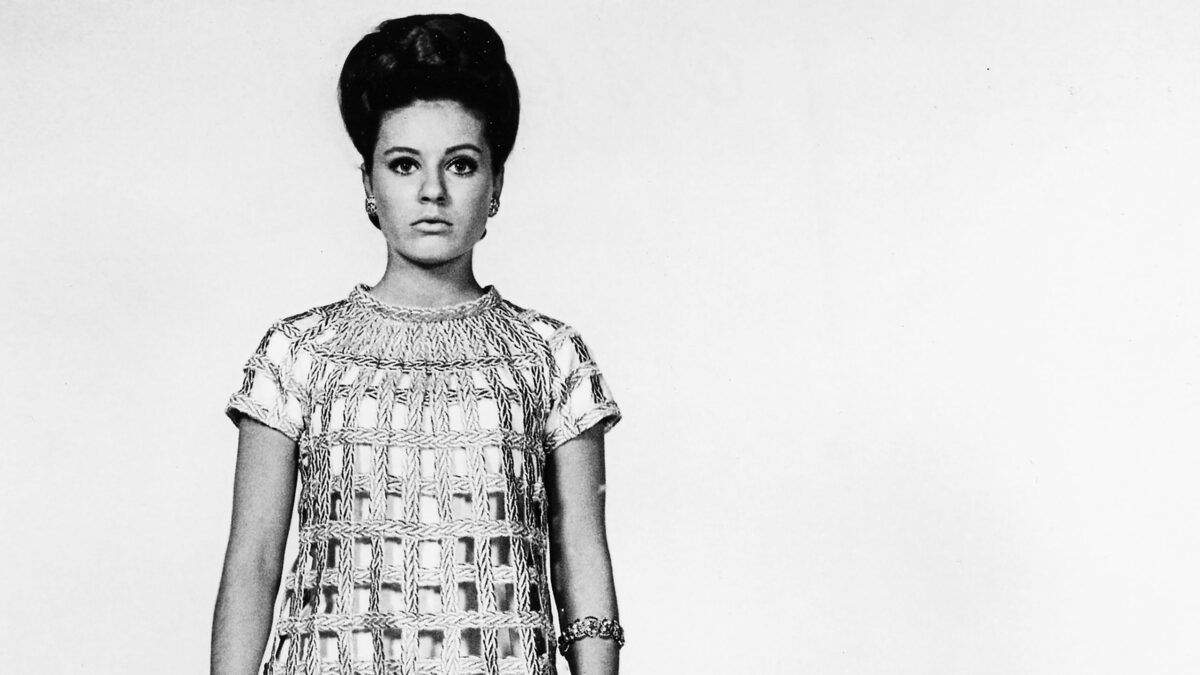
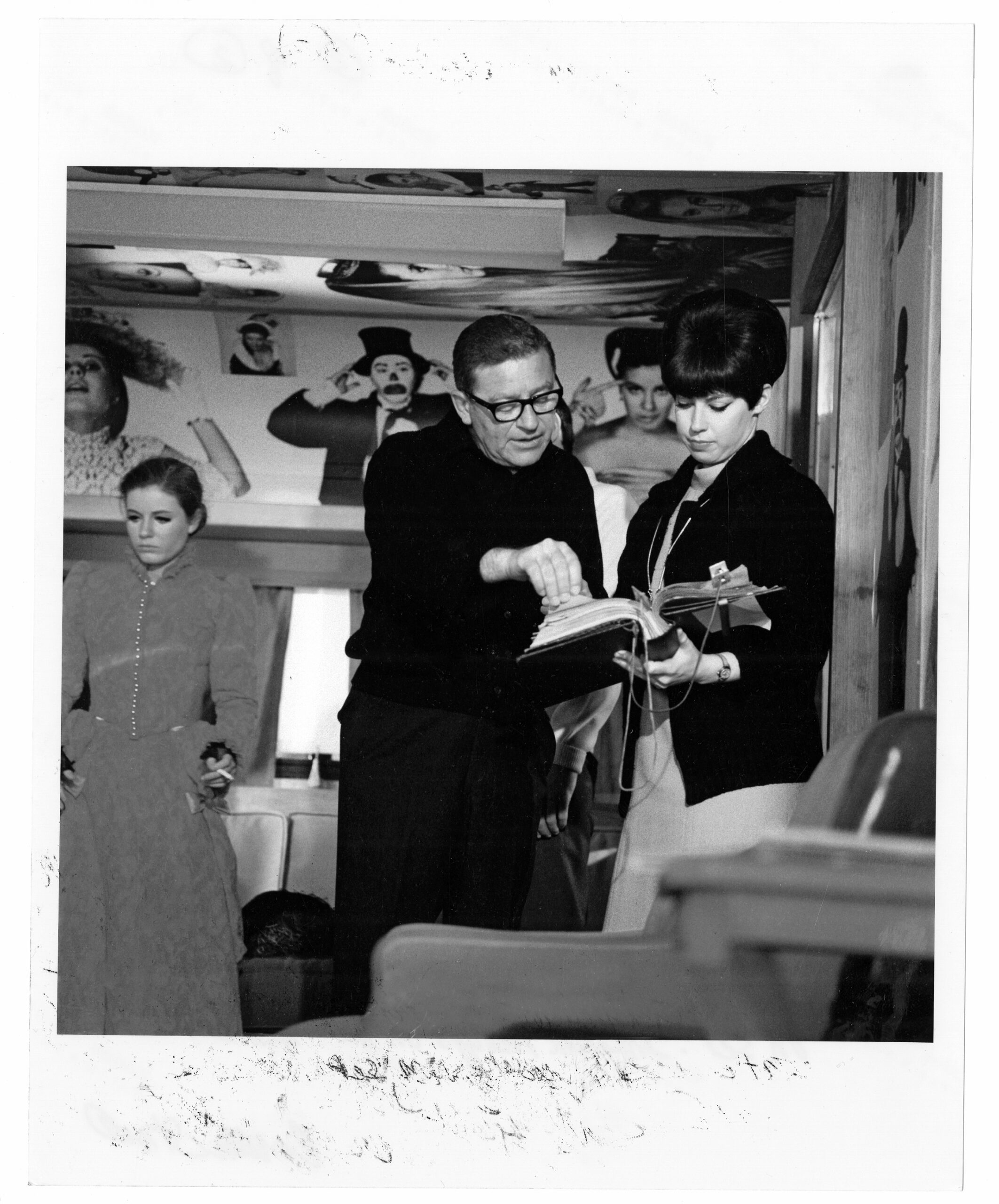
Last week we ran an excerpt from the new book Dolls! Dolls! Dolls! Deep Inside Valley of the Dolls, the Most Beloved Bad Book and Movie of All Time. In it, author Stephen Rebello brings to life the on-set war between star Patty Duke and director Mark Robson, whose skirmishes included weaponized donuts. Throughout Rebello’s book, the laughs are abundant, but so are the moments of wrenching struggle. And even as Dolls! offers such dishy delights as an up-close view of Judy Garland’s disastrous and short-lived involvement in the movie, it’s easy to drift back to Duke’s perilous journey from Oscar-winning child star abused and exploited by her legal guardians, through the premiere of Dolls and its enshrinement as a beloved celluloid fiasco, through decades in and out of addiction and acclaim, and ultimately to grace.
Toward the end of the book, Rebello (who’s also a screenwriter and Playboy contributing editor) reveals that Duke eventually started to speak out for others living with addiction, mental illness and trauma, and that she connected with legions of LGBTQ Dolls devotees who helped her make peace with her demons—and with a movie that might have tanked her career. Here, in an interview conducted shortly before the book’s release, Rebello speaks to Playboy about these transformations—the movie’s, Duke’s and, as he wrote the book, his own.
PLAYBOY: At then end of Dolls! Dolls! Dolls! you touch upon Patty Duke’s advocacy for queer communities. Why do you think it became such a passion for her?
REBELLO: I think that she understood what it was like to be the other—although that isn’t always the open sesame to being kind or being an advocate. Queer people are everywhere, and lots and lots and lots are in show business. But I hear all the time people who’ve been in the business forever being absolutely idiotic and disgusting about queer people and transgender people and the whole gamut.
Patty, I think, really got it. She had been so battered by her own childhood, her own parents. She was exploited and damaged and commodified by the Rosses, who managed her, quote unquote. She was basically a house mule for them. It’s why Patty and Judy Garland, in that brief time that Judy Garland was on the movie, got so intensely close. Both those women had a real appreciation for what it’s like to be misjudged, laughed at, misunderstood, to have this freakish talent that most of the world merely exploited. Both of them, as children, were being force-fed drugs—one by her studio, the other by her so-called protectors.
There’s an entire population of people who got the humor, who loved the outlandish costumes, the wig-upon-wig-upon-wig of it.
PLAYBOY: So how did that background help her become an ally?
REBELLO: Valley of the Dolls strangely was an eye-opening experience for Patty Duke as she started to see it with gay audiences. For years, she would not talk about the movie at all. I completely understand why: When they’re showing your award-clip reel, that’s not necessarily one you want to include. But there’s an entire population of people—of outcasts—who got the humor, who loved the outlandish costumes, the wig-upon-wig-upon-wig of it, the excess, the booze and drug aspects.
And so when she experienced that movie with gay audiences in San Francisco, in New York, in Chicago, Patty got the edge and the laughter and the sarcasm, but she also got these waves of love coming her way. Neely O’Hara was like an emblem for gay people. Lots of lesbian kids and grownups tell me all the time about how Neely is an inspiration because she takes no shit from anybody. She brings everything crashing down around her head, but she’s basically a decent kid who got messed up along the way. I think you can understand that whether you’re straight, gay, bi, whatever: Neely says what’s on her mind.
So Patty tuned in. She found a source of love. She found a way to reconcile the movie that was supposed to put her on the map and did—but not the right map. Suddenly it became something that she could come to terms with. It’s kind of a double whammy, because it not only reached this enormous worldwide audience and made a fortune, but it was ridiculed—so there was that. But then it found this other audience that for years and years kept Patty laughing at herself in the best possible way. Isn’t the point of our lives to get deeper, to get kinder, to get more empathic? I think she did.
PLAYBOY: She also became an advocate for people living with mental illness and addiction.
REBELLO: I think this movie, strangely, helped her in that process. She found that she had gone through so much hell, and lived through it, and survived it, that she now wanted to tell other people that they could, too. Like many recovering addicts, she never made it seem like any day was a snap for her to get through, but that every day was a struggle, and that every day is a struggle for everyone we know, in one way or another. She kept crisscrossing the country, speaking to people one-on-one. She was tireless, and she did it on her own dime. What a great way to use your gift and talent, bringing insight and heart and empathy and joy and understanding to people. I can’t think of a better thing than any actor can do—to say thank you to someone by telling them they’re worth talking to.
So my hat is off to Patty Duke, and I didn’t necessarily start that way. I think I learned a thing or two on this journey.
PLAYBOY: Did the book originally have a different tone?
REBELLO: Three years ago my agent asked me why I wasn’t writing another book. I said, “Well, I’m tired of coming up with serious ideas I really love that no one wants to publish.” And I said, “Fuck it, I’m going to come up with something that I think I’ll have fun with.” But instead of just having a rip-roaring time, which is what I expected, I got caught up in it. Let’s say you and I watch Valley of the Dolls in the theater; I’d be laughing hysterically, but it’s tougher for me now to watch Patty, for example. She’s still wildly over the top, but the laugh is coming from a different place. Honestly, sometimes it catches in my throat.
PLAYBOY: There’s a quote in the excerpt in which Duke talks about her preparation for the role: “I went to bars and watched confused, tormented people full of self-pity and wondered how they got to be that way.” What if the movie had been made in that spirit? Would it have endured as a serious look at sexism, addiction and mental illness?
REBELLO: You have to remember that Darryl Zanuck, who was still basically running the studio at that time, had made really important, socially relevant movies like Gentleman’s Agreement, which dealt with antisemitism, and The Snake Pit, which dealt with mental illness in women. His vision for Valley of the Dolls was that it could be that: It could be an important look at opioids, way before we all knew about them; about women having no financial agency, no control over their careers, no place in the world without a man.
The Dolls screenplay never got there, and they never got a director who was willing to go there. But people forget that it was a risk to write that book, to make that movie and to be in that movie. The way it turned out—I mean, it’s not irrelevant, but what some of the people making that movie were trying to do was noble. That’s one of the reasons I wanted to write the book. There’s an important story to tell.