Your bag is empty.
As viewers continue to process that startling finale, the actor tells Playboy about how he tried to understand the racist politician he plays
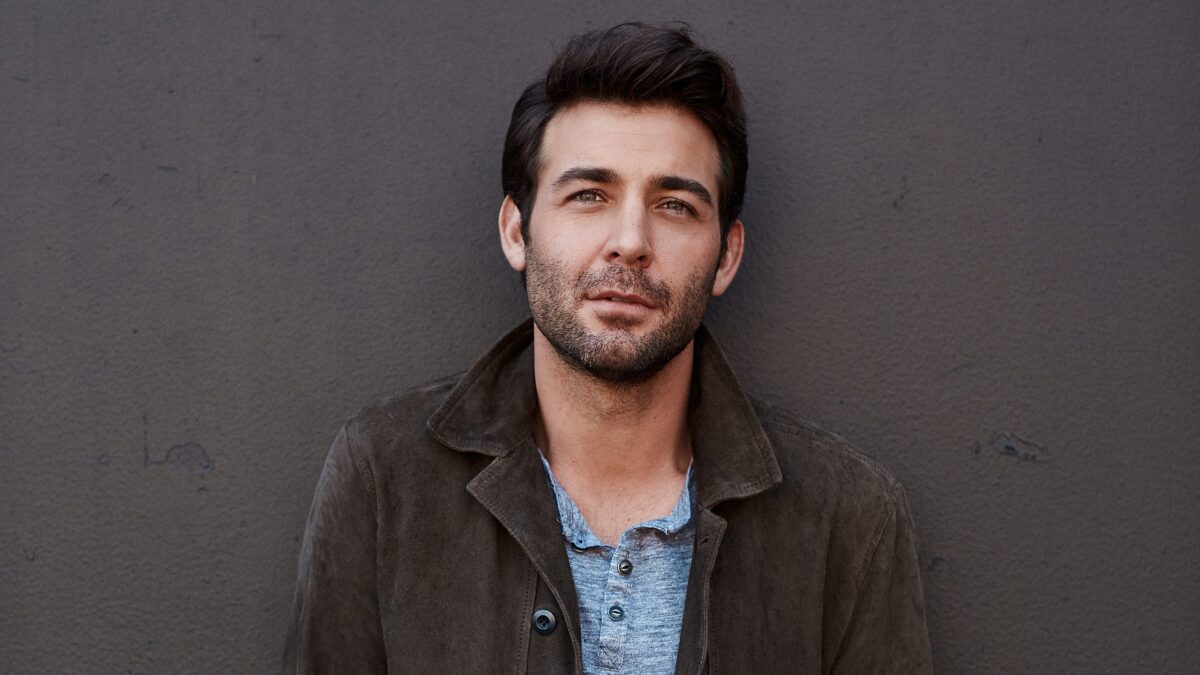
You may not know it just by looking at him, but James Wolk has one of the most contemptuous faces on TV right now. Perhaps it’s the actor’s natural charm, signified by his Midwestern cadence and happy-go-lucky smile, that makes him a shoo-in to play characters whose malice isn’t easily detected. That certainly came in handy as the perplexingly cheery yet crooked Bob Benson on Mad Men, and the sorrowful though dangerous Jordan Evans on Tell Me a Story. But neither role matches the levels of insidiousness hidden beneath the surface of Wolk’s cunning turn as Sen. Joe Keene Jr. on Watchmen. (Beware of spoilers.)
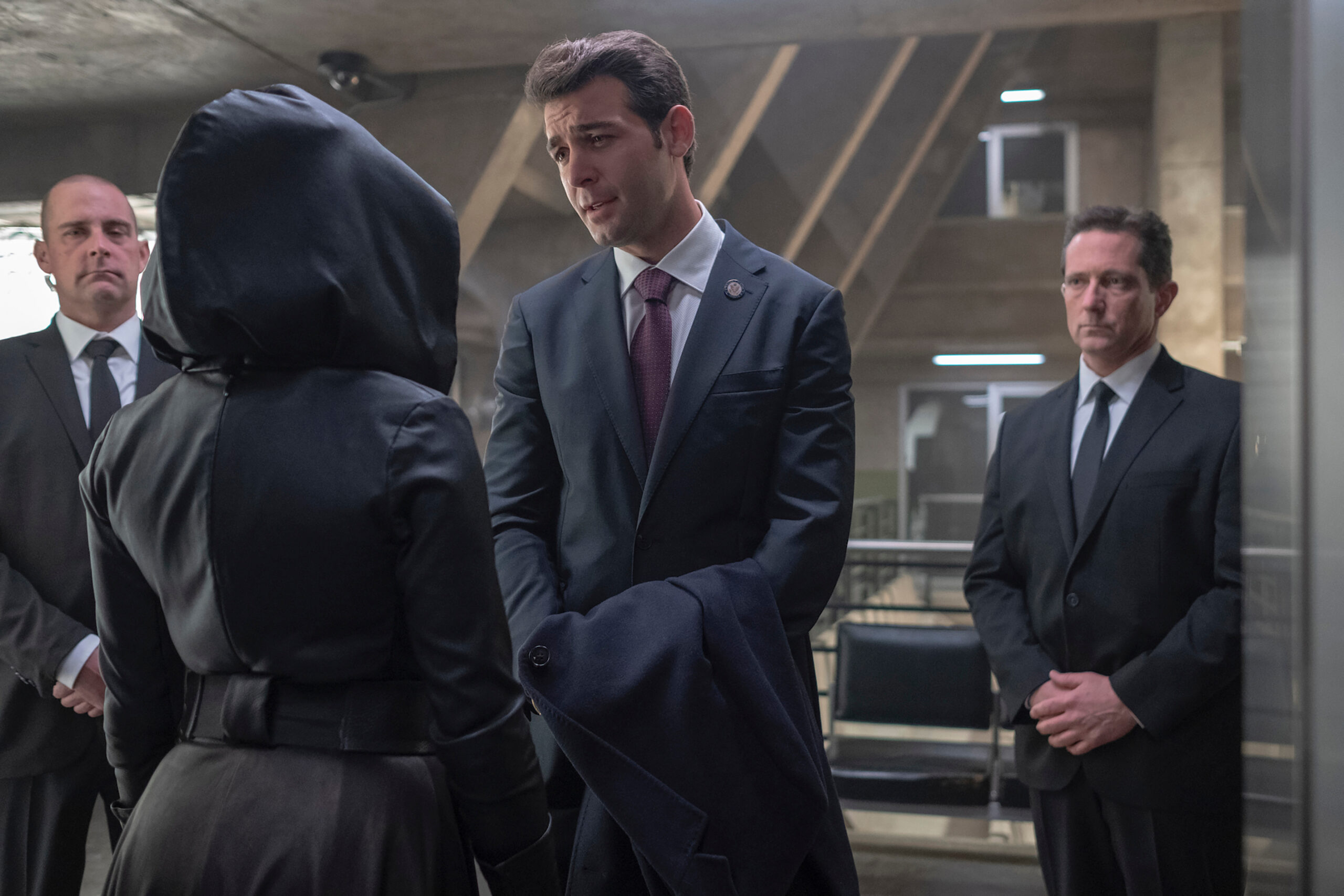
He’s introduced early in HBO’s graphic novel-inspired masked-vigilante series as your regular, ambitious politician eager to step in where he’s needed—like when the Tulsa police chief (Don Johnson) is mysteriously murdered. But Keene later drops his righteous façade in a shocking mid-season turning point to reveal that he is aligned with the white supremacist organization, Seventh Kavalry.
As audiences collectively picked their jaws up off the floor, Keene concludes his first of many self-inflated monologues with a threat on the life of detective Angela Abar, aka Sister Night (Regina King): “Serve her up, and that way I don’t have to ask these racist Okies to go to her house and kill her and her entire fucking family. Either way works for me.” He utters this venomous speech with a can-do grin, of course.
Wolk jumped at the chance to play his most complex and derisive role to date, a character that gave the Michigan native an opportunity to move outside of the nice-guy image that pigeonholed him earlier in his career. “When I was younger, that quality put me in a certain position where people were like, ‘I don’t know if I see him playing the scariest character, or someone who has that inherent edge,’” he tells PLAYBOY.
But the actor found a way to use that same innocuousness as a mechanism for the vile behavior of his most memorable on-screen alter egos. “As I’ve gotten older and had the opportunity to play people like Bob or Keene, it’s really cool to take that same [quality] that made people unsure of whether I could play a bad guy and use that as this exterior,” he continues. “Inside, there’s something much more nefarious going on, and I think that’s exciting to play against.”
It takes more than innate affability to make a character like Keene compelling, though. For Wolk, it meant visualizing a backstory for him that doesn’t already exist in showrunner Damon Lindelof’s adaptation—or even Alan Moore’s source material, which only features Keene’s father, not the son. Even with all his Machiavellian actions, Wolk needed to make Keene human.
In 2019, it’s a perfect time to look back at everything we’ve experienced, and demand people examine it and not just take things at face value.
“The thing about playing a guy like Keene, or someone who is obviously not a good guy, is that you can’t judge them or be the one who says, ‘I’m playing a bad guy,’” the actor says. “So, I took the material that Damon gave me, then sat with a blank notepad and a pen creating Keene’s life: his children, his wife and the motivation behind why he does what he does.”
Though we never get a peek at Keene’s home life, it’s clear that he is a man obsessed with his own alarming power. Not even a promising presidential run and his staggering number of right-winged followers is enough for him. By the season finale, we learn that he also wants to consume the almighty Doctor Manhattan’s (Yahya Abdul-Mateen II) abilities. And he gets pretty far with that plan until his own silly technical hiccup instead turns him into black ooze.
Even with all its wild twists and turns, Watchmen is a show that seems just as interested in exploring the deplorable justifications for violence and hatred—including trauma and power—as it is seeking retribution for those ills. It’s also brimming with characters in law enforcement and government hiding their true identities behind masks (both figuratively and actually), and exacting their own definitions of justice, that make it nearly impossible to be certain of anyone’s real agenda.
But that’s what also makes the series so fascinating; it rightly determines that even political figures and high-ranking officers of the law can and should be questioned about their motivations and participation in unseemly acts. “It’s clear if everyone’s eyes have been open that we as a country have seen people in those positions not live up to what we believe they should be in a perfect world,” Wolk says. “We’ve seen bad politicians and cops who didn’t do the right thing. But there are also a lot of cops who do amazing things, and a lot of great politicians.”
Ultimately, Wolk sees Watchmen, a series so rich in social commentary, as an opportunity for audiences to have a candid conversation about the world around us. “I think it’s healthy for our society to be honest about what’s working and what’s not,” he adds. “In 2019, it’s a perfect time to look back at everything we’ve experienced, and demand people examine it and not just take things at face value.”
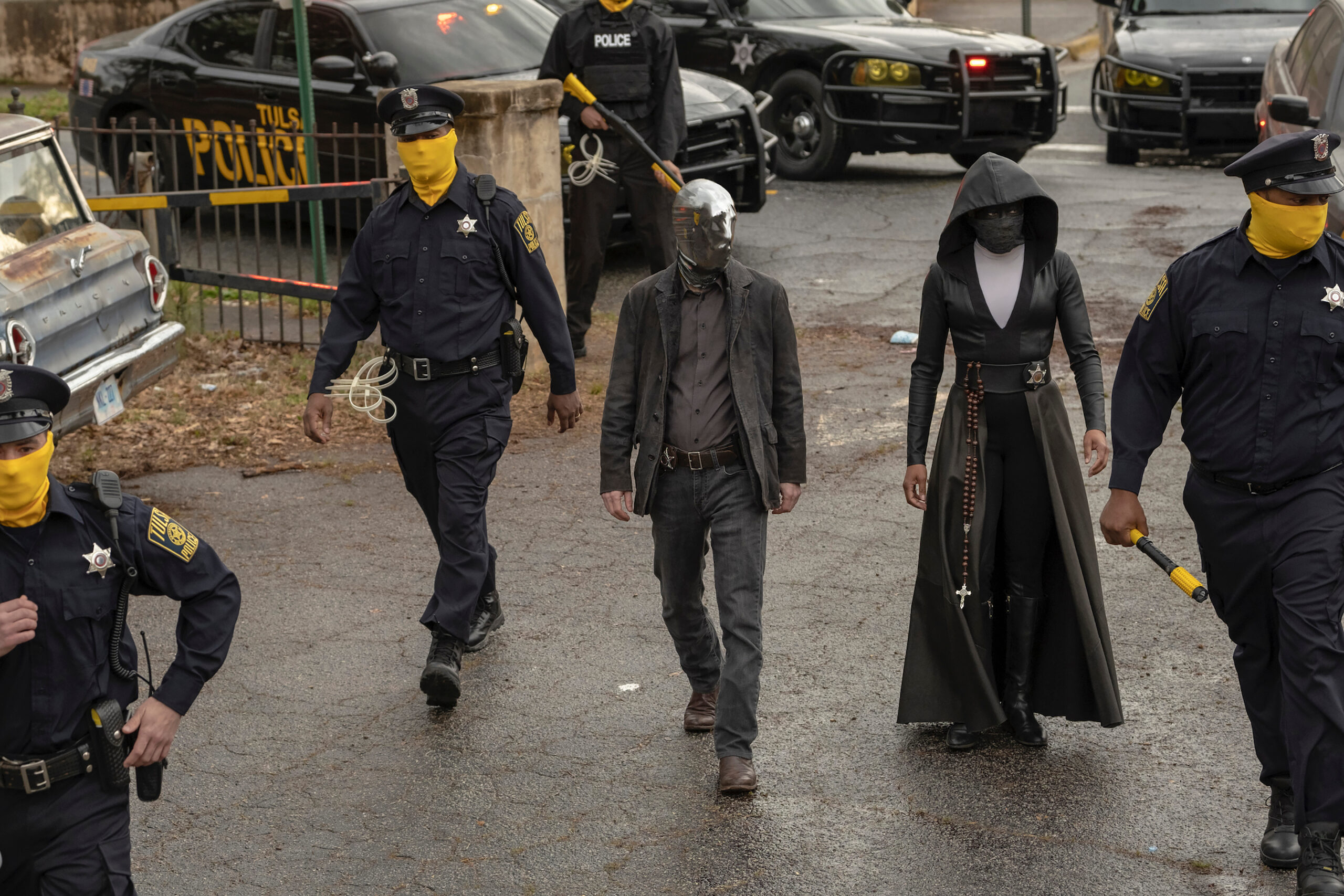
Being a part of a show that effectively pushes the boundaries of superhero storytelling fills Wolk with as much excitement as the rest of us, who have been riveted to our screens for the last two months. “The amazing thing about the show is that it’s so big in scope,” he says. “I tune in to the show, and there’s so much for me to see that has nothing to do with [my character]. I just enjoy watching it.”
But Watchmen hasn’t exactly become family viewing in Wolk’s home. The actor’s 3-year-old son Charlie, with wife Elizabeth Jae Byrd, is understandably not allowed to watch the series, which has everything from naked Jehovah’s Witnesses to his dad terrorizing a man with basketballs dropping out of a lightning portal. “Oh, my God—he’d freak out!” the actor laughs. “He’s never seen anything I’ve done, and I think Watchmen will be far in the future.”
It’s likely that even then we’ll still be debating Watchmen’s many heightened elements, including Angela’s Nostalgia drug overdose and that giant, blue Doctor Manhattan dildo. Still, the show will be most remembered for the way it uses superhero characters to tell a story about masked humans that are battling, and in some cases enabling, real-world issues such as racism, corruption and trauma.
“I mean, what took place with the giant squid dropping down is not a normal thing that a lot of people can associate with,” Wolk laughs. “But the idea of a childhood trauma that changes who you are the rest of your life is what’s so moving about this show. No one has a superpower, so to speak. They don’t have X-ray vision. You feel like you’re watching real people that you can connect to.”