Your bag is empty.

A week in the bush with VETPAW, a veterans’ organization fighting to save endangered African wildlife while healing the wounds of war
It is just past one A.M. and I am deep in the South African bush with Ryan Tate, a 33-year-old native of Fort Myers, Florida and former United States marine. We are following the perimeter of an electrified fence that surrounds a 26,000-hectare private wildlife preserve situated in the northern fringes of Limpopo province. Just over the horizon lies the tri-national border between South Africa, Zimbabwe and Mozambique, a hotbed of smuggling nicknamed Crooks Corner.
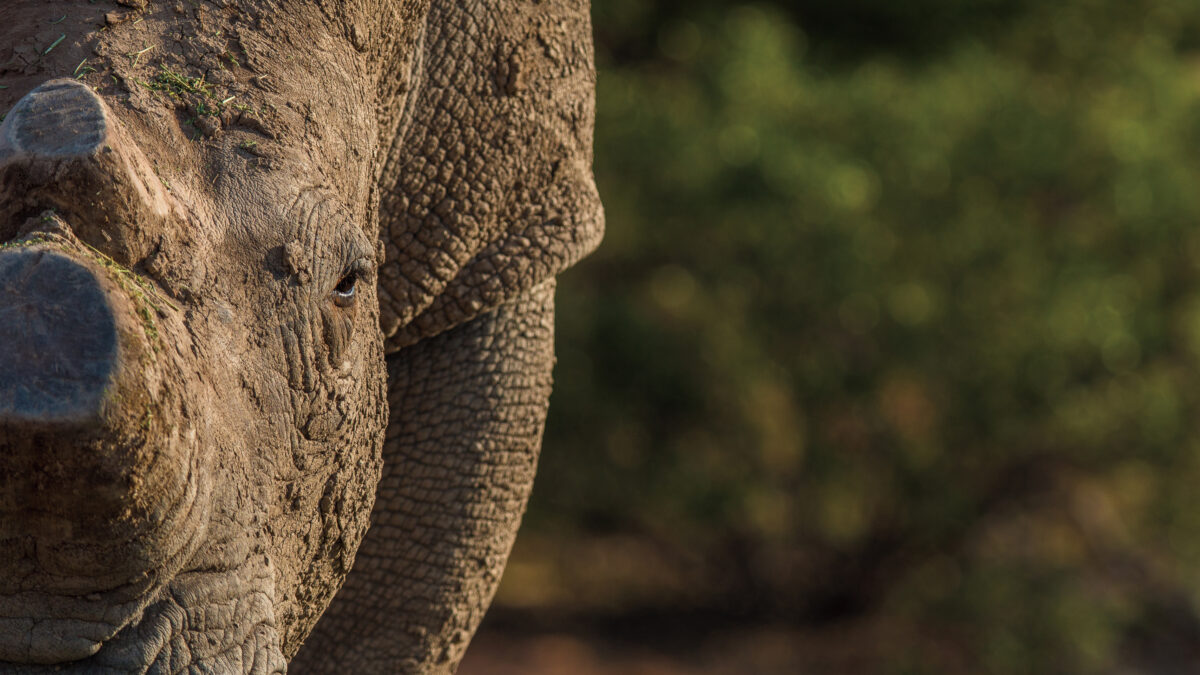
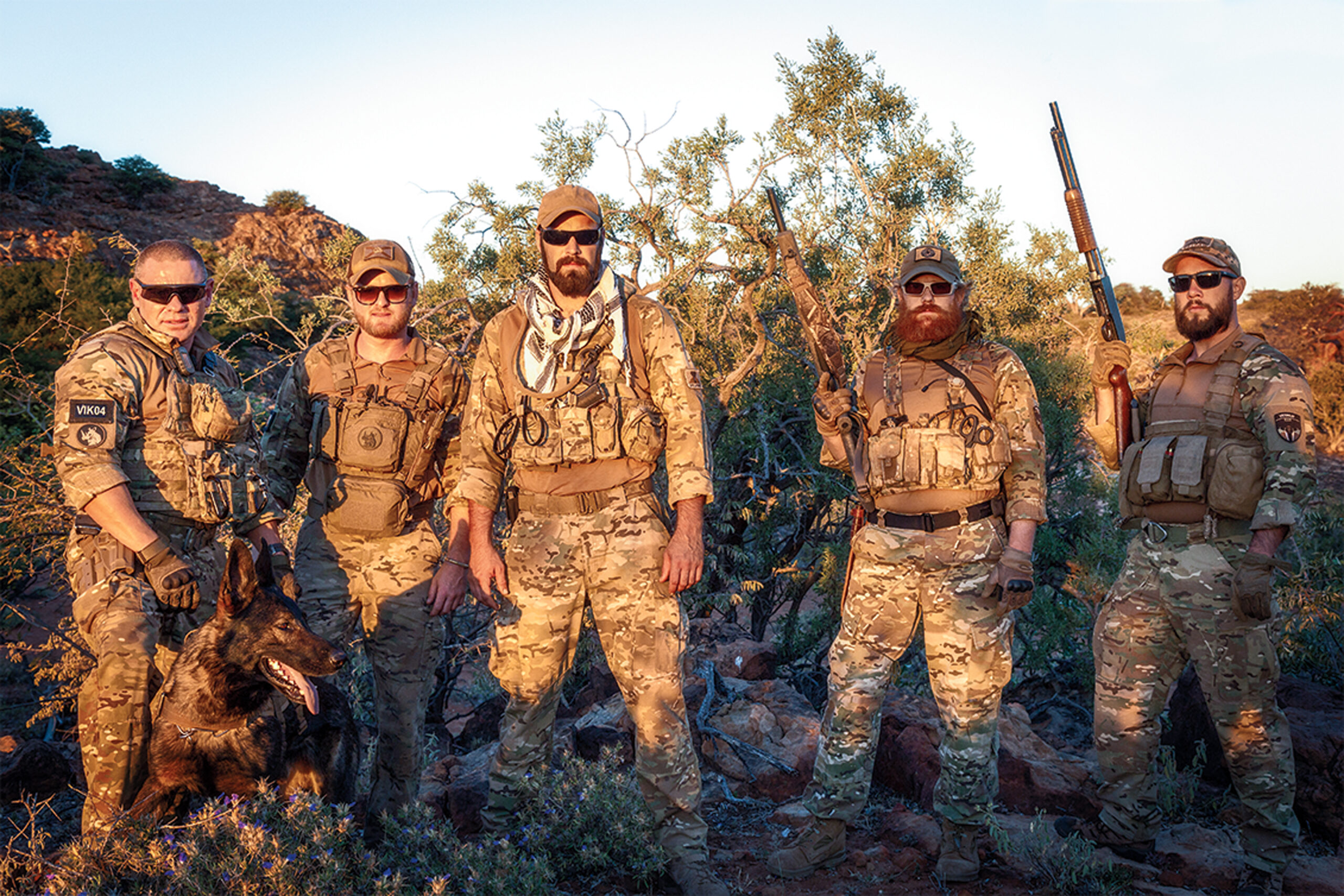
In recent years some denizens of Crooks Corner have been trafficking in a new and peculiar contraband: rhinoceros horn. Between 2007 and 2014 rhino poaching increased by 9,000 percent; some 7,245 rhinos have been killed in the past decade. Most rhino species are now endangered, which is why Tate is out here, under cover of night. In 2013 Tate founded Veterans Empowered to Protect African Wildlife, or VETPAW, an antipoaching security organization staffed by U.S. military veterans who use the skills they sharpened in war to combat poaching in Africa. After launching in Tanzania—a rocky start, but more on that later—VETPAW has spent the past three years patrolling this private South African wildlife preserve that’s home to all of Africa’s “big five”: lions, leopards, giraffes, water buffalo and one of the few thriving rhino herds left in the region.
Before landing on the continent, the closest Tate had ever come to African fauna was at a local zoo. Now he is one of the more controversial figures in the world of wildlife conservation. Some laud VETPAW for its innovative approach to the poaching problem—offering veterans a way to lend their military training to a peacetime cause. Others see Tate’s organization as a dangerous misapplication of American-style militarization to an already violent corner of the world.
Tate is decked out head-to-toe in camouflage, a pistol on his hip. He points a flashlight at some human footprints alongside a tangle of impala tracks. He picks up a stick and measures a print. It looks like the sole of a worker’s boot, probably belonging to one of the men from the nearby Venda tribal villages who slip under the fence each day to work on the property. But a second set of prints, this one from a pair of sneakers, concerns Tate. They seem to have come from the same direction as the worker, and Tate knows that those villages are also home to suspected poachers.
Apparently animals aren’t the only ones prowling the darkness beyond the fence.
Many veterans struggle to adjust to life after combat, but Ryan Tate wasn’t one of them—not at first, anyway. He served in Ramadi during the bloody years of 2005 and 2006. He was the point man on neighborhood patrols. Each time he busted down a door, it was “like playing Russian roulette,” he says. But he loved his time in Iraq; it was “just like being a G.I. Joe.” When it was over, he found a job on a security detail for the Department of State, where he served as a bodyguard for dignitaries including Hillary Clinton. As boring as it was at times, Tate took pride in the work, which matched his military training with a career that served his country. The only curious thing he noticed following his military tours was that he no longer got the same adrenaline kick riding dirt bikes.
Then, one Sunday afternoon in 2012, Tate was home on his couch in New York City, watching a nature documentary, when he saw shots of elephants with bloody stumps where their tusks once were and rhinos with their faces hacked off. For five days he couldn’t bring himself to leave his apartment. He called in sick to work. He wept uncontrollably. He didn’t understand what was happening.
Tate was angry; he wanted to fight. He wanted to fly to Africa and “kick some ass.” But he also felt helpless, bewildered. How had he not known such horrible things were going on in the world? Why couldn’t he do anything about it? It took him almost six years to realize that the rage and sadness he was feeling that week were bound up in emotions he’d buried with his experience of war.
“It unscrewed the lid,” Tate says back at VETPAW camp. (In the light of day, Tate has broad shoulders, thick forearms and an intense gaze, but when he smiles, his bearded cheeks flash a rosy red.) “You see a lot of things in war. You see children die. You see your friends die. You take lives. You destroy homes. You’re sleeping at night and bombs are going off. Your next-door neighbor’s house is getting raided and gunshots are fired and women are screaming. These people have to live with that. That wore on me.”
When Tate finally dragged himself back to work, he did so with a new sense of purpose. Somehow, he would get to Africa. He would recruit fellow veterans to join him, and together they would use their military skills to counter the poaching epidemic. He believed that a lot of things he and his fellow soldiers did in Iraq and Afghanistan—gathering intelligence, disrupting terrorist networks, conducting war zone diplomacy, halting the flow of contraband—would translate into the field.
It took a few months of leveraging contacts in the State Department to generate interest in his new venture. VETPAW’s first break came in 2013 when officials from Tanzania invited his young organization to train their rangers. Tate and five other vets dropped into the East African nation, where they resided in government housing, drove government-issued Land Cruisers and flew around in government helicopters. The operation focused mostly on gathering intelligence on poaching networks.
“I wanted to be a force multiplier,” he says. “I wanted to take these park rangers and make them the equivalent of 20 park rangers.”
The approach seemed effective. Working alongside local rangers, VETPAW managed to identify several poaching networks. Tate sums up their MO with a story: After rangers had apprehended a poacher, Tate came to have a talk. The suspect was a middleman, a guy who paid off local poachers with money from the larger syndicates that trafficked in the rhino horns. Tate saw an opportunity. As he had so many times in Iraq, he sat the man down and asked him if he had a wife or kids.
“Yeah, yeah, I have two daughters,” the man said.
“You know what, man?” Tate said. “I know that you were just trying to provide for your children. I know that you’ve got to put food on the table.”
The man nodded. Tate continued.
“But what you’re actually doing by poaching these animals is you’re destroying the heritage and the future of your community,” Tate recalls saying. “If you don’t have these animals, your community will crumble and criminals and terrorists will thrive in this region. What you’re doing by providing for your kids in a dishonorable way is you’re taking away their future. You’re actually not providing for them.”
The next day, Tate says, the man led the soldiers and rangers to the homes of several other poachers.
The reason rhinos are being slaughtered in Africa is almost as incomprehensible as the drop in their population. Already established in China, a booming market for rhino horn has opened in Southeast Asia. Folk doctors grind down the horn, which is virtually identical in substance to the human fingernail, and sell the powder as a treatment for cancer and erectile dysfunction. These presumed effects and the amount rhino horn can fetch on the black market—upward of $65,000 a kilogram, more than gold or cocaine—have transformed it into a status symbol for the growing middle class in countries like Vietnam. It is an appetite that underworld crime syndicates are more than happy to satisfy.
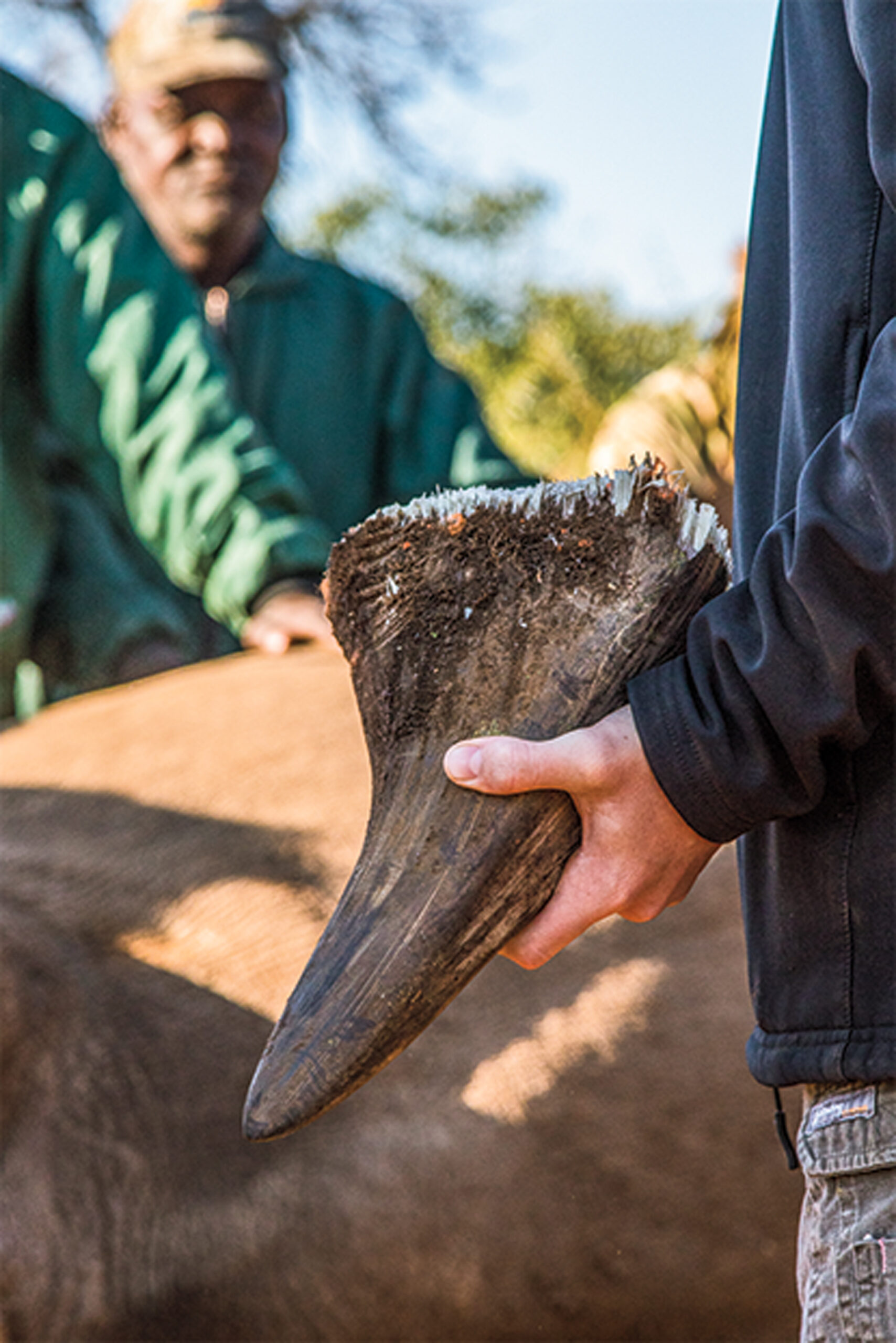
But the Southeast Asian market represents only one of the threats to wildlife in Africa, which has seen tremendous declines in populations of elephants, giraffes, lions and other animals. Natural habitats are shrinking as the human population expands. Political corruption often undermines official antipoaching and conservation policies. Different countries employ differing approaches to conservation, with varying degrees of success, and a crowded nonprofit and NGO sector struggles to focus on a singular strategy. The wildlife crisis touches on many of Africa’s other crises: overpopulation, resource mismanagement, unproductive intrusion from well-meaning outsiders and deeply entrenched inequality that dates back to colonialism.
This is the world Tate and his veterans entered when they started working with the government of Tanzania. Tate soon discovered it was a combustible environment. In early 2015, just before they set out on the mission, a now former member of Tate’s team named Kinessa Johnson gave an interview at the National Shooting Sports Foundation’s annual SHOT Show in Las Vegas in which she said she wanted to “kill some bad guys and do some good.” When the interview surfaced online months later, the Tanzanian government asked VETPAW to leave the country.
Johnson’s comments struck a nerve with governments and organizations concerned that the introduction of foreign military personnel would further militarize the poaching crisis, which had already seen increased activity of heavily armed poachers in places such as Kruger National Park. Ever since the experience in Tanzania, Tate has been focused on refining his model—tempering the “kick some ass” fantasies he’d nurtured a few years earlier. He found the preserve in South Africa essentially by going door-to-door, looking for landowners who would accept free security services in exchange for providing VETPAW a base of operations. (VETPAW pays its veterans by raising money, mostly from American donors.) The goal: to create antipoaching teams that do more than conduct raids and collect intelligence. Tate wants to offer monitoring, security and training services that can be easily adopted around the continent.
VETPAW’s rangers typically rotate through three-month deployments; at any given time four to six veterans are on the ground. The soldiers’ days are framed by morning and evening patrols and shifts with Níall Bedzer, an Irish expat who runs the preserve’s rhino-monitoring program, helping him keep tabs on the movement of the herd. After nightfall, they head into the remote corners of the preserve, sometimes spending days camping out in the bush. They are there to monitor intruders but also to send a message. “We like to own the night,” Tate says.
In reality, when they’re out here, they’re not soldiers anymore. They’re conservationists.
Team VETPAW lives in a small house fitted out like a stage set from M.A.S.H. Workout equipment is scattered around outside, and a hammock is strung between the branches of a massive baobab tree. Inside, the walls are covered with maps, whiteboards and signs warning of poisonous snakes.
Beyond the property’s gates, the preserve is massive—two dusty, tree-dotted valleys that nearly span the horizon. Great journeys of giraffes, two herds of elephants and countless impalas, kudu, muskrats, wildebeests and water buffalo roam the landscape. Down the center, a spindly mountain ridge is dotted with the clay brick walls of ancient Venda tribal ruins. One evening, Bedzer takes me up the side of one of these ridges to a rock shelter a hundred feet above the valley floor. Standing up to our ankles in baboon droppings, we see the faint outline of a rhino painted on the limestone wall—evidence that the giant mammals have been roaming these lands for millennia.
During full moons, when the sky is bright enough to navigate without a flashlight or torch, the patrols increase in frequency and length. But when the moon is in its first phases, evening life revolves around the braai pit, where the vets, most in their late 20s and early 30s, sit around a roaring fire while fresh springbok meat roasts nearby. The conversation drifts from black-mamba sightings to lighthearted ribbing. During the week I spend with the team, Ben Powers, a former Army field sniper, takes most of the punishment, thanks to his constant Tinder messaging.
Watching the banter, I’m reminded that, as much as VETPAW is an antipoaching outfit, Tate’s group is also serving another mission. The organization offers a way for these guys to recapture something of the camaraderie they knew during wartime, a less talked-about aspect of military withdrawal that can be just as demoralizing as the sudden drop in adrenaline. In this way, VETPAW is part of a growing number of organizations that are helping veterans via unconventional means—from Operation Surf, which teaches vets to ride the waves, to Force Blue, which employs them to help restore damaged coral reefs. According to a major RAND Corporation study, nearly 20 percent of Iraq and Afghanistan military vets suffer from PTSD or depression, and 19 percent suffer from traumatic brain injury—and yet as many as 50 percent of those diagnosed do not seek treatment. For vets who may not find their way to clinical care or whose recovery is long and slow with problems not so easy to diagnose, organizations like VETPAW offer a way to process the lingering hurt that is the quiet cost of service.
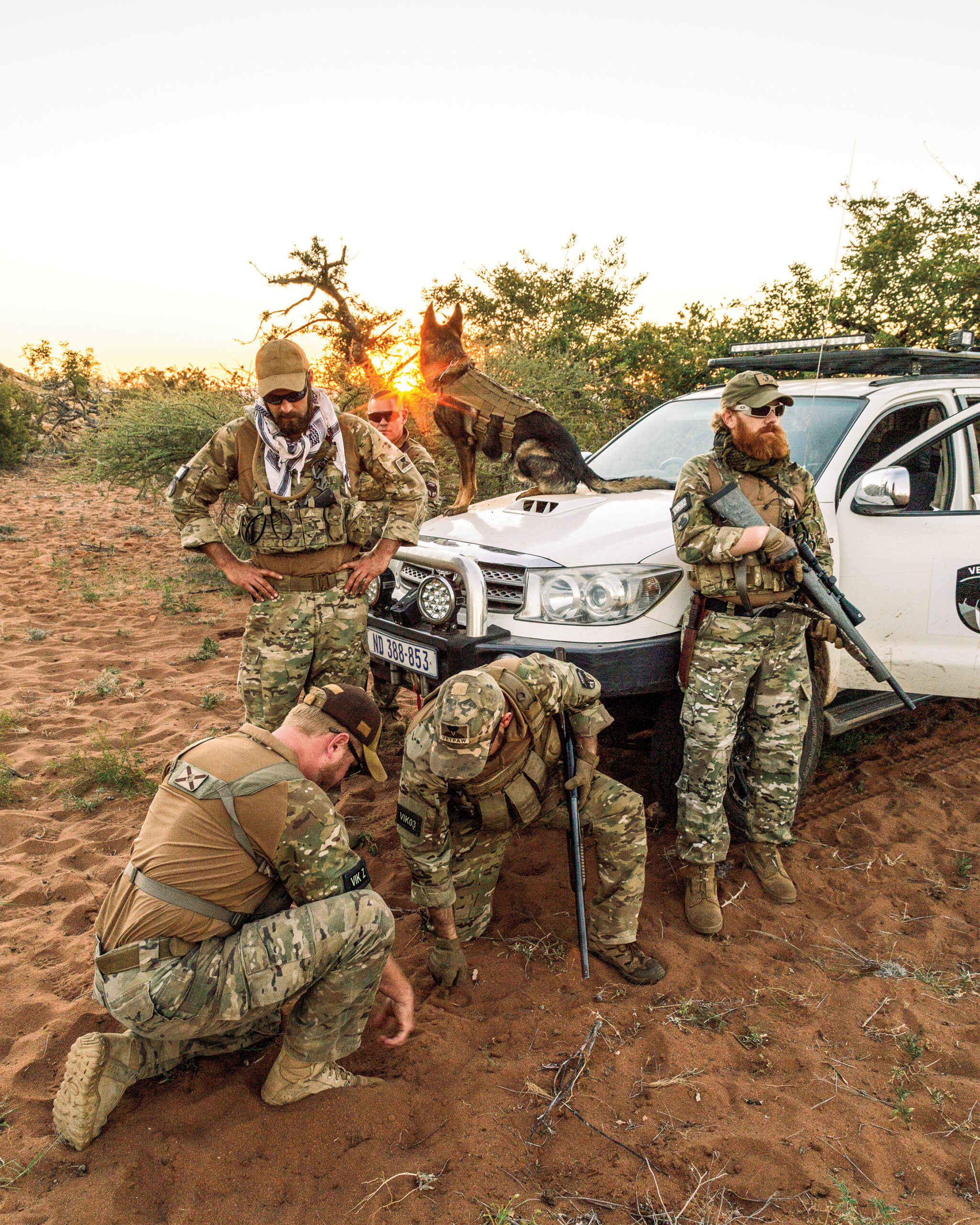
“It’s an empowerment thing for me, showing that these guys are more than just machines that go to war for the government and politics,” Tate says. “The veteran skills that we’re putting to use here, that’s just one part of it.”
The next day, I find Powers in camp, paging through a copy of Friedrich Nietzsche’s Beyond Good and Evil. Life with VETPAW, Powers tells me, resembles deployment because of the regular patrols, the long hours in the field, the suiting up, the weapons and the communal life—but that’s not all. Before he came to South Africa, he was working long hours for a steel-fabrication company, getting up at four A.M. for his commute and crashing into bed around nine or 10 at night.
“There was not a lot of time to spend working on myself,” Powers says. “When on deployment, there’s a lot of sitting around and learning how to utilize that time productively. That military community, that military lifestyle is what I missed.”
In South Africa, Powers has something you can’t find in therapy alone. He has time to read, work out and socialize with peers who know firsthand what it’s like to have lived in a war zone. And unlike many other military contracting jobs, VETPAW offers an opportunity to recapture something of the military life on a mission that isn’t, as Powers puts it, “gray.”
“It is a pure kind of mission,” he says.
Of course, no mission is 100 percent pure. The exile from Tanzania has left a mark on VETPAW that the organization still hasn’t managed to shake. Several conservation organizations I reached out to either didn’t respond to a request for comment or expressed reluctance to speak about VETPAW. One representative said off the record that he didn’t want his name in an article associated with the group. The Game Rangers Association of Africa wouldn’t speak to me about VETPAW but instead sent a five-page statement. Without naming names, it lists a variety of complaints about foreign ex-military entering the antipoaching sphere, including a lack of coordination and appreciation of cultural and political issues, and a tendency in the media to portray them as “the answer to Africa’s poaching woes.”
We are sitting around a firepit at VETPAW’s camp when I present some of these concerns to Tate. He rests his elbows on his knees, as he often does when the conversation turns serious. He says that VETPAW has reached out to countless antipoaching organizations and government officials. Mostly he has found the various players standoffish and territorial. He tells a story about the manager of a nearby preserve, an Afrikaner, who refused VETPAW’s offer to patrol his preserve for free. The Afrikaner bragged about how he had killed a poacher on his property and had the situation under control. A few weeks later, all but one of his rhinos were slaughtered.
Still, the lesson of Tanzania is not lost on Tate. VETPAW has changed the way it selects rangers, and this summer it conducted its first training and recruiting event in Arizona. Over 10 days, veterans interested in joining up participated in a variety of training exercises, including role-playing scenarios designed to weed out hotheads.
“Just because you’re Special Forces, Ricky Recon, Billy Badass, doesn’t make you the perfect soldier for this,” Tate says. “You’re not in war. Even just a shot fired that doesn’t hit anybody, those people are going to go tell the community, and then I got to answer to an elder. It can wreck everything. And certainly if you kill an innocent person, it’s done.”
Tate has also learned that success in this arena requires matching shows of force with acts of kindness. When VETPAW first arrived on the preserve, it was more common for nearby villagers to cross onto the land. Once, Tate received a call from one of his scouts that a suspected poacher was on the property. Tate went up in a helicopter with the game-preserve owner to track the intruder. They followed him all the way back to a village and brought the chopper down right in the man’s front yard. It was a strong warning: There were new consequences for trespassing. A few weeks later, when the VETPAW team returned, they noticed the village well’s water pump had broken. They came back and fixed it.
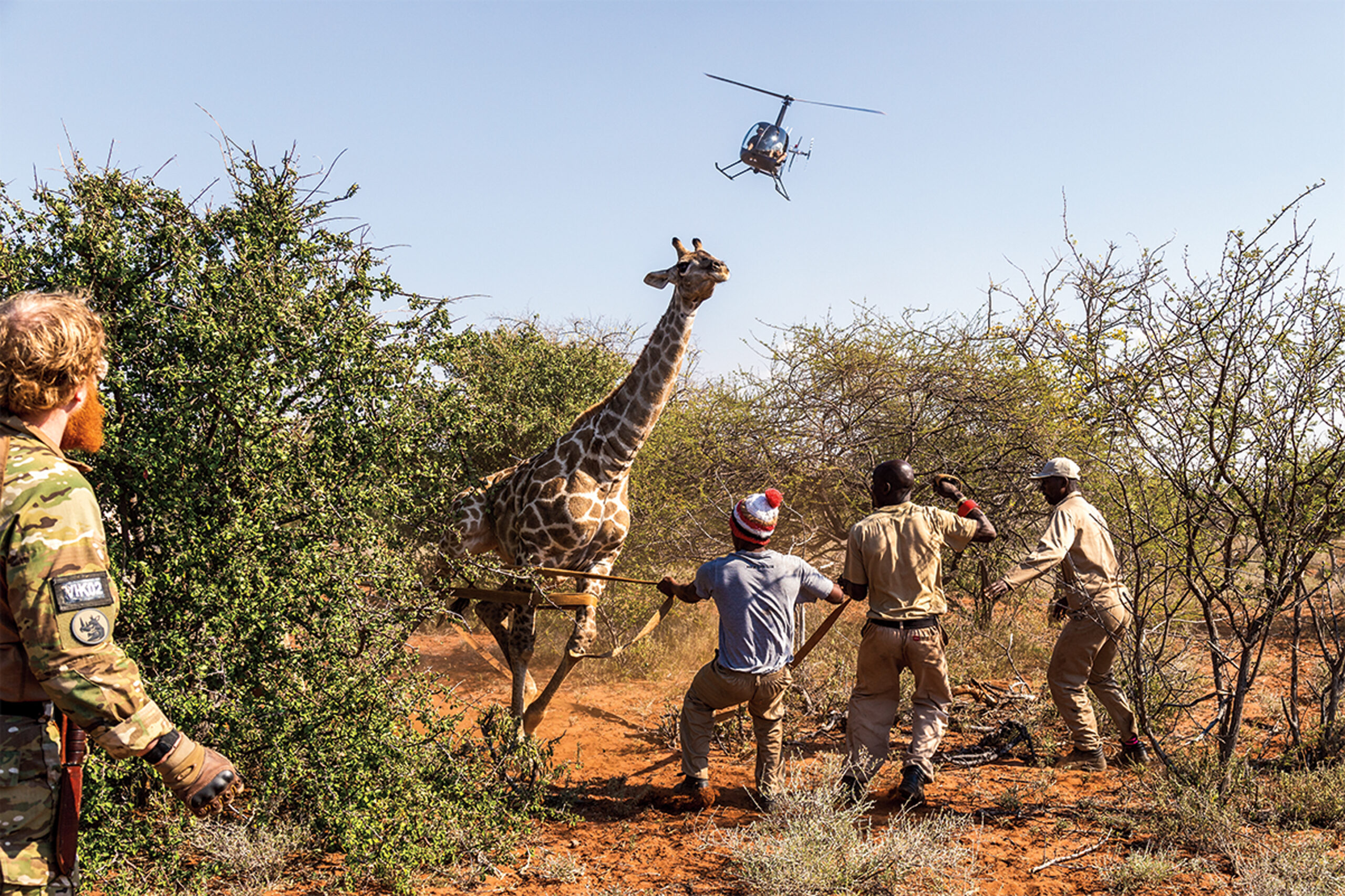
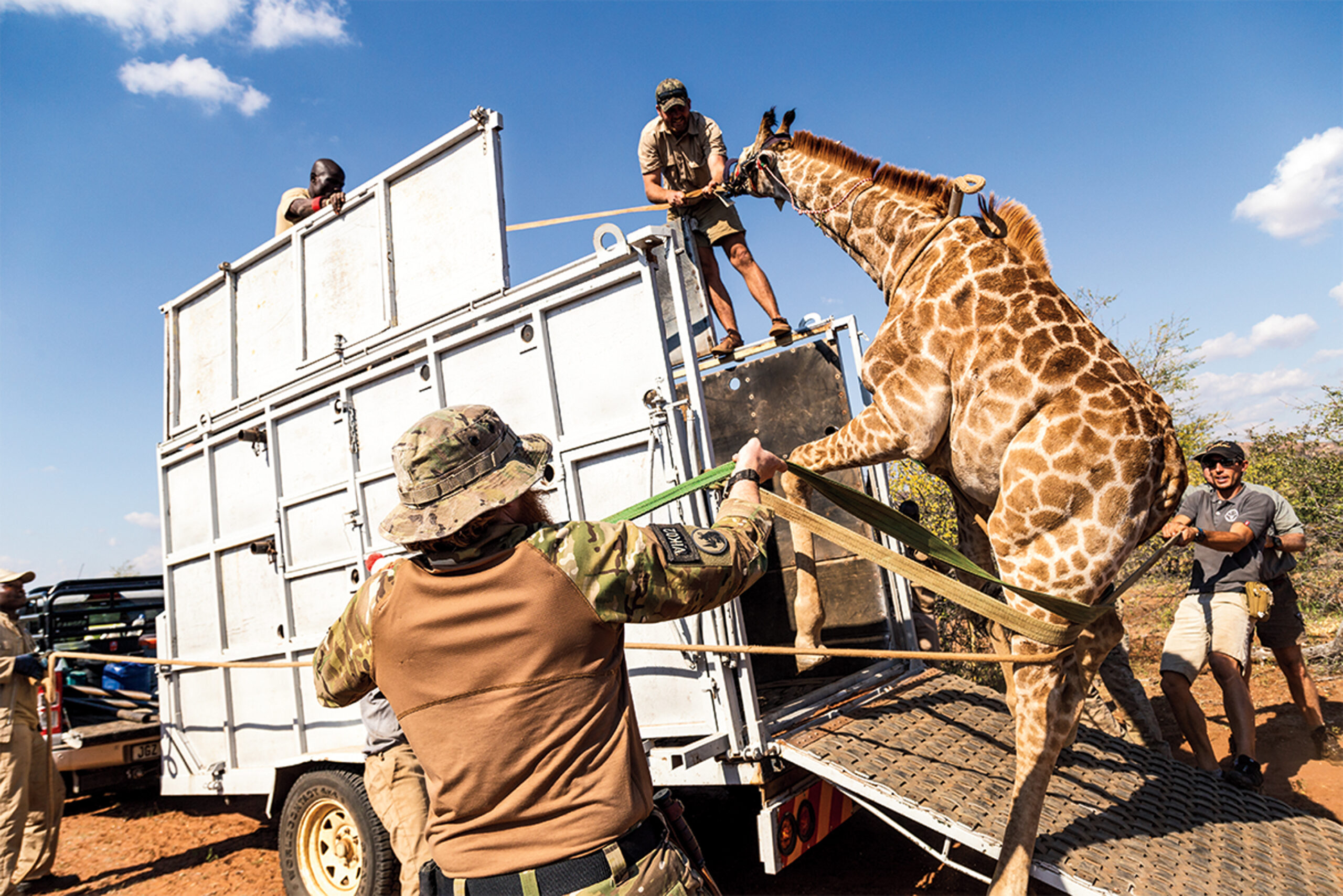
The specter of a jacked-up army implied by the Game Rangers Association’s statement doesn’t jibe with the VETPAW team members I meet on the ground. If anything, the organization resembles a Boy Scout camp for grown-ups. When they’re not on antipoaching duty, the soldiers assist the preserve managers in running the property, capturing game, administering medicine to the elephants with the veterinarian, and feeding and monitoring the rhinos.
“In reality, when they’re out here, they’re not soldiers anymore,” Tate says. “They’re conservationists.”
It’s all part of Tate’s ever-expanding vision for how his organization can not only save rhinos but also save veterans. He wants to add a garden near the barracks so vets suffering from severe PTSD can participate in horticultural therapy. He wants to expand VETPAW’s footprint in Africa so more veterans can use their training for a good cause. To date, the group has been invited to set up a second base of operations at a private preserve in South Africa’s Eastern Cape region. The team will include some who have experience running VETPAW’s program and some new recruits. If all goes well, the new venture will demonstrate that the organization’s success at protecting rhino herds, as well as its operational culture, will be replicable in any number of settings.
It is perhaps not surprising that while other antipoaching organizations have cast doubt on VETPAW, private preserve owners have taken note of its potential. VETPAW’s approach reflects Tate’s blunt, clear-headed style. The complications around the various bureaucracies of the counter-poaching world—from governments to NGOs to protective personalities—he sees as noise. VETPAW can avoid all of it by focusing on a simple mission: protecting the rhinos that are placed under their care.
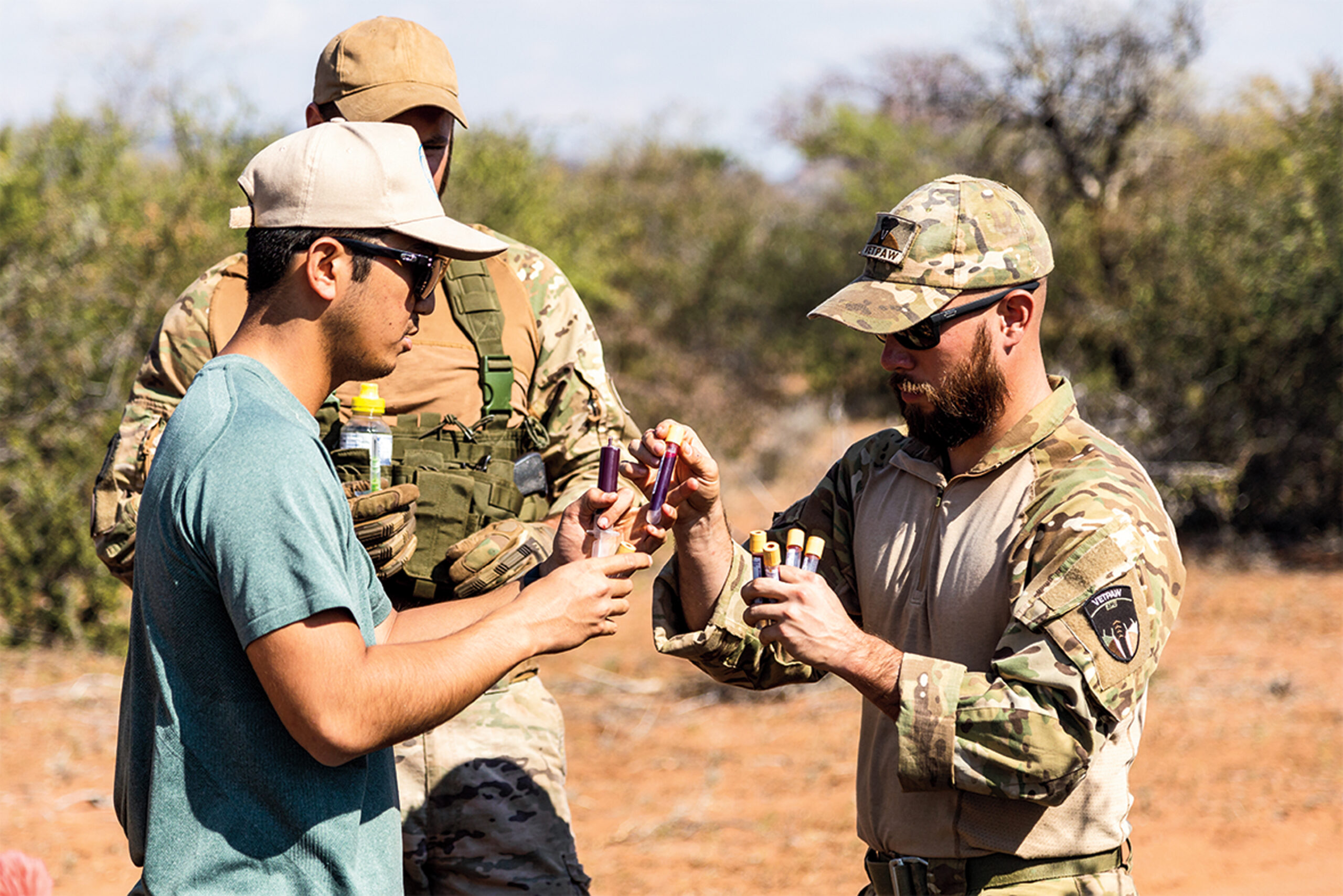
“We’re just focusing on doing the work here and doing a good job,” Tate says. “We’ve never had a poaching incident anywhere we’ve worked. Everyone wants to be the person who saves the rhino. I could give two shits who saves it. Just save it.”
At the end of the day, the only real evidence of an antipoaching organization’s success is the health of the wildlife. Although for security reasons VETPAW can’t say how many rhinos now live on the preserve, since the organization began operating here the herd has remained healthy and is growing.
Just as Tate’s initial vision of VETPAW was tinged with G.I. Joe testosterone, my expectations of this trip borrowed heavily from war-movie tropes. But most of the action I see during my week with VETPAW is related to conservation, not confrontation. I watch the former grunts help the preserve managers conduct a game capture—a helicopter swinging back and forth across the bush, scaring kudu from the undergrowth and driving them miles across the property and straight into a set of massive green curtains, where hidden workers then herd the animals into the back of a truck. For a routine delivery of birth control to the elephant cows, the men spot the elephant herd and radio the preserve owner and the veterinarian, who swoop down in a helicopter and shoot medicine-filled darts into the scattering animals. “South Africans are the best helicopter pilots in the world,” Tate says.
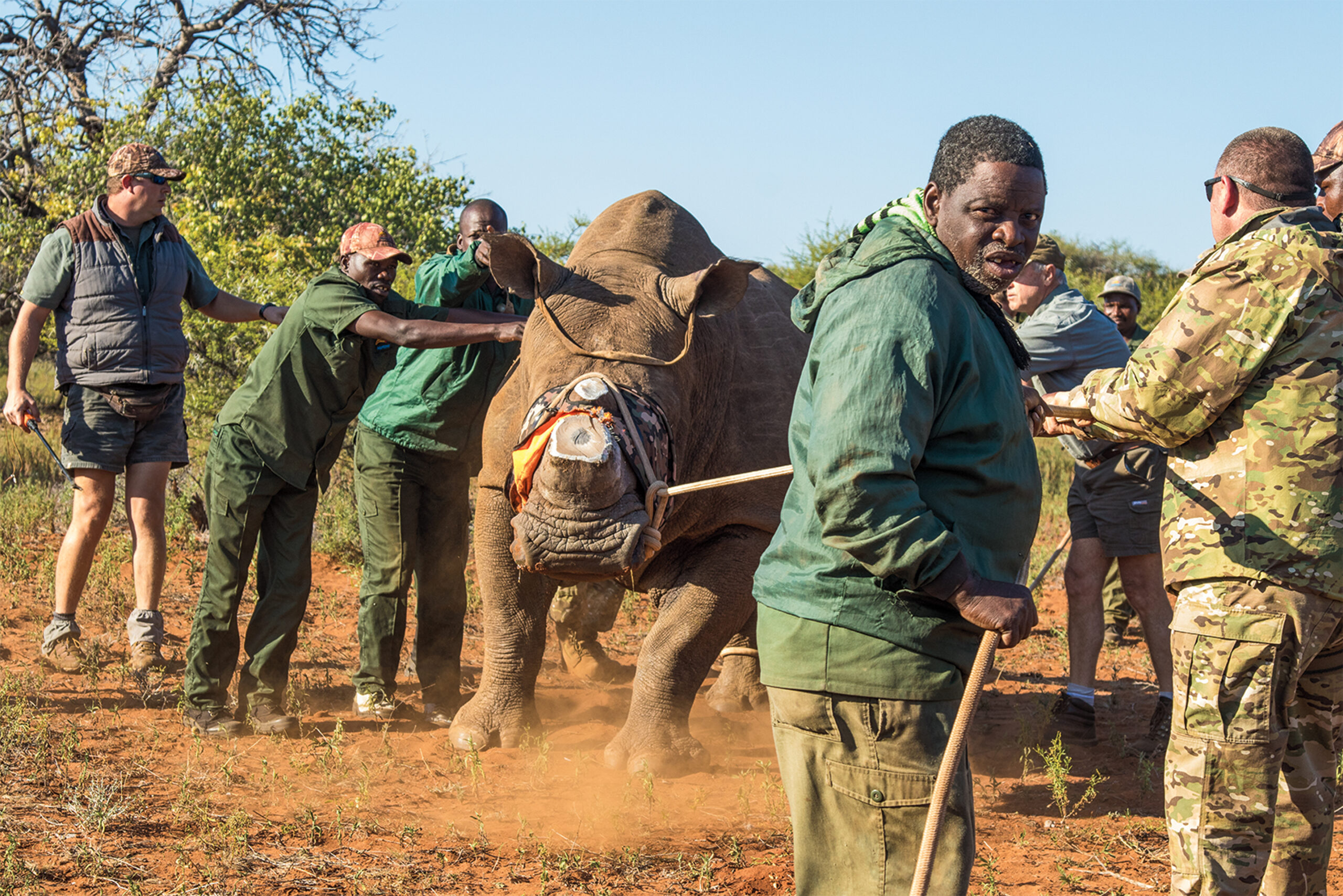
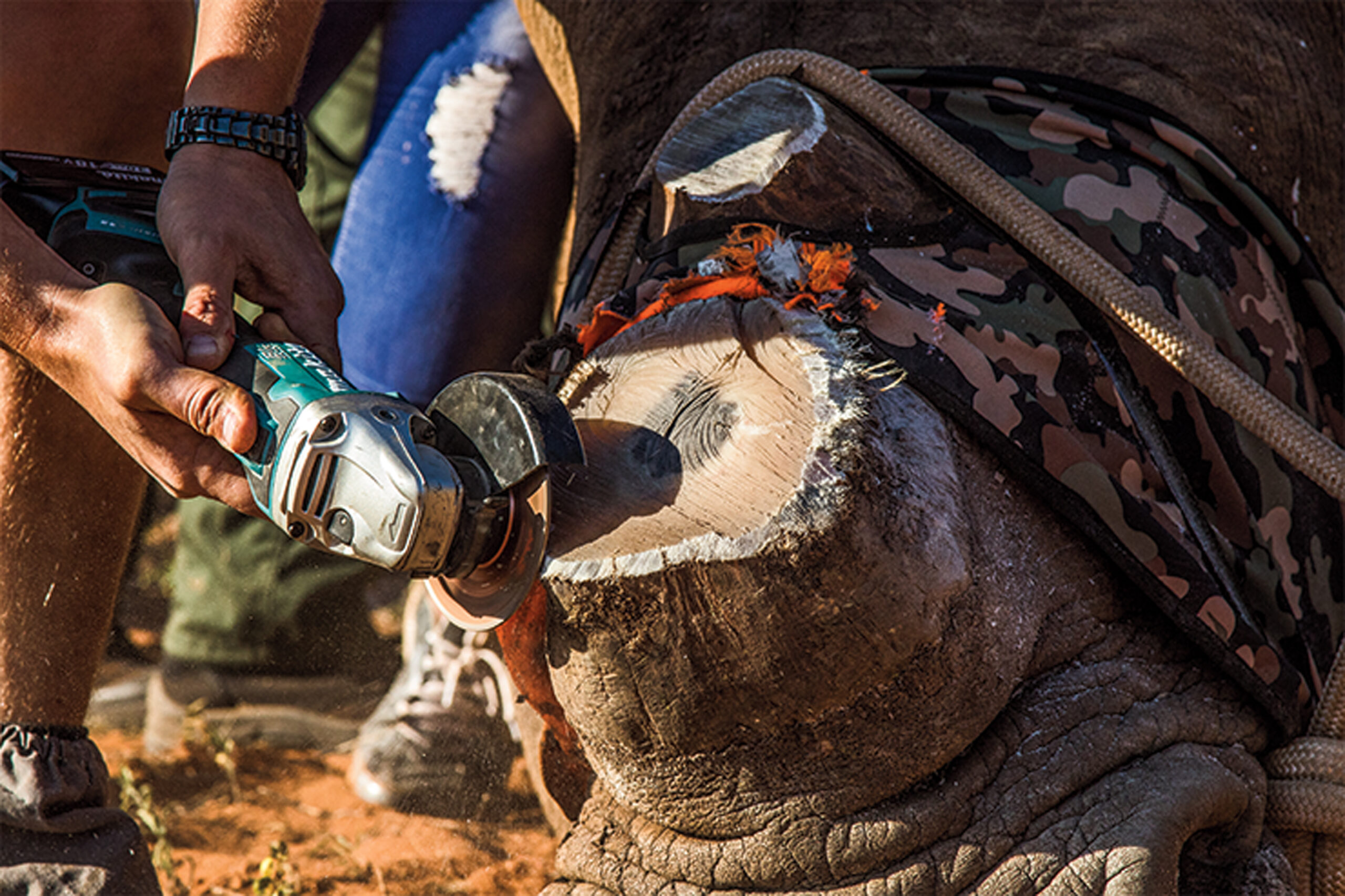
In a few weeks the vets will also participate in a dehorning. Rhino horns can be removed without harming the animals, and game managers have turned to this practice as a way of protecting them against poachers, who tend to shoot the animal and hack off its face, sometimes while the rhino is still alive.
By the looks of it, that gruesome scene will not play out tonight on VETPAW’s watch. Back in the bush on night patrol, we track the footprints into a thicket not far from the fence line. They could tell the story of an employee who simply forgot to wear the correct shoes to work. They could belong to a villager who hoped to catch a little bush meat to feed his family. Or they could be the imprints of a poacher. After following the tracks in a circle, Tate decides they will check with the preserve’s foreman the following morning to see if any of his men showed up to work that day in the wrong shoes.
The moon is waxing. In a few weeks, when it is full, poachers will likely begin to sneak into the property once again. For now, the VETPAW team decides to take advantage of the quiet night and head in early. On the way back to camp, we pass a spotted owl perched on a fence post, glimpse some water buffalo in the shadows outside the headlights and dodge multiple herds of impala emitting their low-throated groans as the 4×4 rumbles by.
Then, as we approach the gate, our spotlights catch the soft gray outline of two female rhinos and a calf standing in a small clearing. We pause and watch. They are strange, primeval-looking beasts, hulking bodies affixed to stubby legs. It’s difficult to discern what Darwinian advantage gave birth to their awkward form, so strong and yet so vulnerable. They crane their necks, dragging their $100,000 horns through a few bales of hay that have been left out for them to eat. One grunts and stomps her feet, kicking up dust. The calf jostles for position before the feed.
They are oblivious to the veterans in camouflage, who are now leaning out the windows of the nearby car, mouths agape in silent awe.