From Riots to Recognition: Celebrate Stonewall Day With Geena Rocero

Our August 2019 Playmate joins the team behind Stonewall Day to honor LGBTQ progress, advocate on behalf of marginalized individuals and salute the trans activists who made history in 1969
LGBT+ June 25, 2020


At 1:20 A.M. on June 28, 1969, eight police officers stormed into the Stonewall Inn, a Greenwich Village gay bar that welcomed drag queens, trans folks, sex workers and other outsiders. It was a routine raid; cross-dressing was then criminalized. The officers started lining up patrons outside to be transported to the precinct.

As the police began inappropriately frisking and aggressively shoving the detainees, a crowd gathered, throwing pennies and beer bottles at the police cars. Others formed a chorus line and began high-kicking and singing in protest. The chaos soon devolved into a brawl between the quickly amassing LGBTQ crowd and the authorities. Outnumbered, the police barricaded a small group of employees and patrons in the bar and waited for backup, which eventually arrived.

But it was a major turning point. Queer New Yorkers protested again the next night and on several subsequent occasions. Overnight many in the city’s LGBTQ community went from a relatively private and unseen existence in which they quietly visited underground bars where they could be themselves to storming the streets and very publicly demanding their legal rights and protections. Eventually known as the Stonewall riots, these protests catalyzed the LGBTQ movement.

Exactly one year after the original Stonewall protest, the first pride parade was organized to commemorate the landmark event, celebrate the LGBTQ community and highlight the need for laws to protect queer rights. Every year since, LGBTQ communities have organized events in June to honor those who stood up for their rights at Stonewall and to raise awareness of the ongoing struggle for equality.

Stonewall Day was born in 2018, launched by Pride Live, a national nonprofit organization that elevates awareness and support for the LGBTQ community. This year the celebration will take place June 26 (one P.M. to three P.M. EDT) via a livestream, and it will highlight LGBTQ voices and performers such as Hayley Kiyoko, as well as allies including Demi Lovato, Barack Obama and Chelsea Clinton.

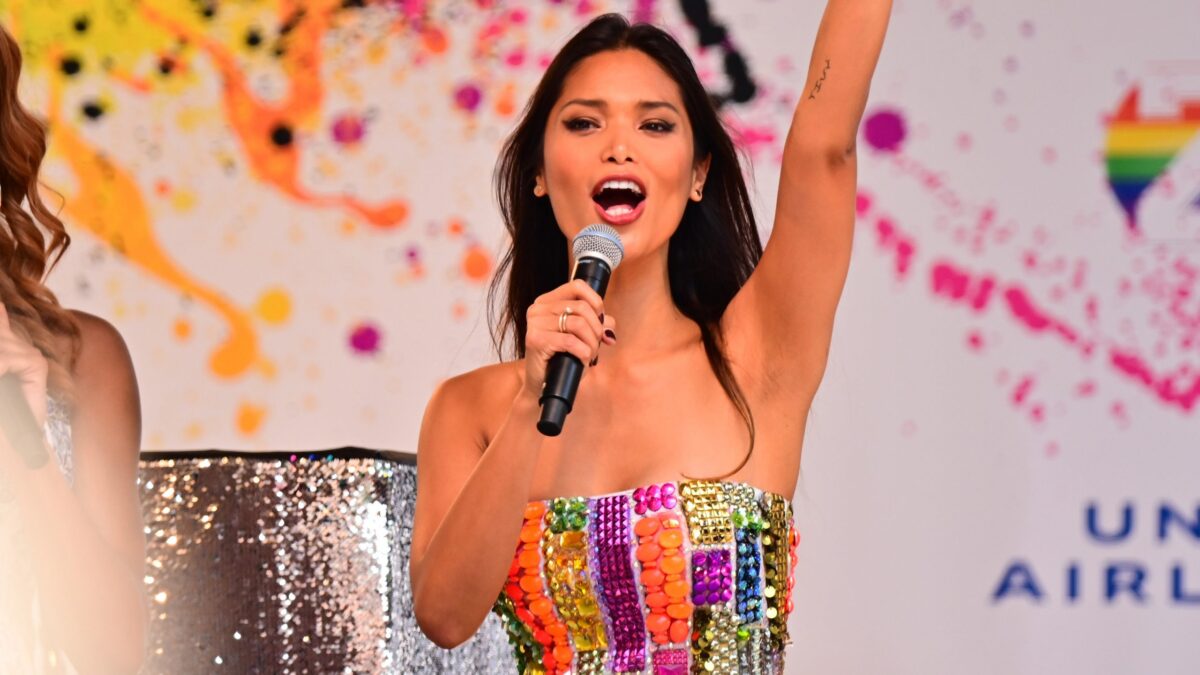
Serving as national chair for the event is August 2019 Playmate Geena Rocero, who is focusing on organizing, fund-raising and amplifying the reach of the program. Rocero, no stranger to activism, chatted with me this week about intersectionality, resiliency, what Stonewall Day means to her and much more.


PLAYBOY: Unjust police raids and police violence targeting the LGBTQ community sparked the Stonewall riots. Sadly, police violence is still an ongoing problem for many marginalized groups, especially BIPOC and trans people.

ROCERO: The Stonewall riots are absolutely connected to what has been happening with Black Lives Matter over the past couple years. Police brutality is exactly what the queer community was fighting against at the Stonewall Inn in 1969. Queer people, specifically queer people of color, were being targeted by the police when they were out walking on the street or when they were at LGBTQ-friendly bars just having fun in a safe space. Back then, there was an informal “three-item rule” that was used to police the outfits of trans and gender-nonconforming people. Trans women couldn’t wear more than three feminine items. Eventually they got tired of not being recognized as women, so they fought back.

It’s also important to note that there were a lot of other LGBTQ-led riots leading up to Stonewall, including the Cooper Do-Nuts riot in Los Angeles in 1959, the Dewey’s Restaurant sit-in in Philadelphia in 1965, the Compton’s Cafeteria riot in San Francisco in 1966 and a handful more. Many of these historic moments were influenced by the civil rights protests that were happening around the same time.

PLAYBOY: What does it mean to you to serve as the national chair for Stonewall Day this year?

ROCERO: Last year was my very first time being involved with Stonewall Day; I served as an ambassador and I hosted an event inside the Stonewall bar with my trans sister Blossom Brown for the 50th anniversary of Stonewall.

This year Diana Rodriguez, the founder of Pride Live and creator of Stonewall Day, approached me and asked me to be the national chair. I told her, ‘I’m only going to get involved if I’m not the only trans person of color in this.’ I leveraged my platform to get more trans people of color involved. It wasn’t just like, Oh, we’re going to center you because it’s the right time to. It was about the power of our voices and having people like Diana believe in that power. It’s time to center black and brown voices within the movement.

I was honored to host Stonewall Day last year and I’m so excited to be the 2020 national chair. I mean, are you kidding? It’s crazy for me to wrap my head around. Growing up in the Philippines, I never believed I would have my legal rights as a woman recognized—I had internalized a very colonized mind-set. When I came to America and began coming into my political consciousness, I began to realize the power in my perspective as a person of color, as a trans person, as an immigrant and as someone who is from a poor, working-class background. I realized I could effect change both at the interpersonal level in the relationships I have with people and also at the political and systemic levels. Stonewall Day is such a great opportunity for me to continue doing that.

PLAYBOY: Last year it was announced that Sylvia Rivera and Marsha P. Johnson, two trans activists that led the charge at Stonewall, would be honored with a monument in New York. What does their legacy mean to you as a trans woman of color?

ROCERO: Thank God for the archivists who elevated their stories. Tourmaline, a filmmaker and activist and a black trans woman, has brought Martha P. Johnson and Sylvia Rivera into the public consciousness more by digging up a lot of archival film, images and documents about them.

The big question is, Why are people just beginning to learn about them? I think it has a lot to do with trans people of color always existing on the margins of the LGBTQ community. The LGBTQ community has been centered around a gay white middle-class cisgender point of view for quite a while, even though trans people of color have been doing a lot of the work.

PLAYBOY: People at the outer rings of the LGBTQ movement are still left out of the conversation. How can we make the LGBTQ community more inclusive?

ROCERO: Black and brown trans people have been ignored by the mainstream LGBTQ community, and we have had to rely on each other to survive. We become a chosen family, and we support each other when we are rejected by our family, when we experience violence, when we can’t access jobs (and end up having to do sex work) or health care (which means we have to pay a fortune for our hormones) or when someone tests HIV positive. Because we face all these things, we are resilient. We are used to fighting for our existence because we have no other choice.

The most marginalized people are sometimes oppressed by other marginalized groups. I think that is why the notion of intersectionality is so important. You have to look inward and analyze your internalized transphobia, misogyny, racism, classism, etc., in order to fully understand intersectionality. The idea of intersectionality has existed for a while, but the application of the theory into action requires a lot of nuance.

Stonewall was led by sex workers, drag queens, genderqueer people and black and brown trans people, like Marsha P. Johnson and Sylvia Rivera; unfortunately these groups of people are still disproportionately targeted by violence. It’s very traumatic to constantly have to worry about your safety. We have to start looking out for one another beyond our own identity markers.

You have to look inward and analyze your internalized transphobia, misogyny, racism, classism, etc., in order to achieve intersectionality.

PLAYBOY: How can we make pride parades and protests more effective in galvanizing change?

ROCERO: We had to rethink pride celebrations this year because of COVID-19, but it hasn’t stopped us from celebrating and speaking up. It goes to show you how resilient the LGBTQ community is. People are still organizing and fund-raising for this. For Stonewall Day we had to pivot from a live event, where we could gather as a community, to a livestream.

Moving forward, we have to take a look at LGBTQ leadership and rethink the voices we are centering. We have to think about the most marginalized individuals in our community and support them and amplify their voices.

PLAYBOY: The year of the Stonewall riots, 1969, felt like a pivotal one for America; in addition to other civil rights protests and student-led anti-Vietnam War protests, two members of the Black Panther Party were killed in their home by Chicago police. It feels like 2020 could be another pivotal year. With the coronavirus pandemic in the background, we have the resurgence of the Black Lives Matter movement and the impending 2020 election. How do we keep this energy and activism going?

ROCERO: We have to slow down and take care of ourselves if we want to keep this going. I have to recognize when I’m feeling anxious or exhausted. You have to find a release for the emotional labor you’re enduring.

It’s important to develop a network of people you can trust and open up to, people who will support you. COVID-19 has exposed how vulnerable our health care system is. We have to take care of each other. We can’t go back to normal after this; we can’t go back to the way it was.

PLAYBOY: What makes you feel celebratory right now, and what makes you feel disheartened?

ROCERO: It’s been an insane roller coaster of emotion, from coronavirus to the murders of black trans women to the Trump administration attacking trans health care to the Supreme Court decision protecting LGBTQ people in the workplace. I’m hopeful and celebratory but also discouraged and heartbroken. I think these things can exist at the same time; it’s not a binary. We have to get rid of binary thinking—that’s a big goal for me.

Aimee Stephens, one of the plaintiffs in the Supreme Court case, passed away about a month before the ruling. It’s bittersweet. Stephens had been fired after coming out as trans. She lost her health insurance. She died so that we could have our rights recognized. The Supreme Court win is a good step forward, but there is still so much work to be done.

PLAYBOY: What are some ways to meaningfully support LGBTQ people?

ROCERO: After seeing the success of #ShareTheMicNow, where white influencers let black organizers take over their Instagram channels, I got together with Winter Breeanne and Ericka Claudio who recently founded #PassThePlatform. The goal is to create something more inclusive for trans women. Natalie Portman and Nina Dobrev recently got involved.

There are so many important black trans-led organizations that people should become familiar with if they want to support LGBTQ rights. Contributing money is really important, but not everyone is able; the least you can do is to uplift, amplify and support these leaders. Follow them on social media. Share their stories and Instagram handles. It’s time to listen up. Some of my favorite black trans organizations and leaders are Ianne Fields Stewart of the Okra Project; Ceyenne Dorsohow of G.L.I.T.S. Inc.; Asanni of For the Gworls; Elle Hearns of the Marsha P. Johnson Institute; LaSaia Wade of Brave Space Alliance; and the BTFA collective.


HOW YOU CAN SUPPORT STONEWALL DAY 2020

Stonewall Day is a global campaign to elevate awareness and support for the Stonewall legacy and the continuing fight for full LGBTQ equality. In partnership with Pride Media and WarnerMedia, the 2020 event will be a worldwide livestream event to raise critical funds for LGBTQ organizations most affected by COVID-19. From around the world activists, supporters, celebrities and influencers will join the broadcast, including Christian Siriano, Hayley Kiyoko, Lilly Wachowski, Demi Lovato, Jonny Beauchamp, Chelsea Clinton, Dustin Lance Black, Katy Perry, Donatella Versace, Taylor Swift, Kesha, Barack Obama and Stonewall Day National Chair Geena Rocero. You can tune in to Stonewall Day on June 26 at one P.M. EDT.

To learn more, please visit the Pride Live website. According to Pride Live, some of its beneficiaries are:

Trans Lifeline connects trans people to the community, support and resources they need to survive and thrive. Its peer-support hotline and microgrants are particularly essential during the COVID-19 era, as trans people disproportionately face isolation and economic insecurity.

Brave Space Alliance is the first Black trans-led LGBTQ center on the South Side of Chicago, dedicated to creating and providing affirming, culturally competent, for-us-by-us resources, programming and services for LGBTQ individuals on the South and West sides of the city.

The TransLatin@ Coalition advocates across the United States to ensure the voices of trans Latinas are heard. The coalition’s purpose is to address the unique and specific challenges and needs of the U.S. trans Latina community.

The Ally Coalition provides critical support for grassroots nonprofit organizations dedicated to bettering the lives of LGBTQ youth.

More From Playboy
Your Bag

Your bag is empty.