Your bag is empty.
The creator of the show talks to Playboy on the importance of LGBT voices in the writers’ room
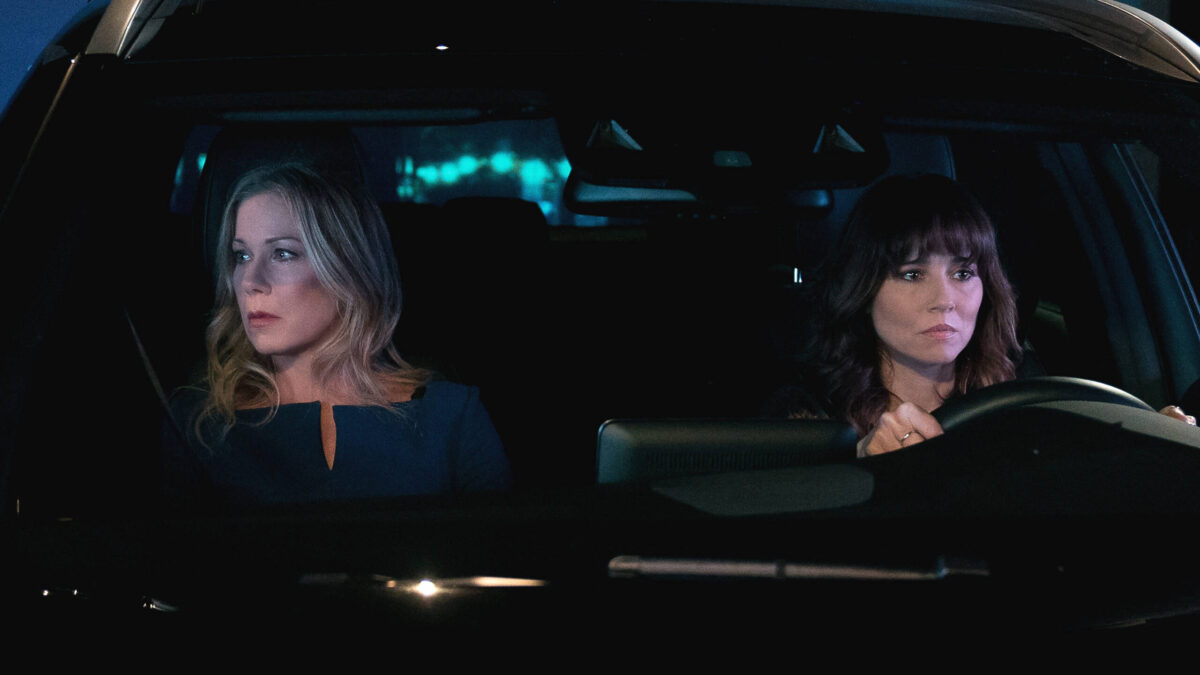
“I’ve always wanted to tell a complicated story,” Liz Feldman tells me about her new series Dead to Me. “It just came out of the bowels of my sadness.” The show, which premiered on Netflix on this month, has been described by The New York Times as a “traumedy,” an apt descriptor for a show about death, grief and the throes of female friendship. Feldman’s journey to creating the show is personal, gutting and odd. She penned an essay about dealing with the sudden death of her cousin on her 40th birthday, her own heartbreak over pregnancy attempts, and how she transmogrified that grief into Dead To Me.
I first heard about the series from a sprawling billboard near my apartment complex in Los Angeles—the poster depicted Christina Applegate and Linda Cardellini, submerging in a pool as wine spilled into the water. The mysterious phrase, “misery just found company” ran across. I urgently navigated to IMDB, always wondering, hoping, “Is this show gay?” I was pleased to find out that the show was created by an out gay woman (Feldman). I binged it in a day, although it felt more like unhinging my jaw and swallowing it whole. Spoiler alert: Dead To Me isn’t gay, but it didn’t necessarily need to be.
The dark comedy follows Jen (Applegate), a widow and a mother dealing with the sudden loss of her husband, who meets Judy (Cardellini) in a grief counseling group—only to find out that, (spoilers ahead), Judy is lying about the death of her ex-boyfriend. He’s still alive—he just broke up with her. There’s much more to the story between Jen and Judy, and the show yanks you by the hair through dark twists and turns you’ll never see coming, but the northern light of the show is the complex bond that forms between the two women—one that’s unique to them and their individual traumas, yet felt inherently familiar and queer to me—and to many WLW fans.
“I’m a gay woman, and I wrote it, and it’s inspired by my relationships,” Feldman tells me. “Everything I do is queer because it’s part of my DNA, and I’m part of the DNA of the show.” So, yeah—of course Jen and Judy’s relationship feels queer—that was quite apparent to me as a lesbian viewer. But there’s always something inherently romantic about falling in love with another woman—whatever the nature of that shared love.
But there’s always something inherently romantic about falling in love with another woman—whatever the nature of that shared love.
“It’s not sexual or romantic, but there’s an intimacy there. There’s a comfort there,” Feldman says. And it’s actually—in some ways—because of the lack of pressure or expectation of a sexual relationship that you can achieve an almost deeper sense of intimacy. So that’s what I was going for with [Jen and Judy] from the start.”
Dead To Me seems to wink at its female audience, who can easily identify with Jen and Judy’s complicated, turbulent, yet intimate relationship. There’s a moment where Judy’s (alive) ex, Steve (James Marsden), grills her on this new relationship, asking, “Judy, what kind of friendship is based on lies? And manslaughter?” To which Judy replies, “A layered one.” It’s true. Minus the “manslaughter,” I’ve had many tumultuous relationships with other women that have been toxic and unhealthy, and still the most important thing in the world to me. Feldman, too, has had that experience.
“That friendship is very much inspired by my relationship with my best friends,” Feldman says, pointing to numerous long-time BFFs who she’s had since her college years. “[Dead To Me] is almost like my love letter to my friends for getting me through all the ups and downs and crazy left turns in life. It’s pretty rare weirdly to see real, pure friendship between two middle-aged women at this point on TV or in film.” She adds, “The feeling I was trying to elicit through this friendship is that there’s a warmth and a comfort and an intimacy with a good friend. I was hoping when people watch it, that they would feel that, and they would feel it between the two women, and they would feel it between Christina and Linda, who just have it, which is just lucky, honestly. They just have wonderful chemistry.”
Feldman wanted their relationship to emulate all the amorous elements of female friendship rather than repeat the insidious tropes we’ve seen about female friendship in the past. “I think, too often, female friendships are depicted as competitive or catty,” Liz says. “There’s no depth there, and the depth of connection that I feel with my female friends is incredibly intimate. It’s not romantic, it’s platonic, but there’s a romance to platonic friendship that I wanted to explore.”
When I told Liz that, while binging, I wondered if Jen and Judy were headed toward, uhh, gay stuff, she wasn’t surprised. “So much of the show is based on the idea that things are not what you think they are,” she says. “So, I didn’t mind the intonation that, oh, maybe these two are going to hook up. It was more subliminal for me in the writing. It wasn’t overt—because it’s not the point. But I didn’t mind if people subliminally felt—maybe they know I’m a lesbian, and maybe they sense there’s something going on there.” For the creator, queerness wasn’t at the forefront of Dead To Me, but it certainly wasn’t invisible. “It’s a fun byproduct of the intimacy that I was going for, and I thought it would be fun if people thought that that’s where it was going, just because it takes you off the scent of where it’s really going.”
I just wanted them to feel represented, for them to see themselves on TV and to feel a little bit less alone in their experience.
However, Feldman, as a gay woman herself, knows the importance of LGBTQ representation. She’s made a point to include lesbian characters in her past work. Before becoming a comedy writer, she started as a standup comedian. She wrote on The Ellen DeGeneres Show in the mid-aughts and created lesbian sitcom One Big Happy in 2015, as well as writing on 2 Broke Girls. On Dead To Me, Feldman wanted to focus on something else.
“As a member of the LGBTQ community, I always feel a responsibility to represent,” she says. “The way I feel like I represented in this is to just show like humanity at its most fragile and vulnerable, and to not focus so much on the sexuality of it all, but just the humanity of it all.”
The authenticity of the scary-funny Jen and affable Judy stems from the people behind-the-scenes—Dead to Me was made by a group of women and queer people. And that was more than just intentional for Feldman—it was necessary. “It was a mandate,” she says of hiring a profoundly female staff.
“This is a show about women. I wanted it to feel authentic. I wanted it to feel real. I can always feel when a female character is written by a man. So, it was really important to me to have as many female writers as possible. Eighty percent of my writers’ room was women, and there were two men. One of them was gay. The other man in the room had lost his mother when he was a young man, and so I just thought he would be the right straight guy to have in the room.” Amy York Rubin, also queer, directed the pilot episode, of which Feldman says laid the foundation for the “look and feel” of the show. “All of the directors were either women or LGBTQ,” she adds, which is so rare and mollifying to see.
With Dead To Me, Liz Feldman has officially marked her territory as an evocative, hilarious, nuanced and poignant creator. “There are some shows out there that are fantastic and inspiring, and do a great job of showing complicated female characters and relationships,” she says, noting Killing Eve as one of them. “All I can say is that I’m hoping to contribute to that audience who so desperately wants to be represented and see themselves. Especially women who have gone through loss and grief, and women who were widowed, women who’ve been through fertility issues, which constitutes so many women. I just wanted them to feel represented, for them to see themselves on TV and to feel a little bit less alone in their experience.”
That Feldman is gay, married, out and visible is powerful—because being out and proud while helming a television show is still pretty freshly kosher in Hollywood. And her story is important. “What if I allowed myself to really tell a story that personalizes my grief, and my loss, not in an autobiographical way, but in interesting, complex, character and plot-driven way?” she asks. “In many ways, this is the kind of story I’ve always wanted to tell. I’m just finally allowed to.”