Your bag is empty.

How 'bout them apples?
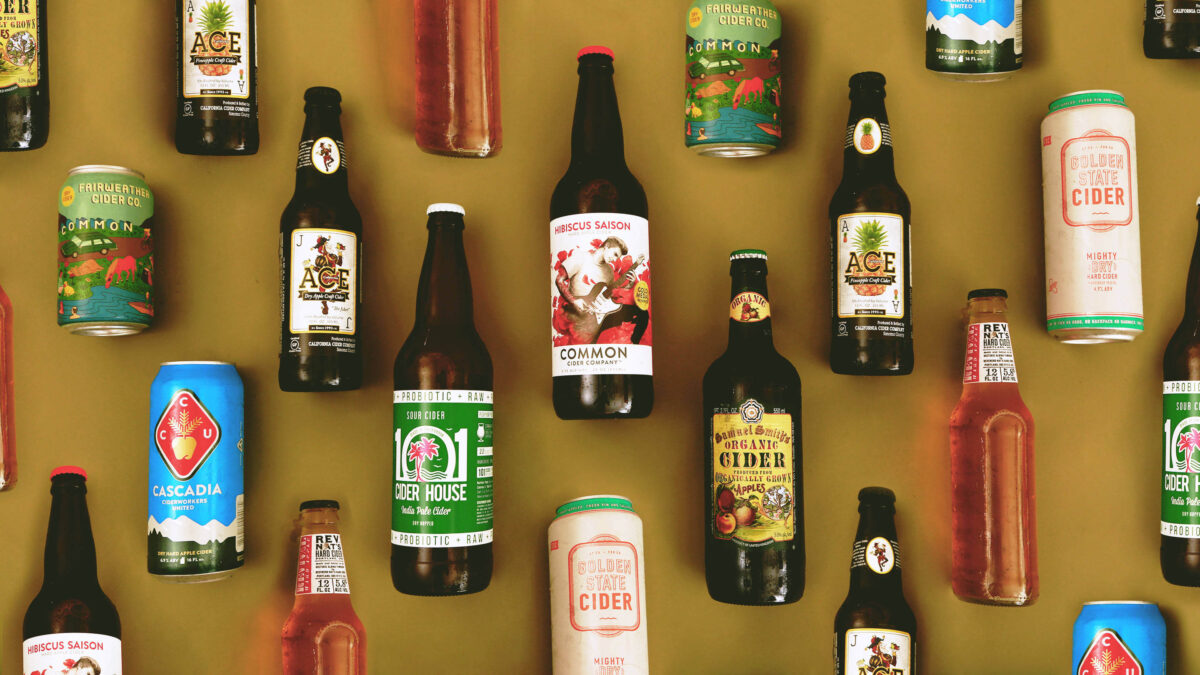
Today, after long being shunned as an all-too sweet beer alternative, hard cider is finally regaining popularity throughout the United States. And if endurance counts for anything, the resurgence is well deserved.
Cider, or fermented apple juice, has a long history—dating back to the very earliest introduction of human beings to the fruit itself. The result of yeast—either naturally found on the skins of the fruit or introduced specifically by human hands—converting the sugars in pressed apples to ethanol have been documented at as an excellent way to get a buzz in cultures throughout the world since at least antiquity. In the early days of the United States it was certainly everywhere, and for good reason—it was (in the popular perception of the day at least) a lot safer to drink than water. A Swedenborgian missionary named John Chapman spent half a century on a personal and obsessive quest to spread the fruit throughout the inchoate country between the late eighteenth and mid-nineteenth centuries. It’s how we ended up with apples everywhere and how he gained a near-mythic nickname: Johnny Appleseed.
As the name suggests, Chapman founded nurseries by planting seeds rather than grafting limbs—the method through which apple varietals are propagated—thus most of their yield came to be called “crab apples.” These are fruits that are tart, tannic and bitter, not quite suited to eating off the tree, but perfect for making cider. And for over a century in the young country, the stuff was enjoyed by pretty much everyone. “Better drunk than with dysentery,” jokes Jeff Russsell, national sales manager for New England’s Eden Cider.
The ubiquity of cider was, like a lot of craft in the States, cut short by the federal disaster known as Prohibition. Orchards had been abandoned and apple trees lost, along with prized varietals. “At one point we had more cider apple variety in America than anywhere else in the world,” Russell says. American brewers had about a year to raise cereal grains to ferment and bottle, but orchards would take years to return to form. By this time of course modern water filtration had long been invented, American tastes were changing and the 20th century was barreling in.
It isn’t that cider has returned to the United States in the last decade. It never exactly went away, but instead lingered at the edges of a grand culinary reawakening: Large producers capable of chancing capital in big batches combined with smaller operations surfacing, fueled by pure passion, are making it seem as though we’re on the cusp of a modern renaissance. “The initial resurgence came when a lot of cidermakers in the US and Canada began sourcing and investing future shares in a wide variety of orchards across the States,” explains John Staples, a partner at Austin’s Fairweather Cider. “Having orchards and farmers grow some of those heirloom varietals that are super high prized: high sugar content, high tannin content.”
“We’re anarchists that don’t believe in the system and we’re passionate about what we do,” Kawecki enthuses. “And not because we see a dollar sign at the end of the road. “
Varietals are often broken down between culinary apples (also known dessert or table apples found as any grocery story) and cider apples (which tend to be sharp and tannic). Since prohibition, a handful of apple enthusiasts have tracked down varietals in both categories, some of which were thought lost for decades. Fairweather takes a contemporary position, having partnered with an Oregonian orchard to utilize not just traditional cider apples but also the more common desert styles.
There are some proper cider varietals mixed in there but its economic for the cidermaker and producer, utilizing fruit that would get thrown away each year. “There’s a bunch of varietals that get grown for grocery stores that simply would not get used,” Staples explains. “We used to press our own fruit, but being in Austin, which is a very urban environment, we don’t have an orchard or a compost. So what this place does—what many of the growers or apple mill houses do—is press the fruit for cidermakers.”
The choice to use culinary apples puts Fairweather firmly in the modern cider category versus the heritage category—at least according the United States Association of Cidermakers. While modern ciders use table apples with familiar names to the average American, heritage ciders utilize cider-specific or heirloom varietals that are categorized as “bitter-sharp”.
Sure, both styles have been flourishing, but not every aspect of cider has been codified. The word “dry” for instance is ubiquitous in cidermaking and proves how unrestricted cider production is today—some cans have no residual sugar at all and others have as high as 12 grams. The limitless attitude is reminiscent of the boom in craft beer production at its earliest stages. And certainly cider, despite being technically closer to wine, is often tied to the beer community. Marketers target the same audience and a lot of recent cidermakerscame to apples through brewing beer, often at home.
“My business partner and I are historically both beer drinkers,” Staples remembers. “So what we started developing was using ale yeast as opposed to wine or champagne yeast (which is what historically is used by the home cidermaker).” Staples and his partner took a trip to the local beer shop to procure yeast after a trip to another Texas cidermaker, Argus Cidery inspired them. “It seemed like a job to love,” Staples says. “At the time, there wasn’t much cider specific equipment in the market. So you’d have to learn what sort of equipment you needed and then you’d build it. We built a press, an apple grinder, and we’d take a day off work every other week to press 1200 pounds of apples in my second story apartment. We’d take it to a local compost afterwards and ferment it. And then we’d throw a party.”
The Fairweather team had some help reaching out to the greater cider community. Staples cites Oregonian cidermaker Nat West of Reverent Nat’s Cidery specifically as a mentor as well as a partnership with a local art studio and screen printing shop, subsequently introducing him to collaborators before eventually bringing samples to bars. Those bars wrote letters of commitment which helped solicit investors and secure a license. “It is very DIY for most people,” Staples muses.
Cidermaker Brandon Kawecki agrees, “The community is thriving I feel. Everyone wants to help each other out. Somebody’s got trees, but not the press so you borrow one. You can make things happen.” His own small production cider, The Valley! The Mountains!,was born when his wife and him produced 55 gallons from foraged apples on a borrowed press in New York City. The pair has since relocated to Livingston Manor upstate, where they still produce cider from found apples. “Up here in Sullivan Valley there are literally trees raining apples on dirt roads,” Kawecki mentions. “The fruit is there, but the idea of utilizing it to make cider is not as ubiquitous as one might expect.”
For Kawecki the drive to make cider is an exploration and a communion with the area where these crab apples—a reminder of a push to spread the fruit across the country over a century ago—create a unique terroir. He points out that for him, this is where cider and beer are vastly different. “Beer is a rather intentional endeavor,” Kawecki rationalizes. “You don’t really stumble upon beer. You start with a plan. You have a recipe. You chose ingredients. You are trying for a goal. You’re not like ‘I want to make beer and let’s see what the fuck happens. With cider, it’s more akin to wine in that you can let the fruit speak for itself and speak to the place where it came from. There’s a lot more variables and you have a lot less control. At least the way we do it. We don’t pitch yeast. We don’t use commercial yeast. For the most part we don’t buy fruit. We’re working with what we can get our hands on. Now that we live here, as locally as possible.”
Kawecki produced about 200 gallons in 2017, just under the volume requiring a license. Most of their product is bartered for produce and equipment or traded for other cider by likeminded small producers. He mentions fellow New York cidermakers Aaron Burr Cider and Wayside Cider. “We’re anarchists that don’t believe in the system and we’re passionate about what we do,” Kawecki enthuses. “And not because we see a dollar sign at the end of the road. We would like to eventually have a license and have people put it on lists in the city and then all over the world, but the end goal for us to be connected to the apple and the land and the trees.”
The last decade has seen significant growth cider in American markets, partially fueled by the no-carbs movement and partially fueled by a large jump in small scale producers. Certainly, we are at a time when a handful of intrepid cidermakers have embarked on an obsessive, personal quest in the vein of Johnny Appleseed. Still, with national cider sales leveling off last year (mostly driven by dips in large scale producers) one wonders, “What’s next?”