Your bag is empty.
Find out why the French-Algerian "High Highs and Low Lows" singer is being called the future of pop music

It’s a balmy afternoon in Brooklyn’s Flatbush neighborhood, and singer/songwriter Lolo Zouaï is perched up against the window sill in her favorite café, rattling off her pre-fame occupations. “I may have gotten paid for my breaths,” she mutters. They include a stint at American Apparel during the seven-month return to her birthplace of Paris, France, a job at Bare Burger here in the United States, and of course the breathing, which was actually part of an ad campaign for NARS. Like her hit single explains, there have been some high highs and low lows throughout her life and career, though the 24-year-old is on a winning streak.
A few days prior, Zouaï (born Laureen Zouaï) was seated in the heart of New York Fashion Week, runway-side for shows by Coach and Tommy Hilfiger, two brands she’s done campaigns with. “It’s exciting being welcomed into the fashion world,” Zouaï humbly advises. “I grew up thrifting; I literally would shop at Ross and Payless in middle school.” She recounts a time during her school years where she would don a Southpole parka daily, to the point where she was bullied over it. “It was cute though, I’d wear it now,” she says with a laugh.
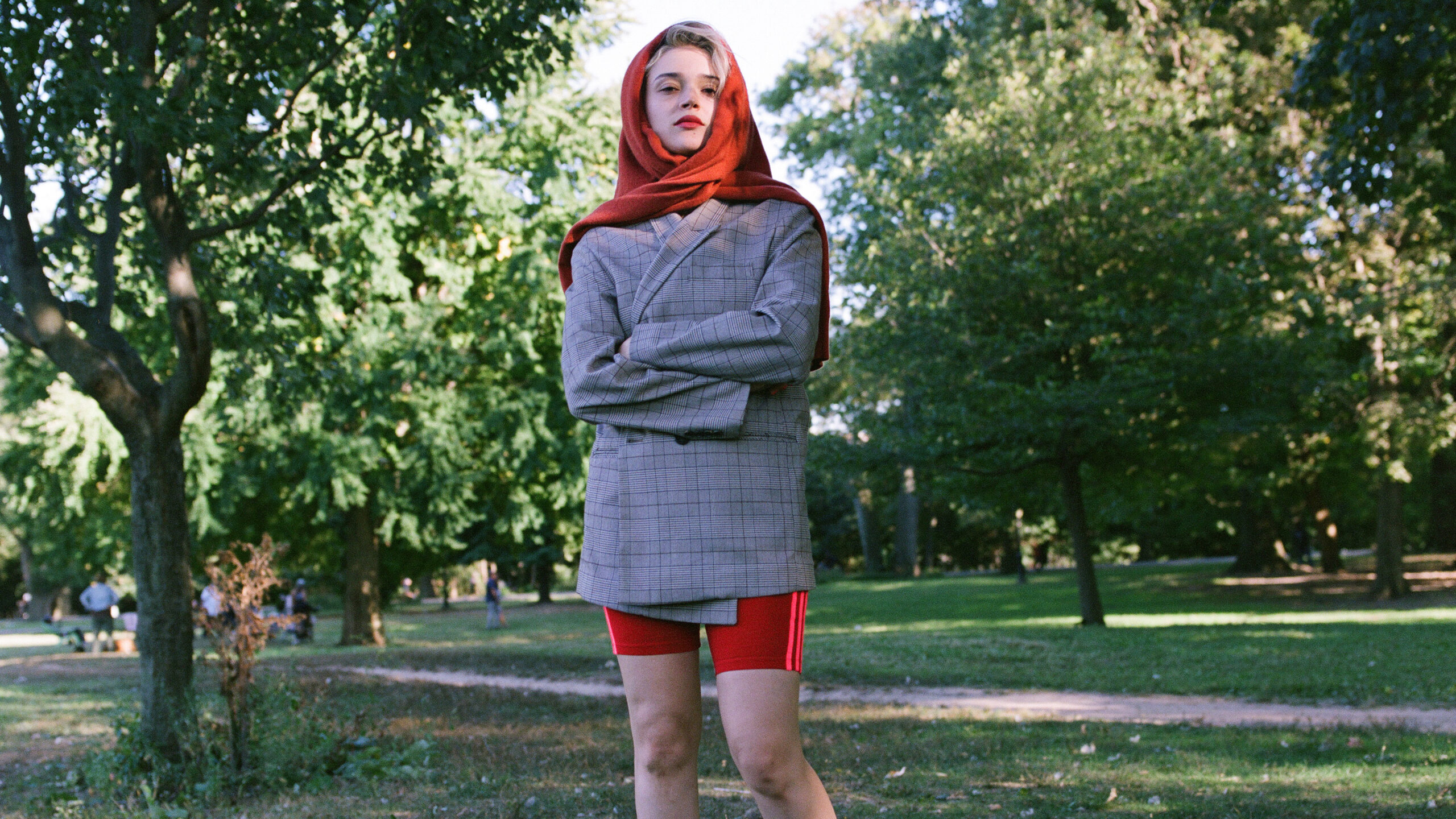
Zouaï has been bubbling on the scene for a few years with her infectious take on electro-dreampop, culminating with the 2019 release of her debut album High Highs To Low Lows.
Her story begins in France, as the French-Algerian siren emigrated to the U.S. as a child, to the west coast, where her music career first began. “I loved singing when I was little,” she remembers. At age 15, she auditioned for American Idol, but she didn’t make it to the televised portion. “I was so insecure about singing in front of people,” she admits, though she probably did nail her rendition of JoJo’s “How To Touch A Girl.” Growing up in San Francisco, Zouaï gravitated toward hip-hop like E-40 and Mac Dre, an influence that undoubtedly trickled into her rhythmically woozy sound, along with her love of pop stars like Britney Spears. It would be years before the union of those two worlds would collide to create her own special version of pop.
About five years ago, her mother moved to New York City, and Zouaï joined her. “She’s not afraid of change,” Zouaï says of her mother. “I feel like I got that trait from her.” She lived up to her genes when she was randomly bound for France at 19, and when she returned, Zouaï was geared to take her music seriously. She started working at restaurants and making music in her bedroom, flipping her mattress up against the wall to convert her room into a makeshift studio. “I started reaching out to producers and I started getting all of these signs that I was destined for some big success,” she tells, “but I knew I had to do it my way.” Opportunities came knocking—including writing “Still Down” for Grammy-winning singer/songwriter (and fellow Bay Area native) H.E.R. off the H.E.R., Vol. 2 EP—though the duality of promise one day and reality the next was a literal mind fuck.
I just need that shit to knock.
“You’re being flown out on Jet Blue Mint which is nice as fuck, in hotels where everything is paid for and then you get back to your small apartment, working at Bare Burger,” she says. “That was kind of what my album was inspired by.” She racked up some wins like her aforementioned H.E.R. placement, along with receiving the Songwriters Hall of Fame Abe Olman Award for her songwriting skills. “It was weird because it was a time in my life that I wasn’t really putting out music,” she says. “I was writing a lot of songs and working with a producer, but hadn’t found my sound yet.” Watching H.E.R. in action gave Zouaï the necessary boost to record more music. “Seeing H.E.R. work that hard, had me working that hard,” Zouaï says.
She cut a series of songs—including her first single “So Real” (with Swagg R’Celious)—and the movement began. She later linked with producer Stelios Phili and the collaborative chemistry was perfect (“He understood my life story”). They cut what would be her breakout single, “High Highs To Low Lows” in 2017. Her greatest leap of faith, she says, was uploading onto TuneCore, technical difficulties and all. “I uploaded the wrong version (a .mp3 not the .wav), so I had to change it,” she recalls with a laugh. “I was freaking out.” The song is an homage to the come up, as Zouaï’s airy vocals layer Stelios’s production, waxing philosophical about the ups and downs of success. “Fake gold on my hoops, real rips on my pants / They think it’s all Gucci, but it’s 99 cents, I swear,” she sings. “Ooh, you wanna help me / Ooh, you wanna fly me out to LA / Dreams you wanna sell me / I took a bite, that’s a gold plate.” The music video shows Zouaï touring around New York City from the streets to the subway as she coos about dreams of her inevitable fame.
Zouaï kept releasing music, dropping the Ocean Beach EP along the way, and on the strength of that buzz managed to lock a five-city international tour, selling out a handful of 300-capacity venues. “I was like, ‘Okay! That’s special!” It was a combination of her vocal charm and striking aesthetic that wowed her growing fan base. With big gold hoops, red lips, and outfits that blend oversized with fitted threads, the modelesque wunderkind proved her star power on those stages.
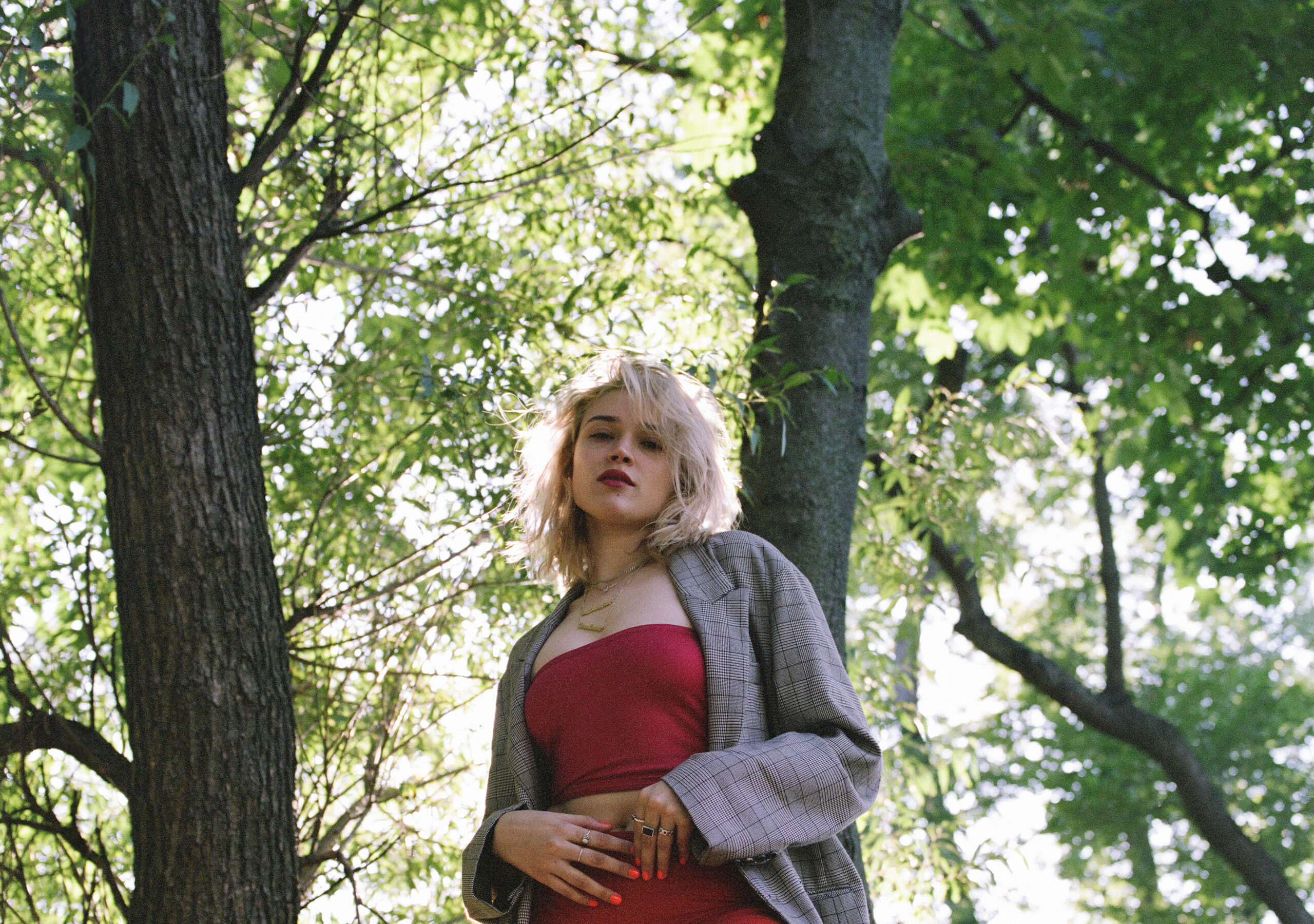
The greatest traction came from Paris, which Zouaï took as a sign. “The fact that it was resonating so much in Paris where I was born…it was fate,” she says. It was officially time to leave the daily grind. “I quit my job, and I was off! I was like ok it’s go-time!”
While she wasn’t entirely keen on a major label deal, Zouaï worked independently on putting her debut album together. “I recorded it in the basement of Flux Studios,” she says, “It was very gritty and lo-fi and then I finally went upstairs and got the album mixed by the man who owns the studio and it added that hi-fi end to it.” High highs to low lows indeed.
In April, the album finally arrived. The project, cohesive and balanced, placesZouaï in the middle of her own realistic yet idealistic narrative—as she talks about everything from romance to family. The singles “Blue,” “Caffeine,” and “Moi” all show Zouaï’s vocal depth and diversity, where she punctuates her English lyrics with singing in French as the trappier touches to her sound come from her aforementioned Bay Area hip-hop loving background. “That’s where the influence of my beats come from,” Zouaï adds. “I just need that shit to knock.” She even delves into the turbulence of her Algerian roots on “Desert Rose,” inspired by her family’s distaste for her music career. “When I first started putting out music, I was getting messages from some of my family members telling me that it wasn’t really welcome there,” she says. “In the song I say ‘middle finger in the air,’ and the reason they were mad was because on Instagram I had a photo where I was like this.” She starts waving her middle finger up. “They told me not to come to Algeria for my cousin’s wedding. It’s like I’m sorry that I scared you, but I still love you guys.”

The song is more like a peace offering, coupled with Zouaï’s desire to get back in touch with that side of herself. She even uses words like “Insha’Allah” and “Habibi” on the song. “It’s something I’ve tried to connect to more, because my dad didn’t raise me and I’ve only been to Algeria twice, but whenever I go there I’m like wow we look so much alike, but I feel so far away,” she adds. Her song “Summers In Vegas” continues that thread of speaking to her family through song, as it’s a letter to her father. “I’m not sure he heard it though,” she says.
Two weeks before the album dropped, Zouaï inked a distribution deal with RCA Records and the rest of her story is still being written. She’s now embarking on a 16-date tour through Europe, where seven of those cities will be in France. After that, it’s back in the lab to create her next body of work, though this time the energy is different. “It’s more about trying to think about what my narrative is now,” Zouaï says. “Before it was so very clear: it was about being broke and sharing my issues. Now it’s like okay what will it be about now?”
It’s a fair question, though with chops like Zouaï’s and a style to match, the sky’s the limit. In the end, however, she keeps one mission in mind. “I’ve gotten smarter about things, but I’m realizing that you still just have to care about the music,” she explains. “That’s all that really matters. I go to these fashion shows and do these things, but at the end of the day, it doesn’t matter. I have to make the music.”