Your bag is empty.


The experimental artist, born Daniel Lopatin, discusses film scoring for the Safdie brothers
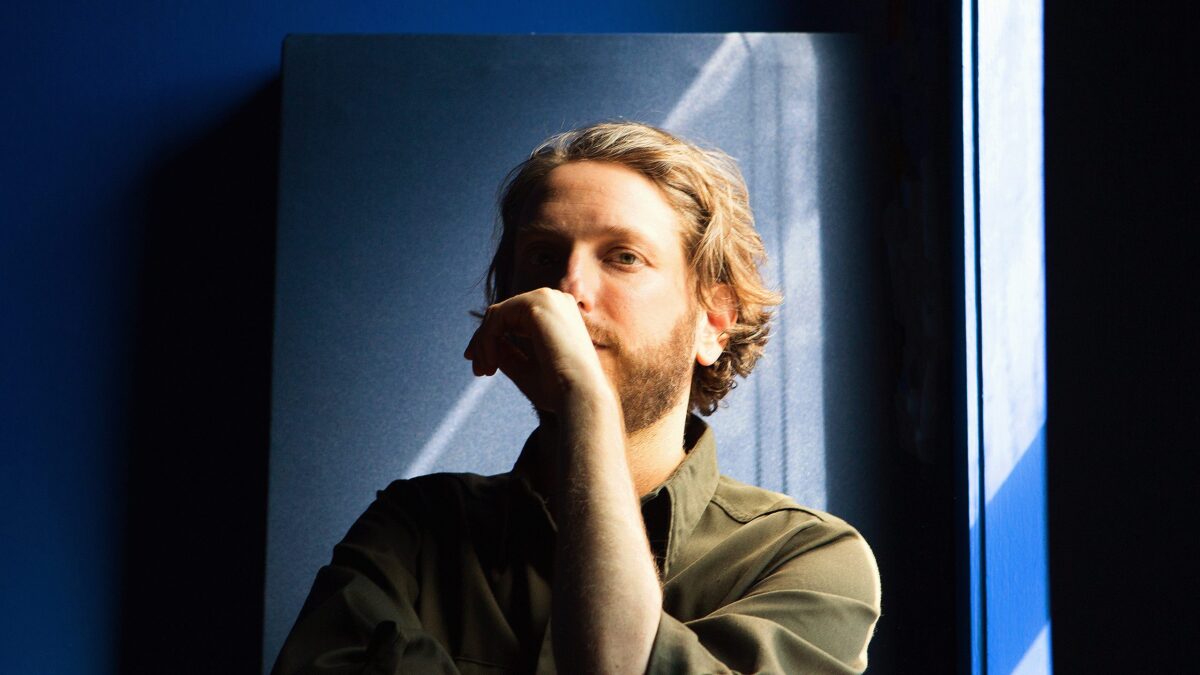
If you want to understand how Daniel Lopatin—the experimental electronic producer and composer better known as Oneohtrix Point Never—thinks about music, you have to think about more than the music. You have to think about the room you’re in while you’re listening to music, he explains, and the sounds within it—the tapping of a foot, the idle hum of a ceiling fan. You have to think about what’s happening outside—the screech of tires, a knock at the door. You have to listen to yourself listening to music, he says, in other words, “listen to everything that there is to listen to while you’re listening to a record.
“The entire audible field is like a cartoon landscape for me that’s suggestive of sculptural forms all the time. Of musical forms. Of things that are interacting,” Lopatin says. “So I really like to make music that sounds like that, because I find it to be an interesting permutation when you think about people then consuming that, and then sitting with that, and doing whatever they want with it.”
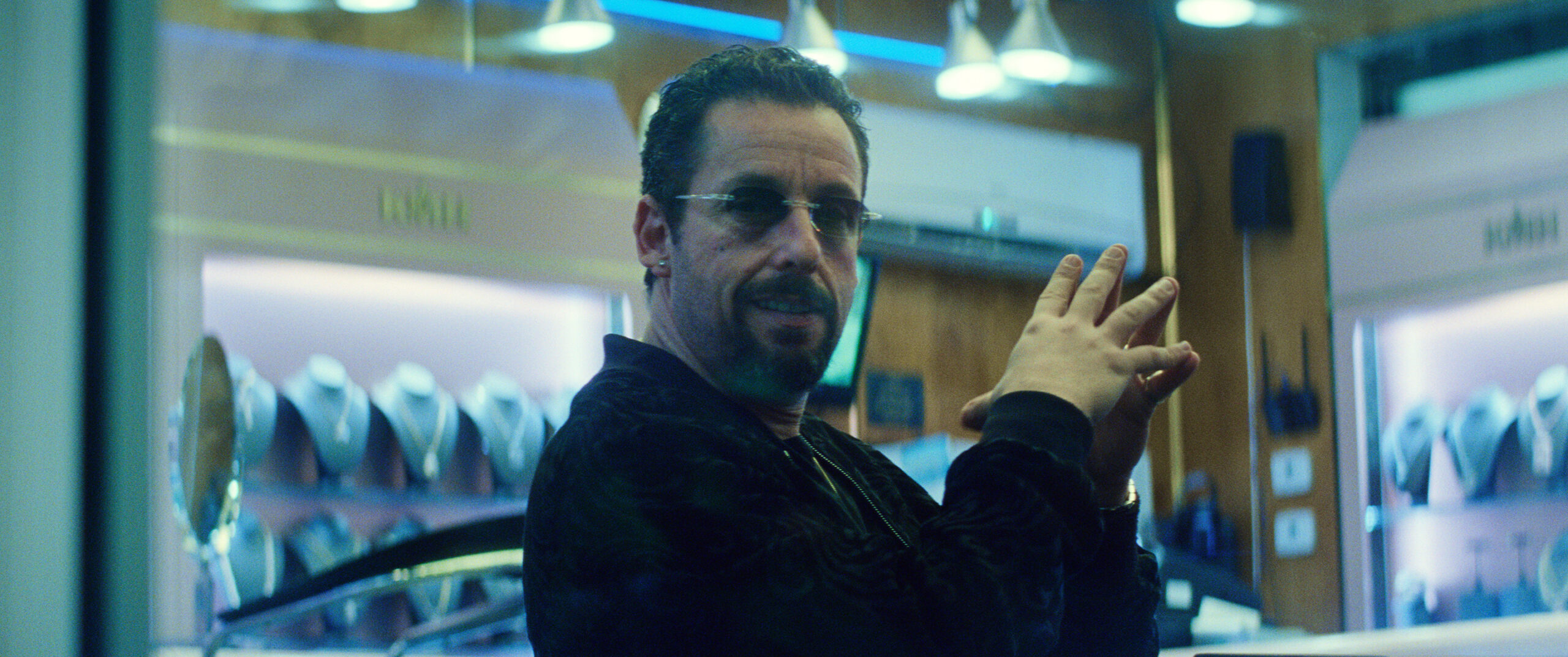
That contextual, interactive approach has imbued Lopatin’s work for the past decade that he has been making and releasing music as Oneohtrix Point Never (OPN for short), whose dynamic catalog ranges from synthesized choir compositions, to reworked samples of ’80s television commercials, to digitally-decayed metal. Along the way, his bold vision has earned him collaborations with David Byrne, FKA Twigs and Harmony Korine; multimedia installations at UCLA’s Hammer Museum and the Tate; and the prestigious Soundtrack Award at Cannes, for his 2017 score for Josh and Benny Safdie’s breakout bank heist film Good Time.
It’s inherently big picture, cinematic material, with a knack for making the familiar uncanny, and vice versa. But that effect has perhaps never been quite so vivid as on Lopatin’s second original score for the Safdie brothers, this time for the highly anticipated crime thriller, Uncut Gems.
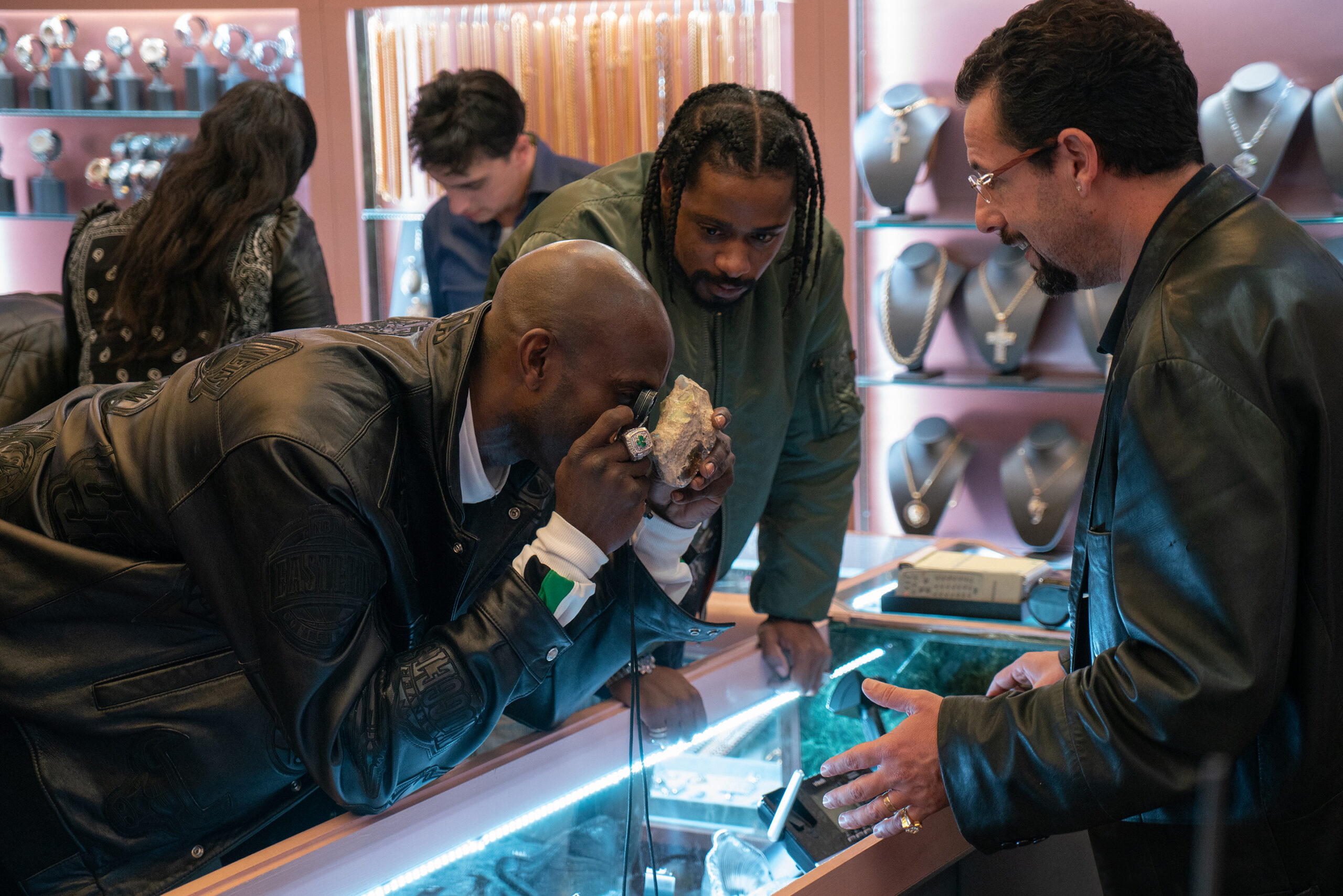
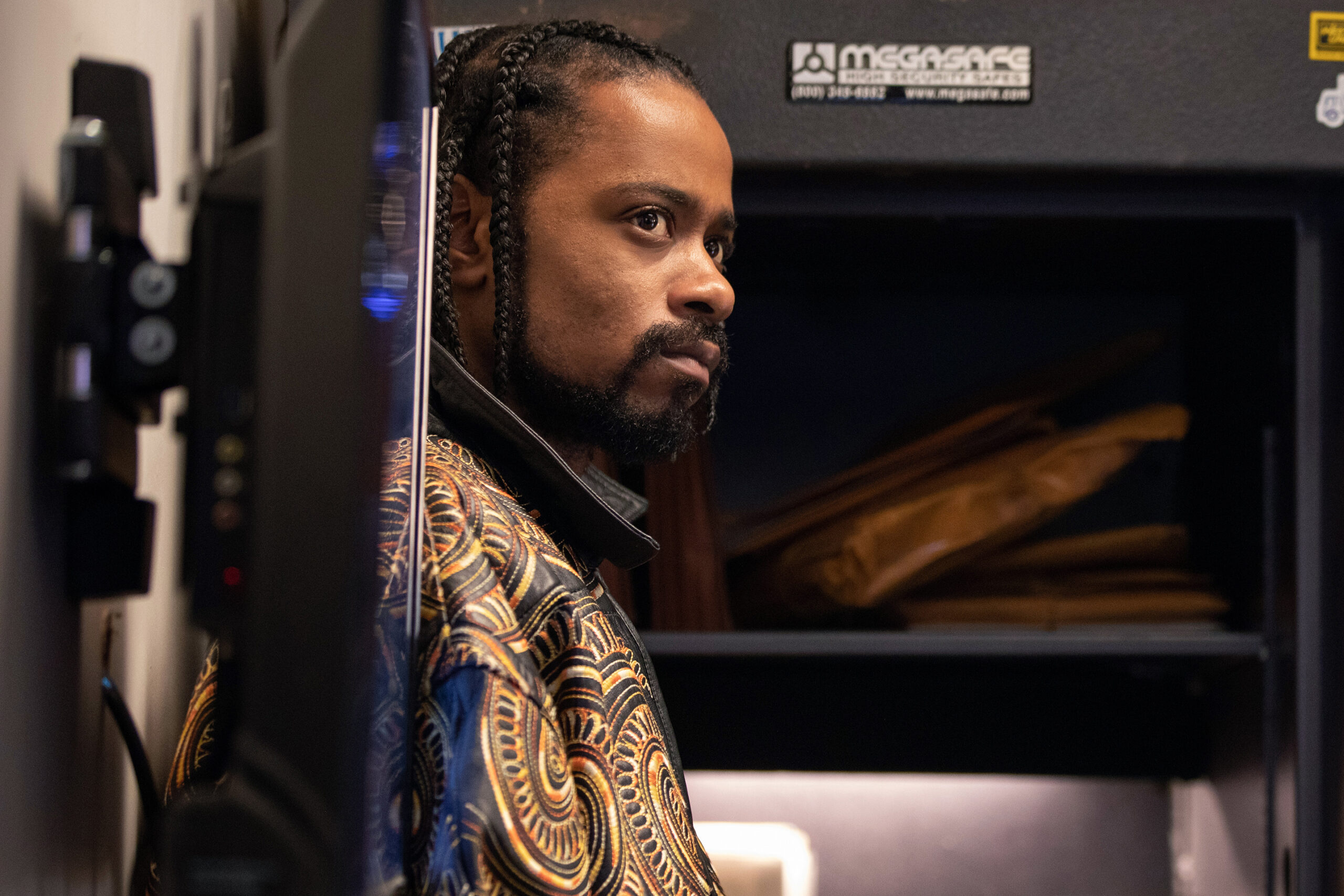
The A24-distributed film tells the story of Howard Ratner (Adam Sandler), a New York City jeweler with a penchant for gambling, rare opals and pushing his luck. Like Good Time, the movie feels like an existential, and often literal, high speed chase, following Ratner as he makes successively high stakes bets in pursuit of an ultimate payoff, all while juggling family, business and encroaching enemies to increasingly vertiginous effect.
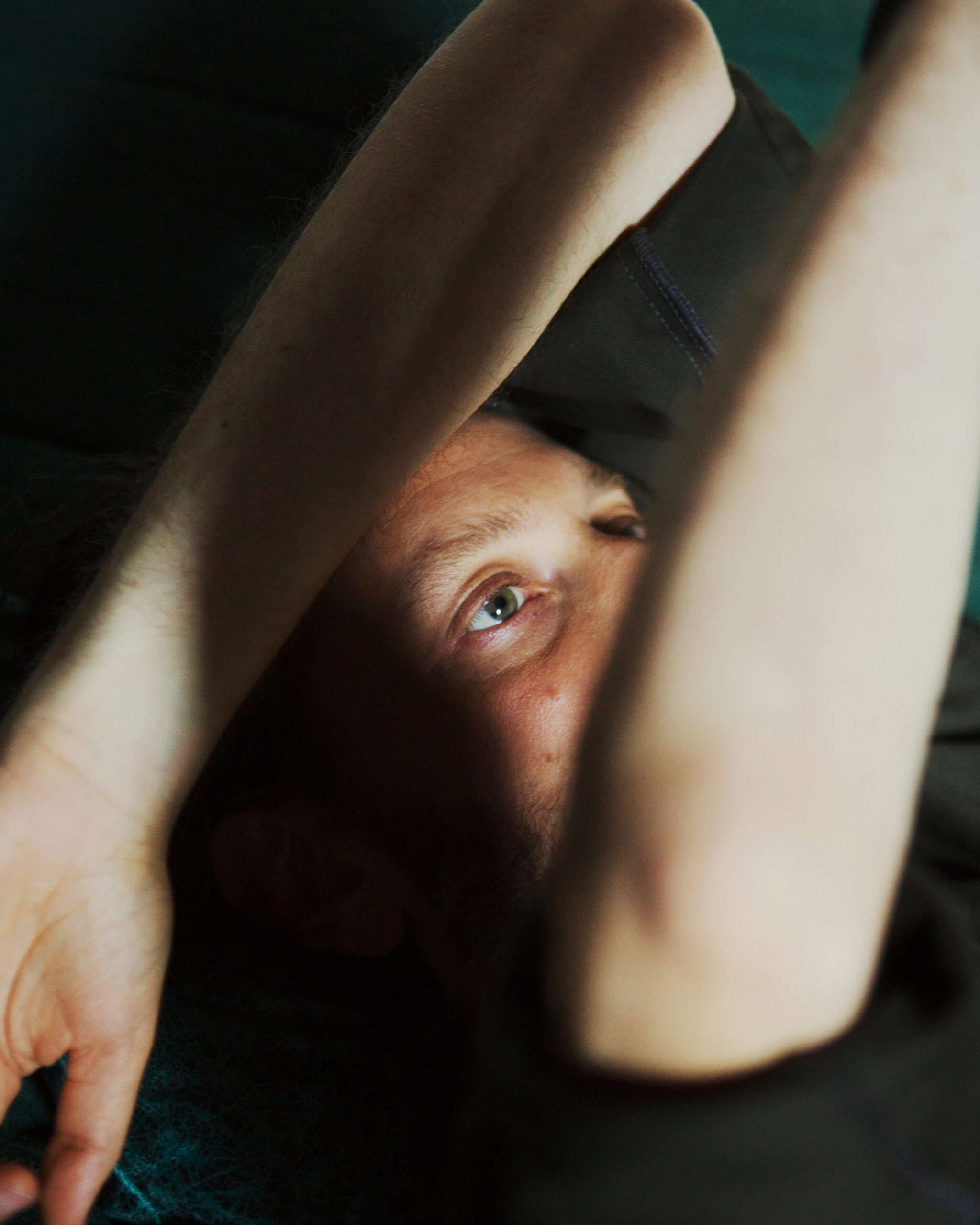
If Good Time and Uncut Gems are all white-knuckle plot turns, gritty cinematography and ’70s cinematic homage, they are also, at their cores, unflinching psychological portraits about the cost of desire. As a viewer, you’re not along for the ride so much as seduced into it, electrified by the protagonist’s aspirational lust at the same time as you are disturbed by it. And that’s where Lopatin’s music comes in. “The Safdies do sort of tend to think about score that way,” he explains. “Even on Good Time, the music had that function where you were placed inside [protagonist] Connie’s inconsistent trains of thought, and his ups and downs, and then it helped amplify the story from an internal standpoint.”
Whereas the pulsing techno constructs of Good Time underscores the relentless pursuit at its center, Lopatin’s score for Uncut Gems is a work of unsettling contrast and tension, with cosmic orchestral flourishes, ethereal flutes and New Age-y soundscapes distorting the hip-hop and EDM clubland (including an on-camera performance by The Weeknd) of Ratner’s 2012 New York. It’s a startlingly effective feat of solipsism, immersing the viewer in the fantastical nature of Howard’s appetite for that which is just out of reach, and his growing distance from the reality that surrounds him.
“I love irregular bouquets of music,” Lopatin says. “There’s definitely some shit going on with the score where it’s speaking to his id. It’s part of his internal combustion engine, his desires—something that he knows is around in terms of a general sense, a mystical world that he’s connected to, but that he can’t really connect to.”
Listen to the sounds inside Lopatin’s room at the posh London Hotel in Beverly Hills, and you’ll hear the hiss of a steamer, which the Brooklyn-based artist is applying to a “horrendous” tie-dyed shirt that a concierge just delivered for him to wear to the A24 holiday party later tonight. “I really don’t want to be early to this thing,” he admits.
Music and art are like any other ecosystem—they thrive on variety.
It’s been a long day—a long week, actually—in Los Angeles, packed with meetings, press and screenings to promote Uncut Gems in anticipation of its December 13 release. “That this is even happening is still so shocking and so weird. I’m trying to adjust to just being a 37-year-old adult that, you know, doesn’t just wear whatever fucking schmatta is on the ground when I wake up.”
A Pitchfork darling and scion of the mid-00s underground noise scene, Lopatin doesn’t exactly see himself as aligned with a certain image of the professional Hollywood composer—“at the cheesiest extreme, guys with some fucked up haircuts and sunglasses and a black shirt with some horrible embroidered dragon on it or something,” he laughs.
The youngest child of Russian Jewish immigrants, Lopatin grew up in suburban Massachusetts, steering the cultural divide of being the first American-born in his family through their shared love of music. He’d spend evenings shadowing his father, who played in traditional Russian bands at restaurants in the greater Boston area, and days at home navigating his dad’s dubbed jazz fusion and Stevie Wonder tapes, alongside the classical music his piano teacher mother helped research for a local radio show.
Lopatin’s own interests lay in filmmaking, and later, music journalism, but his parents’ experience with musical and creative censorship while behind the Iron Curtain would help inform his contextual, resourced approach to creating electronic music as OPN later on. “Music was rare and very special to them,” he remembers. “My dad has absolutely crazy stories about trading vodka for the microphone that a trolley driver uses to announce stops and then converting it for band practice, or listening to bootleg records pressed on X-rays. When you don’t have shit, you really learn to actually appreciate it. It’s so fundamental and yet so easy to overlook.”
Lopatin played in bands throughout high school and his tenure at Hampshire College, but it wouldn’t be until after graduation, amidst suburban Boston’s underground noise scene, that he considered pursuing solo work. When a bandmate failed to show up for a show at Brooklyn’s Death By Audio, Lopatin was forced to improvise—and OPN took root. “I got up there and shredded a solo set, and I kept going with it because people wanted to hear it,” he says. “And that’s sort of where it came from—your gut under pressure.”
Lopatin’s earliest outputs, released on handmade CD-Rs and cassette tapes, drew on a fusion of synthesizer, ’80s New Age and contemporary noise influences. His 2009 compilation Rifts would earn OPN international acclaim, with subsequent releases broadening to include collaborative visuals, live performances and internet-based projects into his bold musical vision. With each successive output, OPN would become less associated with any particular sound than with splicing artifacts of high and low culture (think samples, found sounds, computer-generated voices, and lots and lots of synths), toward the end of exploring the porous boundary between art and audience. “I’m drawn to ‘bad’ music. I like garbage in general. Like, I like dustbing New Age records in a very sincere way,” Lopatin explains. “Usually it’s because I’m looking for some weird little nugget within the sea of garbage that has something else to say, or that says something differently.
I do like taking back some of my power in the otherwise powerless situation of listening to music by thinking about it differently or trying to find some angle into it that’s beautiful or interesting for one reason or another. Just chopping shit up and reassembling it and editing stuff that’s not mine.”
It’s not surprising, then, that Lopatin would go on to find kindred spirits in the Safdie brothers. Born and raised in New York, the pair began writing and directing movies around the same time that Lopatin began releasing music as OPN. Early films like Daddy Longlegs and Heaven Knows What wrought immersive cinematic visions with an attention to detail and unflinching, unorthodox aesthetic that mirrors much of Lopatin’s work. “His albums are very conceptual, and he was making basically scores for movies that didn’t exist,” Josh Safdie said in a recent interview with Variety. “So when we met on Good Time, after he saw the way we were using a lot of Debussey on our film prior to that, he was like, ‘Oh let’s get deep together,’ and we’ve become very close friends.”
By that time, Lopatin had dipped his toes into scoring, including Sofia Coppola’s The Bling Ring in 2013 and Ariel Kleiman’s Partisan in 2015, but working with the Safdies recast his understanding of the medium. “It was an object lesson, in that scoring films can be really stimulating and personally satisfying the way an album can be,” he says. “It’s exciting in a way where you feel like you’re really connecting. I always talk about that one scene in Avatar where she hooks into the other creature and they become one. [Laughs] You have to have that moment in the studio.”
That dynamic would prove critical for the success of Uncut Gems, a white whale project for the Safdies ten years in the making that came with the upped stakes of Scott Rudin as producer and Martin Scorcese as executive producer. The score for Uncut Gems took root not long after the trio completed Good Time, born from late night conversations about Jerry Goldsmith action flick scores and an ear toward something more orchestral and complex than the techno-like “grid” Lopatin operated on for Good Time.
Taking inspiration from the freewheeling improvisations of Greek electronic great Vangelis and a new Moog poly synth, Lopatin embarked on what would be, for him, uncharted musical territory, with Josh Safdie holding down a Rick Rubin-esque role in the studio amidst a tight production schedule. “He would come to the studio at night and we’d just grind. Even if it was like 10 hours of bullshit with like 20 minutes of something amazing happening, we were like addicts for that 20 minutes,” Lopatin says.
“It was like relearning the freedom to just sit in front of a bunch of instruments and play, and feel free to improvise and sing over things. That was really new in a way for me.” That experience is in part why he opted to have Uncut Gems credited to “Daniel Lopatin” rather than OPN—it’s more melodic and traditionally instrumental than most anything OPN has done— but the result is singularly his own. There’s a cold beauty to it: chimes and bells shimmer with crystalline sharpness, synth pads crescendo into ecstatic cacophony, computerized choirs chant the word “Bling” like an incantation. Together, they’re greater than the sum of their parts, a siren song beckoning us into one man’s personal oblivion, irresistible and altogether sinister.
“Music and art are like any other ecosystem—they thrive on variety. That’s how you get new species,” Lopatin says. “If you want to break into something, you should just dive in like brazenly. I don’t think rules help.”