Your bag is empty.

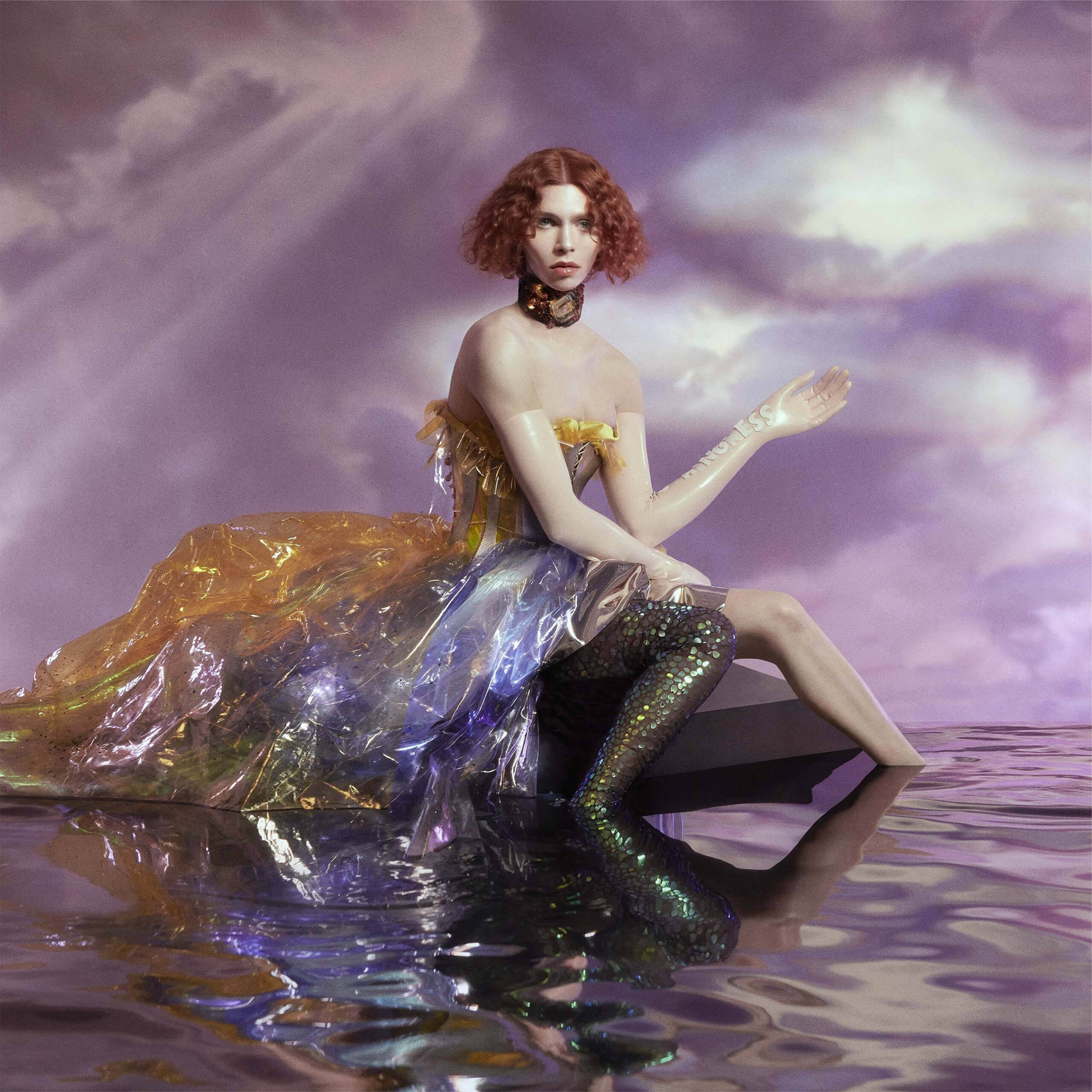
Playboy talks to the artist about her debut album, OIL OF EVERY PEARL'S UN-INSIDES.
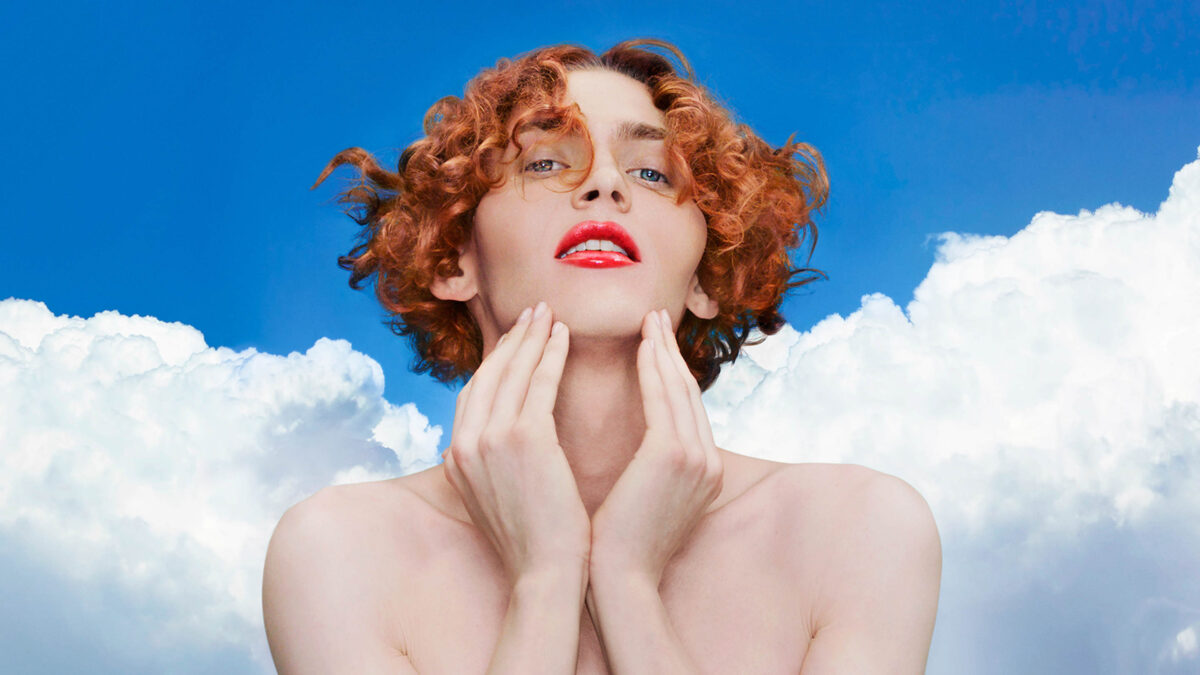
After a long pause during our conversation SOPHIE, one of the most compelling electronic producers and visually inventive performers to date, says something very telling about appearances: “There’s so much false information and false images constructed around people that are very alluring.” And she should know. The UK born, Los Angeles-based artist has maintained a tight curatorial grip on her own image (or lack thereof)—that is until now, with her debut full-length album, OIL OF EVERY PEARL’S UN-INSIDES (out now).
When I ask her how she feels she’s changed as an artist since she released her first single “Bipp” in 2013, I can almost hear her shrug over the phone. “I think I’ve always been about a certain way of thinking. I don’t think anything has dramatically changed there, but I certainly feel like I want to connect with people,” she says. “There’s no separation between [SOPHIE as a concept] and who I am as a person. We’re one and the same thing, so it’s not like I can say, ‘Okay, 12 to 8 I work and I’m doing the SOPHIE project, and then when I switch off, that’s my time… It’s just, I’m trying to put the things I feel and think into my music.”
SOPHIE gained a sort of mysterious notoriety early in her career. Whether it was as a part of London’s acclaimed PC Music collective, or as a producer for other’s work or as a solo artist, she always let her amalgam of electronic, bubblegum pop and bracing soundscapes stand alone, without an associated persona. Between her breakout singles, “Bipp” and “Elle,” and her 2015 collection of songs PRODUCT, little was seen of SOPHIE in the way of photos—a rare quality for a pop star of the Instagram era.
Instead of identity-driven music videos, SOPHIE’s visual aids typically featured computer-generated objects rendered in candy colors. Her single artwork bore nothing more than titles. And, in a 2014 Boiler Room performance that has become a main text in the SOPHIE mythos, the artist sent out a drag queen look-alike to “DJ” her set while the real SOPHIE stood by on the sidelines, dressed as a security guard. None of these decisions are evidence that SOPHIE is operating with an agenda of secrecy—but they do strongly suggest that she’s firmly holding the reins when it comes to her presentation.
“Sometimes your internal organs and things at a microscopic level feel as far away as the stars and the universe.”
With her well-known aversion to the spotlight in mind, it came as a delightful bombshell when late last year she unveiled her music video for “It’s Okay to Cry.” Before a shifting skyscape, SOPHIE serenades us in the buff, characterized by a rust red wedge of hair and glossed lips; it was the first time she’d ever paired her image and her own voice so directly with her music. While fans and the media were intrigued by the reveal, SOPHIE remained adamant that though she was previously less visible, it was never a tactic to generate extra buzz for her subsequent visual premier.
While “It’s Okay to Cry” ushered in a more vulnerable, empathetic SOPHIE, it also coincided with the widespread knowledge that the artist is transgender. Prior to the song’s release, people had often misgendered SOPHIE, referring to her as “him” and accusing the producer of appropriating a female identity for the sake of success (a pretty absurd notion given today’s industry). And it came with the announcement of her first LP, promising more intimate glimpses at the woman everyone adores, but no one knows. Throughout the record, SOPHIE’s sonic range is colossal, encompassing radio-ready pop with tracks like “It’s Okay to Cry” and “Immaterial,” as well as cinematic, avant-garde compositions. “Is It Cold in the Water?” falls into the latter camp, recalling an experimental Kate Bush song with its lucent refractions of synthesizer and skyward vocals.
Early single “Ponyboy,” meanwhile, explores power dynamics in fetish, and is equal parts club banger and weaponized sound. “[With] ‘Ponyboy’ I was kinda thinking about this mechanical type of animal… like a sexual animal,” SOPHIE says. “Like mechanical biology and body augmentation and stuff like that.” Seeing SOPHIE perform “Ponyboy” live at Brooklyn’s Elsewhere this February, my body did feel augmented—by the forceful detonations of static bass she deploys throughout the song. During the live performance, as well as in the song’s accompanying video, SOPHIE and Brooklyn dance duo FlucT work through a choreographed routine, crawling on all fours, chomping on a leather leash, and taking turns with the submissive and dominant roles the song’s lyrics suggest (“Spit on my face/Put the pony in his place”).
SOPHIE’s live performances recall transgressive theater in this way, with a cast of characters, set pieces and costume changes. At one point during her Elsewhere set, SOPHIE appeared in a glove-tight latex dress, wriggling around as an inflated black sheet billowed behind her, buoying her as if she was leaning on a storm cloud. From my vantage point, she looked like an opera diva facing death—a contemporary Carmen staring down her darkest fate with grace and ferocity.
When I ask SOPHIE about the visual vocabulary that informs her stage shows, she assures me that making the theater association was right on the money. “We were thinking about props and things that can change forms and meanings, a bit the way an economic theater production does,” she says. “Like, if you see a Shakespeare play that’s done with four people and they’re all changing costumes and characters all the time. So I wanted it to be like that. It feels economical, because it is theater, we’re telling a narrative, and we’re changing roles and power dynamics all the time as performers, so it’s a breakaway. What we’re trying to do is break away from a traditional band mold, where you have, like, ‘there’s the guitarist, that’s the dancer, that’s the drummer.’ It’s more like we’re four characters in a play… That’s how I want to see theater and opera now: in pop music.”
In addition to contemporary opera and theater, SOPHIE cites the collage work of Barbara Kruger as an inspiration for the screen graphics and slogans that are emblazoned behind her during live shows. “We want to play with propaganda imagery and words, like, really put it on the surface that words are weapons and propaganda and we should use the same tools to get our messages across,” SOPHIE explains. “Rather than try and disguise the message, let’s put it on the screen in bright LED lights, and let’s strobe it at people. The focus is on communication, not abstraction of the message.” And what is the message SOPHIE hopes to spread? “Liberation,” she says. “Authenticity.” And of course, the sensation of “dancing in a club where you feel free.”
“Authenticity” is a word SOPHIE and I come back to a few times in our conversation. It is a term often usurped by and assigned to makers of “organic” art, whose tools are fashioned from recognizable materials, and whose appearances are “natural,” whatever that means in 2018. SOPHIE however, feels that one’s own authenticity does not need to be validated by other people. She makes highly emotional music with digital machinery, but feels as connected to the natural world as she does the fabricated one. “This album I feel is slightly less about materials that we live with and hold and touch every day, but more about the ocean and sky and stars and things like that.” SOPHIE says.
“I feel like [it’s about] materials and the physical world, and trying not to see a separation between the physical world and the intangible world. Sometimes your internal organs and things at a microscopic level feel as far away as the stars and the universe.” SOPHIE states that she feels overwhelmed by the amount of information and the complexity of the physical world, and this feeling of inundation inspired OIL OF EVERY PEARL’s UN-INSIDES in a big way. She finds the universe “wild and unpredictable, but thrilling.” “We’re all surrounded by the same kind of material, sounds, and information,” she continues. “And it’s all valid. It all has an effect on us, so I want to play with everything.”
SOPHIE’s open mindedness and experimental nature are rare traits in an industry so tied to genre. But that doesn’t seem to faze her. Regardless of her recent ascension in the press, SOPHIE has been making music for half a decade, and her glittering arrival as a flesh-and-blood pop star is more of a surprise to us than to her. Even as we speak, she seems to be five steps ahead of my next question, which is only half as many steps as her head start on the music industry. So, how will that industry at large respond to SOPHIE—the artist, the woman, and the innovator? “Well,” she sighs, “we’ll find out, I guess.”