Your bag is empty.

The Portland stalwarts became Grammy-winning chart-toppers in under a year. Here's how they did it
Two bearded guys in jeans and old T-shirts come down the backstage stairs at the McDonald Theatre in Eugene, Oregon, carrying a hot-dog roller—one of those gleaming, grease-lined contraptions that spin ad infinitum in convenience stores. As they set it up I watch them from the nearby couch I’m sharing with two of the founding members of Portugal. The Man, a band whose eccentric psych-pop has allowed it to float just underneath the mainstream for more then a decade. Last year the group surprised everyone, including themselves, with the massive success of “Feel It Still,” an infectious Motown-inspired jam that has garnered praise from the likes of former president Barack Obama, who included it on his “favorite songs of 2017” playlist.
Just a few days earlier, the song had landed the Portland-based group a Grammy for best pop duo/group performance. Now, at the kick-off of their first tour of 2018, they giddily look on as roadies set up their brand-new appliance. If all goes according to plan, it will traverse the globe with them, heating dogs for the band, the crew, the opening acts and whoever else happens to be hanging around. “Treat yourself,” bassist Zach Carothers says. Singer-guitarist John Gourley, seated on the couch with Carothers and me, has been quiet; he strikes me as shy. But once he gets started, he has a lot to say.
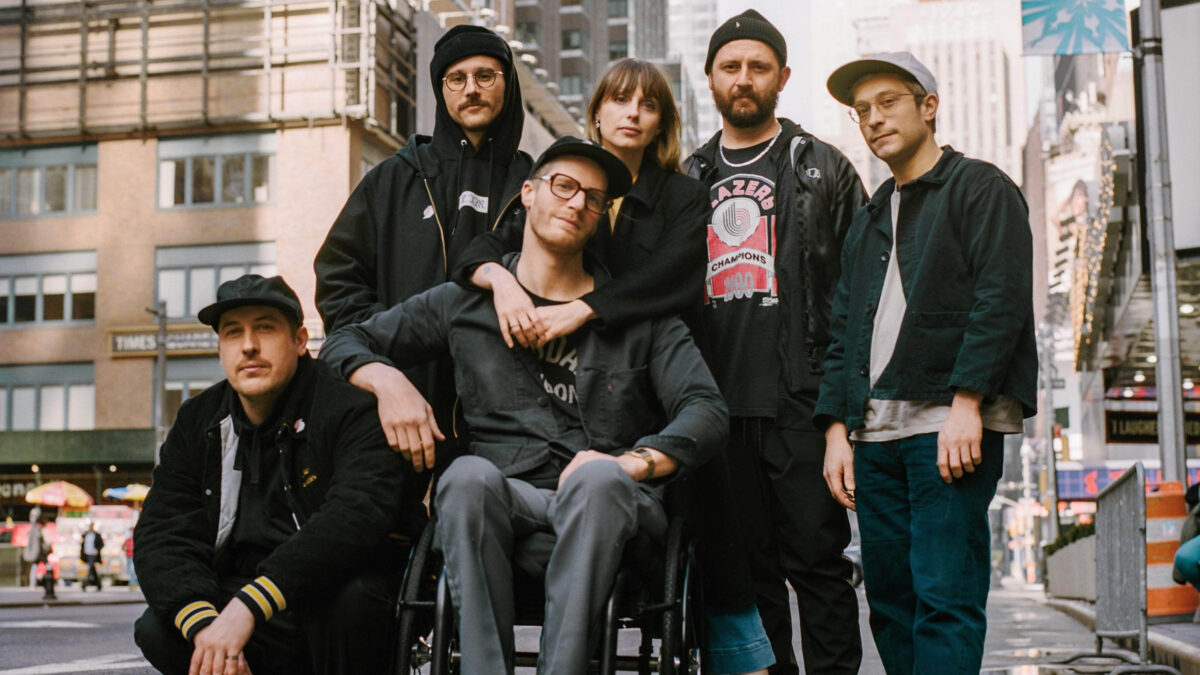
“You’re really not going to get a good dog off that for a couple weeks,” he says as a crew member loads the rollers. “Got to get a few layers on it first.” Gourley has an accent I can’t place. Carothers sounds like he grew up in southern California. Of the other band members, second guitarist Eric Howk is in the touring van. (He’s been paralyzed from the sternum down since 2007 from a construction-site accident.) Drummer Jason Sechrist is hanging out somewhere, as are vocalist Zoe Manville, Gourley’s partner and the mother of their child, and keyboardist Kyle O’Quin. Later, O’Quin tells me the band members used to satisfy their tour cravings by cooking up “bus dogs”—franks boiled in a coffeepot.
Gourley and Carothers, now 36 and 37 respectively, grew up in remote parts of Alaska. Gourley’s family moved around, usually relocating every two years to a different secluded part of the state. (“My friends were dogs,” he says.) Carothers lived outside Wasilla, the tiny city most people associate with the Palin family. The two future bandmates met as teens when Gourley’s family moved there; they started playing together seriously around 16 years ago, after relocating to Portland.
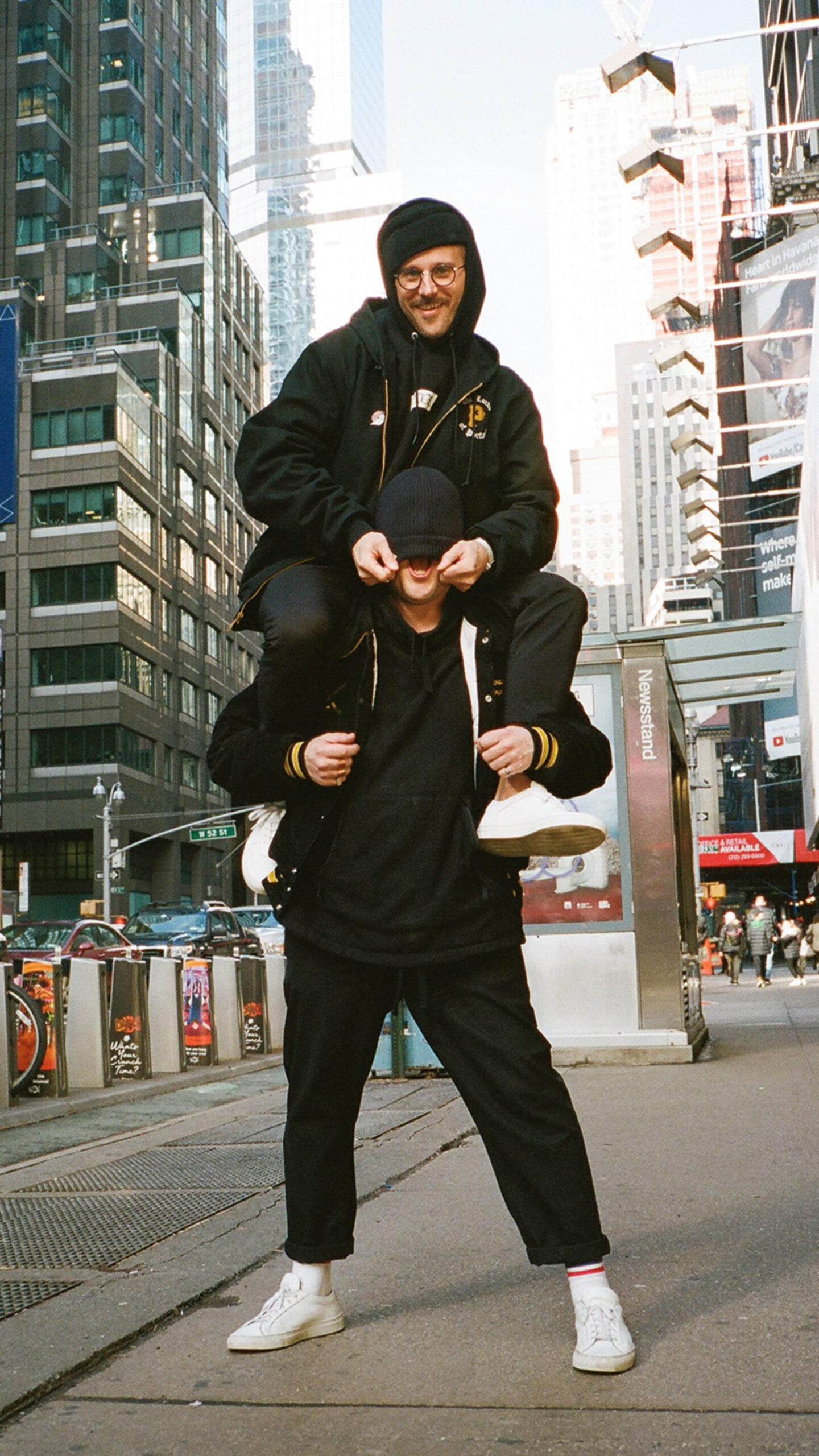
It makes a certain sense that they would splurge on a hot-dog roller: Facing the kind of fame few bands ever glimpse, they make a point of clinging to the rustic oddities of their past rather than trading up to rock-star cliché. Their clothes suggest broke musicians: Gourley is dressed for the snow—blue winter vest, fluffy Portland beanie—while Carothers wears black sweatpants and a varsity jacket with coach carothers emblazoned on it. When I ask about the Grammy win, they both shake their heads.
“Somebody fucked up,” Gourley says. Until the moment they walked onstage, he hadn’t expected to win. “There’s no way you’re going to beat Justin Bieber and ‘Despacito.’ There’s no way you’re going to beat Coldplay and Chainsmokers. There’s no way you’re going to beat Imagine Dragons.”
But they did, and the group’s acceptance speech, which they drafted “just in case,” grabbed headlines. Consequence of Sound wrote that they’d “made a mockery” of the win and pointed out that Gourley appeared to wipe himself, onstage, with the trophy. (Gourley disputes this interpretation.) Carothers delivered the speech, wrapping up with a warm “Hail Satan.”
“If we win a Grammy as a pop duo or group, a genre that we had no business being in up until last year, we’re going to give it up to Satan because that’s the only way idiots like this are going to get on that stage,” Gourley tells me—kind of laughing, kind of serious. “He’s got to have something to do with it.”
Many publications failed to notice the thrust of the speech: Carothers paid a nervous, heartfelt tribute to Alaska. He said their heroes were dog mushers and dedicated the award to the kids in the villages (“Shishmaref, Barrow, Bethel”) and the state’s indigenous people.
“That’s who that award should be dedicated to,” Gourley says back in the dressing room, “people that don’t have a voice out there.” He’s suddenly serious, his own voice louder than it had been all afternoon. “It was a really proud moment for us to win a Grammy, coming from all that. It was just sad to see the next day that you’re not going to mention any of it.”
That wasn’t the first time the press misrepresented Portugal. The Man as pretentious, arrogant or out to stir up controversy. I wonder what those writers would think if they saw the band members backstage, feeding the venue staff with their new hot-dog roller.
“Legit, it’s awesome for tour,” Carothers says, bunning a dog. “We’re cooking hot dogs in the dressing room. Look at us. We’ve changed, man.” The last statement strikes me as both accurate and ironic: The trappings of success are new, but the band’s defiantly humble embrace of it is baked in.
The merch table offers a T-shirt whose large letters scream i liked portugal. the man before they sold out. Gourley tells me it was inspired by his love of 1990s hip-hop and Wu-Tang Clan, one of the two groups that got him interested in new music during that decade. (The other was Oasis.) He talks a lot about his love of hip-hop—how the genre is forward-thinking, while rock is stuck in the past. Incidentally, the shirt was released a few months before “Feel It Still” definitively put the group in a position to be called sellouts.
“It made me think about that era in the music industry where hip-hop was just coming up,” Gourley explains. “We’re the greatest. We’re the biggest. That’s why the first poster we put out for ‘Feel It Still’ said ‘featuring the smash hit “Feel It Still.” ’ You don’t know if it’s going to happen, but there’s a bit of willing it to happen.”
As kids living in the boonies, they got much of their musical education from mainstream radio, TV commercials and film trailers. Being into the most obscure underground music was a luxury they didn’t have.
“I’d like to be able to turn on any radio station and see any commercial and good music coming from anywhere,” Carothers says. “Help make the mainstream better.”
The fact that, in 2017, PTM scored a number-one hit single as a band that started out playing basement shows more than a decade earlier makes very little sense; no wonder Billboard reported that “Feel It Still” was the “biggest rock crossover hit in five years.” The last breakthrough rock song of its caliber was Gotye’s “Somebody That I Used to Know” in 2012. But Gotye didn’t enter the mainstream as a seasoned touring concern like Portugal. The Man, whose members were already earning a living off the fans they’d developed over many years. That night, when I notice the range of ages in the crowd, the success of “Feel It Still” seems more like a bonus than an arrival. Without it, the group would still be on the road, grinding it out.
“That’s what’s missing in rock and roll. It’s like y’all stop being competitive.”
Next-level catchiness aside, the band doesn’t seem to have much insight into why “Feel It Still” has blown up. In fact, the song was conceived with unusual ease and swiftness. The melody, borrowed from the Marvelettes’ “Please, Mr. Postman,” gets stuck in your head instantly, making it ripe for multiple Spotify plays and commercials; it’s the kind of earworm you don’t bother fighting. Miley Cyrus mouthed the lyrics on The Tonight Show as part of a lip-synch battle with Jimmy Fallon, saying of it, “Sometimes a new song comes out and you just can’t get it out of your head.”
Unlike a lot of bands that have arisen from the indie-rock world, PTM has never fought mainstream success. In fact, considering the scale of producers it has worked with in the past seven years (John Hill, Mike D, Danger Mouse, Stint), a breakout hit was likely always part of the plan. The members never admit to that agenda outright, but they openly embrace mainstream channels. Gourley tells me how confounding it is to hear from musician friends who get signed and then intentionally make anti-commercial music.
“Are you fucking kidding me? That’s such an elitist idea,” Gourley says. “Indie bands want to be super indie, super weird. I think they lost track of being competitive. I think that’s really what’s missing in rock and roll. It’s not that hip-hop is taking over; it’s like y’all stop being competitive.”
Back when the band was starting out, indie rock was in a strange place. Vampire Weekend, TV on the Radio, Grizzly Bear, Animal Collective and Of Montreal were among the scene’s big names; none of them bore a passing resemblance to Portugal. The Man. From the beginning, PTM has earned tepid reviews from make-or-break outlets like Pitchfork, a fact that irks Gourley if you get him talking about it.
Since joining Atlantic in 2010, the group have had access to resources they only dreamed of as they crisscrossed the country in a beat-up van. Even after 2013’s Evil Friends didn’t become a chart-smashing success, they were still able to work for three years with Beastie Boys’ Mike D and Danger Mouse on the follow-up, which was to be called Gloomin + Doomin. Sessions would start and stop; the band would redo tracks. Gourley says the resulting music is very “experimental”—a common music euphemism suggesting that its creators are lost.
The musicians were used to putting out a record a year, and they still think in accordance with the scrappy DIY aesthetic they started with. Uncomfortable working in nice studios, they regrouped. They went back to their old agent, a dear friend. They brought on Howk, a childhood friend from Alaska, as second guitarist. Original drummer Jason Sechrist, who’d been in and out of the band since the early days, came back not long before the new album dropped. Gloomin + Doomin got scrapped in favor of a fresh start, a new album title—Woodstock—and mostly new songs.
“It was about us wanting to take things back to where we come from, the family that we started with,” Gourley tells me later.
The decision to reconceive the project resulted in large part from an offhand comment made by Gourley’s dad, who wondered aloud why they were taking so long to make the new album. Don’t you just go into the studio with your instruments and record?
“We had stressed about it for a long time,” Carothers says. “That was the straw that broke the camel’s back.”
Lyrically, Portugal. The Man has always had a knack for combining the personal with the political, in its own stream-of-consciousness style. During the three years spent working on Gloomin + Doomin, the band members felt they were losing touch with the outside world, particularly as they watched Donald Trump Godzilla-stomp his way to the White House. At a certain point, releasing years-old music just wasn’t going to cut it.
“If you’re not putting out your song—that thing that was in the air that sparked that idea—for three months, it’s totally irrelevant,” Gourley says. “We recorded up to two weeks before Woodstock came out, which is not common with rock bands. I really think that’s why hip-hop does so well.”
The new album’s title was inspired by an original ticket from the 1969 concert that Gourley’s father found. It’s also a reminder of the importance of connecting to the times music is created in. Opening track “Number One” samples Richie Havens from the historic three-day lovefest. The chorus of “Feel It Still” references both 1966 and 1986—glancing allusions to the civil-rights movement and the release of Beastie Boys’ debut record. The video features a shot of a Sikh man burning a newspaper with the headline info wars—a move that earned the band death threats—and ends with Gourley watching TV over the sounds of a crowd yelling, “Fight back.”
As big as the song has become, it’s a weird little exercise that doesn’t match much else happening in pop music at the moment, which brings us back to the band’s perpetual sense of being outsiders. That’s fine with the group; it gives them perspective on how to deal with fame. Mostly, they stick together like family and find ways to remind one another of the goofballs they were five and 10 years ago, and try not to let all the attention go to their heads. The longer I spend with them, the more I see them finding ways to insert these reminders into their daily lives as members of a now-famous rock band. In that light, the hot-dog roller appears key to the next level of their success.
“I feel like it’s the best thing we’ve ever done. The whole place smells like a 7-Eleven,” Gourley says later, gazing at the rotating meat. “It just reminds me of touring in a van. It’s kind of rad to take you back to that. Remember when we toured in the van and would stop at gas stations every hundred miles? There’s something about that. You never lose that.”