Your bag is empty.

Fourth-generation union member James A. Williams Jr. opens up about the worrying state of the working class.
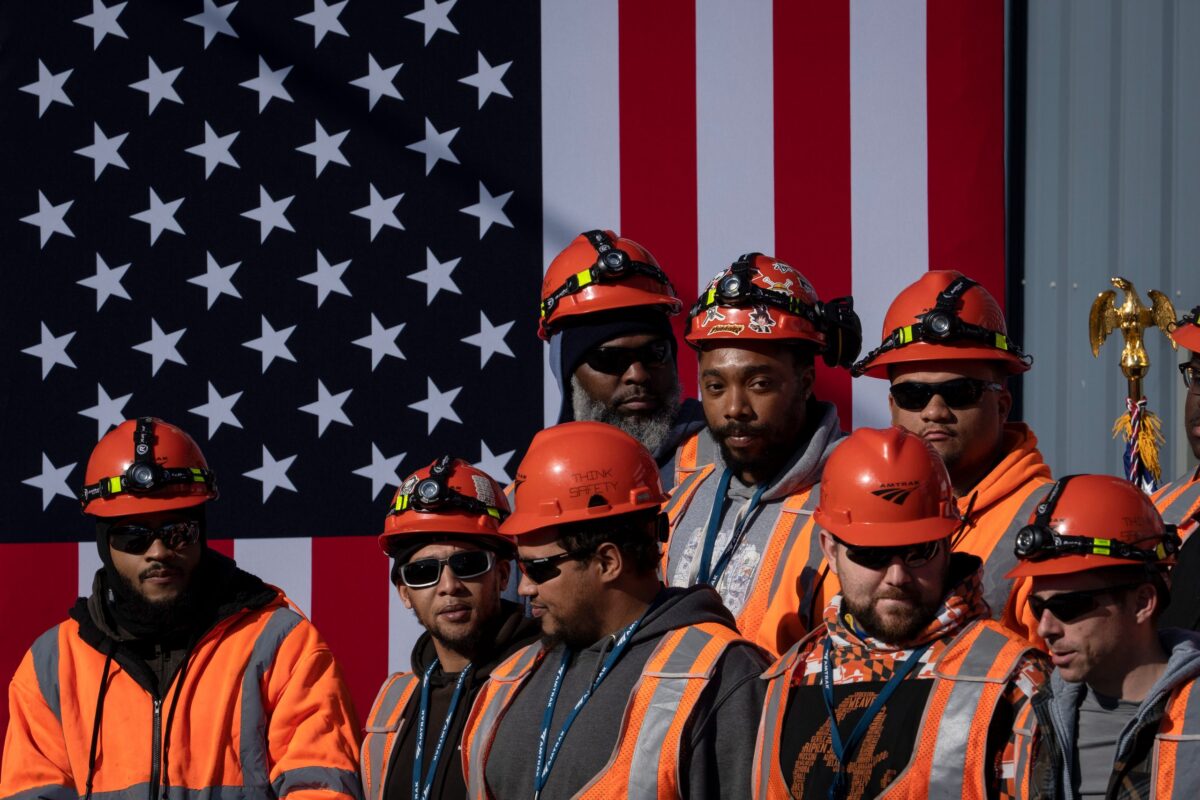
It’s not a great time to be a working class man in America. Study after study, panicked article after panicked article tell us that men—particularly young working class white men—are in crisis, that they’re falling behind, that they’re hopeless and angry and isolated. The Trump administration has catered to the far-right while weakening the economy and launching deeply unpopular wars; many formerly pro-MAGA young men have since soured on the regime and been left adrift. Bearing in mind that the rest of us aren’t doing so hot, either, young men are undeniably struggling to cope with the rising economic pressures, social alienation, changing expectations around masculinity, and harmful online influences that have become endemic to their generation.
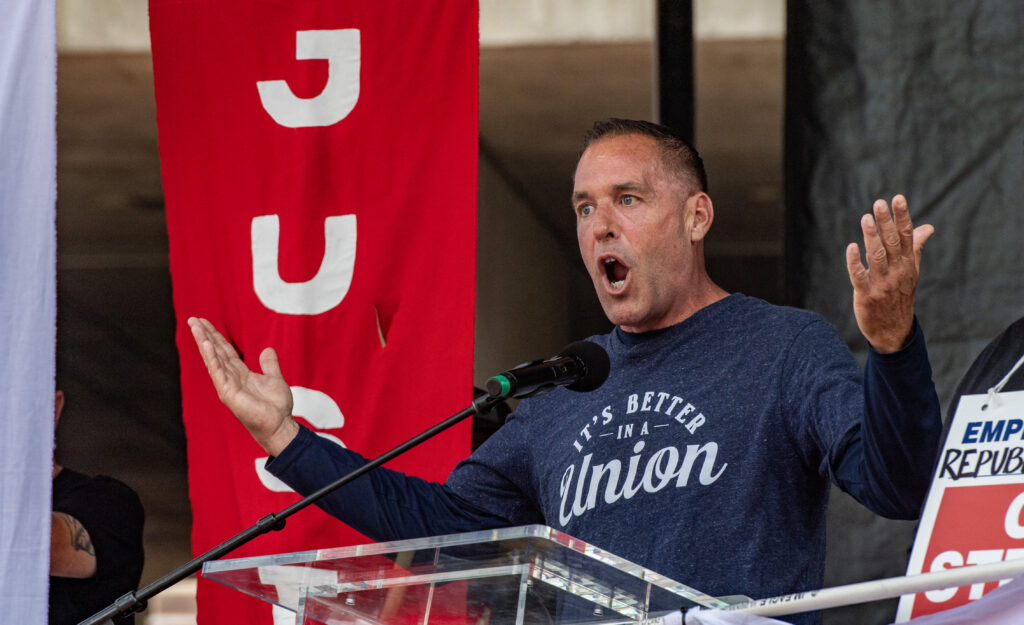
That’s why I wanted to talk to James A. Williams Jr. As a fourth-generation member of the International Union of Painters and Allied Trades (IUPAT) who got his start in the construction industry at the age of 18, Williams is used to getting his hands dirty. The burly Philadelphia, PA native followed his father, grandfather, and great-grandfather into the trades, then fulfilled another family tradition by getting involved in union leadership. He has served as IUPAT’s General President since 2021, representing over 140,000 skilled trade workers across the United States and Canada. He’s no-nonsense, passionate, and tough, with a pitch-perfect Philly accent and a reputation for getting shit done. Traditional but forward-thinking, progressive but proud of the past.
If you want to get a handle on the issues facing working class men in America in 2026, Williams is a good guy to call.
My dad felt that, and when I graduated high school and told him I didn’t wanna go to college, that was probably the most disappointed I’ve ever seen my dad in me. ‘Cause he was sold on the American dream that if you work hard, you send your kids to college, they’ll do better than you did, and he was so disappointed in me for not wanting to go down that path. I think he knew too that working-class people are not keeping up in the economy, and, and we’re probably the first generation that actually went backwards, right?
It’s taken a toll. The construction industry’s in the top three for death by suicide, and has struggled with the opioid crisis in this country too. It’s not talked about enough. We lost a member just last week who took their own life, 36 years old, who was a bridge painter in Pittsburgh. It’s all because that American dream isn’t there, and as men, I think they internalize things too much. They feel inferior when they can’t provide the level of life that they wanted to or thought they could, and they go to the ultimate extreme. Too many people are just a number right now, and nobody’s talking about it, you know?
Especially amongst white working class men that are struggling in this world. And then you get the other side of things with immigrant workers who are coming to this country wanting to provide a better pathway too and, and finding themselves in an industry that can’t keep up, where they’re abused on the job sites, misclassified as workers, dealing with wage theft, all that stuff. And they’re reluctant to want to speak out because it’s not what they were told to do. It’s a sad, sad state of affairs right now.
And I hate to make it political, but it’s important now, when you have this toxic male kind of approach to everything that our country’s doing, too. I think it only furthers the notion of ‘you gotta be the tough guy, that’s what real men do, that’s what leaders do.’ But when everything collapses around you—the economy, your home life—you’re conditioned to maybe blame and get angry at the world, but you’re certainly not conditioned to wanna reach out for help.
Yeah, exactly. Or ‘My back went out because I’ve been working 25 years in construction and I’ve been able to secure painkillers that turn into other issues.’ I started my apprenticeship program with 20 other people in 1997, and six of the people I went through my apprenticeship program have either taken their lives or overdosed—and I’m only 48 years old, you know?
We’ve had a union-wide initiative we called our Helping Hands program now for about the last five years, and it’s all about taking that stigma away for both mental health and substance abuse. In construction, if you don’t work, you don’t get paid, right? That’s just how our contracts work, and the biggest barrier to people that want help to actually get help is that they can’t go 25, 28 days a month without income. So we’re working with our members on trying to find better insurance programs that can help provide assistance when they do go out of work to get help. We’re trying to figure out ways to maybe even collectively bargain some of that stuff with our employers. Sadly, we’re always after the fact in trying to provide assistance to people, but we’re trying to get out in front of it and be ahead of it, you know?
Well, if you talk to your members and you actually listen to them, you can see all these things that are right in front of you that are meeting a tipping point. Some of it’s generational. We have an enormous amount of women that are increasingly working on construction sites, especially in our trade, coupled with recent immigrants, visa holders, TPS holders, deferred action holders that are under attack by the administration, and then you still have this old guard workforce that still views things like, “Shut the hell up and just do your job,” right?
It’s all right there on the job site every single day. All you gotta do is talk and listen to your members to see what they’re going through. There’s a toxic culture that somewhat still prevails from time to time, but I think people look to their union for support and guidance, and when they see their union actually willing to talk about these things, they’re more apt to bring up their issues versus just putting their head down and going to work every day.
It’s interesting you say that because that’s the thing I’ve wrestled with the most over the last three years serving in this role, and saying, “Okay, it’s one thing to bring awareness, but it’s another thing to actually do something about it,” right?
We had spent six weeks on a bus talking to our members about the 2024 election, and it was obvious that they had already made up their mind. I was in Philadelphia, my hometown, to kick off Labor Day, and we had about 400 people in a parking lot. We did a little rally, and you could tell that half the people there didn’t wanna even hear about Vice President Harris and what Biden did, and you could tell they already made their minds up. And I left that day going, “We are in trouble,” you know? “If we can’t win white working-class voters here in Northeast Philadelphia, we’re gonna have a problem.”
And then it carried through to Wisconsin and Ohio, Michigan. We were in the Rust Belt talking to our members. Some of the issues that they were bringing up were all that blame—blame women, blame transgender people, blame immigrant workers—and it was all there, you could see it, and when that election was over, it was like, what are we gonna do about this? How are we gonna change this mindset? So we launched a campaign across both countries, the United States and Canada, and our answer to that question you asked is redirecting the anger by bringing back the old school values of taking care of one another, and training people on it. We call it One Union, One Family, One Fight. I’ve personally trained over 5,000 of our members in just a year. We talk about a working class history in this country that goes back to our founding, and we show ’em all the things that have been done to weaken workers’ power in this country and try to redirect the anger at corporate America where it belongs, and not at each other.
And we’re not bashful. We say, “Listen, both parties are in this here somewhere.” There were moments where a working class movement could have prevailed, however we’ve been divided along these lines and, and corporate America has been winning, and winning, and winning, and winning. And so we agitate them around that to get ’em pissed at the real truth of how working class people have been left behind by our political system, and then we immediately shift it to teaching people the old school values of unionism: taking care of your brother and sister on the job site regardless of what they look like, where they come from. That union card means something.
And the response is overwhelming when we do it. It’s overwhelming. I’ve taught this class with people wearing Make America Great Again hats, you know? And that has been our only way to go about at least saying, “Let’s do something about it.” And then we hold people accountable to those values. If, on the job site somebody is sexually harassed or racially discriminated against, we immediately move into action. We have zero tolerance for hate and discrimination, and we say, “You’re outside of our values.” I don’t know any other way to do it than to organize our own movement, within our own union, around those values.
I think it has to be very apolitical. The labor movement has to speak about these values that I speak of and try to win people over in that light, and also shift the blame towards corporate America. I don’t see a political figure that can emerge to lead that ’cause there’s so much skepticism around politicians in general. The moment is now for the labor movement to lead that larger discussion. Are we in a position to do that? Certainly we have the track record to do it. We need to get our story out there in a meaningful way. It’s gotta be able to connect with people in their 40s, in their 30s, people that are giving us a second chance right now.
I’ve been a strong advocate for us having to declare our independence from political parties publicly and still align with those that support our values. There’s no doubt that the extreme fascist wing of the Republican Party, which is now the majority of the Republican Party, if not all of it, is hell-bent on destroying everything that workers have, have fought for. But in the same breath, the Democratic Party has yet to figure out where to root itself, and so why would we be beholden to either, or even try to be? I think the working class wants to hear a message of independence.
What’s interesting is our union is increasingly less and less white; 46% of all the apprentices that became members of our union last year were Latino, and an increasing number of women and African American members that are joining our trades in the traditional model of apprenticeship. And we’re not seeing that type of toxic viewpoint on those social issues. We’re seeing this desire to be a part of something bigger, and running into other roadblocks in their journey.
But in general, you see a disenfranchisement, and I see it in my own kids on some levels. I think they’re disappointed in the economy as a whole, and seeing mounting college debt, mounting income inequality and cost of living that they just can’t keep up with. I think because of social media, because of the way our society has changed, you just see this increasingly retreatist approach to things, where you can go down some deep, deep, dark holes, you know? And again, nobody’s talking to ’em from a labor perspective of like, “Hey, there is a better way. You can have more power over your own life and your own economic standing.” But it’s scary.
I think younger white working class people know and feel that this economy’s not gonna work for them like it did maybe for their parents or their grandparents, and are pulled in so many different directions right now with the messages that come out and how they’re targeted. I don’t think they’re any different than any other working class person that’s been told to blame somebody else, and then no one is there to help steer the anger in the right direction, you know? Somehow Trump can freaking get to those people. I’ve stopped trying to figure it out. He represents everything that is wrong with a toxic male and I don’t know how people can be drawn to that.

