Your bag is empty.


Stratten was a Playmate and an actor with a rising star. But her poetry caught the ear of Cristine Brache, who turned Stratten's portraits into paintings.

Cristine Brache is an artist whose recent exhibition, Centerfolds at Bernheim gallery in London, focuses on former Playmate Dorothy Stratten, who was murdered by her husband at just 20 years old. Here, Brache explains how Stratten’s poetry refocused her image. Brache’s work also appears in our Fall 2026 issue, for which she painted a portrait of Playboy’s first Puerto Rican Playmate of the Year Karen Velez, Miss December 1984. The issue is now on newsstands. Want us to come to your place? Subscribe here to get it delivered to your door.
I knew Dorothy Stratten’s face long before I knew any of her words.
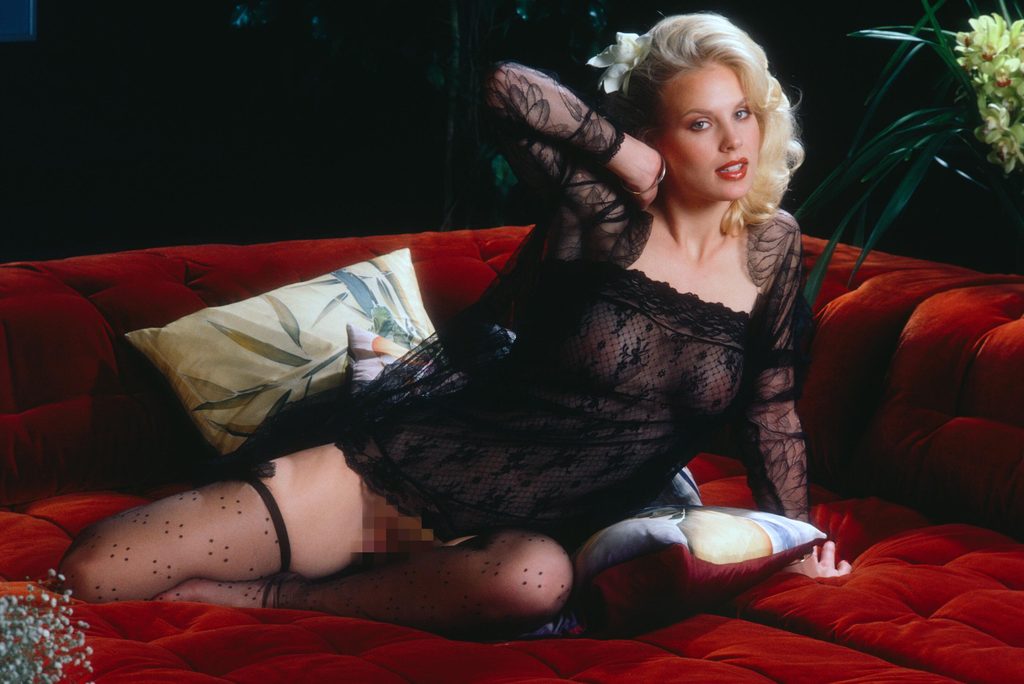
For most people who know her at all, this is probably how Dorothy enters the imagination: as an image. Blonde hair, blue eyes, a particular softness in her face. Playboy’s Miss August 1979 and Playmate of the Year in 1980, she had the kind of beauty that elicits an almost unbearable, visceral response because it is so rare and otherworldly. Her image possesses you and, in turn, makes you want to possess her, creating a mirage of intimacy, the strange illusion that we truly know something about her beyond what we see.
Born Dorothy Ruth Hoogstraten in Vancouver in 1960, she was working at a Dairy Queen when she met her future husband, Paul Snider, a pimp who told her he was a promoter. He encouraged her to pose for photographs and submit them to Playboy. She moved to Los Angeles, appeared in the magazine, and soon after, she began acting. She was poised for success, declared to be the “next Marilyn Monroe.” However, very suddenly, in August 1980, at 20 years old, she was brutally murdered by Snider, who then killed himself.
Since then, her photographs have circulated for nearly 50 years, accompanied by a story that has become almost inseparable from her image. Her death has been retold in films, books, articles and documentaries, each version attempting to arrive at a more conclusive version of Dorothy Stratten. In the process, Dorothy has become many things: a quintessential Hollywood tragedy and cautionary tale, an emblem of beauty, an ambitious young woman with lost potential. She has been mourned, desired, protected, analyzed, and sadly, more and more, forgotten. Each act of restoring or honoring her personhood inadvertently produces another archetype for her to inhabit. And yet, somehow, with each reinterpretation, it is barely ever mentioned that she wrote poetry.
As a poet myself, discovering this part of Dorothy’s life drew me toward her in a way her image alone never had. I was saddened not to see her writing carry forward with the same tenor as the legacy of her beauty and death. Here was something from within, something that gave form, however partially, to her interiority. Dorothy had been looked at, reproduced and interpreted endlessly while her poems moved in the opposite direction, marooned. And yet, surprisingly, reading her words did not make me feel that I finally knew Dorothy. If anything, the distance between the Dorothy I had imagined and the person who had existed became more apparent. The poems suggested a consciousness that the photographs could never contain, a private configuration of thoughts, anxieties, desires, and observations running alongside the extraordinarily public surface of her appearance.
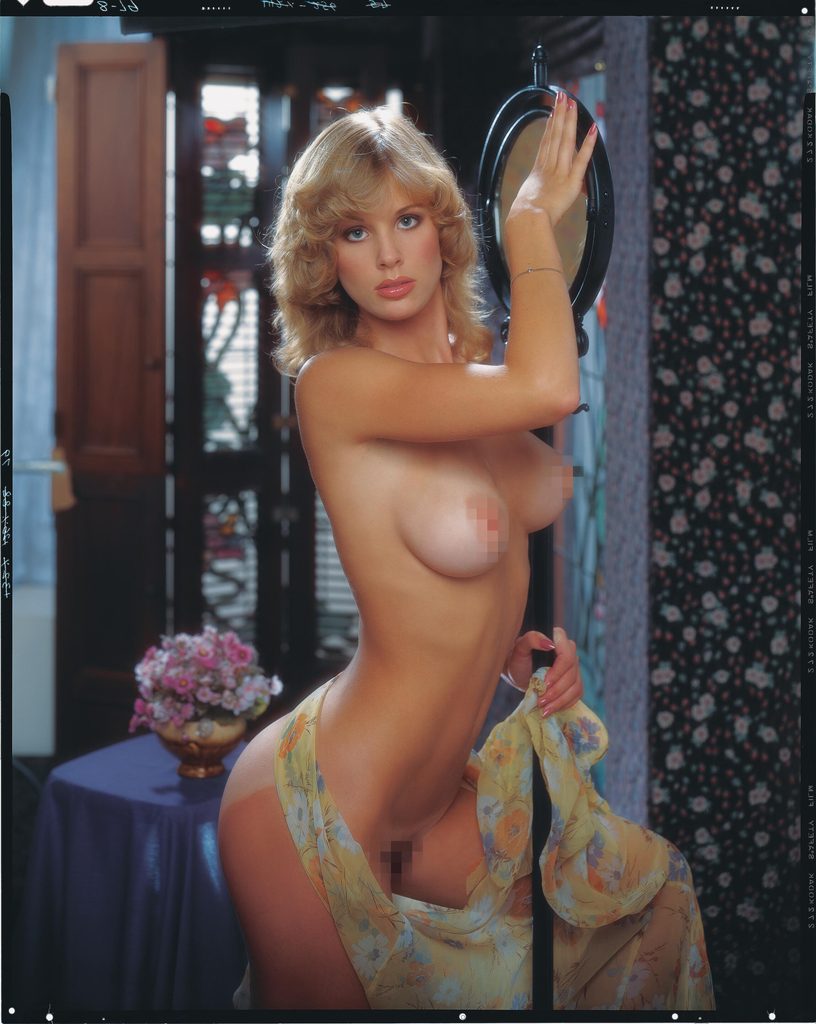
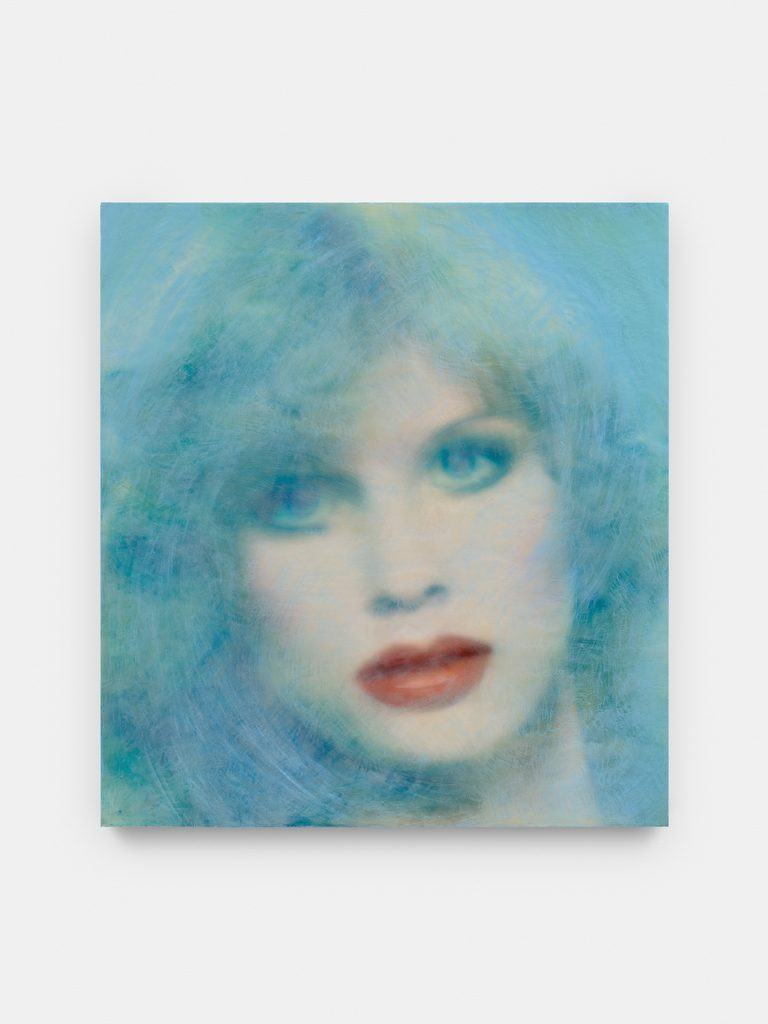
This dissonance made me curious. I wondered why her poems seemed to hinder my ability to project upon her, and why it is that the less we actually know of someone, the more readily we fill that unknowability with whatever we need, want, or fear them to be. Our projections are delicate, even sacred things. They reflect something of our subconscious and form a fragile glass scaffolding that supports core parts of our identity. Thus, we are very protective of them. They hold some of our deepest longings—precious internal states that fulfill a psychological imperative of their own. And we cast these secrets collectively, most intensely upon the people we find most talented, captivating, and beautiful. We pull them toward us in our imaginations, filling the distance between their image and their unknowable interior with our shadows. What is this closeness we desire? And why, when someone becomes visible enough, do we begin to feel entitled to their being?
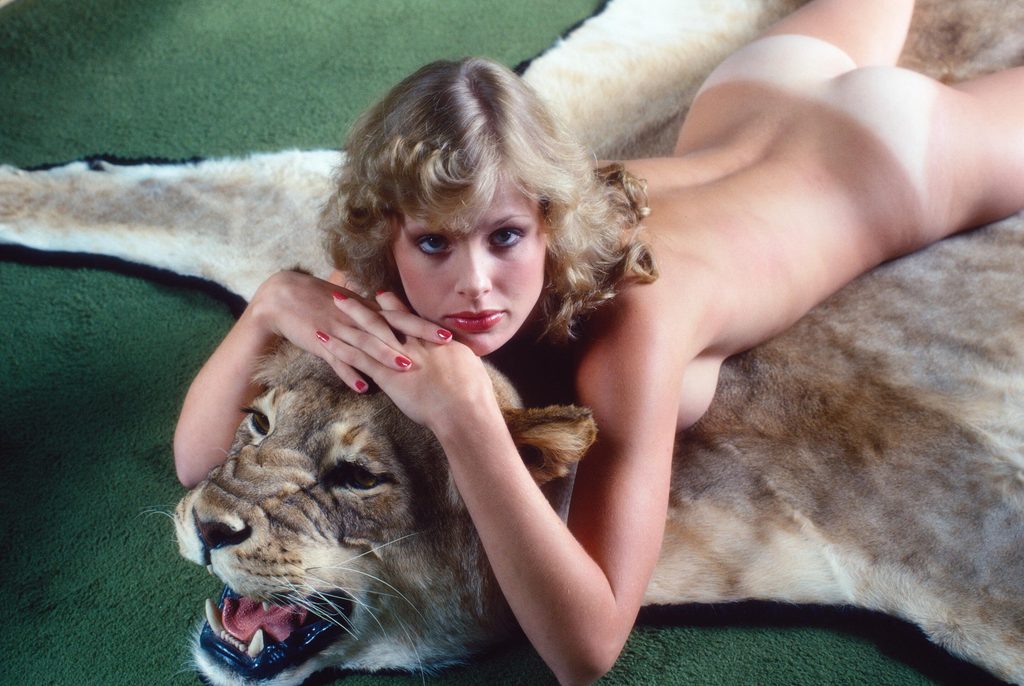
I felt that so much had already been taken from Dorothy, while her image continued to ripple through our collective consciousness. And yet, for someone once so famous, relatively few people know her today. I began thinking about how even the most recognizable person can eventually disappear from cultural memory. I wanted, however symbolically, to return something to her and make her known again. This was what ultimately led me to paint her. I wanted to elevate Dorothy to the status of an icon by deliberately placing her within the visual lineage of something as culturally universal as Warhol’s Marilyns. So, I painted some of her most iconic Playboy photographs, zooming in on her face to capture her expression. But the large-scale portraits in my Dorothy series perform two contradictory acts at once: they monumentalize her forgotten image while simultaneously withholding it.
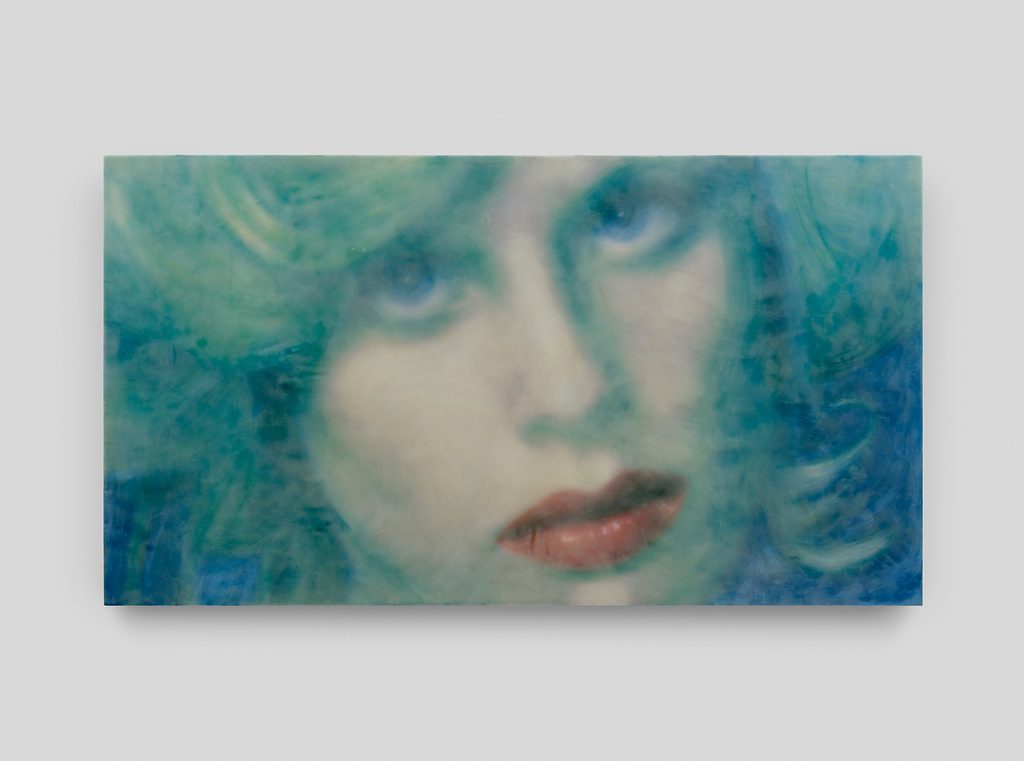
I work in oil and encaustic, building the paintings through layers of textile, pigment, ink, beeswax and damar resin. The material seems capable of expressing something about Dorothy that escapes language. Her face becomes submerged beneath the wax, almost as though she were trapped beneath sheets of ice. Features emerge and disappear. At times she is immediately recognizable; at others, she hovers just beyond reach. The paintings make her enormous and impossible to overlook, while refusing to make her fully available to the viewer. In this way, the process embodies the paradox, the yearning that drew me to Dorothy in the first place. Her image has been made available to us, while the person within it remains forever out of reach.
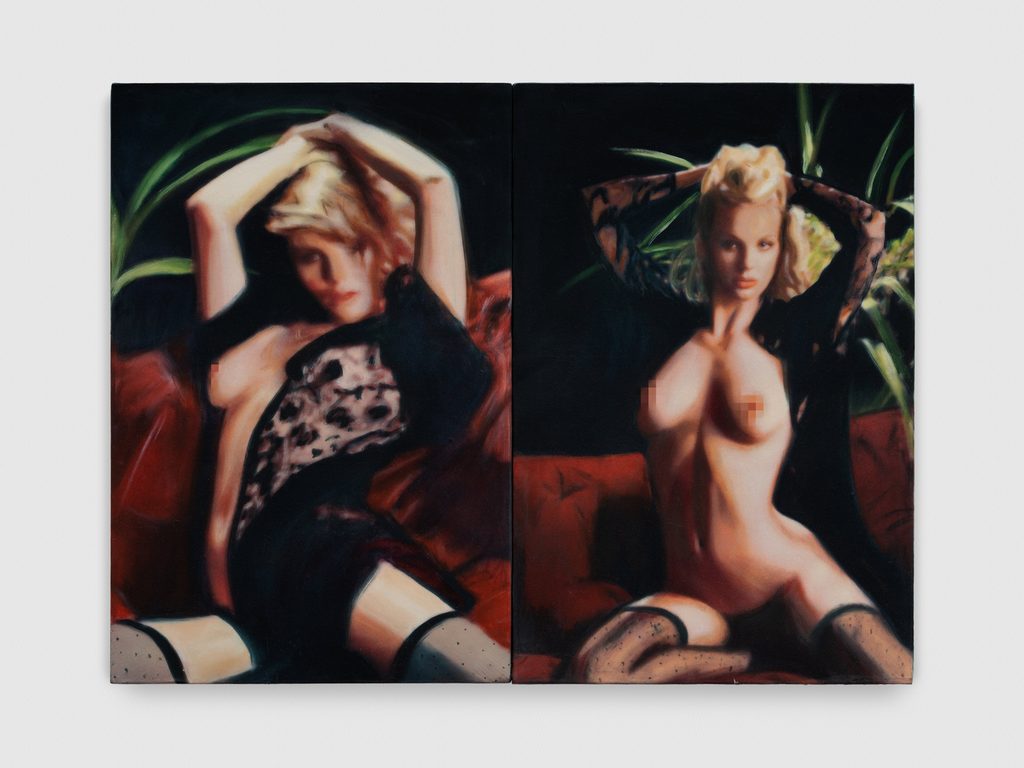
My Star 80 series of diptychs uses Bob Fosse’s 1983 film of the same name about Dorothy Stratten to examine the increasing distance between a person and their image as it proliferates over time. Released only three years after Dorothy’s death, Fosse’s film reenacted her life with Mariel Hemingway in the role of Dorothy, meticulously restaging many of her original Playboy shoots. Seen side by side, Dorothy’s original photographs and Mariel’s reenactments seemed to express the accumulating degrees of removal between an image and its source. As an image circulates, it becomes increasingly detached from its subject: visible everywhere, yet estranged from any singular origin.
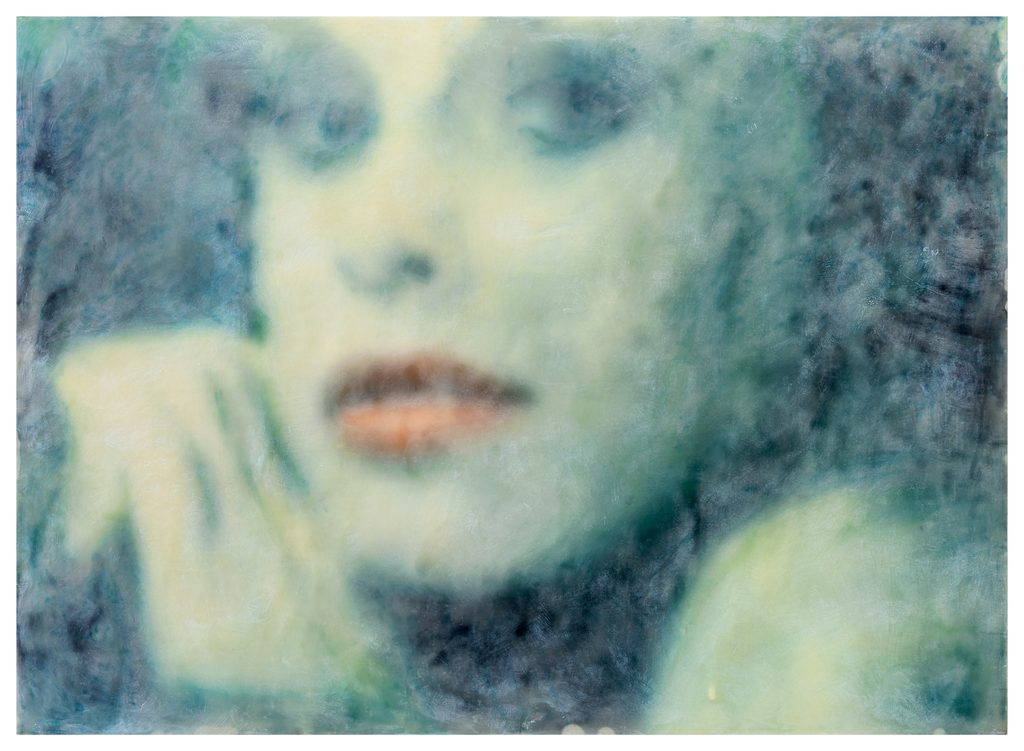
This alienation is reinforced through the other encaustic method I use. A thin layer of wax is absorbed directly into silk and activated with luminous oil glazes, producing images that appear unusually vivid and exposed, almost hyper-visible, in contrast to the more obscured surfaces of my Dorothy series. The softness and translucency of the silk, together with a slight blurring makes Dorothy seem to recede as her likeness intensifies. Her image moves from Playboy photograph to cinematic reenactment to painting, each translation introducing another layer of mediation between the living person, her cultural afterlife, and our projections. Her myth grows while the person at its center becomes increasingly remote and isolated.
When a person becomes an image for public and psychic consumption, something is inevitably sacrificed. I think we tend to take that sacrifice for granted. We imagine there can be no suffering in being seen, particularly when visibility has brought someone wealth, admiration or power, particularly when the person is beautiful. They become entangled with memories and private parts of ourselves they will never know exist. It is an extraordinary amount for a stranger to give us.
Perhaps what we owe in return is not guilt, but generosity. To admire Dorothy’s beauty and writing without confusing our admiration for access to her. To recognize that the pleasure, longing or fantasy an image produces in us was created by us, while the person who inspired it remains separate. Dorothy’s poems don’t tell me who Dorothy really was. Neither do my paintings. If anything, both have made me more aware of the void between her image and the person who once existed inside it. I can look at her. I can paint her. I can be moved by her beauty and fill her image, like a mirror, with parts of myself. But maybe looking generously means remembering that whatever her image gives me in that exchange is a gift that exists in my mind and nowhere else.