
Your bag is empty.

From STIs to social anxiety, there's a new set of rules governing sex.

Welcome to Playboy’s Gen Z Sex Survey. In partnership with The Kinsey Institute and the sexual health brand Julie, we talked to 2,373 adults ages 18 to 29 about their sex lives to get to the bottom of the so-called sex recession, and to get more insight on what’s really going on in the bedroom. Check out the full survey results here. This survey also appears in our Fall 2026 print issue. To have Playboy delivered to your door, subscribe here.
Every generation has a unique relationship with sex, but it has never been as free or easy as nostalgia suggests. The archives of sexual history reveal a consistent push-pull between freedom and safety, pleasure and panic. The 1960s had the pill, Masters & Johnson, and the Stonewall riots. The 1980s had Madonna, Mapplethorpe, and the HIV epidemic. The 2010s had Tinder, Fifty Shades of Grey, and #MeToo. Each generation believed it was more liberated or doomed than the last. Is today’s “sex recession” different? Fear came through plainly in responses to our 2026 Gen Z Sex Survey: “It’s not safe out there anymore, it’s a lot to handle.” Has the pendulum of sexual history swung and stuck?
In previous generations I think it was more about actual romantic love, but now, it’s about hook ups, cheating, leaving, etc. It’s sad.
Fear is one of our deepest evolutionary survival instincts. Nothing shuts sex down faster than a physical threat. You won’t find gazelle mating in front of lions. Yet, Gen Z doesn’t seem to be afraid of the lions that plagued previous generations.
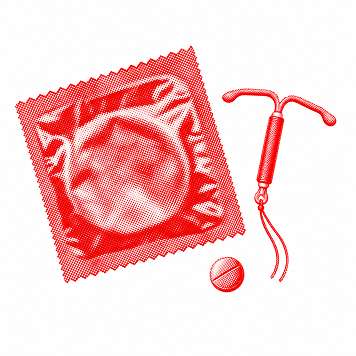
Only a third of singles used any kind of protection against STIs or unplanned pregnancy most or all of the time during sex in the past three months, despite more reliable choices being available than ever before. Withdrawal was one of the most common methods used, even though it doesn’t protect against STIs and can lead to pregnancy for 1 in 5 people, per The American College of Obstetricians and Gynecologists. And while at-home STI tests are increasingly popular and affordable, rates of STI testing were spotty at best; a third had never been tested.
Physical risks are still very much a threat, as is unintended pregnancy. But looking through the data, the real lion on Gen Z’s mind seems to be other gazelles. One response reflected the mood. “Everyone I know that’s my age has some form of social anxiety. It’s hard to hook up with someone if you’re too scared to even talk to anyone.” Fear of rejection was cited as a key barrier to pursuing romance and sex by almost two thirds (61%) of survey participants, with no differences for gender or age group.
The risk calculations Gen Z’s environment demands have become complex and paralyzing. As one participant put it, “this generation is taught to hate one another.” Unsurprisingly, in this environment, desire feels like a bad bet. With unclear odds, people are choosing to play less. Even positive changes participants called out—like more openness, more acceptance, more tools and toys, and more awareness of consent, safety, and mental health—create more reasons to pause. “We have more knowledge now and it is riskier now,” as one participant said.
They had Woodstock and all those hippy waves. They were fucking everybody. Nobody was judged back then and if they were they didn’t care. Now we all care what people think and are too scared to be judged
But the pendulum of pleasure needn’t swing wildly between Woodstock and Comstock. Boundaries and rules do not shrink desire, they help give it focus. This could be where Gen Z’s sexual revolution really begins. The sex recession could be a reset on a path to balance what previous generations missed: freedom and safety are not opposites, they make each other possible.
For the full breakdown of The Playboy 2026 Gen Z Sex Survey with the Kinsey Institute and Julie, go to sexsurvey.playboy.com.