
Your bag is empty.

Unsurprisingly, young people report having less sex than prior generations.

Welcome to Playboy’s Gen Z Sex Survey. In partnership with The Kinsey Institute and the sexual health brand Julie, we talked to 2,373 adults ages 18 to 29 about their sex lives to get to the bottom of the so-called sex recession, and to get more insight on what’s really going on in the bedroom. Check out the full survey results here. This survey also appears in our Fall 2026 print issue. To have Playboy delivered to your door, subscribe here.
Playboy‘s Gen Z Sex Survey complicates but doesn’t contradict the popular narrative: Gen Z is an unusually sex-distressed generation—progressive regarding sexual orientation and gender, theoretically open to romantic partnerships, but deeply worried about sex and its consequences.
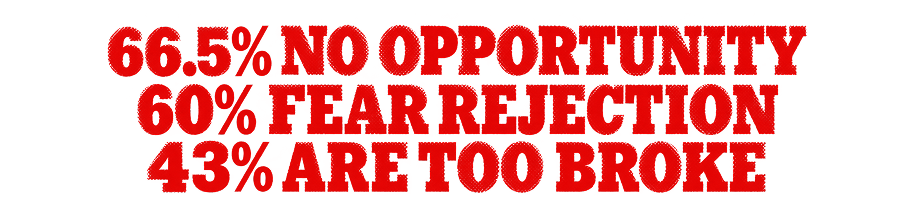
The data describes a cohort of young adults who feel they lack opportunities to meet partners (66.5 percent of respondents), fear rejection (60 percent), and consider themselves too broke to date (43 percent). Particularly troubling is the influence of digital life; large minorities of polled respondents reported that they’re exhausted with dating apps, that pornography dulls their drive to meet a partner, and that they often seek intimacy online rather than in person. Unsurprisingly, young people reported having less sex than prior generations, and digital culture plays a central role.
It’s all very depressing! The preeminence of romantic love in human fulfillment is the closest thing we have to a universal, cross-cultural value. Sex, meanwhile, is one of the most reliable sources of human flourishing I’m aware of, whatever its risks. Young people openly identifying themselves as too tired, broke, or scared to have sex leave me wanting to shut down the internet for good. The survey makes me contemplate the recent film Obsession, which has been identified by some as the first movie to truly capture the Gen Z zeitgeist. If true, it says sad things about the state of the generation: Obsession is about terror in the face of sex and love.
Protagonist Bear and his friends work dead-end jobs at a music store; there’s the exhaustion and economic precarity. Bear is infatuated with peer Nikki, but when given an opportunity to confess his feelings, he’s too anxious to say anything; there’s that fear of rejection. Instead, he turns to a gag gift from an occult store to compel Nikki to love him; in doing so, he evades the potential for rejection but also for real connection. The mayhem to come underscores deep-seated feelings that sex and love are dangerous.

In fact, the Nikki replacement that Bear wishes for could be taken as a representation of the online porn and chatbots that increasingly fill the erotic needs of young people: Post-wish Nikki is eager to fulfill all of Bear’s desires, but her submission comes packaged with unpredictability, inauthenticity, exploitation, and violence. Bear has the opportunity for an authentic and loving connection with coworker Sarah, who’s cute and stylish and genuinely likes him. But Bear’s attraction to Nikki, based largely on fantasy, prevents him from seeing the opportunity right in front of his face; the safe, fake option obscures the real thing. It’s not surprising that a generation that grew up in a world where sex was always a click away found much to connect with in the film.
The survey offers some hope. Most in relationships are satisfied with their sex lives, and as the researchers note, the Gen Z sex recession seems to be a matter of less opportunity, not less desire. But we should be deeply concerned that both our cultural conditions and our digital world offer choices that, like Bear’s wish, evade risk but also foreclose on connection. This is what it really means when we say Gen Z is afraid of sex—not that they lack desire but that their culture is extraordinarily attentive to things that can go wrong with intimacy and offers so many digital approximations to avoid them. Sex requires precisely the conditions that contemporary culture teaches young people to avoid: risk, uncertainty, and the potential for embarrassment and rejection. If we’re going to fix the conditions described in the survey, we’ll need to demonstrate to Gen Z that sex doesn’t have to be a horror show.
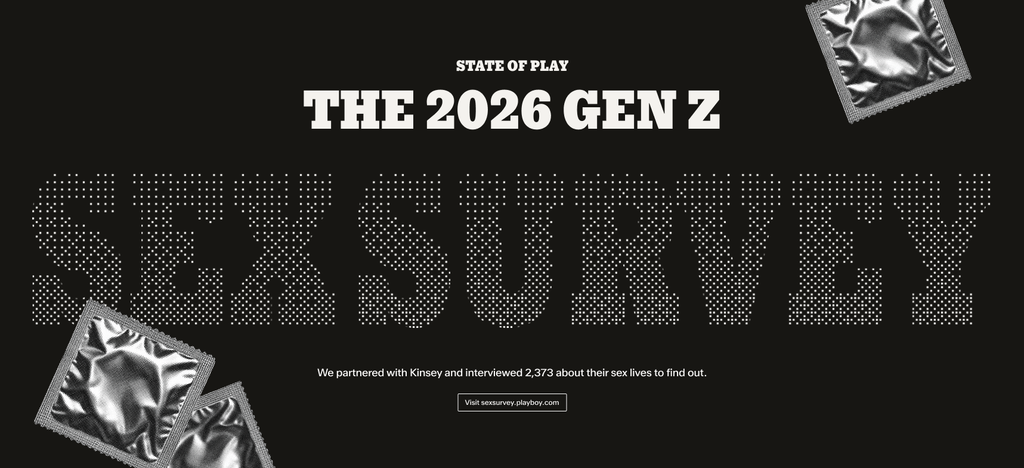
For the full breakdown of The Playboy 2026 Gen Z Sex Survey with the Kinsey Institute and Julie, go to sexsurvey.playboy.com.