Your bag is empty.

It's not the first time Gigi Hadid or Vogue Italia have come under fire for cultural insensitivity

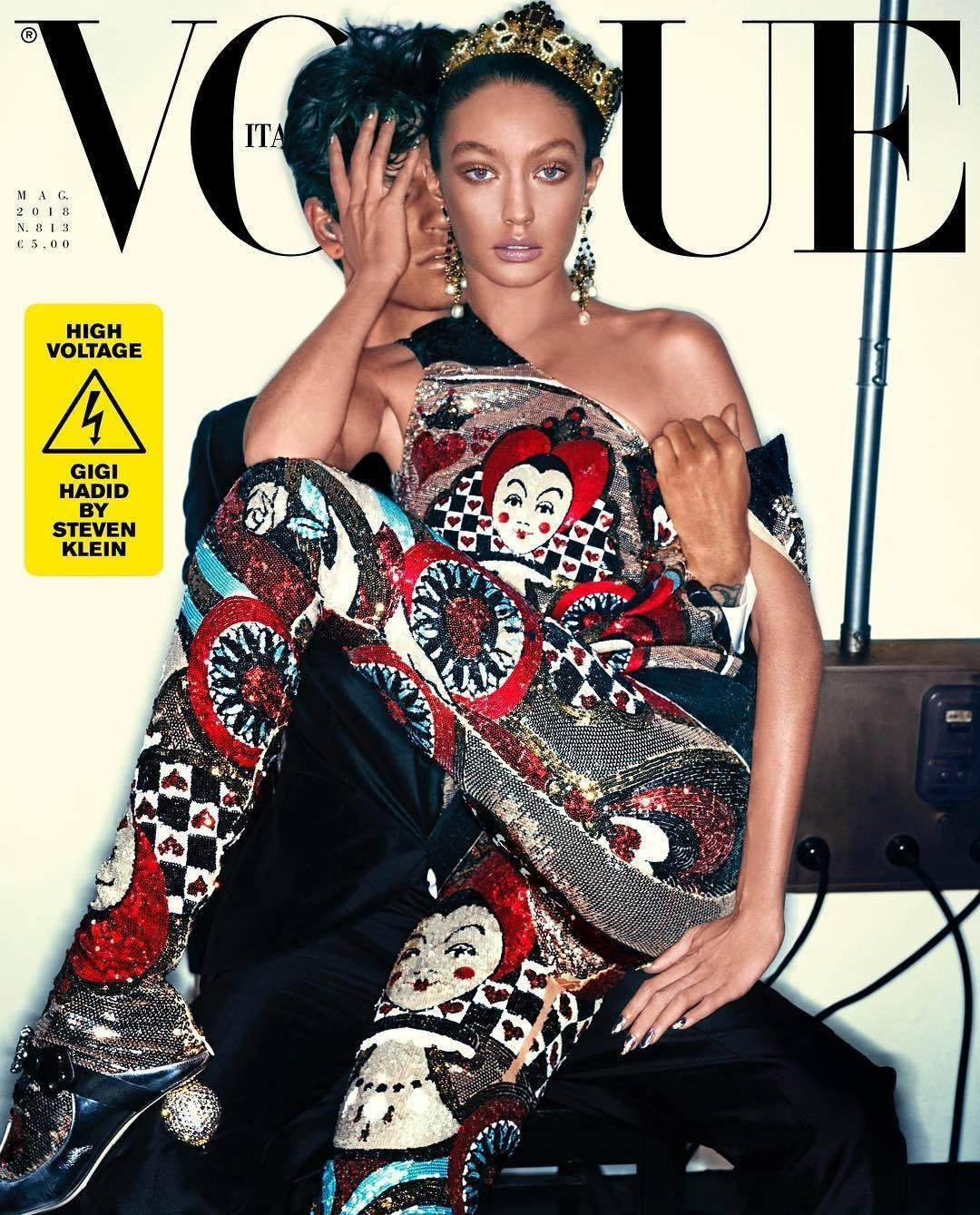
According to the 2018 calendar, there’s no indication Halloween arrives early this year, but the season for “blackface is never acceptable” declarations is apparently getting a head start. Earlier this week, model Gigi Hadid found herself at the center of controversy after Vogue Italia unveiled the cover of its May issue on which the model appears with altered facial features, darkened hair and most noticeably—a much darker complexion.
After a social media skirmish where many took her to task for donning blackface—a centuries-old, culturally insensitive gesture intended to caricaturize and dehumanize black features—Hadid apologized for the cover on social media, explaining that she had no role in the photo alterations or the creative direction of the shoot. Furthermore, she attributed her extremely “bronzed,” photoshopped look to photographer Scott Klein’s signature editorial style.
“I want to address this for those who were offended by the editing/retouching/coloring of the cover,” Hadid shared on Instagram. “Please know that things would have been different if my control of the situation was different. Regardless, I want to apologize because my intention is never to diminish those concerns or take opportunities away from anyone else, and I hope this can be an example to other magazines and teams in the future. There are real issues regarding representation in fashion—it’s our responsibility to acknowledge those issues and communicate through them to work towards a more diverse industry.”
At this point (and long before we got here, actually), there’s legitimately no excuse for anyone to still be perplexed about what’s wrong with blackface. And what’s worse is that this isn’t Hadid or Vogue Italia’s first time facing blackface-related backlash. In 2015, the publication featured a spread of a bikini-clad Hadid presumably made up to look like a black woman, complete with darkened skin and wearing various colorful afro wigs. In 2014, yet another Vogue Italia issue tried and failed to make segregation look stylish by placing images of models in separate, race-based categories. Klein has a history of racist and ableist photos, including a 2009 Vogue France shoot of white model Lara Stone posed in blackface and an Interview magazine cover shot of Kylie Jenner posing in a wheelchair.
This type of “imitation” isn’t sincere nor is it taken as flattery from black and brown people who know that our skin isn’t some creative concept we can rinse off after a photo shoot.
Needless to say those images caused similar waves, but the negative reactions don’t seem to stop even more egregious instances of companies using racial marketing tactics. In January, an Italian cosmetics company carelessly included a racial slur in its black nail polish name and even defended its choice in a completely tone-deaf, apology-free response that simply tied the offensive moniker to a song title.
Clearly, that reply was an utter failure, as was this latest incident by Vogue Italia, which has basically left Hadid to tackle the outrage on her own, suggesting that they see no fault in their actions or that they simply don’t care. The fact that this continues to occur gives credence to suspicions that companies have tapped into a formulaic approach to marketing: purposely incorporate racist tropes into product presentation, await the public outcry and the increased attention that comes along with it, issue an apology, and move on with the intrinsic knowledge that mocking the culture of black people and other people of color for profit is just a modernized form of minstrelsy.
If companies have indeed formally adopted racialized tactics as a form of increasing revenue, should we collectively ignore them or continue calling them out although we know it will reward them with the publicity they seek? Thinking about that answer is about as exhausting as forever explaining why blackface is and will never be appropriate. On the other hand, some see this as just another example of media exploitation, but if companies would stop utilizing racist tropes as thinly disguised examples of art, maybe the media wouldn’t have much material to work with.
No matter how you look at it, this type of “imitation” isn’t sincere nor is it taken as flattery from black and brown people who know all too well that our skin isn’t some creative concept we can rinse off after a photo shoot. Besides, considering that the fashion industry has an ongoing diversity issue, ditching the excessive bronzer, paint and heavy makeup and hiring actual black and brown models seems like a way smarter option.