Your bag is empty.

It took centuries for mankind to realize it needed to manscape (and a company like Manscaped). Why?
Back in 2558 B.C. when Khafra, a famous Pharaoh in ancient Egypt, prepared to attend a religious ceremony, his male preparation ritual probably looked a little like this: He’d fasten his ornate collar onto his neck, apply an entrancing eyeliner and step into his white, form-fitting kilt. After making sure his hair (or in this case, a wig) was just right, he’d also take equally meticulous care at chopping off all of his body hair. He’d do this not only to keep lice and fleas off his body but to feel fresh and confident. This is much in the same way that manscaping over the last 20 years has become the grooming ritual of heterosexual and homosexual men wanting to express their masculinity through the artform of creating a freshly cropped crotch area.
“After you’ve shaved, you actually feel free,” says Paul Tran, co-founder of the male below the belt grooming company Manscaped. “There’s definitely a feeling of cleanliness and hygiene. But the other thing is, and let’s be honest, men can be shy or even insecure about their bodies when they go into the bedroom and pull down their pants. So when you’re on a first date or even subsequent dates you feel more masculine and less insecure.”
Whereas only six percent of men trimmed their nether regions in 2008, a 2017 study published by the ‘American Journal of Men’s Health’ reported that upward of 73 percent of men ages 25 to 34 groomed, especially before for sex.
As far back as 1890 America, manscaping was initially the domain of competitive bodybuilders, who completely shaved their bodies to accentuate chiseled physiques for contest judges or magazines. But homosexual men who leafed through those publications eventually took body grooming into popular culture. By the 1980s, manscaping among gay men was an aesthetic switch from the hairy-chested macho-man look of the 1970s, popularized by the disco group The Village People and featured as cultural norm in the 1980 film classic and Al Pacino starrer Cruising. By the 1990s, mainstreaming of gay culture within hit TV shows like Will & Grace coincided with the “metrosexual” movement among straight men. Marketers took notice of young urban hetero guys using high-end hair and skincare products, being meticulous about their fashion, and sensitive about their appearance.
The biggest impact on this budding demographic, of course, was the original 2003 version of the juggernaut makeover TV series Queer Eye for the Straight Guy, which rebooted last year on Netflix. Millions of straight guys tuned in —alongside their wives and girlfriends—to watch five gay men transform style-challenged heteros by advising them on various areas of self-improvement, which included removing unwanted body hair. In fact, the show helped push the term “manscaping” into the American lexicon (as well as into the straight male grooming ritual).
“I think millennial males led the way,” Tran says, “but women have been doing this for decades.”
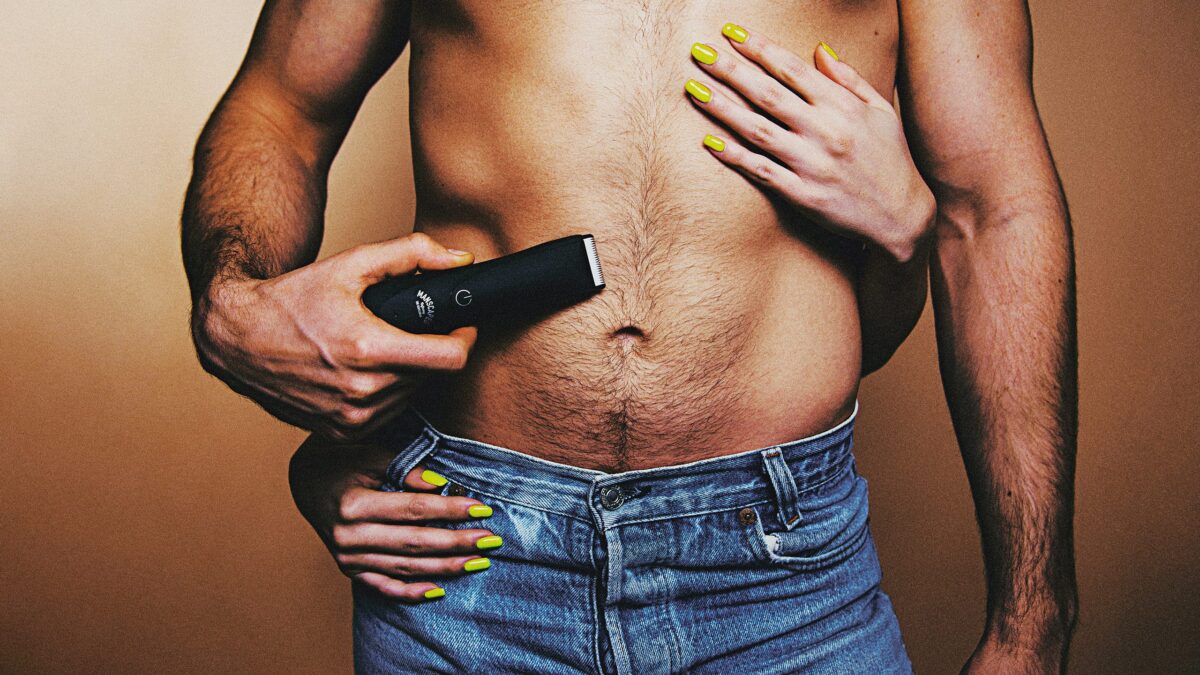
Whereas only six percent of men trimmed their nether regions in 2008, a 2017 study published by the American Journal of Men’s Health reported that upward of 73 percent of men ages 25 to 34 groomed their junk, especially before for sex. Not to mention that a manscaped crotch has become a desired look for sexual or potential sex partners. One 2017 survey done by Cosmopolitan found that 70 percent of women preferred their male partners trimmed. Last year, our own Playboy Advisor expressed her preference for downstairs grooming. Moreover, a simple Google search sprouts results of a growing number of body hair trimmers from familiar companies like Gillette, Norelco and Remington.
Although these clippers are marketed toward men, they’re not specifically made for them. But Manscaped has been creating significant buzz with its male-specific grooming products exclusively made to shave, moisturize, hydrate and deodorize a man’s package. What sets this start-up’s hair-trimmers apart from the others is the anti-nick design for avoiding injury—one of the biggest perils of shaving one’s balls—but also one of the primary reasons Manscaped was conceived in the first place.
“The eureka moment to start this company was when I snagged my balls,” explains Tran, pictured above. “I was using a beard trimmer, and I had my own horrific accident. Then I went out to see if someone was creating products for this particular purpose. Then I realized the answer was no.”
Tran, 35, and his business partner Steve King, 63, began their San Diego-based start-up in 2017 with the notion of providing men with the right tools for below-the-belt grooming, a task that comes with its own set of rules. “One of the biggest challenges was learning how to speak to men about our products,” says Trans. “That was difficult because publicly talking about caring for your balls is so taboo. And just talking to guys about the health benefits of manscaping was not resonating.”
In its first year, Manscaped generated $1.7 million followed by $2.8 million in 2018.
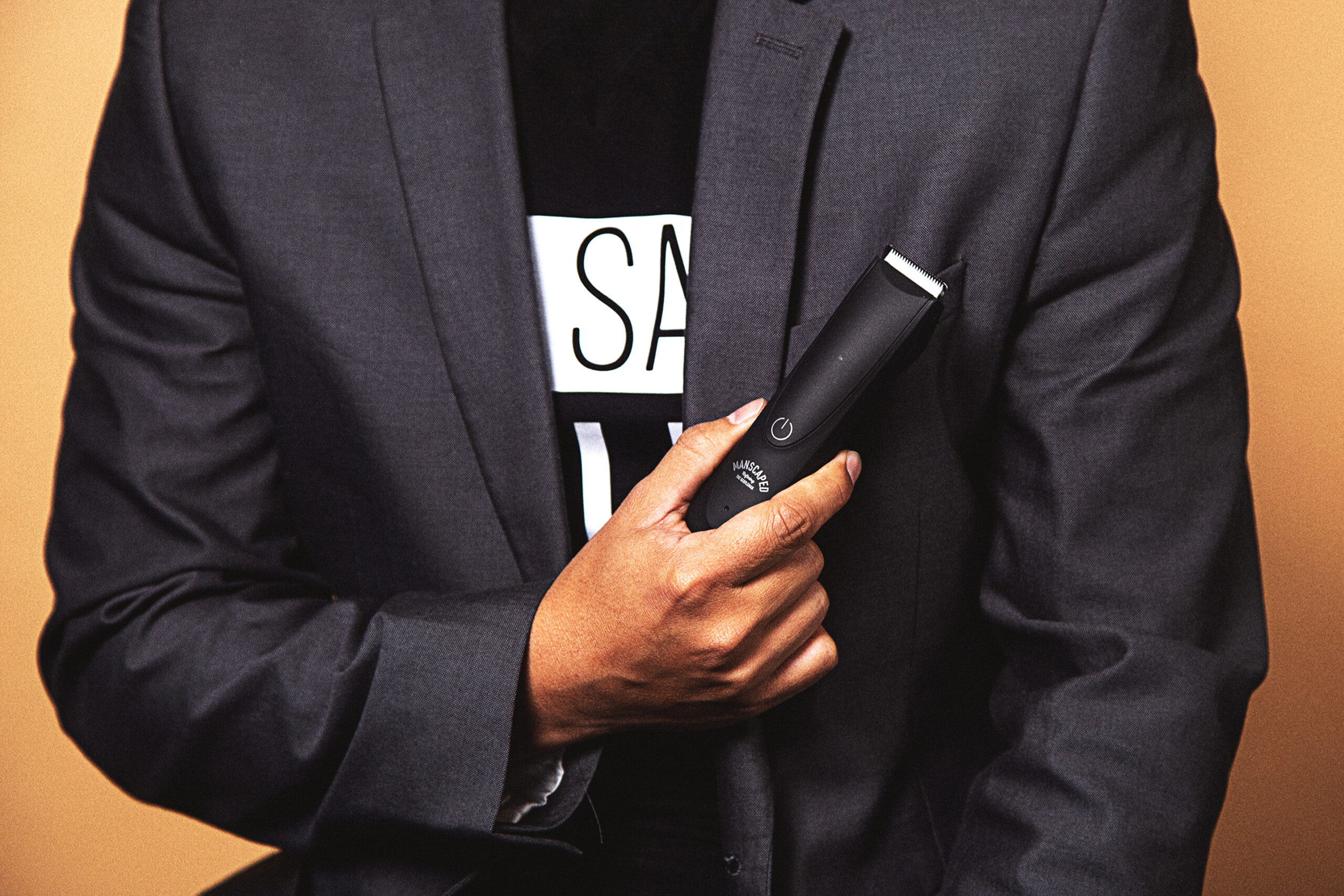
In dealing with such a delicate and private subject, Manscaped began using comedy as its branding voice shortly after its launch. Humor is even prevalent in the landscaping-inspired names for many of it tools. Along with their groin-care products, which include an anti-chafing ball deodorant, Crop Preserver; a hydrating spritz, Crop Reviver; and a moisturizer-shampoo, Crop Cleanser, they offer an advanced version of their original trimmer called The Lawnmower 2.0 (pictured above).
“When you break down the barrier with comedy,” reflects Tran, “that’s when they listened.” Using a patented “SkinSafe” technology, the tool allows for a closer shave of the family jewels without snagging them.
In its first year, Manscaped generated $1.7 million followed by $2.8 million in 2018. That same year, Manscaped entered the Shark Tank universe and convinced billionaire Mark Cuban to invest $500,000 into the company, which, as Tran says, “helped amplify the brand and get the word out.” A great example of that amplification is the Shark Tank-produced viral video commercial for the Crop Preserver, which hilariously depicts a man discussing the impressive manscape of another man’s balls. The video, which received close to a million views, is in line with Manscaped’s message of men shunning the stigma of openly discussing their ball grooming as well as referring to their testicles as such.
“It’s like, we all have them,” declares Tran, “And you never see any ads that uses the word balls. But they use the word ‘breast’ all the time. Why is the word ‘balls’ so taboo? It’s our anatomy.”
Another way Manscaped helps to spread awareness about men caring for their balls is working with the Testicular Cancer Society. In April 2019, the company partnered with the TCS to produce a humorous video showing men how to check themselves, in less than 60 seconds, for symptoms and signs of testicular cancer. “A lot of guys don’t do that,” Trans explains. “And it’s so simple, because if you catch the cancer early enough, it’s not a death sentence.”
All of this further pushes the idea of manscaping among the masses of heterosexual men, which Trans sees as the new normal in their self-care ritual. “We truly believe,” he says, “that, in the next five years, this will be socially required grooming activity. Like you can’t be on a date, drop your pants, and expect to have a full-on bush. That will not be cool or socially acceptable.”
Could manscaping ultimately become socially mandatory? That remains to be seen. But with its preference stipulated by one’s personal preference, and the varying degrees of mens’ personal taste around the world we may never really know for sure. However, because of the steady redefining of masculinity that continues to be explored, the trend of manscaping the nether region will most likely continue. Whether it’s to feel clean and healthy or be coitus-ready, men will always have a reason to touch clippers to crotch. Why? Because if history is any indication, we’ve been doing it for a very long, long time.