Your bag is empty.
The players are paid, the conferences make no geographic sense, and the sport has never been more chaotic. Somehow, Saturdays keep getting better.

This story appears in our Summer 2026 issue, on newsstands July 28. Want us to come to your place? Become a member to get digital access to the issue and early access to paywalled content.
There’s a good chance you’ve been told college football is dead, or at least on its way. Maybe it was a friend, a die-hard consumer of the sport, or maybe it was one of many, many talking heads decrying the death of tradition.
The reality is that the sport you remember was never really there in the first place, and the one kicking off in August is better than ever.
By any practical measure, college football is thriving: Television ratings and attendance are up, and the sheer volume of teams playing at the highest level, the FBS (Football Bowl Subdivision), increases annually—all while quality of play on the field remains exceptional.
Parity has flooded into the game, creating a puncher’s chance at a national championship for more teams than ever before. Hell, a program with a storied, century-long history of losing just ripped off an undefeated national championship.
No other American sport is experiencing as rapid a rate of change to its fundamental structure as college football, and arguably no other pastime trades on your own personal nostalgia in such an exacting, and often brutal, manner: Players, historically unpaid and labeled as “student-athletes,” are raking in legit money to play for major schools, and if it doesn’t work out this season, they’re free to leave for somewhere else ASAP.
If that last sentence made your blood pressure tick up, you’re who this is for. Most of you object to one or both of the personnel updates unleashed by a wave of legal rulings in the 2020s: the transfer portal, allowing players to jump teams without penalty, and the name, image, and likeness (NIL) ruling, which allows players to profit from commercial use of their identity.
For the better part of a century, athletes were handcuffed by a model of so-called amateurism that allowed universities, governing bodies, and television networks to reap billions of dollars from their efforts while penalizing players for eating too much pasta from a buffet (true story).
Somewhere within that century of amateurism, while college football’s labor class built an empire for free, the old guard of college football fans fell madly in love. Maybe it was joining that coliseum roar on a perfect Saturday afternoon, or their team beating a rival they were bred from birth to hate (or cottoned to loathing quickly enough to fit in). Or maybe it was that leaf-strewn campus of a Midwestern land-grant school where future spouses crossed paths. Trust me; ask your parents.
Generations of college football fans fell in love with the idea that a running back working 80 hours a week for the chance of making the NFL was somehow the same as their collegiate experience, because both of them were students, both broke, both sleeping through lectures, compatriots during a seminal phase of life because they wore the same logo.
So, yes, of course, lots and lots of longtime fans are convinced college football is in shambles, both because its present form represents the palest shadow of that memory and because uncertainty now abounds. The most recent Heisman winner is a kid from Miami who secured a national title for Indiana, of all schools, right after playing three seasons for California, whose former rivals USC and UCLA now belong to the Midwestern Big Ten.
And if you’re looking for clarity, it could be a few more years. The infighting confederacy of TV executives and conference commissioners “leading” this sport won’t resolve its financial issues any time soon, let alone something as vital as the size of the sport’s postseason (or who participates in it).
Sure, the NCAA’s parasitic business model is no more and your favorite linebacker can make legitimate money, but players are now neither nominally amateurs nor fully recognized professionals. This liminal state has created a manic, uncapped market of spending and unenforceable transfer rules. (Because, after all, if the sport’s managerial class won’t recognize the players as labor, how can they enforce an agreed-upon rule set?)
There is no level of sugarcoating or hand-waving possible to dismiss the recent speed of change in the sport. A decade ago, programs were penalized for players receiving free rental cars; now roster budgets are speeding toward $50 million annually or more.
If such a price feels like confirmation that the sport’s richest programs have pushed out the competition, I’d nudge you in the direction of reigning undefeated national champion Indiana, the losing-est program in the history of the game. Using NIL (but only a portion of what bigger programs like Ohio State and Texas offer), Indiana built a perfect season and led a pack of upstarts crashing through the glass ceiling of the game’s old boys’ club. The advent of free transfers, player compensation, and a playoff bracket that’s anything but traditional has created a wider pool of title contenders.
Players used to be trapped by scholarship rules when departing coaching staffs exercised their own free-market rights to jump teams; now multiple starters at top 10 programs will start for their fourth, fifth, or even sixth team this fall.
Does that pang at your heart or offend some sort of loyalty code in your fandom? I can only offer a salve in the form of Mikail Kamara, a former zero-star prospect from Ashburn, Virginia, who, thanks to the transfer portal, followed Curt Cignetti from James Madison to Indiana, where he blocked a punt in the national championship game, was named defensive MVP, and got paid a respectable wage to do all of it.
The sport’s moment is discombobulating, but it is not a death sentence, nor is it anything particularly new. Long before TV networks plied university presidents with cash, transfer restrictions were debated because college football players were changing teams in the same season as they followed the harvest across the Great Plains, working as farmhands (no, really). Such is the consequence of marrying higher education to commercially popular sporting events.
Even if the crystallized image of a New Year’s morning bowl game that stirred your soul bears no resemblance to the game your school plays today, today’s game better represents the unpredictable future that current students and younger fans understand to be normal.
Walk among the rank-and-file college students this fall, absorbing October nights filled with QR codes for NIL donations, million-dollar LED halftime shows, and one-year transfer superstars stealing their hearts. They will love every moment of every win, and collapse at every unexpected loss.
That’s how you know college football is, in fact, quite healthy. It will amble along through this new era, all set to play the same cruel trick on generations of fans to come.
Five things everyone will be screaming about by midseason.
The Indiana Era?
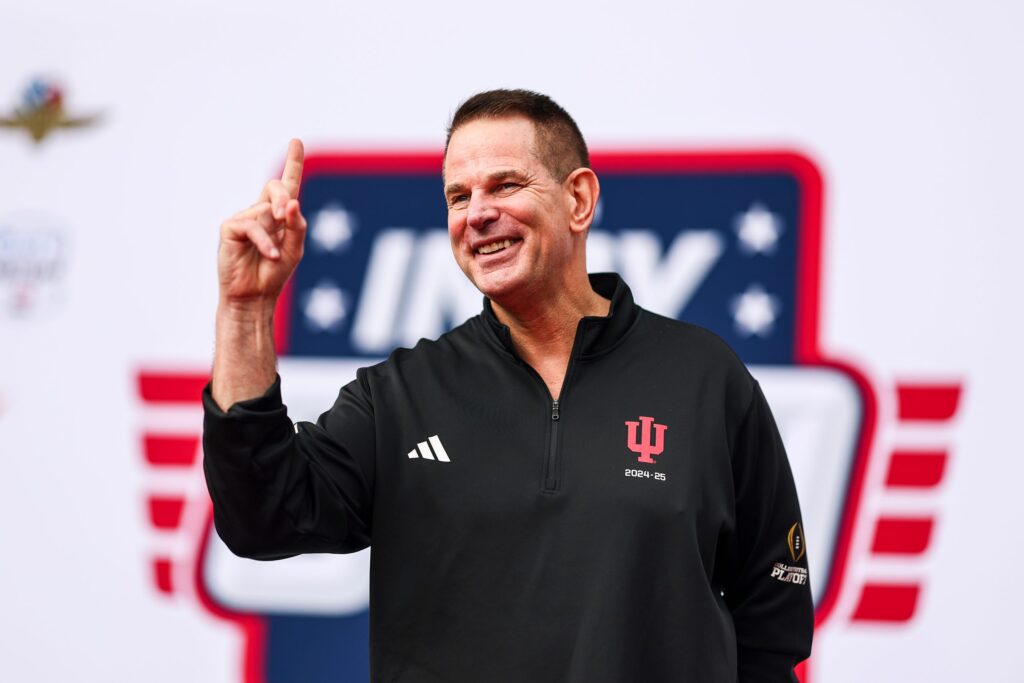
The losing-est program in college football history (714 FBS losses) is the nation’s best of the new era. Coach Curt Cignetti is a savant at flipping overlooked portal players into high-end talent while using a fraction of the NIL (name, image, and likeness) budget that the game’s legacy powers are throwing around. Last year’s undefeated national title wasn’t a fluke.
Will the Playoff Expand?
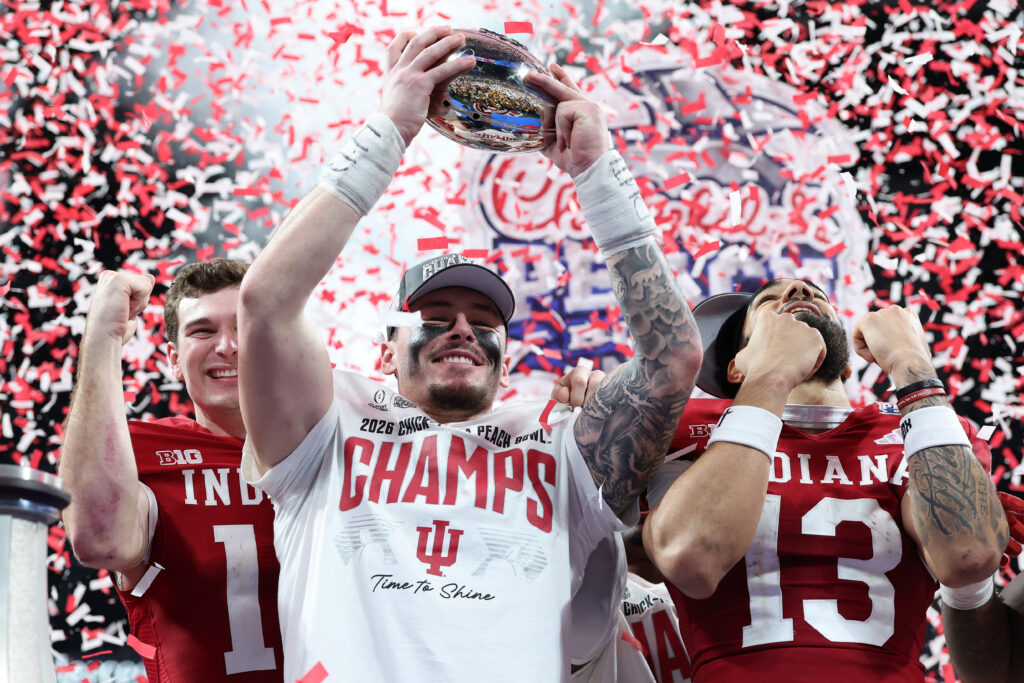
The 2026 season will conclude in a 12-team playoff format for the national championship. Anything after that is speculation. Expect an annoying amount of palace intrigue over the future size of the CFP (College Football Playoff) to dominate headlines, even during the season. Billions are at stake, so don’t expect a tidy resolution (or a fair one).
The SEC NIL Title Drought
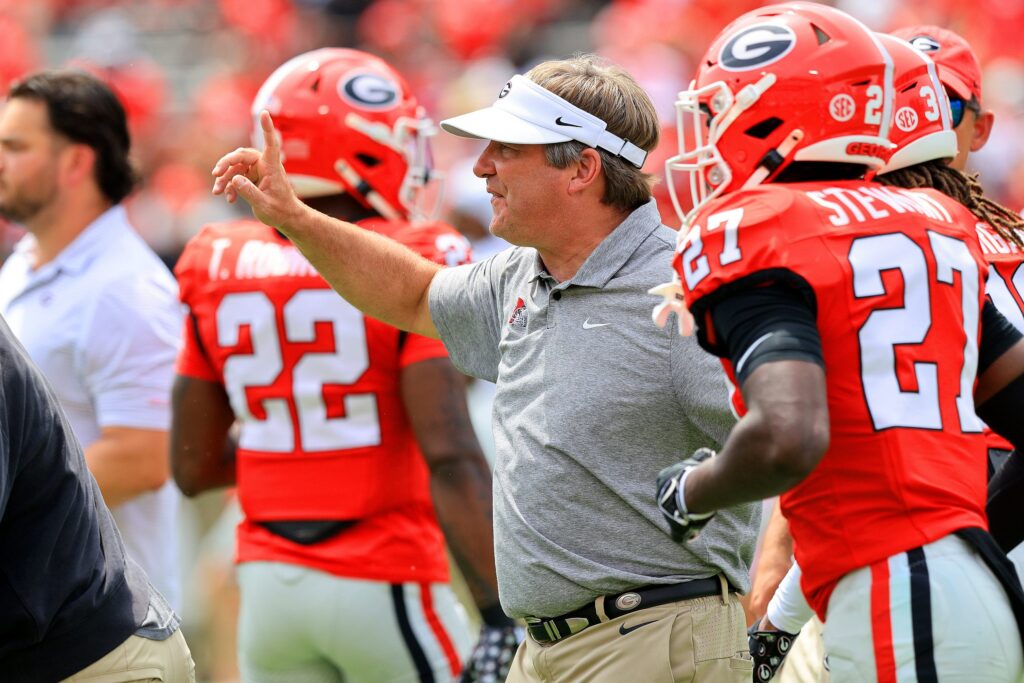
Is it really a big deal if your conference fails to send a team to the national championship for three years? It is when your league won 13 of the previous 17 titles. Not even Coach Kirby Smart’s Georgia Bulldogs have ended the dry spell. The SEC’s inability to win it at all in the era of player payrolls is worrying the South’s most powerful college sports stakeholders.
Can Arch Become a Manning?
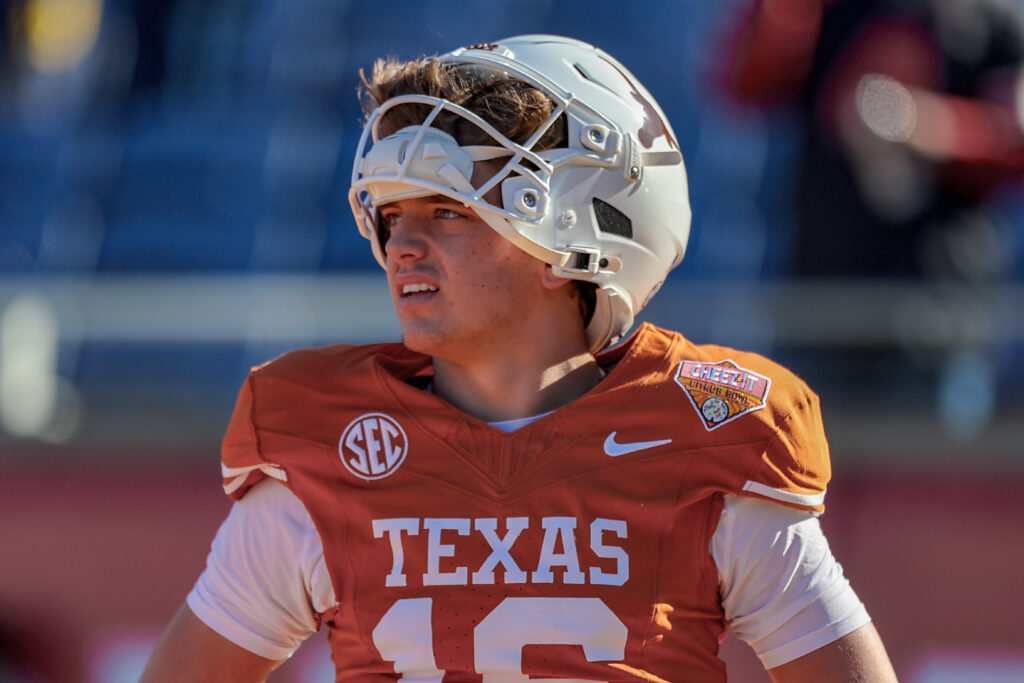
The most famous last name in quarterbacks made his full-time debut for Texas last season, and results were…fine? This season’s national title expectations for the Longhorns demand greatness from Peyton and Eli’s nephew—or else. A Week 2 showdown with Ohio State in Austin could be the first real test of whether Texas is built to win it all.
The Irish Revenge
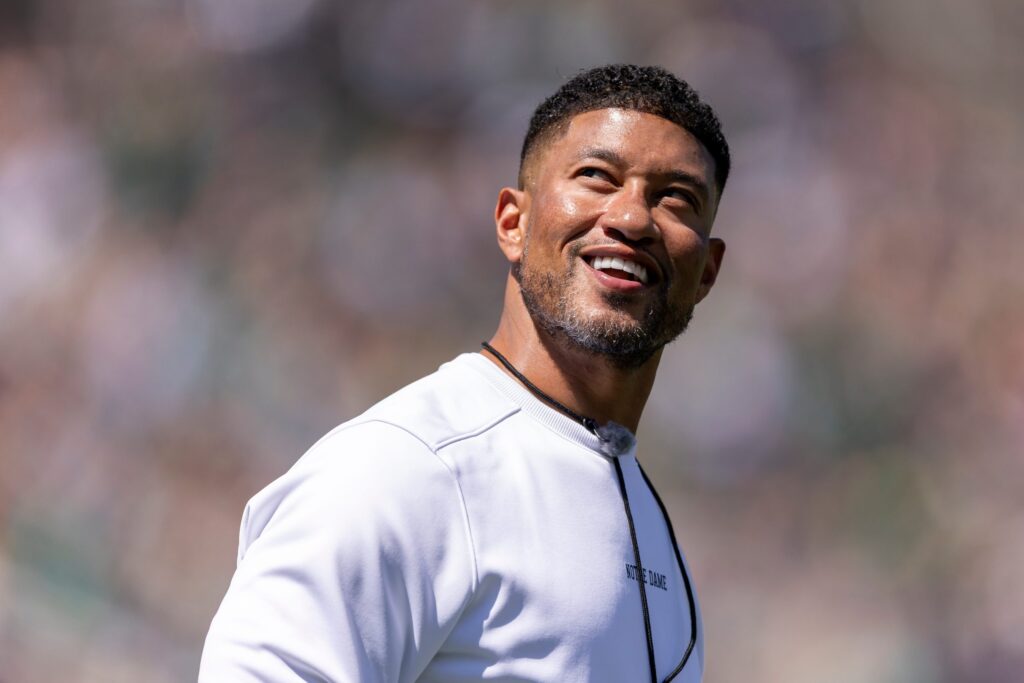
Call it a format “quirk” or a conspiracy, or just blame Notre Dame’s dogged refusal to join a conference, but the Irish’s exclusion from the 12-team CFP last season was a glaring, inconceivable omission. With a deeper roster on both sides of the ball, Coach Marcus Freeman and the Irish could vault themselves all the way from cheated to champions.