Your bag is empty.
When I meet up with Billy Porter at a trendy tapas bar in Boston, it’s been nearly 30 years since I’ve spoken face-to-face with him. A lot has changed in our lives, but it’s as much a pleasure to hang out with him now as it was back in our acting-school days.
Porter is in town directing a play called The Purists by rising-star playwright Dan McCabe. He arrives at our lunch wearing a Trina Turk silk dashiki-style top with black perfectly fitting jeans and embellished velvet Gucci loafers. His handbag is by Burberry. Endemic of his style and grace, he politely asks the waiter if he could bring over an extra chair for the bag. The server does so without hesitation.
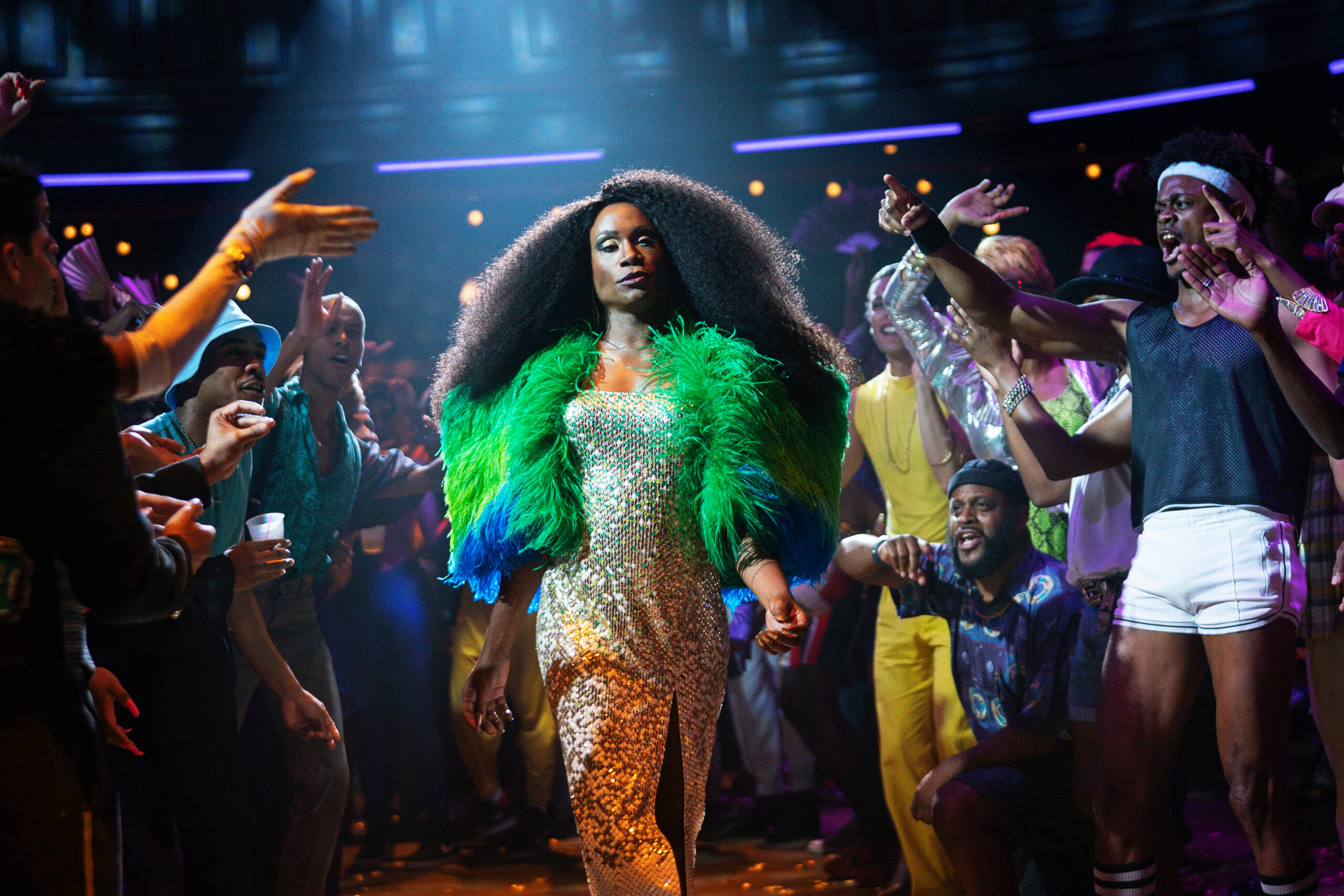
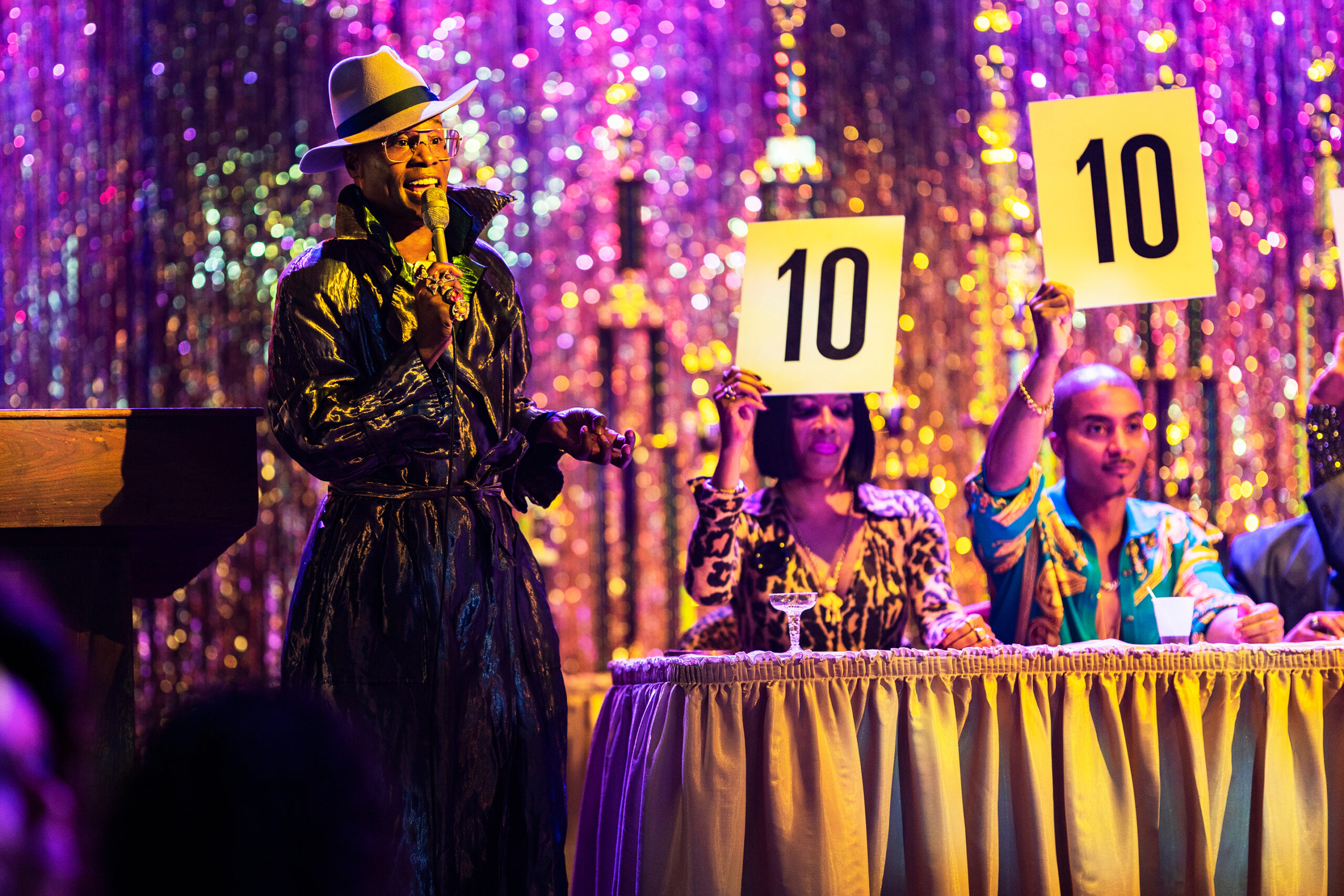
Since last we met, he’s won a Grammy and a Tony for his role in Kinky Boots on Broadway, and picked up his first Emmy nomination earlier this year for Ryan Murphy’s highly celebrated series Pose. The FX drama debuted in June 2018 and is set in New York in the 1980s. Coincidentally, art imitates life, as Porter himself came out in 1985.
And although Porter was on Broadway, directed, wrote plays and sang with some of the biggest names in the business, he didn’t work like he wanted to. Not as a leading man. Not as the object of another man or woman’s affection. Not until 30 years later with his success in 2013, originating the role of Lola in Kinky Boots.
But, as he says, his detractors were right in many ways. He was a leading man, and they knew it. They just couldn’t visualize a leading man who was also black and openly gay.
“From the minute I could comprehend thought, my masculinity was in question,” Porter says. “From the moment I can remember, I was told, ‘You’re a fucking sissy. You’re a fucking faggot. Stop being a sissy.’ There was not a place I could go where I was not judged for not being masculine enough.”
Although I remember he was immensely talented at school and that our drama teachers berated him for not being versatile enough ever to work professionally, I didn’t know he was also suffering from unthinkable trauma.
Only three years before he came to CMU, he’d fled his home in the East Liberty neighborhood of Pittsburgh—“the hood,” he says—where he lived with his sister, mother and stepfather, a man who violently sexually abused him from the ages of 7 to 12. At 16, he moved into a motel and worked as a full-time summer entertainer at Kennywood Amusement Park to pay the bills.
Billy described the graphic details of those horrifying five years in an op-ed for Out magazine. He says his inspiration came from watching the infamous hearings of now-Supreme Court Justice Brett Kavanaugh.
As open and unabashed as Porter is and has been since I’ve known him, there’s also an obvious shell he uses to protect himself. And now I understand why. For 20 years, Porter says he referred to the abuse as an “affair.” He explains, “Because I’m gay, I thought it was my fault.”
I don’t have to worry about not being masculine enough because I’m creating a whole different archetype … a whole new lane.
After Trump was elected in 2017, but before his inauguration, Porter and Adam Smith tied the knot—they were afraid the president would try and roll back protections on gay marriage. And with any marriage, there’s always a period of adjustment, and issues from the past rear their ugly heads.
“I’m trying to face my issues without the curse of perfectionism. Because as a black man, you can’t make no mistakes. You get pulled over, and you could die. So, you have to be perfect, and that’s it. I’m trying to just be kind to myself,” he says.
He has since processed his nightmare via years of therapy, and recently even on an emotional episode in Pose‘s second season. “Ryan saw the op-ed and called to ask me if we could use it in the show. He asked how far I was willing to go. I said, ‘All the way.’ As an artist, this is what I’m working through.”
Pose was originally created by Steven Canals, “a queer Afro-Latino who grew up in the Bronx in the ’80s,” as he describes himself in Remezcla. It took him two years, 150 rejections and finally the support of co-creators Murphy and Brad Falchuk for the show to become a reality.
Aymar Jean Christian, an assistant professor of communication studies at Northwestern University and a Fellow at the Peabody Media Center, points out that Pose and Porter himself offer the industry an invitation to “embrace the diversity of blackness.”
“Billy is inciting all black people to embrace what we have always been, which is queer,” Christian says, referring to people such as Bessie Smith, Little Richard and James Baldwin.
“When Jeffrey Tambor won the Emmy for Transparent, he said he wanted to be the last cis actor to play a transgender woman. Honestly, if he hadn’t said that, I’m not sure if Pose would have happened.”
Janet Mock is the first trans person of color to write, direct and produce for television. Murphy brought her on to join the Pose team. She gushes when she talks about working with Porter.
Mock says anyone who spends even a few minutes with him quickly realizes he’s someone with a great depth of knowledge and sense of history of the stakes LGBTQ people have gone through. “He’s also just a huge wealth of talent,” she adds.
“Talent that for many years sat on the sidelines, not really elevated beyond the stages of Broadway,” says Mock. “And so when Billy is on-set and given a chance to play, he takes up space. He takes his moment. And for anyone who’s a writer or a producer or a director, you want to give that person material. As Ryan [Murphy] says, Billy was never a supporting character—he was always a leading man.”
Mock tells me she always knew that one of the trans women on the show who would become a beacon of representation, as Indya Moore has, but that Porter surprised everyone. “He’s deeply impactful that way.”
Porter and I leave the restaurant to head to his next scheduled event for the day, a photo shoot with People magazine—a clear sign he’s currently a Hollywood get.
He tells me in the Lyft ride that today is like every other day off for him. He speaks to the press; attends rehearsals; jets off to reshoot scenes for the currently titled film Like a Boss, co-starring Salma Hayek, Rose Byrne and Tiffany Hadish, or to a runway for Fashion Week. He’s now the darling of the fashionistas.
Fashion is what put Porter in front of all the eyes. He says there was his life before the Oscars and his life after.
I’m of the last generation of people who were taught to be brilliant interpreters of other people’s material.
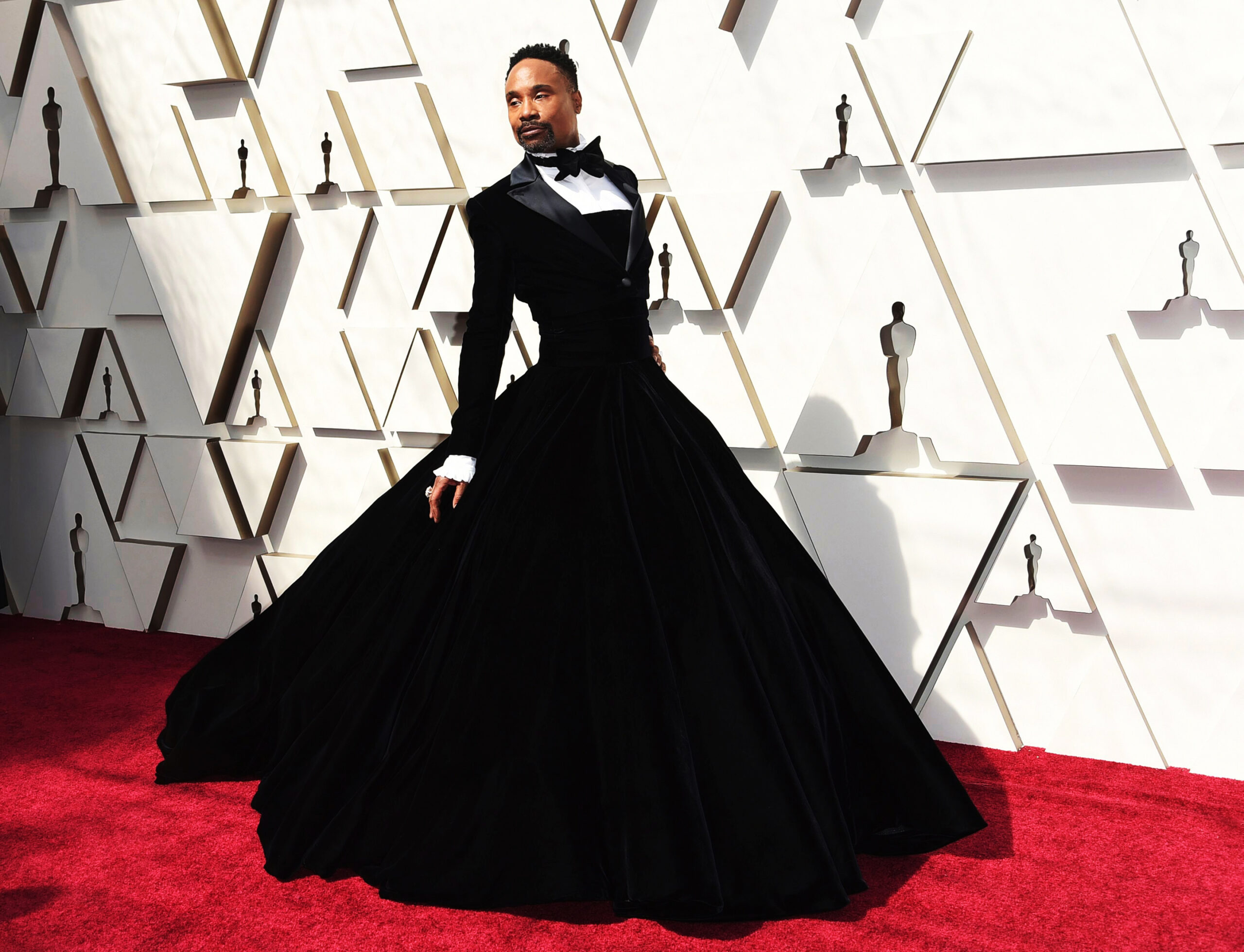
In case you missed it, and it’s hard to believe that anyone did, Billy was asked to host the red carpet at the Oscars this year. He arrived in a black velvet tuxedo gown created by designer Christian Siriano, and it nearly caused a melee in the worlds of Hollywood and fashion.
He tells me that wearing the gown was no accident. He did it to have what he calls his Idina Menzel moment. He’s referring to 2015 when John Travolta mispronounced the singer’s name at the Oscars.
“The whole idea of even being at the Oscars was so foreign to me. And then I got the call to host the red carpet, and I was like, ‘Well, this is my moment. Somebody needs to say my name wrong. I’ma wear a ball gown,’” Porter says.
Knowing consciously that all eyes would be on him, and since he was already living a sort of gender-fluid fashion life, wearing a gown was a no-brainer.
“Now I’m being honored for who I am,” he says. “So I don’t have to worry about not being masculine enough because I’m creating a whole different archetype … a whole new lane.”
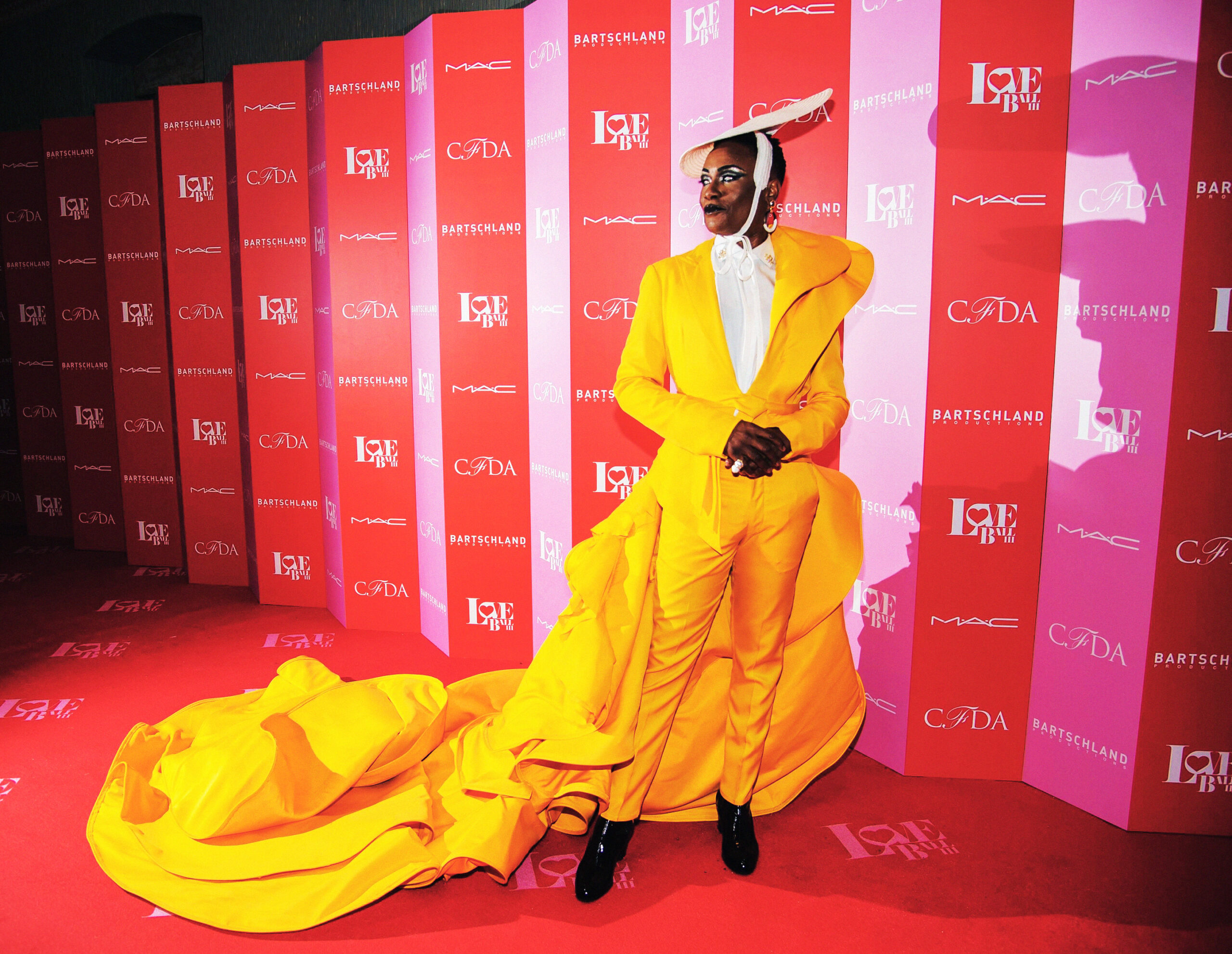
We arrive in Cambridge, Mass., for Porter’s shoot. His team, people he’s worked with from Broadway, are there and set up for his arrival. This includes his makeup artist, La Sonya Gunter, and his stylist Sam Ratelle—the man behind Porter’s now-infamous Oscar gown; his Met Gala gilded Egyptian-themed, winged extravaganza; and his Tony Awards fuschia gown-suit hybrid constructed from the Kinky Boots curtains.
Billy strolls onto the circus-themed set and dutifully shakes every single person’s hand and introduces himself. He is involved with all the details, and it’s all worth his input because when the camera starts clicking, Porter turns it on like a high-voltage spotlight. He brings all the looks, channeling Diana Ross, Barbra Streisand and Tyra Banks in all her smizing glory—who happened to slide into Porter’s DMs after the Oscars to say simply, “I see you.”
Two hours and three looks later, Porter is ready to hit the bar and a vape pen. We head back to the South End neighborhood where he’s living during the next few weeks of rehearsal. We stroll down Washington St. A man jumps out from a local cleaners, smiling from ear to ear. He’s a handsome African-American man in his late 40s. He’s barely able to contain his excitement. He tells Porter he and his wife love the show. The man throws his cracked phone at me and asks me to take a picture of him with Billy to send to his wife. Porter easily smiles, thanks him and poses for the photo. It makes me wonder, if I’d stayed in the acting biz, would I have ever been this famous?
We get to the bar. The host recognizes Porter and tells him that his aunt will be thrilled to hear from him. Billy knows the man’s aunt from Broadway. The host insists Porter Facetime with her. He orders a drink and dutifully chats with the man’s aunt, who’s now retired and living in Palm Springs. This is Porter’s life now.
It’s not at all like the really tough years when he was couch-surfing or singing at industrial shows to pay the bills, or when he lost his voice or filed for bankruptcy in the same year he was diagnosed with Type 2 diabetes.
The fear of returning to the lean years is always close at hand, he says.
“You can win a Tony award for best featured actor—and whatever, that’s amazing—or best lead actor in whatever, and then you’re never heard from again,” he says. “The business is not set up for you to fail; it’s set up for you to quit.”
And he almost did quit. From 2000 to 2002 he was living in L.A., trying to break into the music industry. He was in his 30s and says it was so homophobic that the homophobia overshadowed his talent.
When Billy is on-set and given a chance to play, he takes up space. He takes his moment.
“That decade was like a smack in the face,” he says. “It was the first time my voice didn’t save me.” Then he lost his voice to acid reflux. It took him three and a half years to rehab it.
But the 2000s were also the period when he says he discovered what he really wanted. His vision became clear.
Inspired by an Oprah show featuring Maya Angelou and Iyanla Vanzant, Porter says the show’s theme focused on shifting your life’s intention to service, and when you do that, everything else falls into place.
“I thought, How can I be of service in an industry that’s inherently narcissistic?” he says. “What does that look like? And it hit me like a ton of bricks—it’s your authenticity. It’s that gay thing that everybody’s telling you is your liability that will, in fact, be that service thing—but you gotta hold on. And you can’t give that up.”
Porter explains that between his training at CMU and the years he worked on Broadway, he got to know and work with the best in the business—Hal Prince, Mandy Patinkin, Audra McDonald and Kristin Chenoweth—but it never occurred to him that he could be in that group, particularly leading the artistic charge.
“I’m of the last generation of people who were taught to be brilliant interpreters of other people’s material,” he says. “That was the focus of our training.”
Porter says he came to the epiphany that what he wanted was to work toward being a mogul or, as he says, the HBIC—head bitch in charge. And he’s doing it, while also staying 1,000% true to who he was.
“I’m not interested in living a life based on what other people think I should be doing anymore,” he says. “That’s never going to happen again. I was put here for a purpose. It’s not a mistake. There is a calling on my life.”
And through the dark years of struggle, Porter says the person who kept him moving toward the light was his mother. She was his inspiration and beacon.
Billy’s mom has a degenerative neurological condition. Today she’s 73 years old and lives in the Actor’s Fund Nursing Home in N.J.
“Look, the one thing she was able to achieve in her life when all the doctors said she would never be able to make it on her own and be autonomous in this world, she got up every single day of her life to live it,” Porter says. “She chose it every single fucking day. If she can do that, I don’t have any excuses.”
And even today, with all that he’s accomplished, issues surrounding race and religion rear their ugly heads. Porter tells me that just last month, his mother got a call in the nursing home from somebody in her church saying how sorry and upset she must be that she has a gay son.
I got the call to host the red carpet, and I was like, ‘Well, this is my moment. Somebody needs to say my name wrong. I’ma wear a ball gown.’
“With everything that’s happening in my life and all the goodness that I’m putting out into the world, that’s a call my mother gets. I can’t put any energy into that,” he says.
He tells me he has rejected the Pentecostal church he grew up in. He says he believes in manifesting into existence what you want your life to be.
“As artists, as queer people, we have a different kind of empathy that cracks us open and allows us to communicate spiritually in a different way,” Porter says. “It’s always been us. So, nobody should be surprised. It’s in the history books.”
Billy has recently inked a book deal. It’s a memoir about his life. He graciously sent the proposal to me for my thoughts. It holds a few dramatic surprises about him and his life in the theatre. It highlights the challenges and the people who stepped up to give him a boost. But I must say, above all else, it’s inspiring, like his life.
To quote a line from the last episode of Pose‘s second season, “The world don’t change. People change it.” Porter is making that change simply by accepting himself as he is—flaws and fabulousness. He’s “choosing life.” We could all learn a lesson from that.