Your bag is empty.
The artist known as Swoon sits at a sketch table in her Red Hook, Brooklyn studio, fiddling with a disembodied papier-mâché head.
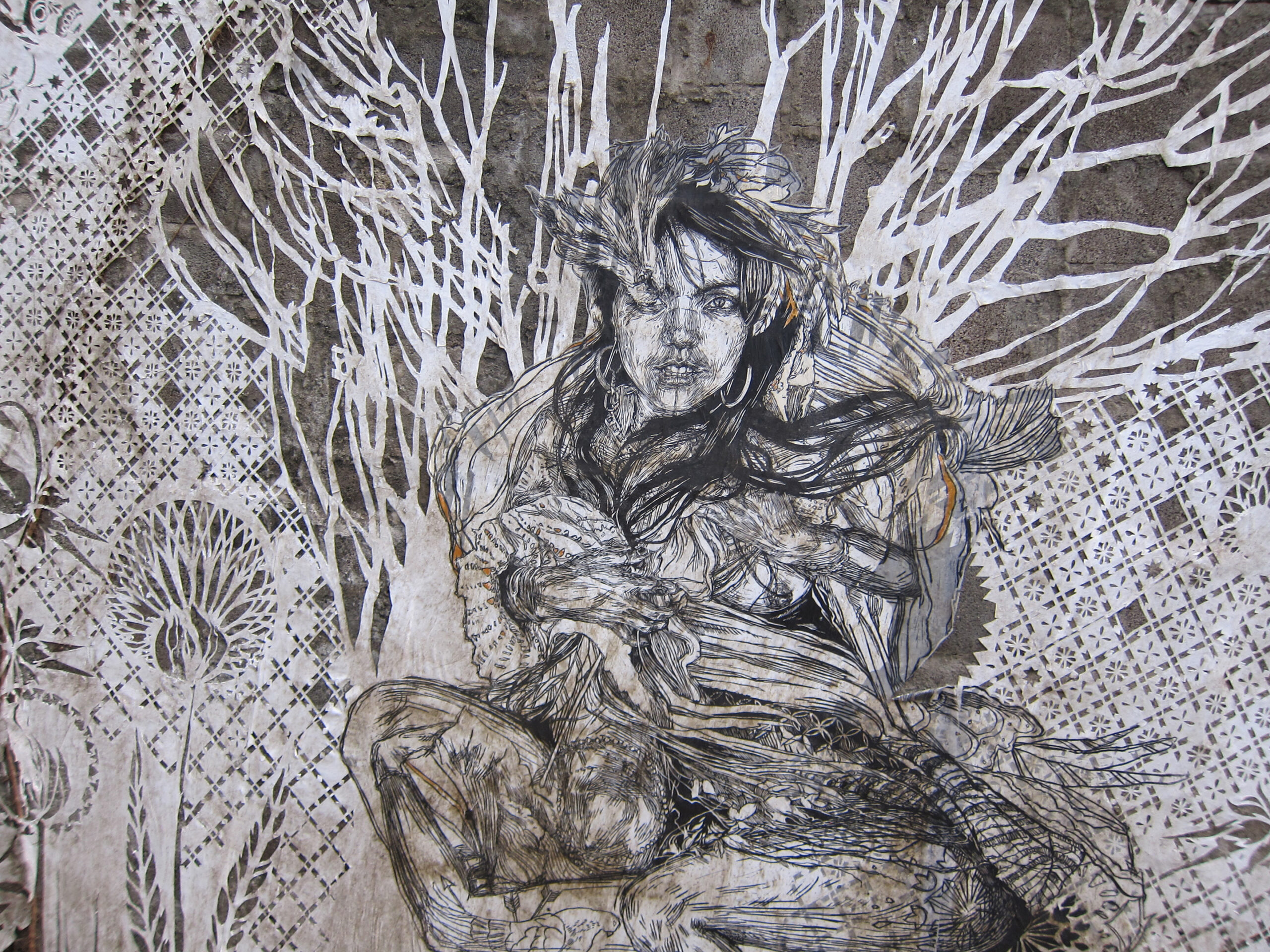
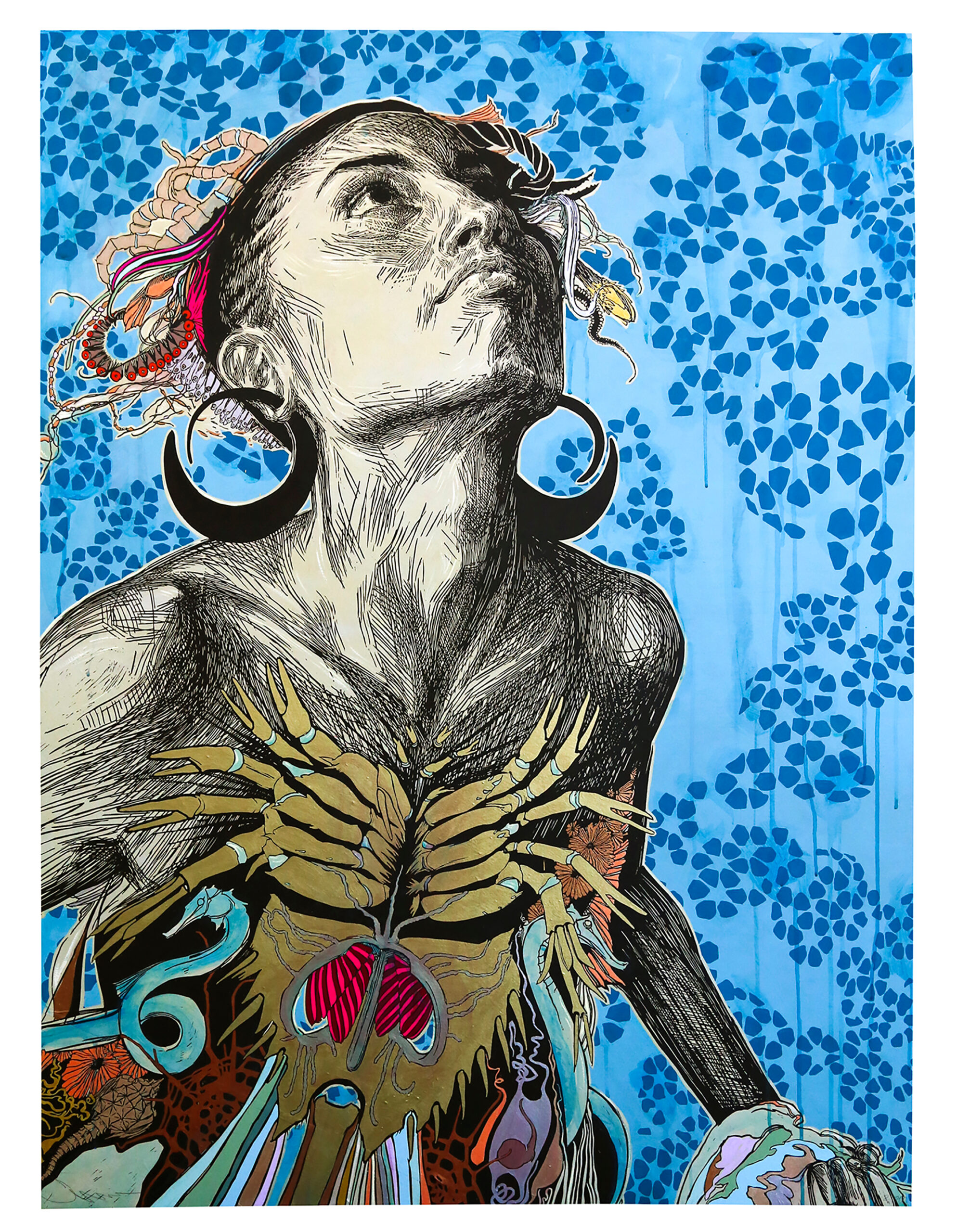
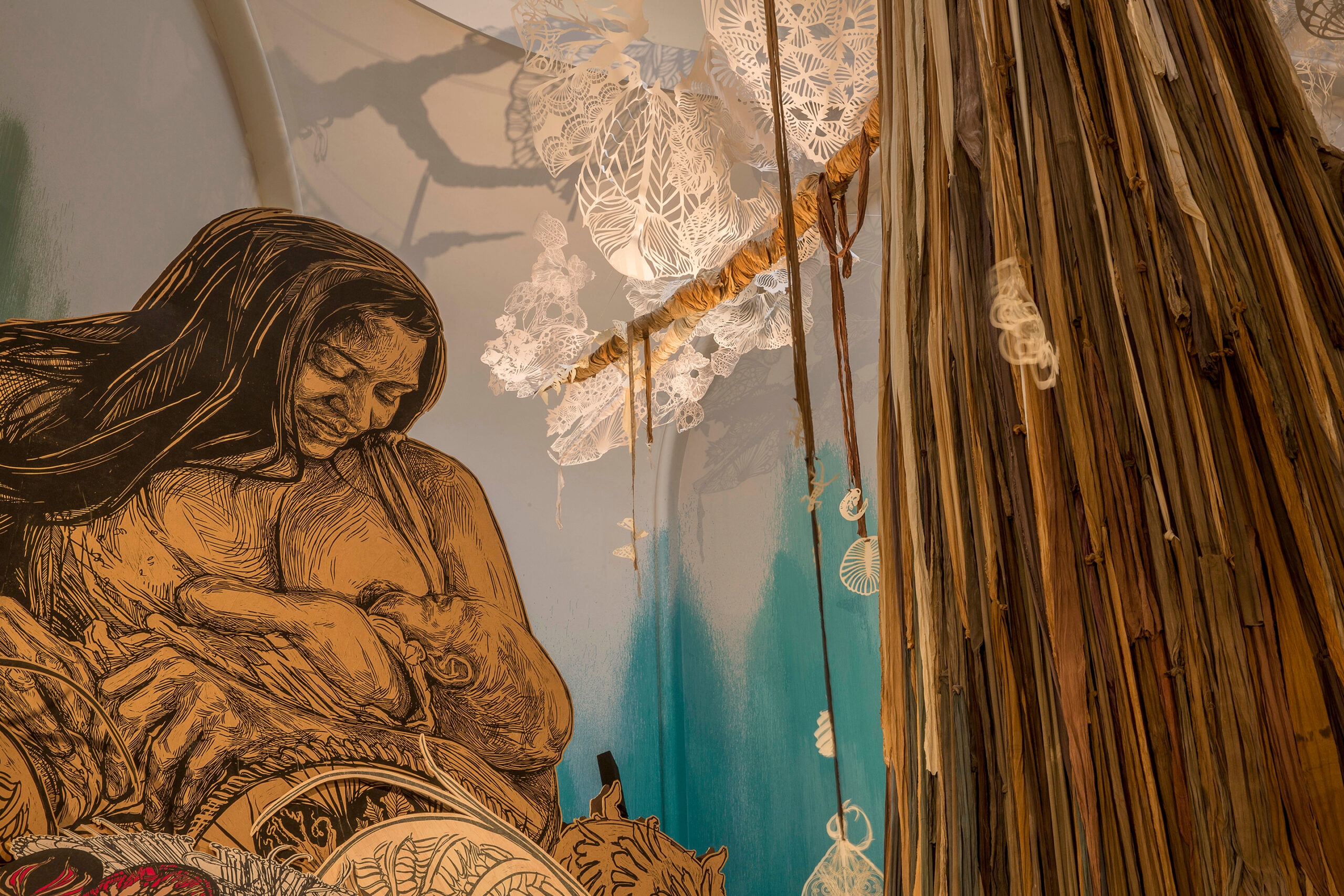
“There’s nothing private,” she says, running a hand through her wild curls as I roam one of two rooms she rents in a labyrinthine artists-and-makers’ complex. Behind her hangs a large-scale mural depicting gritty but feminine myth-like scenes of motherhood. Smaller, ethereal cut-out portraits of women, many of them family and friends, are arranged in small clusters on the surrounding walls.
Because she hosted a party here recently, her studio is tidier than usual, she says, seemingly by way of apology.
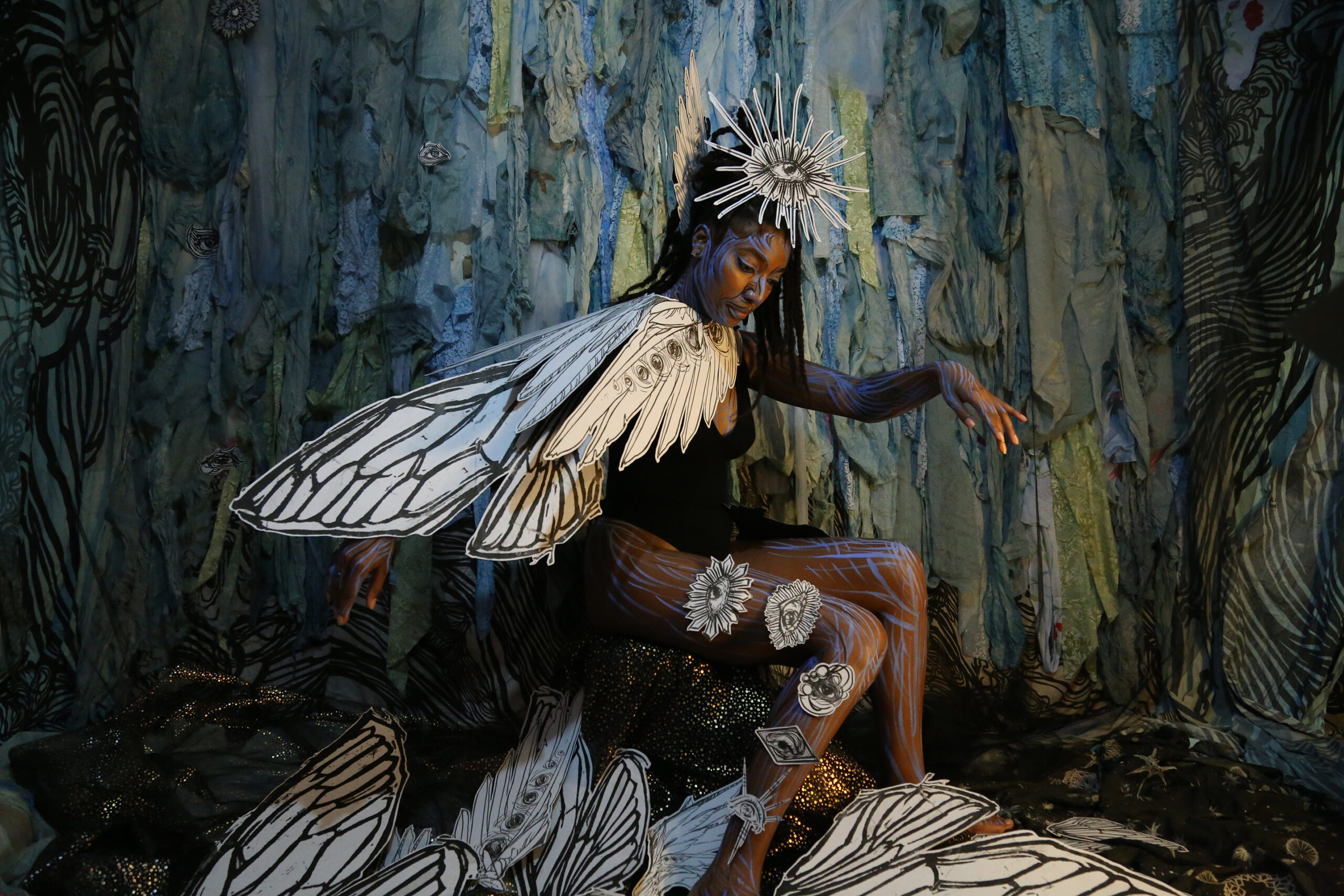
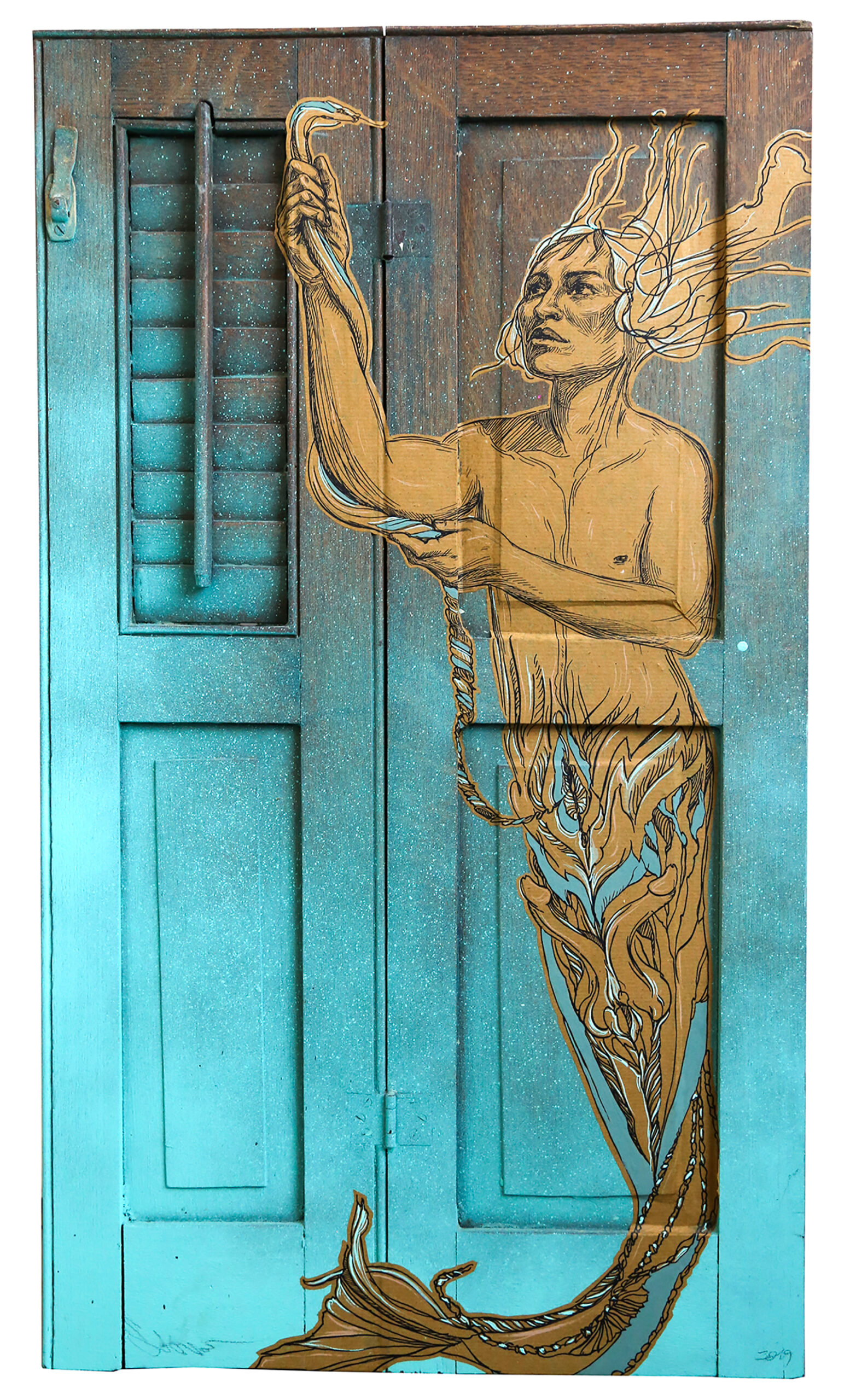
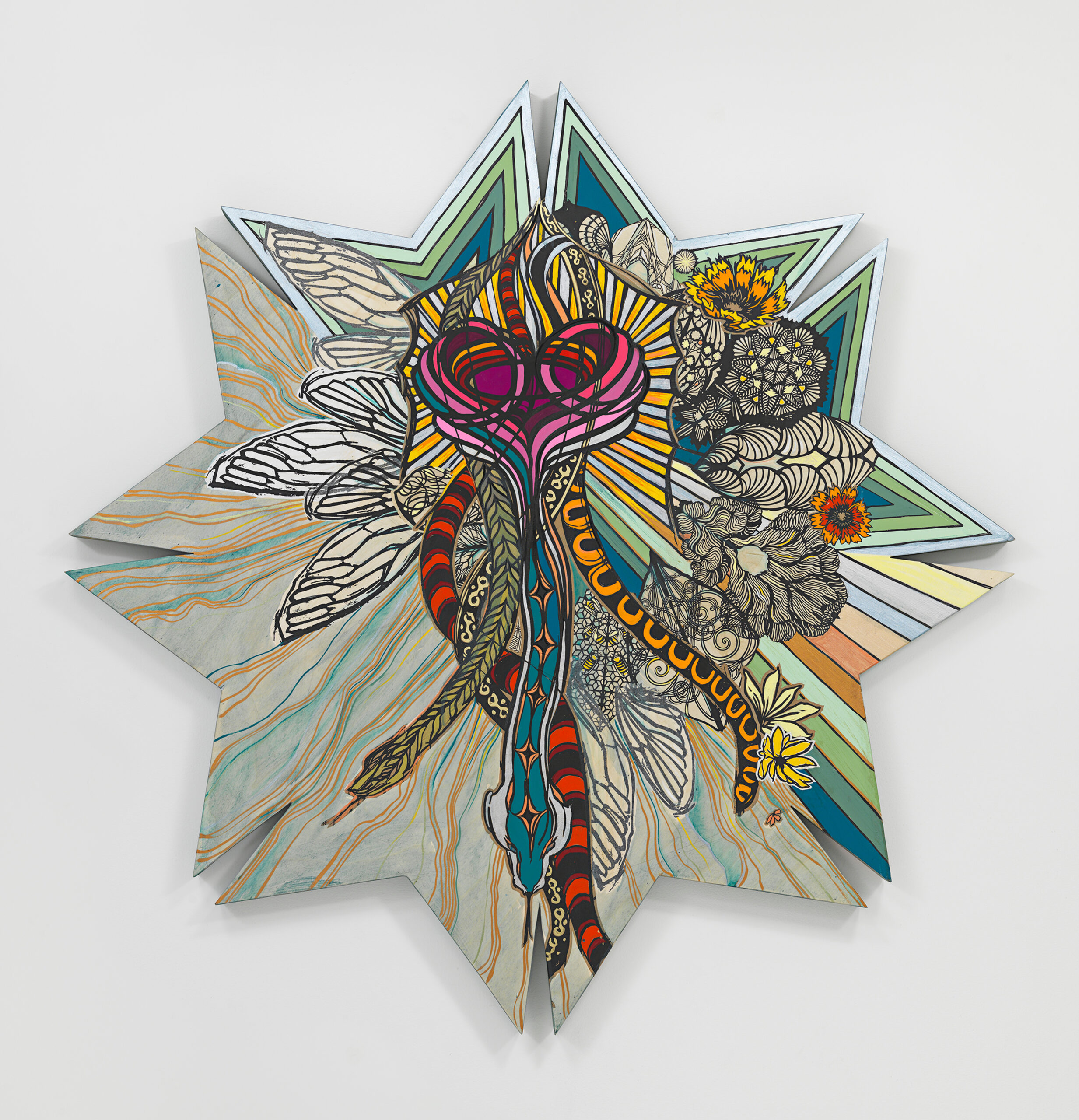
The spaces Swoon creates are more often overflowing: Her recent show Cicada, at the Jeffrey Deitch gallery in New York, features a tangle of wire and cloth spilling out of the wall into a lush, overgrown swamp-like scene. Paper flowers and insects swarm a mer-like character, who cracks her ribs open to reveal snakes uncoiling from her heart. The fabric jumble appears to be gobbling up another figure, its limbs disappearing like moss-choked flotsam.
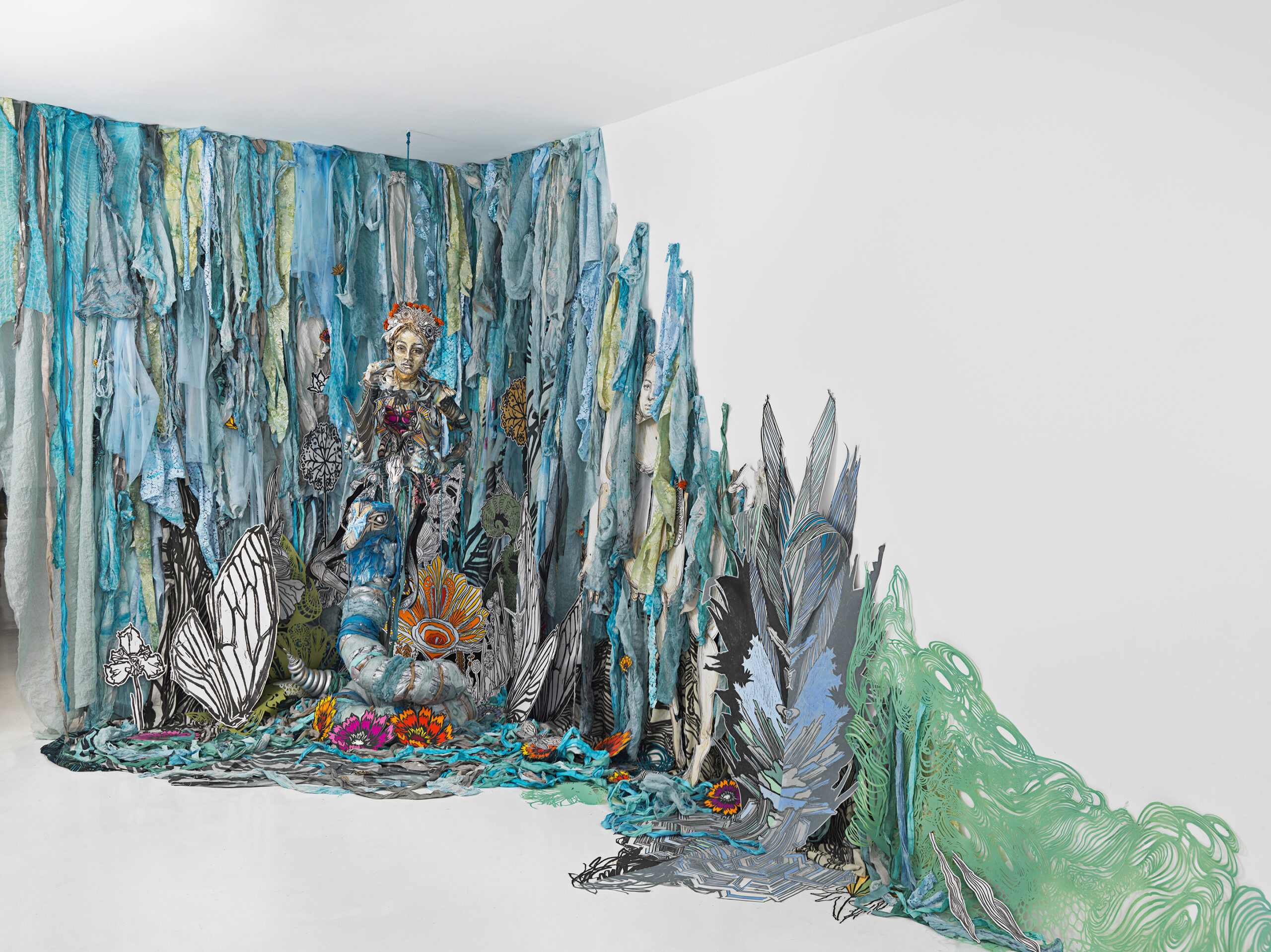
The recent body of work she’s been developing, beginning with Cicada, marks a new direction for Swoon. Injecting her characters with movement, she has adopted into her practice an entirely new medium she’s spent the past two years teaching herself: stop-motion film. Meanwhile, her visual language has taken on a more explicitly sinister and introspective tone, a departure for an artist who made her name beautifying the outside world.
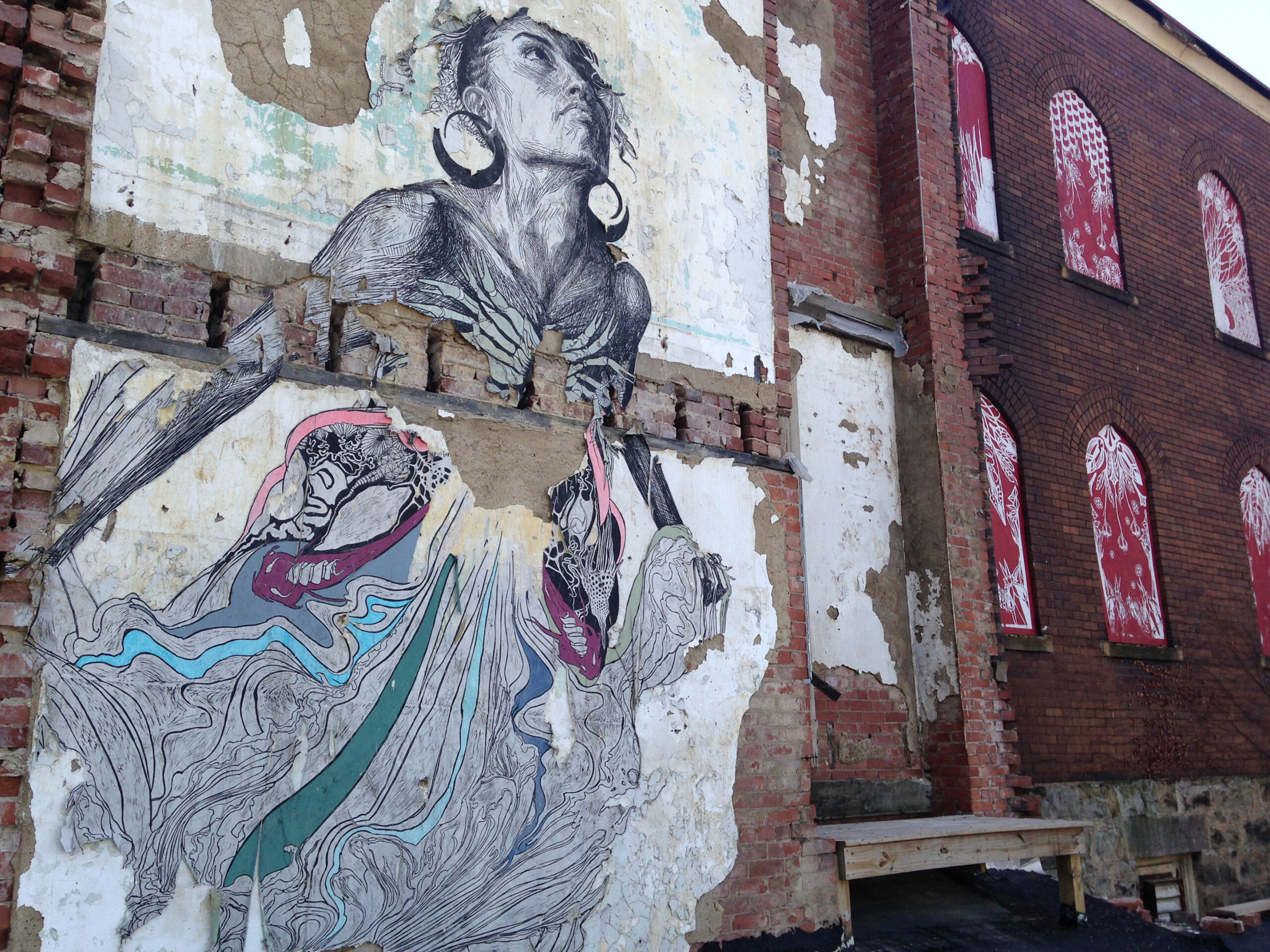
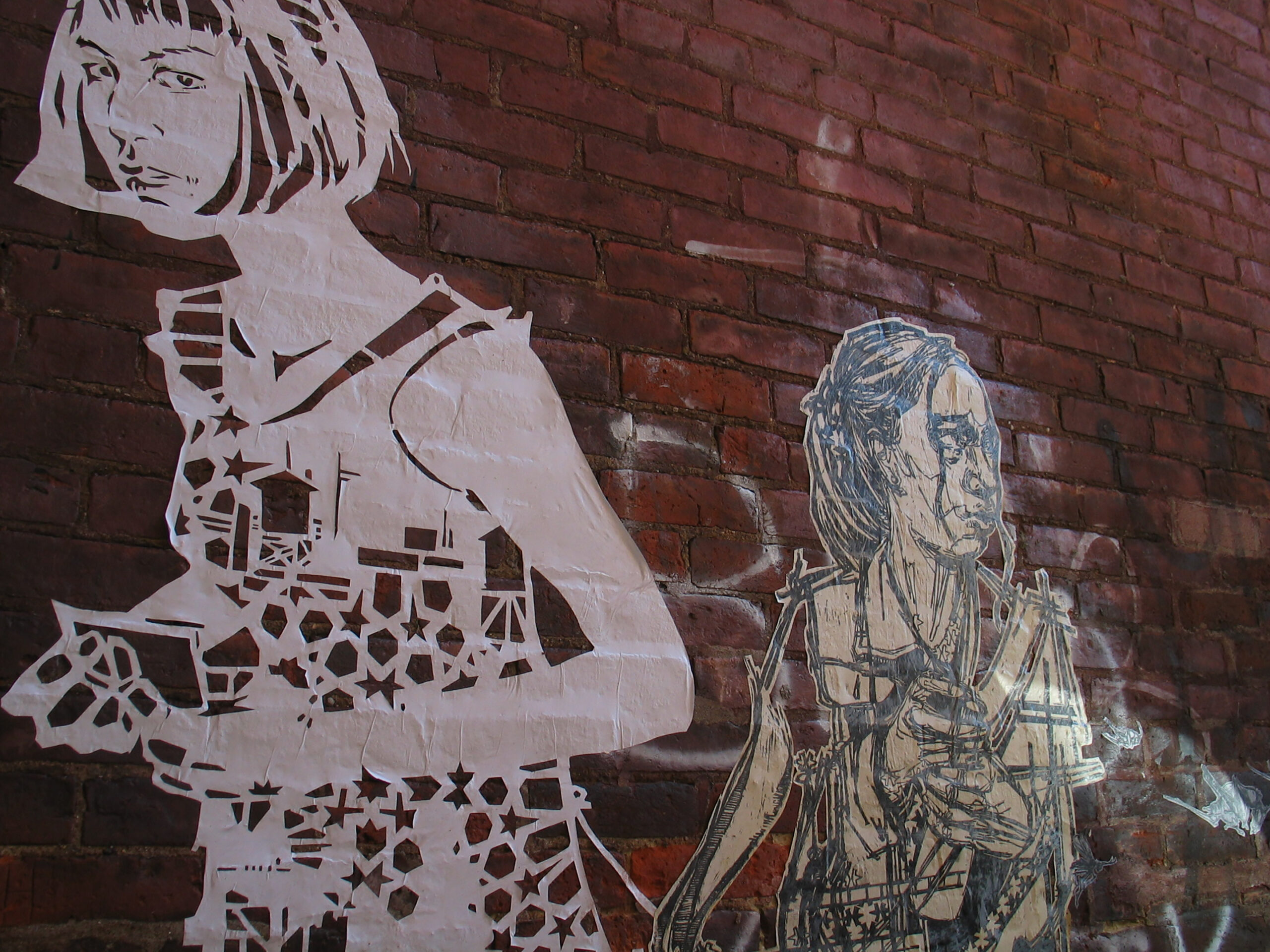
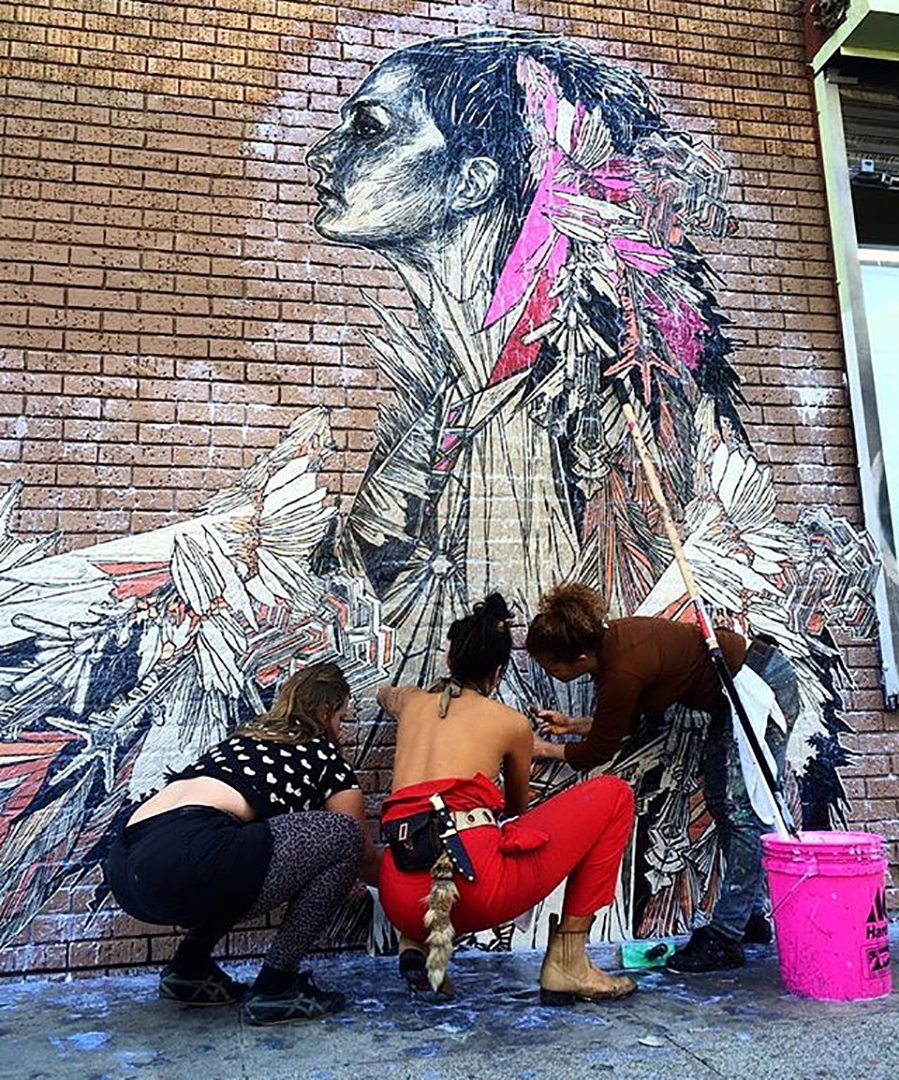
Swoon, born Caledonia Curry in New London, Connecticut (she spent most of her childhood in Daytona Beach, Florida), began pasting her dreamy ink-block portraits on city walls in the late 1990s. Alongside peers like Shepard Fairey, Banksy and her good friend JR, she became central to a youth movement fueling street art’s ascent. Swoon was one of the few women to gain recognition in that world. Her bold, feminine murals, with nods to Greek mythology, soon captivated major museums and galleries, which she filled with immersive multimedia installations.
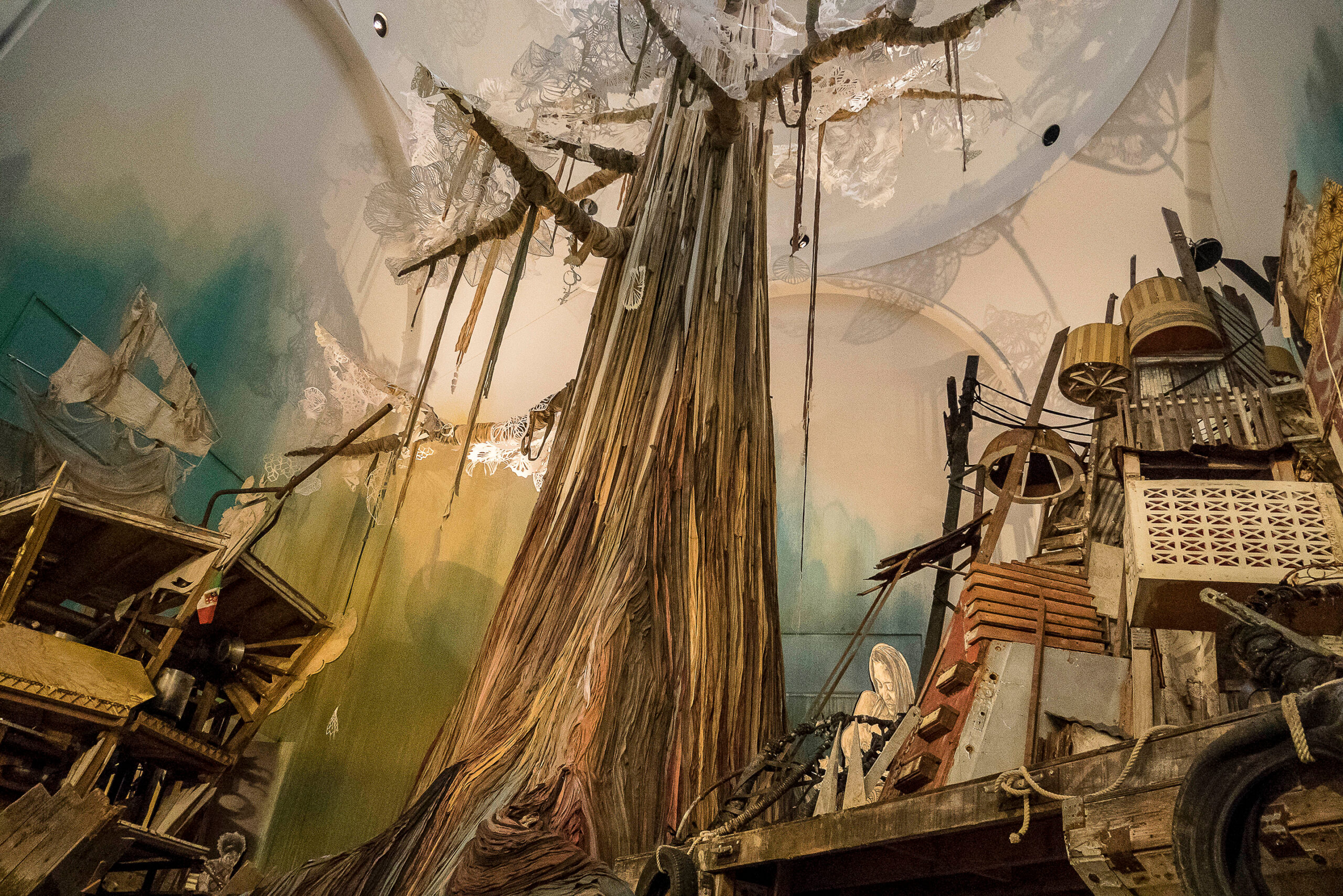
Her 2014 exhibit Submerged Motherlands shaded viewers under a paper tree that reached the height of the Brooklyn Museum’s 72-foot-tall rotunda. It was the museum’s first solo show dedicated to a living street artist.
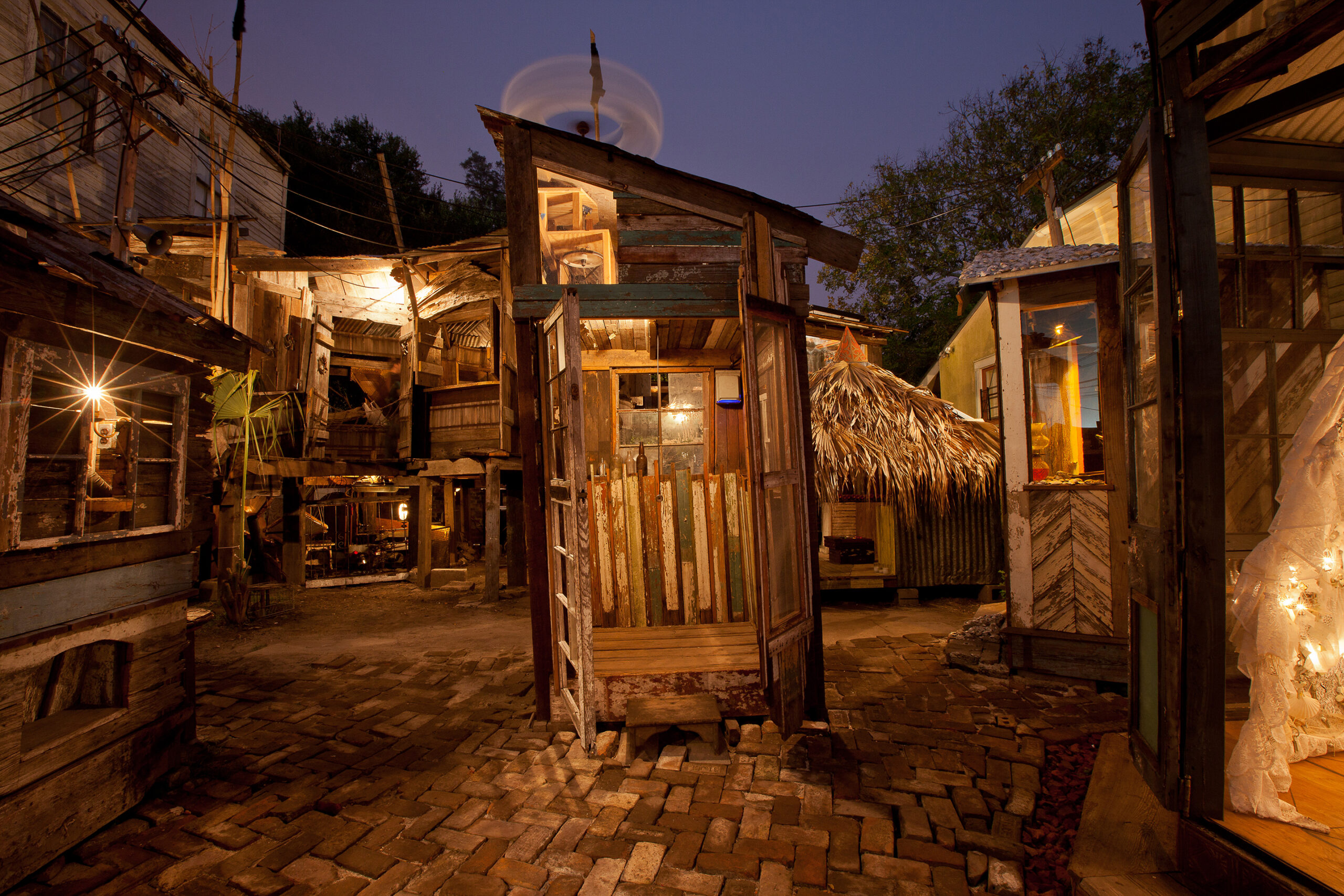
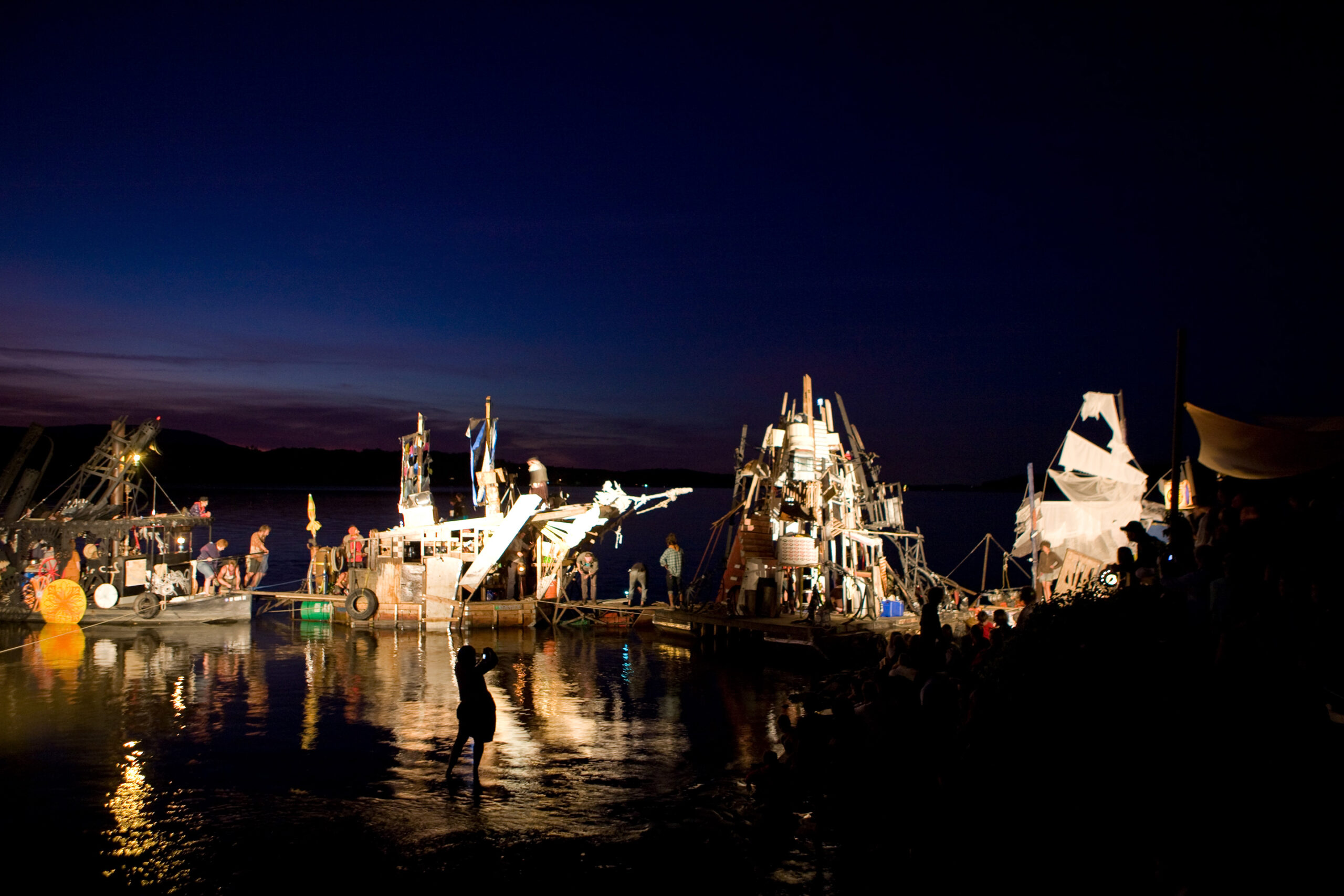
From early on, Swoon saw art as a medium for activism, creating “spaces of wonder” that bring people together. In New Orleans, together with the New Orleans Airlift collective, she created a musical village whose ramshackle treehouses double as functioning instruments. With her community of punk artists and DIY craftspeople she famously built three rafts out of garbage and sailed them across the Adriatic Sea and into the Venice Biennale, uninvited. The renegade crew invited onlookers to join them onboard.
“Swoon’s practice is based in generosity,” says Anne Pasternak, the director of the Brooklyn Museum and a longtime champion of Swoon. “She wants to create dignified, humanistic, beautiful things about people, for people. She uplifts those who are less visible in our society, and she transforms the most banal and even devastated sites into places for real beauty.”
After the 2010 earthquake in Haiti, Swoon launched a decade-long project building colorful, disaster-resistant homes in the remote village of Cormiers. Having just finished the rafts, Swoon says, “I was working with a lot of artists and builders that knew how to confront exceptionally difficult situations and problem solve in unusual ways. I had an instinct that we could make that skillset useful.”
In Philadelphia’s Kensington neighborhood, which has one of the highest rates of opiate overdoses in the country, she leads an art therapy workshop for people in the throes of addiction. It’s a project she plans to grow in tandem with her outspoken efforts to combat the stigma surrounding addiction.
If there’s a thread that runs through Swoon’s diverse body of work, it’s “that idea that creativity can be a really powerful part of how you rebuild after disasters of any kind,” she says. “Social, physical, all different kinds.”
Swoon’s early life was colored by the chaos of her parents’ heroin addiction and struggles with mental illness. Forgiving them took years of therapy and meant reconciling memories of fear and trauma with memories of joy. “I literally thought my mom was going to kill me sometimes,” she says, describing a weeklong psychosis her mother experienced when Swoon was six. “And my mom would bake big zucchini bread and take me to art classes and be this wonderful person, and those two things are just true.”
That dual nature became a central refrain in Swoon’s work, the figure of “dark mother goddess” looming large in many of her installations. Partially autobiographical, her art was both an escape and a form of therapy.
“Almost whatever I’m doing, it’s going to be through art,” she says. “Am I thinking through a problem? It’s going to happen through art. Am I healing all these old wounds? It’s going to happen through art. Am I getting friends together? Art.”
In Cicada and in her growing body of stop-motion films, Swoon uses art to go inward, unearthing the trauma lodged in parts of her mind she hadn’t dared explore.
Behind the swamp-like installation that welcomes visitors to Cicada and an adjoining room filled with portraits of her friends is the show’s centerpiece: a small movie theater where a five-minute, semi-narrative reel brings Swoon’s characters to life.
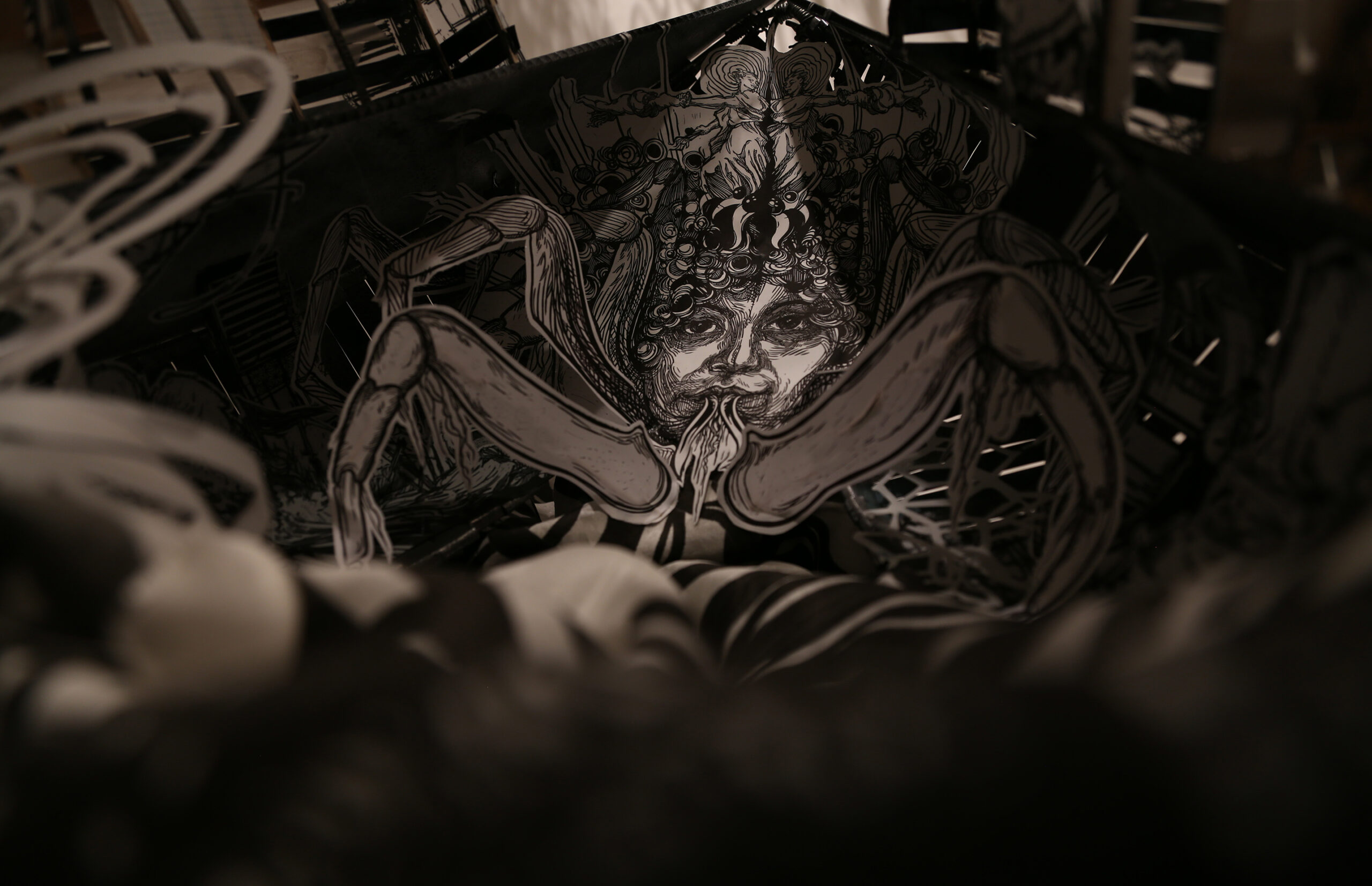
Their awkward, fitful transformations are as discomfiting as they are mesmerizing. In one vignette, a Raggedy Ann doll is smothered by the “tarantula mother,” a paper spider with an anthropomorphic head and snake-like tongues. Cicadas flit their wings in haunted home scenes, colorful flower beds and underwater dream worlds—which were actually filmed underwater; Swoon spent last May at an artists’ residency established in Robert Rauschenberg’s former estate, sinking her drawings into the late pop legend’s swimming pool to capture the serene “amniotic world” of rebirth. (“Some of them survived,” she says enthusiastically.)
Her decision to introduce what she calls “time-based storytelling” into her work was driven by a head-on collision with temporality. In 2013 Swoon lost her mother to lung cancer and, a year and a half later, her father to suicide. It forced the artist to reckon with the past. “It almost felt as though I got sucked out backward through my childhood,” she says. “All this stuff got re-enlivened, and I had to deal with it.”
After that inflection point, the personal nature and raw emotional depth of her work reached a new pitch. “I’ve been really outward all my life, working out on the street, working in community,” she says. “And I just felt this call of like, Girl, you need to get inside and you need to work through some things and you need to to be introspective.”
When she did, she says, “I was like, Hey, there’s this old dream I had 20 years ago of making films, and street work and community-based work just kind of took center stage. But actually, this is still here.”
Swoon sees the stuttering nature of stop-motion as an apt parallel to the disassociation she experienced as a child. “When you’re tiny and things are shithouse crazy, one of the coping mechanisms that’s available is to just be like, Bonk, I am not even here; I am somewhere else.”
Art allowed her to create those other worlds, but it also left her feeling “there were gaps in the frame” when it came to her sense of reality. She grew up fearing that her family’s history of mental illness would eventually catch up to her. “I was always like, I’m just going to get mine.”
Cicada is Swoon’s unfiltered confrontation of past trauma, but it’s also a reverie on the transformation that introspection can bring. “I called it Cicada because of the way the cicadas go underground and do this incredible hibernation process and then emerge, like out of these other forms of themselves,” she says.
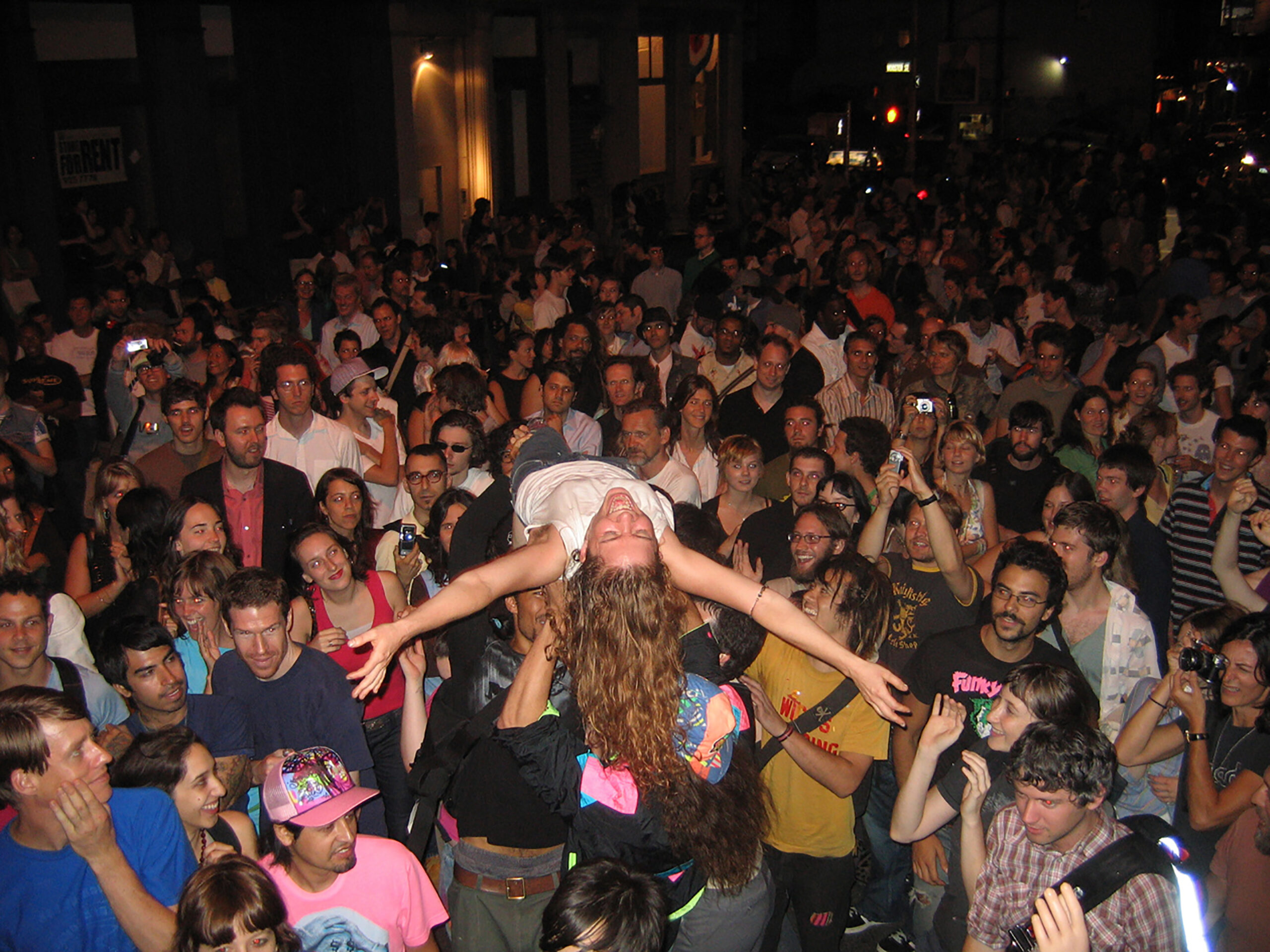
While the show began a new phase in the artist’s career, it also celebrated a homecoming: The Jeffrey Deitch gallery is the site of Swoon’s first major show, which in 2005 garnered international attention almost overnight; she was 27. As a curator, Deitch carved out a niche spotting promising artists and facilitating their wildest, most unsellable ideas, and his gallery at 76 Grand Street became the epicenter of a new wave of experimental multimedia art, including Swoon’s cobbled-together cityscape installation there, whose opening drew some 800 people, by her memory. The afterparty was an impromptu block party where a noise-punk band performed atop an illegally parked truck and gallery-goers crowd-surfed the artist down a shoulder-to-shoulder-packed Grand Street.
“I was like, Anything else is going to feel less than,” says Swoon, who was nervous to return to the reopened space 14 years later.
The night before Cicada opened in November, she posted about her insecurity on Instagram. “I’m 41 years old now…and no longer a central, active part of a spontaneous youth movement (which was then exploding all over the world). I’m just me now. Callie. Learning a new thing, and showing it to the world,” she wrote. “I couldn’t help but compare myself to myself.”
But seeing her community of artists and activists reconvene to uplift her was joyful in another way. “We found ways to make it beautiful and fun but to also acknowledge, ‘Yeah, we’ve grown up,’” she says, adding with a laugh, “I don’t want to surf Grand Street again.”
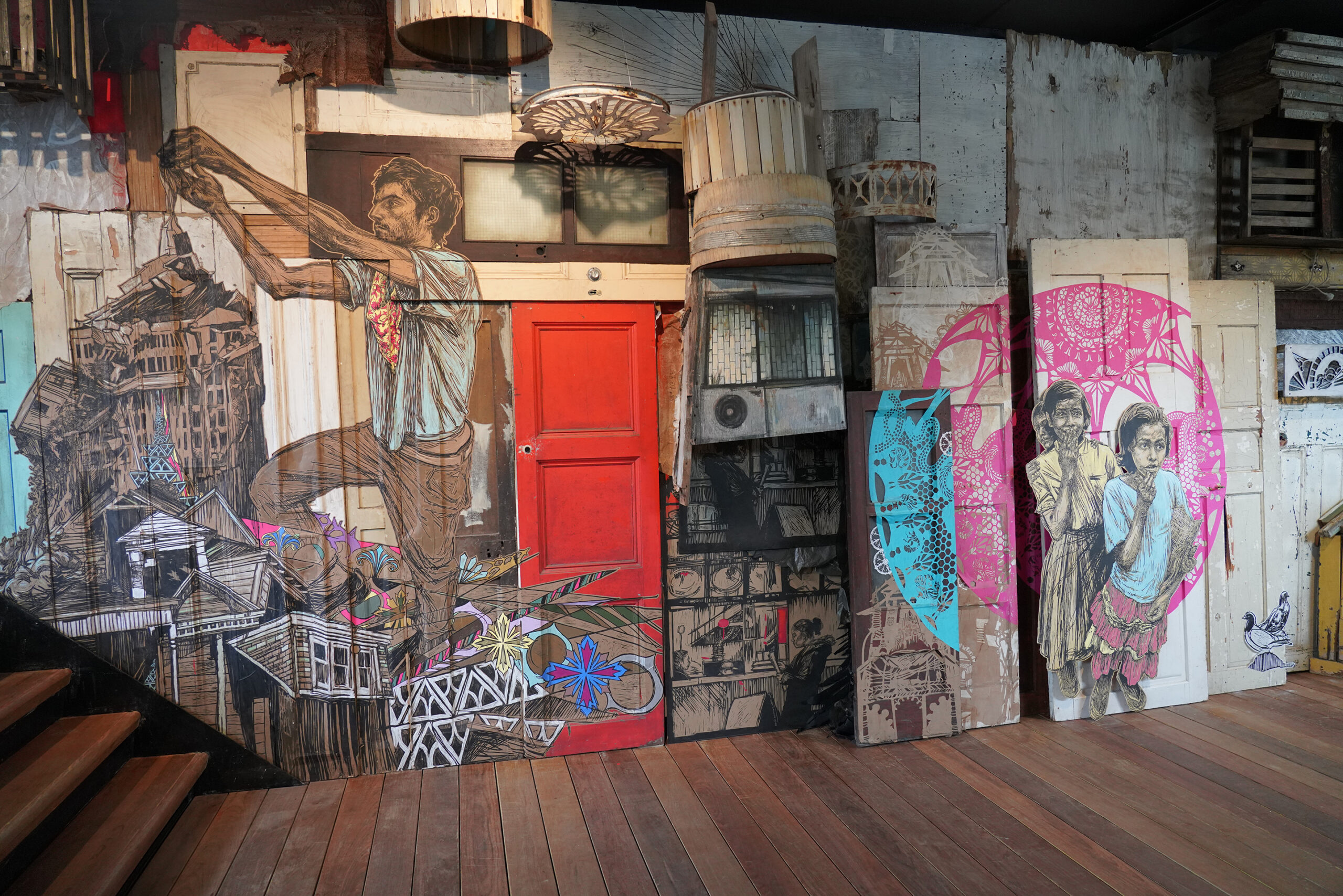
Swoon no longer considers herself a street artist. It’s been years since she’s wheat-pasted on city walls with any regularity. Going underground, as she describes it, is part of what has allowed her to explore the innermost crevices of her subconscious.
It has also freed her to create her most boldly sexual work yet.
“My work has had this reputation for being PG,” she says of her earlier pieces. For street artists, there’s a certain civic duty to self-censor because audiences of graffiti art often haven’t chosen to be; they encounter it on their way to work, to school.
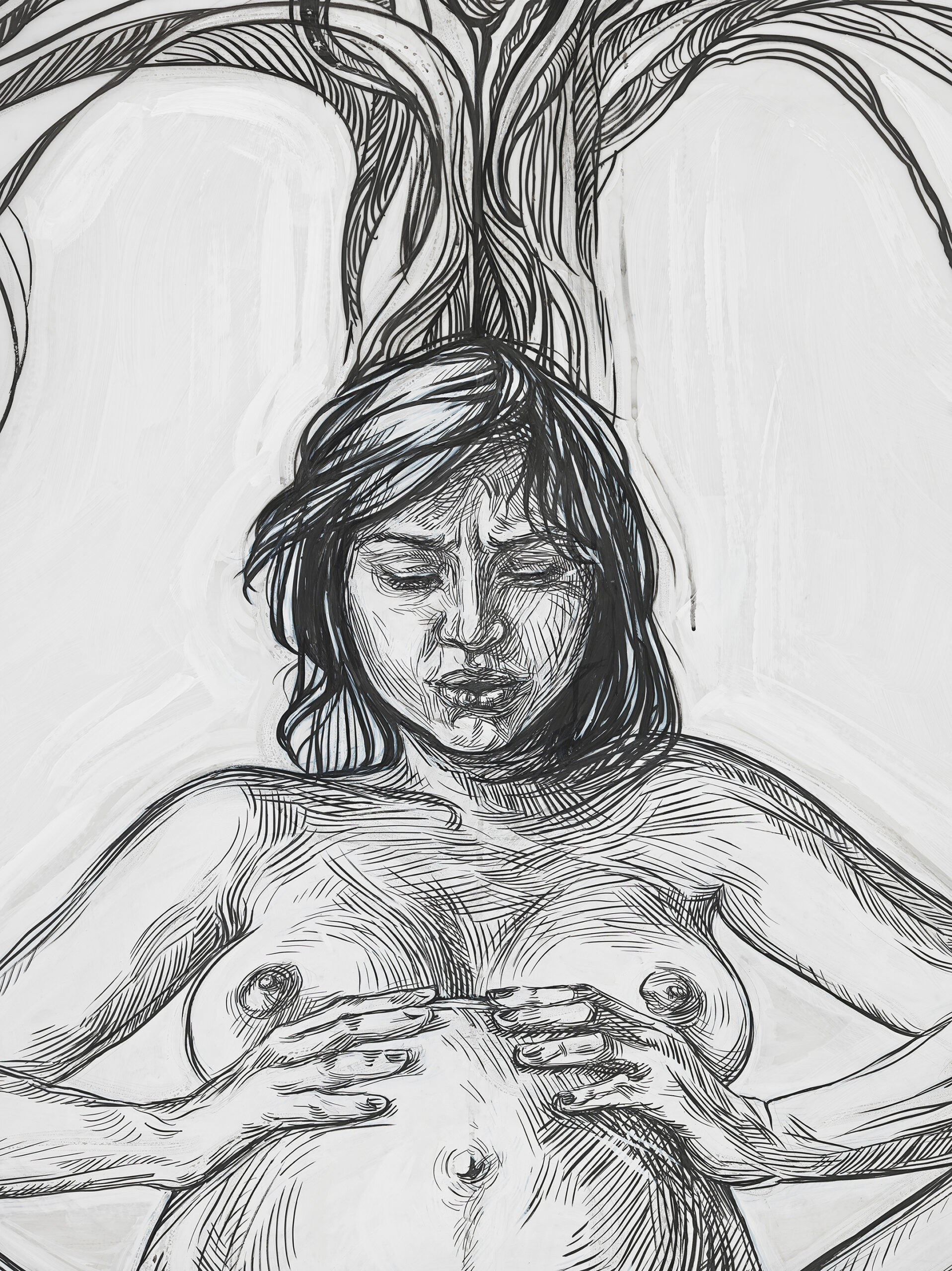
“My whole life, working out on the street, I had this feeling that you’re sort of part of this community in a way that you need to be responsible for,” she says. “Who is seeing this? What’s it like for them?” But in galleries and on film, viewers choose to enter Swoon’s world. “Now I get to be like, What is beautiful to me? What is sexy to me?”
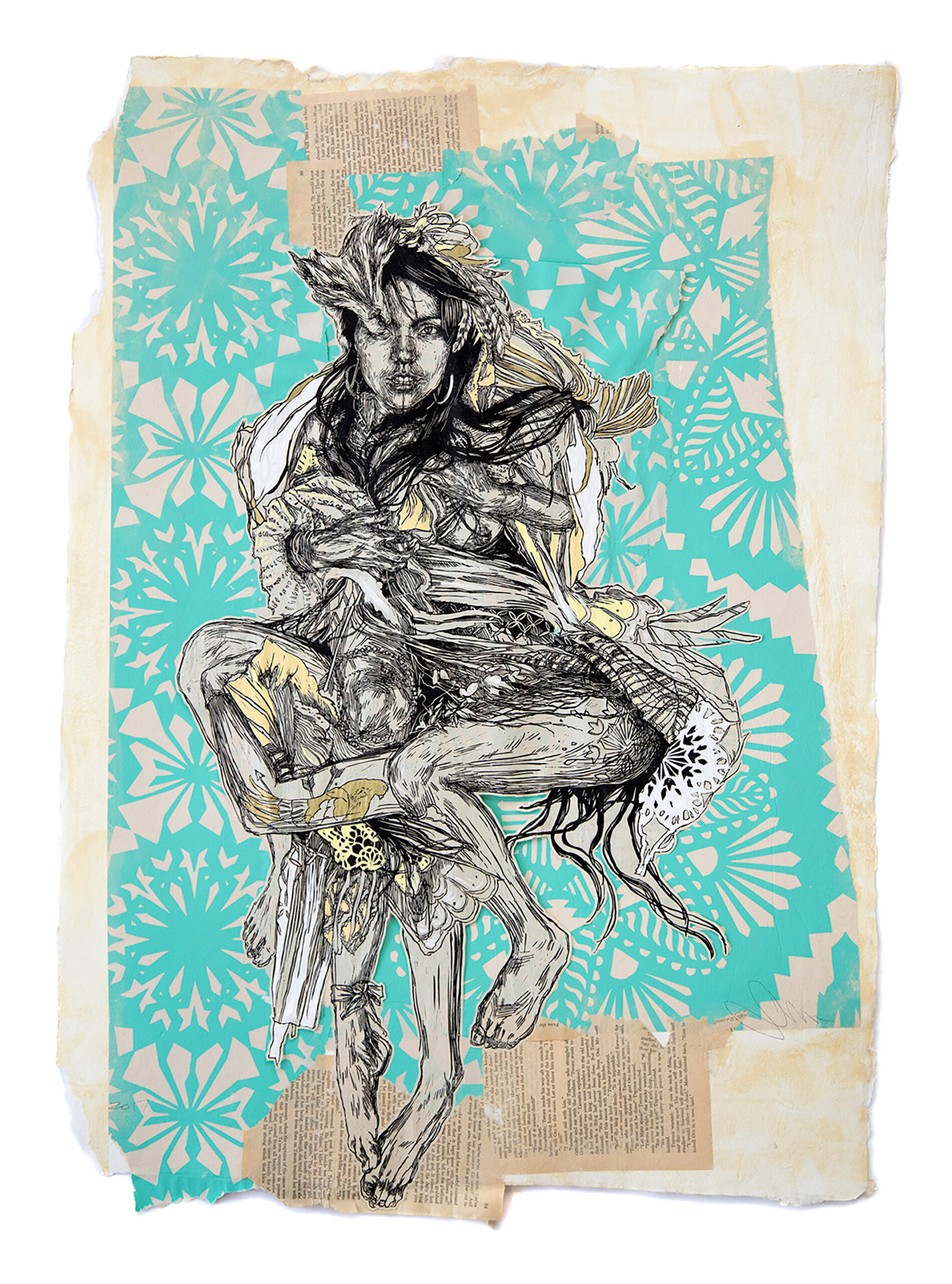
In one life-size drawing in Cicada, a naked woman sits cross-legged, wearing a strap-on dildo. “I just wanted to make a sexy portrait,” Swoon says of the image, a stark departure from her tunic-draped goddesses. “This is without a doubt the first time that I’ve done that.” She thought twice about hanging it up in her studio, where her students would see it. “When I brought back this giant painting of my incredibly hot, sexy friend looking you straight in the eye with her dick out, I was just like, Is this fine?” she says with a laugh.
Swoon gestures to another portrait hanging in her studio, a nude drawing of the artist Monica Canilao. “She’s been a friend and lover and collaborator for so many years. I always photograph her naked because she’s fucking hot, but it’s always been part of my private world. This was a moment where I thought, Okay, I’m ready to express some things that I really think are beautiful and sensual and sexy.… I’m a fucking grown-ass woman now. It’s time. It’s time for me to just own more of myself.”
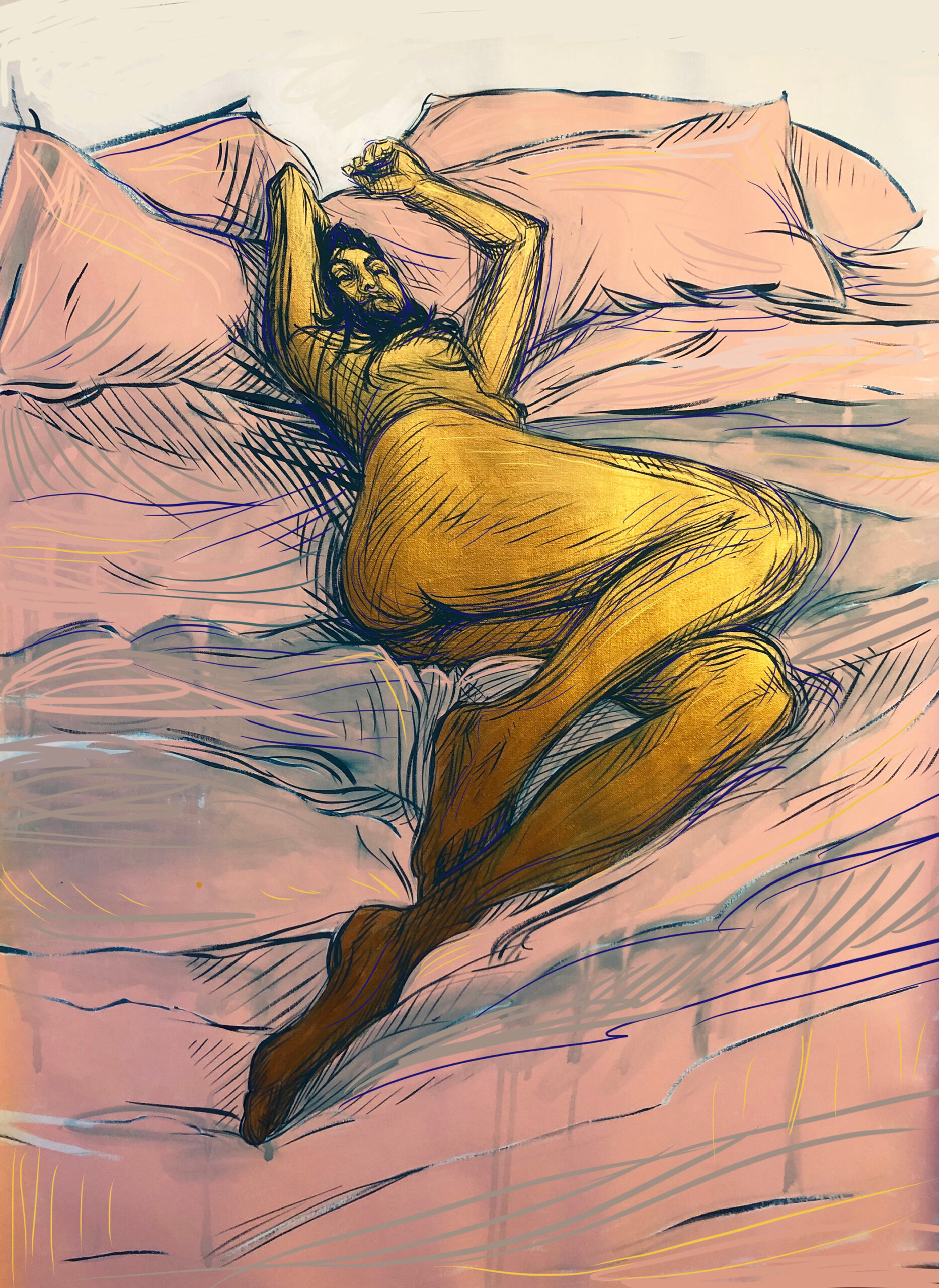
Since Cicada closed in February, Swoon has turned her attention to creating a feature-length animated children’s film. It will be based on a fairytale she wrote about her mother’s psychotic break. In the Grimm tradition, it may not actually be appropriate for children, she warns.
“I was like, What are you doing, Callie? This is so weird! But you know, sometimes as an artist you just get your marching orders, and you do them.”
This interview was conducted in December 2019.