Your bag is empty.
In the first episode of The Politician, Ryan Murphy’s latest show and first project for Netflix, two beautiful twentysomething actors portraying two high-strung teens sit in bed discussing their sex lives. Post-hookup, River (played by David Corenswet, looking very Kennedy-esque) points out that his girlfriend, Astrid (Lucy Boynton), seems to be faking it while he wants her to actually enjoy their sex life.
“I will do better at appearing more authentic from now on,” she tells him, robotically. It’s a quote that captures the nonchalant attitude the show adopts toward fairly progressive takes on sexuality, even for a streaming show, and an overall lack of emotion imbuing most relationships in the series—at least in episodes 1 through 7.
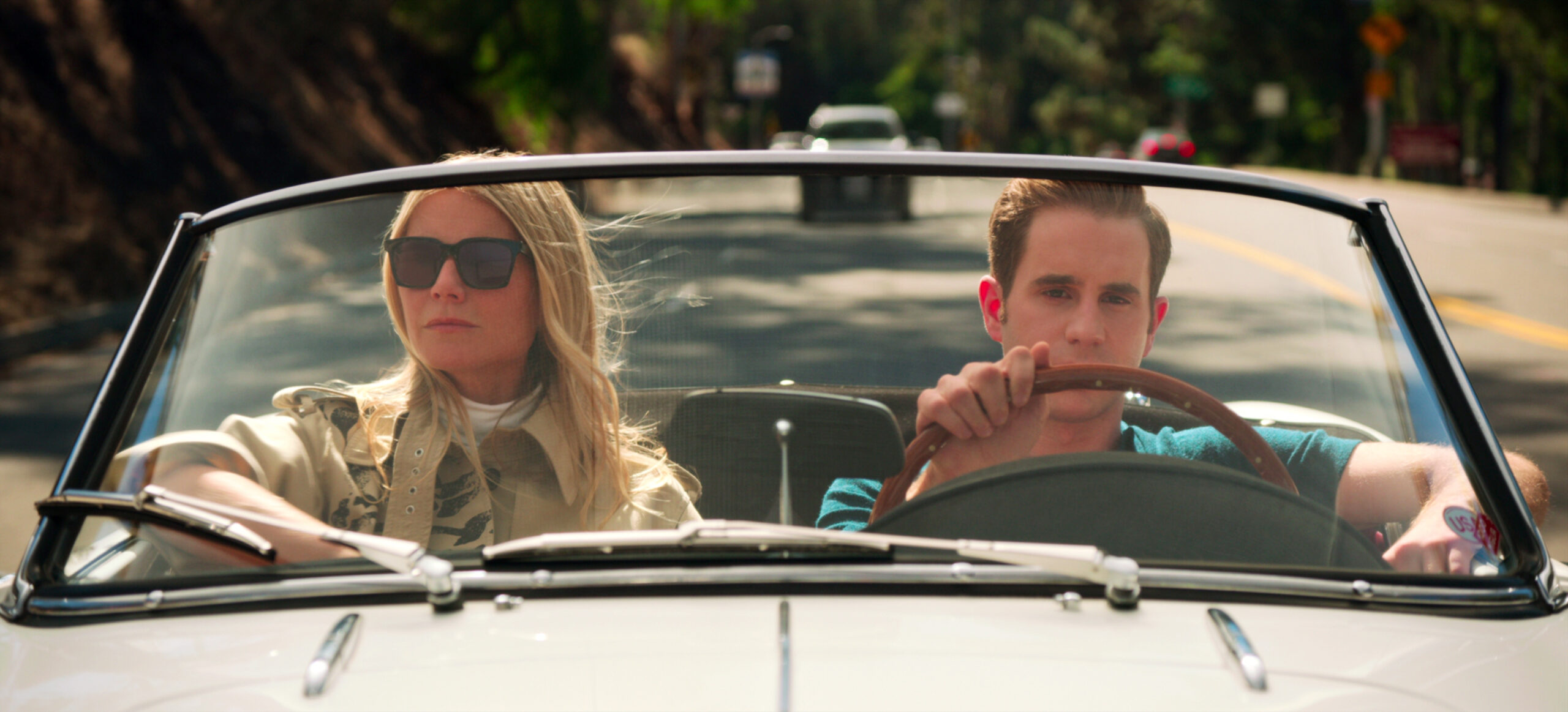
In the show’s first seven episodes, things get bleak fast and are actually sexual in only blink-and-miss-it moments. When Astrid finds that Payton (played by Ben Platt, who post-Dear Evan Hansen has made the flustered teen guy into an art form) has been sleeping with River, she suggests they have a threesome. Though Payton seems slightly shaken by the proposition, he isn’t taken aback enough to refuse.
While this particular ménage à trois doesn’t get any actual screen time (though another threeway at least gets some pre-action pillow talk on camera), it does introduce a world where high schoolers see sex as an ever-evolving conversation, rather than a paired binding agreement. This seems progressive even when you take into account Murphy has been challenging norms around sex and sexual orientation on TV since Nip/Tuck, and that Netflix’s dearly departed Sense8 gave us what will likely be the most diverse group-sex scene we’ll see for years to come.
As a viewer conditioned to story lines involving characters—especially teens—closeted by societal pressure, I expected an eventual reveal (and possible outing) that, despite River’s relationship with Astrid and Payton’s somewhat Stepford-esque S.O. Alice (Julia Schlaepfer), both boys are gay. But by the end of this very short season, it seems both teen characters are bi, and while there are many, many uncomfortable facets to their lives, their sexualities don’t seem to be one for them.
Both teen characters are bi, and while there are many, many uncomfortable facets to their lives, their sexualities don’t seem to be one for them.
Maybe the reason it took me so long to understand that the two teens would become part of a very, very short list of bi men on TV is because The Politician is a hard show to connect with. While modern TV audiences are more than happy to root for a clinically aloof protagonist who doesn’t seem to form any meaningful bonds with those around them (looking at you Dexter, House, Sherlock), they’re almost always surrounded by people with actual affection for each other.
Payton’s adoptive parents (played by a Gwyneth Paltrow in full Goop mode and Bob Balaban) having a cold and calculated marriage—to the point that his dad is able to question not why she’s stopped loving him, but stopped putting on the act they had agreed on—is funny, and is rooted in enough familiar “married for money” tropes to ground us. But the emotionless classmates who act as Payton’s loyal campaign assistants make less sense.
It’s jarring when, later in the season, his minions mention they’ve been friends with Payton since childhood, because it highlights how unthinkable it is that these high schoolers know what friendship is, and were ever, let alone recently, children. That cognitive whiplash is nothing compared to the one you get in the finale of this eight-episode first season, however, when we learn after a time jump that the previously mechanical-acting high schoolers surrounding Payton have morphed from cheerleaders, enemies and, in one case, an actual attempted assassin, to the kind of caring friends who will ask him how he’s feeling and gladly drag him home after a night of too much drinking. It doesn’t matter that some of the new relationships are hastily, or often never, explained. What seems so off is the way they’ve gone from speaking like AI creations fed only scripts from Succession, to only slightly left-of-center teens from Glee‘s earlier years.
*The Politician* joins a wave of 2019 shows that aren’t interested in breaking societal norms around sexuality for the sake of breaking them, but for the sake of the story.
When you’ve built a television empire, and one with an audience that ranges from the pop-cover-obsessed tween Gleeks to American Horror Story‘s gore devotees still tuning in to see what terrible fate will befall Emma Roberts this year, you get to know what your viewers want. Looking at the only eight episodes in my Netflix queue, barely an investment of time or emotion when held against the 24-episode seasons that are just getting started on network, I was more than willing to overlook some of the more pressing problems with The Politician‘s world-building in exchange for Ben Platt singing three full-length songs and Paltrow flirting with a lesbian icon. And I believe Murphy knows this. And probably knows we know this. And we’re all looking at each other, shaking hands and agreeing to six seasons and a movie if the movie is just Platt singing Sondheim’s greatest hits while Paltrow models her many caftans.
Sudden swerve aside, the end of season one does set up some interesting dynamics for season two. Payton exploring the depth of his ambition helped by the woman he loves, his best friends and a collection of enemies-turned-genuine allies is more interesting than watching him fight flanked by flunkies, and being fought by opponents barely more likable than him. A thrupple in love and protecting each other while nervous about outside judgment that could destroy their relationship and professional lives is more interesting than a trio of teens in a threeway to maybe stave off boredom.
Overall, The Politician seems to have joined a wave of 2019 shows that aren’t interested in breaking societal norms around sexuality for the sake of breaking them, but for the sake of the story. Yes, the ad campaign promised “bi partisanship” with all the subtly of those old Vampire Diaries ads that inexplicably tried to court young viewers by telling them to “catch VD.” But from HBO’s Euphoria to its upcoming Mrs. Fletcher, 2019 might be the year when coverage of sexually progressive shows become the norms.
Maybe Ryan Murphy’s true genius is his ability to get your finger off the (by 2019, almost certainly metaphorical) remote at the last possible moment. You might as well listen to one more a cappella cover, see what wig they’ve got Evan Peters wearing this year, see if this move into real relationships is going to last. But just for one more episode.