Your bag is empty.
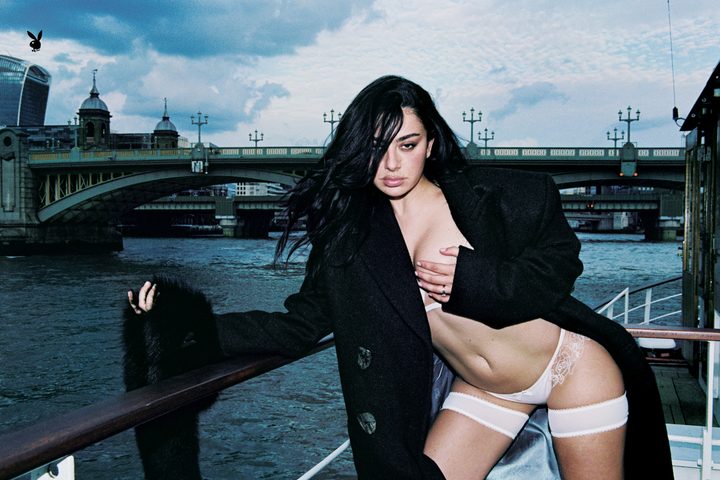
Ahead of "I Want Your Sex," the filmmaker sits down and goes deep with Playboy.

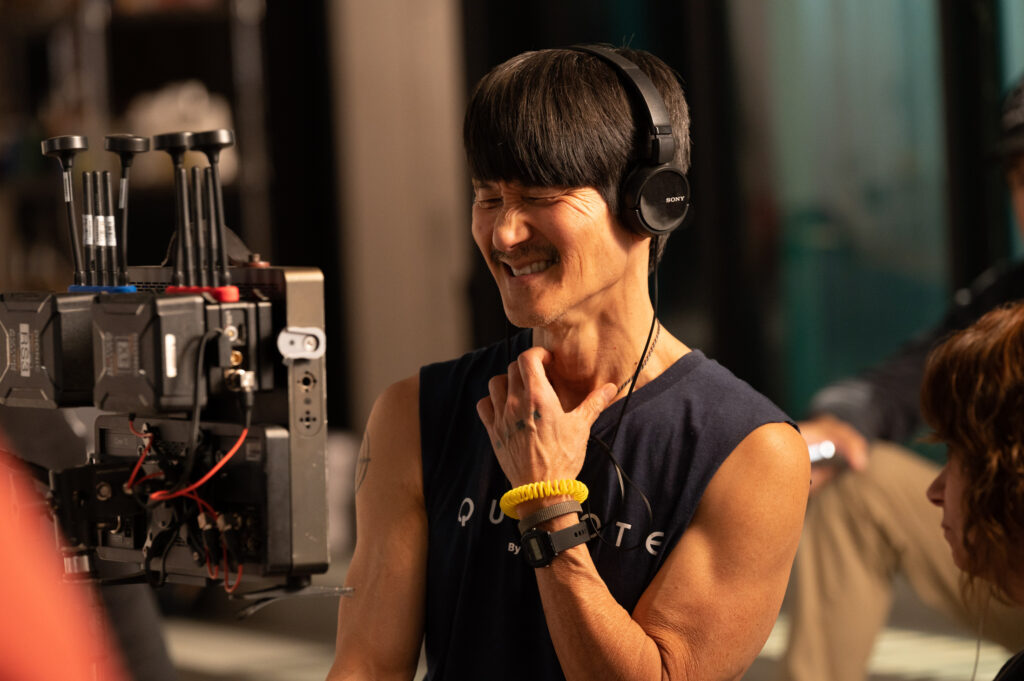
Gregg Araki knows sex.
Since the late 1980s, when he was coming to prominence in the company of his fellow New Queer Cinema practitioners, the director has made matters of the body a central facet of his work. Whether exploring connection in the age of AIDS in The Living End or the freedom and fluidity of college campus culture in Kaboom, Araki has spent decades establishing himself as one of the leading visionaries of on-screen sex-positivity. Even in the 12 years since he last directed a feature — during which he decamped to the world of television as a director-for-hire on shows like 13 Reasons Why and American Gigolo — the auteur has remained close to his lascivious roots: Now Apocalypse, a canceled-too-soon comedy he created for STARZ, centered on a part-time webcam model and an insatiably horny stoner.
With that background in mind, it should come as no real surprise that the director is making his long-awaited comeback to the big screen with a film called I Want Your Sex. As its title suggests, it’s a movie with carnality on the brain. But where older Araki releases like Totally F***ed Up and Nowhere became generational touchstones thanks to their vivid portraits of the intrinsic libidinousness of the youth, I Want Your Sex flips the director’s typical script to tell a more era-appropriate story about just how little sex the kids of today are actually having.
Partially inspired by a study Araki stumbled upon concerning Gen Z’s increasingly negative feelings toward sex, the film centers on the life-altering BDSM relationship that develops between Elliot (Cooper Hoffman), a struggling and undersexed twentysomething, and Erika Tracy (Olivia Wilde), the provocative contemporary artist who hires him as her assistant and promptly propositions him for sex. Like most Araki creations, the hilariously zippy I Want Your Sex features young adult malaise, copious pop culture references, a hard-hitting soundtrack, and a mysterious corpse (this one is floating in a pool). But in addressing the new norms of a generation unrecognizable to his own, the director’s latest slightly changes course, crafting a story that highlights the transformative power of a healthy sex life while also wrestling with a culture that has gradually closed up around the very idea of it.
In a wide-ranging, career-spanning interview with Playboy, Gregg Araki talked about I Want Your Sex’s generational divide, the role sex plays in cinema, why queer people are predisposed to being more sex-positive, how going on wild “sex adventures” in his youth shaped the person he is today, and what Pedro Almodóvar taught him about sex scenes.
Well, I’ve been working on I Want Your Sex. The original spec script was sent to me back in, like, 2013, and it’s been on the backburner this whole time. The thing about indie movies is that you always have a bunch of irons in the fire. You’re always working on a few things at the same time. I never stopped working in movies. It’s just a matter of the stars having to line up and then you get to make a movie.
Through the years, I Want Your Sex has changed a lot. The original script had a female intern and a male boss — but after #MeToo, I switched that around. There was a version that almost got made in 2015 or 2016. It had a different title at that point and it was a very different incarnation, but it fell apart. And so, you know, back to the drawing board.
That became a big part in the final leg of development for the script. It was literally because I read that article [about Gen Z having less sex]. So the Erika Tracy character became very much like a mouthpiece for me, going, “What’s wrong with your generation?” A lot of things she says in the movie are literally things, word-for-word, that I’ve said in interviews before. And Cooper’s character became his generational spokesperson, sort of explaining where Gen Z is coming from and why face-to-face interaction, sex, and all that stuff is more difficult and trickier for them.
But I don’t think of the movie as “lecturing.” I’m not lecturing to Gen Z about whether they should be having sex or not. But I really want the movie to provoke those kinds of conversations. I want people to continue that conversation with their friends at the bar after they see the movie.
When I was developing and doing research for the movie, I very specifically remember being at a business lunch with a Criterion executive and he was talking about his kids and he said the same thing: “They don’t date. They don’t have sex. They don’t go to parties. They don’t get drunk.”
Because of social media, because everybody’s being recorded, there’s this real fear of making a mistake. They don’t want to be publicly humiliated. If you get drunk at the party and throw up all over the place, then it’s all over Instagram or something. It’s hard to get private moments anymore. You have to put your phone away or put a sticker over your camera because everybody’s always filming everybody secretly. Like, the whole thing with the fucking glasses?
It’s literally so fucked up!
But for me, it’s very much what Erika says: “Making a mistake is what being young is all about.” Being young is when you have that bad boyfriend or that bad girlfriend or are in that bad relationship. You have that one-night-stand that you maybe shouldn’t have. You have all these experiences that are like, What was I doing? What was I thinking?
Those experiences are what made me. They forged me as a person, as a human being. Those are the times when I learned, when I grew, when I evolved, when I became the person that I am today. Particularly as a queer person, if I had not snuck out of the house and gone to a gay bar when I was 19, I can’t even imagine what my life would be. My whole life is built on those sort of…sexual adventures. They’re not always great experiences. They’re not all wonderful. A lot of times, it’s like that was weird or that was confusing or that was terrible. But it’s all so much a part of growing up. I just feel like you can’t be young and expect to have everything under control.
It kind of contradicted it. But the thing is that this is a generalization. Not all of Gen Z is like this. But there is a lot of that generation that doesn’t [have sex]. I know this from the fact that relatives of mine are, like, 30 and have never had a boyfriend or girlfriend, or even been on a date. So I know this happens in the real world.
But Cooper? Chase [Sui Wonders]? Mason [Gooding]? They don’t fit this stereotype. But they’re also all actors. They audition and then get told no. So, by nature, they’re already more exhibitionist and more “out there.” But they all know what this is and they know people that are like that. They have friends that don’t date, that don’t go out, that don’t do things.
There’s a really broad spectrum of characters and their sexualities. There’s Elliot, who’s exploring, confused, and trying to figure it out. There’s Apple, who’s just so repressed. I think she’s gonna end up living with a girlfriend on a farm somewhere. And then, there’s Mason’s character, Zap, who’s just super comfortable with being a gay man. He’s having Sniffies sex all the time, with whoever he wants, and he’s very free and open about it.
I just feel like being queer is a huge advantage. Even just “coming out” and announcing that you’re queer takes this level of…being out. If you’re living at your mom’s house in the cellar like a lot of incels, you’re obviously repressed because you’re hidden away from the world, gooning. But if you’re a queer person who’s had to be like, oh, I am attracted to whatever I’m attracted to, you’ve obviously done the self-exploration and have thought about sex and what your desires are.
This was actually Karley’s spec script. It’s how we met. I read it in like 2012 or 2013, we had a general meeting, and then I became attached to produce, direct, and sort of rewrite the script. But after that, we just hit it off. So I enlisted her and she became like my writers’ room for Now Apocalypse. I’m not the person that’s like, “Oh yeah, I went to a sex party on Saturday.” But she’s really experienced in that way. So I could be like, “Oh, we’re at a sex party, so write this sex party scene.” But with I Want Your Sex, I did a lot of the development on my own.
The reason sex has been in all my movies all these years is that those moments of sex are like moments of pure truth. When you have sex with somebody, what’s happening between you is so private and secret. Nobody knows about it. Your best friend doesn’t know about it. Nobody knows you like that person in that moment. As a filmmaker, that’s super fascinating to me because it’s not just the public bullshit persona everybody puts out. It’s about what’s hidden.
It relates back to those old [Pedro] Almodóvar movies that I thought were so interesting in the way they captured these sexual moments that felt so authentic and so real, even in his stylized worlds. That was a big inspiration for me back when I was starting.
Absolutely. I have always said that I’m so fortunate to have been born when I was born and to start making movies when I started making movies. I was in undergraduate school studying film in the late 70s, early 80s. It was right as punk-rock music and new-wave [were taking over]. There was this cultural explosion. Everyone was like, “Break the rules! Do what you want! You don’t have to be top-40 mainstream! You can explore alternative sensibilities!” That all happened when I was in college and when I was just beginning to think, Oh, do I want to be an artist? What do I want to do? What do I want to say? So that was a formative influence on me.
When I went to graduate school at USC in the mid-80s, that was when Almodóvar started to make movies. It was all those filmmakers, like David Lynch and Derek Jarman. There was Jim Jarmusch. Stranger Than Paradise was a huge movie for me when it came out; it was just as I was making Three Bewildered People in the Night. And the 90s was right when Sundance was happening, and I was right there. So I’ve just always kind of been in the right place at the right time.
Sex is such an important part of life. But I think Americans, in particular, are so puritanical and so hypocritical about sex. As a queer person, sex-positivity, openness, talking about sex, even just being out in culture are all so important. [It’s not some] mysterious scam where all this secret, bad, dark, fucked-up shit is happening behind a closed door somewhere.
But I also think that the explosion of porn on the internet is, in a way, a great thing, because it frees cinema from [carrying that burden]. For actresses in the 80s or whatever, if they did a topless scene, it was like, “Oh, people are gonna be jerking off to me!” But now, you don’t need to jerk off to some frozen, out-of-focus image of Phoebe Cates in Fast Times [at Ridgemont High] because there’s any kind of porn you want, 24 hours a day, anytime you want. So, now, sex in movies is not about porn or titillation. It’s about what’s important to the story or the character or that moment. You’re getting to know these characters in a way that is so intimate.
That’s one of the things I feel about The Doom Generation. The fans of that movie are, like, obsessed with it, and it’s literally because of the sex scenes. It’s not the graphicness of them, because there’s not really that much nudity. But you experience those encounters in a way that cinema is so perfect for because it’s such an intimate medium. So I feel like people feel like they’ve had sex with those characters. That’s why they’re so attached to them.
Honestly, this is why I’m hopeful and why I think of I Want Your Sex as being kind of an optimistic movie. For young people, I think it’s the same. There is an openness and there is a fluidity. If you’re talking about, like, Pete Hegseth, clearly that’s a different, dark-mirror world to the world that I live in. But amongst young people, I think there’s still much more fluidity.
Also, I feel like the openness of sexuality is important because it helps people figure out who they are. If you were a closeted gay man back in the 40s or 50s, it’s like, what did you do? You’re just secretly looking at underwear ads or something? But now, Grindr and Sniffies and all this stuff is crazy because all these DL guys can watch gay porn and are like, “Oh, fuck. This is who I am. This is what turns me on. I’m married with fucking five kids, but I’m really into this.” They’re maybe not “fluid” in the sense that they’re coming out and going to a parade and saying “I’m bi” or “I’m pan” or whatever, but they’re hooking up with dudes and they’re liking it.
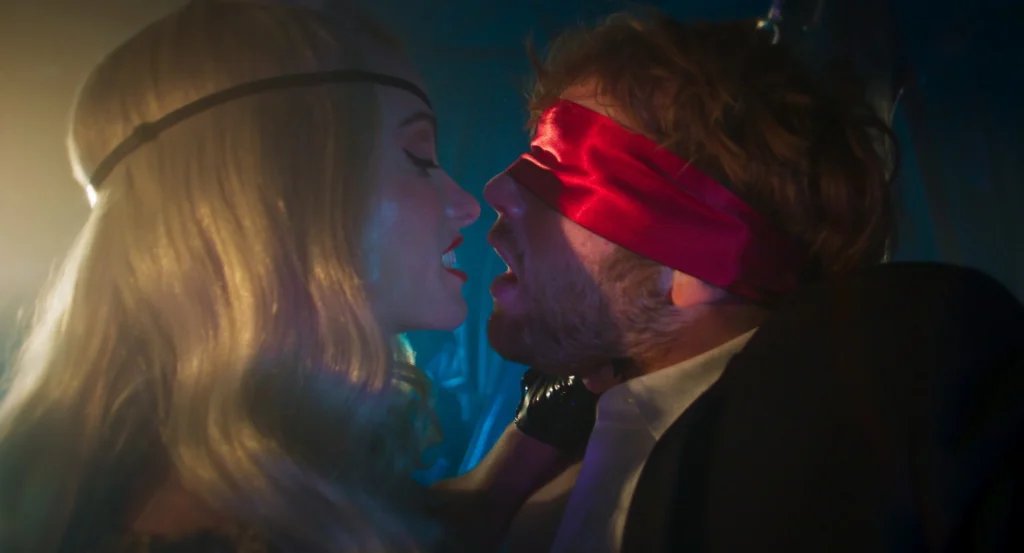
Well, for one, the world of kink is very cinematic. It’s very visual, very stylized and dramatic. But also, when it comes to Erika’s character, I describe her as “Madonna meets Robert Mapplethorpe.” I just couldn’t imagine that she’s just vanilla. She’s larger than fucking life, and kink is the same.
Well, I love Erika Tracy. I relate to her so strongly. But I don’t fuck my interns. I don’t do a lot of things that she does. She’s definitely a flawed character. She’s a narcissist. She’s kind of crazy.
One of the things I loved about Olivia was that she was so fearless. She just jumped in the pool and embraced Erika, flaws and all, from that very first scene, when she’s with her employee going, “I want to fuck you.” I actually moved that scene to the front because I wanted to [announce], right out of the gate, “This is who this person is and this what this relationship is [going to be].” It’s just this kid who’s nervous about this job and this woman who’s just like, “I want to fuck you. What do you think about that?” So she’s definitely inappropriate, but I think she’s such a fun character. And for Olivia, it’s such a great showcase for her, to just jump in and really create this larger-than-life iconic character. She’s like an S&M Miranda Priestly.
When I look back on those old movies, I really appreciate that I’m a different person now than I was when I made them. But I also appreciate how very true they are to where I was in like 1994 and 1995. That’s exactly who I was. That’s exactly what I was thinking about and how I was feeling. The sentiment of those movies is so pure and so true.
I hope so. The funny thing is, Doom and Nowhere both barely got released. The people that love them, love them, but they were very “cult.” They played very few theaters and lived on video and DVDs and whatever — and the DVD and VHS [copies] were terrible. That’s why I’m so amazed that they’re still around. I go to these screenings and the audience is all kids, and I’m just like, “Where did you find out about this movie? How do you know about this?” So I think the themes and feelings and sentiments of my movies are universal and cross generational lines.
That’s always my hope as a filmmaker — that, somehow, the movies will get out there to the people they need to get to. I love the idea of that. I have fans that are like, “I live in fucking North Dakota and I saw Nowhere when I was 15 at like 2:00 in the morning and it changed my life.” It’s just cool that movies can live like that and spread around and get out there for the people that need them.
I feel like we’re in a very chaotic, crazy play. The industry is just upside-down. Nobody knows what’s going to happen. I think technology makes filmmaking so much more accessible now. You can just do so much more with the cameras and the editing software, and I feel like that’s a good thing. But I do think Hollywood is on fire right now. It’s like the Titanic sinking. Nobody knows what’s happening. I’m inside it and I don’t even know what’s going to happen.
Back in the olden days, when I was a young filmmaker, the boundaries were very clear around, like, indie film, Hollywood film, cable, TV, network TV, etc. But with the disruption of streaming and all the shit that’s happened, it’s all blurred. How people watch movies, how they consume them — it’s all changed. There’s just so much media now. It’s TikTok, Instagram, YouTube, movies, TV, Heated Rivalry, all of it. That’s why I’m so excited for I Want Your Sex to be a real movie in real theaters, because it’s meant to be enjoyed [that way].
I haven’t seen [Obsession and Backrooms], the indie horror movies that took over the box office this summer, but I think it’s cool that these little movies are making more money than fucking superhero movies. We’re all fucking sick of the superhero movies. That’s why everyone should go see I Want Your Sex on July 31st instead of Spider-Man. Because who cares about fucking Spider-Man? There’s 20 of them. What else can you do to this story to make it interesting? So that’s the moral of the story.
This interview has been edited and condensed for clarity.