Your bag is empty.
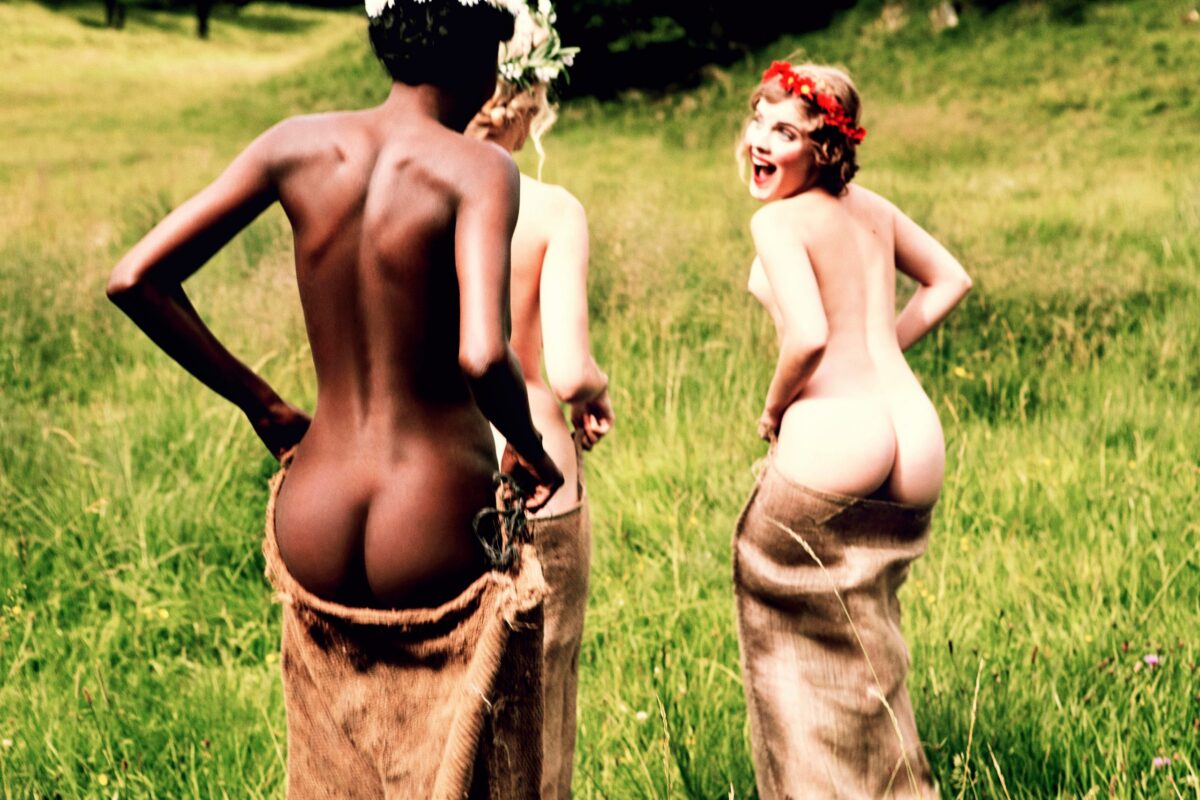
With Devotion!, the legendary photographer—and frequent Playboy contributor—celebrates 30 years of portraying "the glamorous woman in the world"
Claudia Schiffer looks over her shoulder at the camera. Her hair is pulled back, windswept, with some pieces trailing across her forehead in seductive wisps. Her shoulders and arms are bare, and her torso is cinched into a black lace bustier.
Taken some 30 years ago, it is one of Ellen von Unwerth’s most iconic photos, shot as part of what would become a brand-defining campaign for Guess denim. Along with several other shots of Schiffer, who, like the photographer, was relatively unknown at the time, the series launched both women’s careers—and the aesthetic von Unwerth captured with Schiffer would soon define the former’s work: sexy, sultry women who come alive in front of her lens, full of strength and irrepressible joie de vivre.
In the decades since, von Unwerth has become a staple of fashion and art photography. Dozens of supermodels have posed for her, including Naomi Campbell, Kate Moss, Elle MacPherson and Eva Herzigova, as well as pop megastars like Rihanna, Courtney Love, Miley Cyrus and Lady Gaga. Von Unwerth has shot campaigns for brands including Chanel, Diesel, Rolex and Veuve Cliquot, and she’s published nine books of photographs.
In 2019, von Unwerth, who is originally from Germany, was honored by the LUCIE Awards for achievement in fashion photography. This Saturday through March 29 of next year, her work will grace the walls of Fotografiska New York, a photography mecca whose site in Stockholm, Sweden is one of the world’s largest such spaces. (Another location exists in Tallinn, Estonia.) Its title handily sums up the photographer’s relationship with her subjects: Devotion! 30 Years of Photographing Women.
A regular contributor to Playboy (witness her stunning contributions to our 2018 Lina Esco Profile), von Unwerth spoke with us about what inspires her, female nudity in the time of Instagram and the way she uses fantasy, glamour and a bit of the surreal to capture her models’ powerful sexuality.
Read on for her inimitable insights and a selection of photographs from the show—including a cheeky Playboy exclusive.
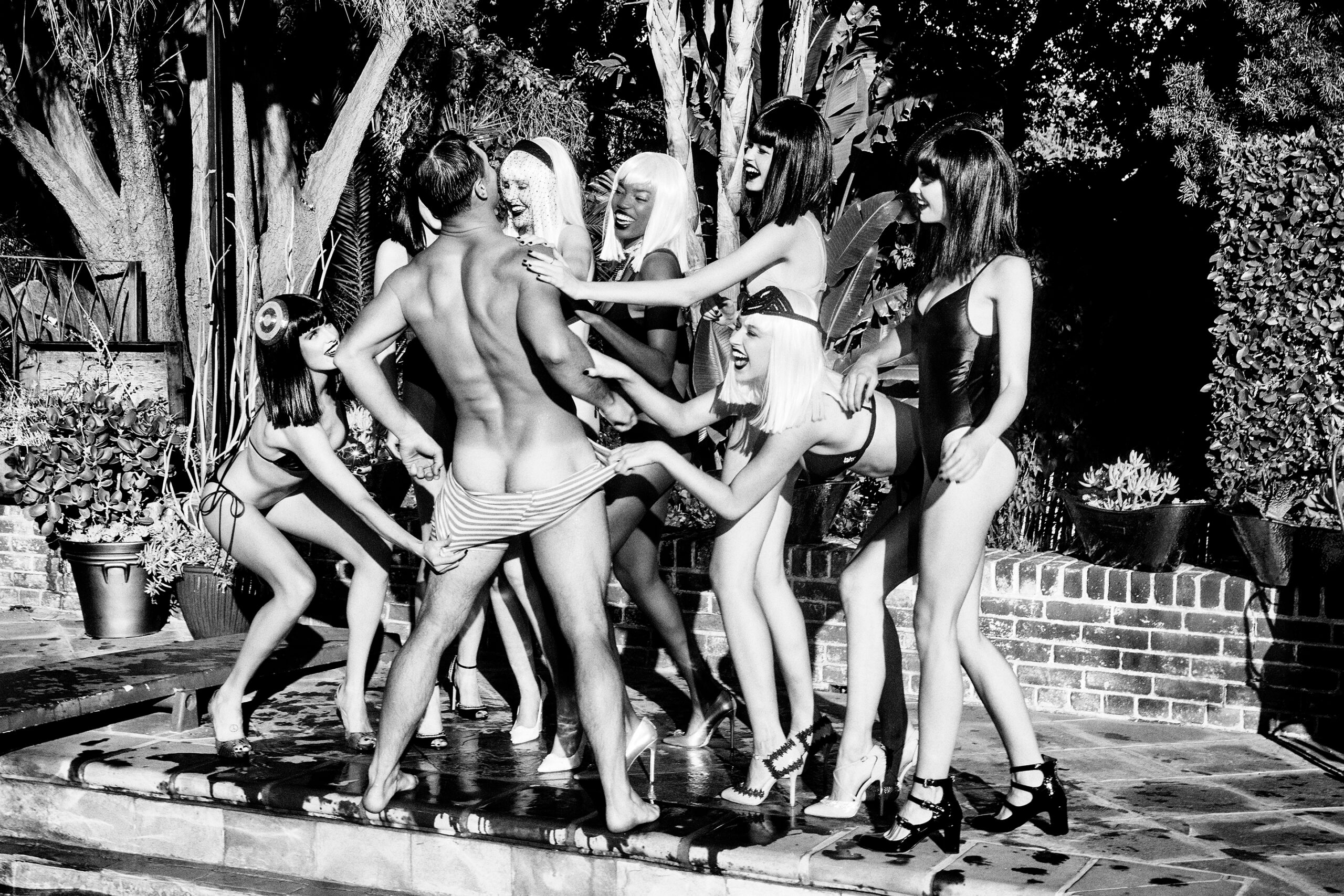
Your work in the Fotografiska show is divided up into themed sections, correct?
Yeah. First of all, we decided the show is going to be about women—my favorite thing. The pictures are probably my strongest. I had an exhibition in Stockholm last year called Devotion! It was about three months, and it was actually the same exhibition, more or less. And because it was seven rooms in Sweden, we have the idea to divide into seven different emotions which reappear a lot in my pictures. And so we came up with those different themes: play, power, gender, drama, passion, love, lust.
Those themes overlap so much in your work. Was it tricky to decide which theme was the most relevant for each piece?
Actually it was fun, because once you have a theme it’s much easier. And I like that it was overlapping: You can have really a sexy picture and you would put it in play, not in lust. So it was kind of fun to make it a bit tongue-in-cheek, a bit of humor to it, which I always love.
I wanted to talk about your background a bit. You were orphaned at a young age, and then you lived in some very unusual places as a teenager.
I lost my mother when I was two, but she was not married so I don’t actually know my father. I had different stepparents. Then when I was 16, I was living on my own in Germany, and then I started to live in a hippie community when I was still going to school. It was the ‘70s, of course. It was a fantastic time, and very influential on my way to think and to see things. Then I was in the country: I was 18 and living in the mountains in Bavaria. I went to Munich to study, but I saw the circus on telly and went to see it, and I was so fascinated. I went to ask the circus director if I could be a part of the circus, and he said, “Yes, you look like a circus girl. You can start tomorrow.”
I did that for six months—not such a long time, but it was a big influence on the way of seeing the world. It always comes back in my pictures—a bit of a circus element.
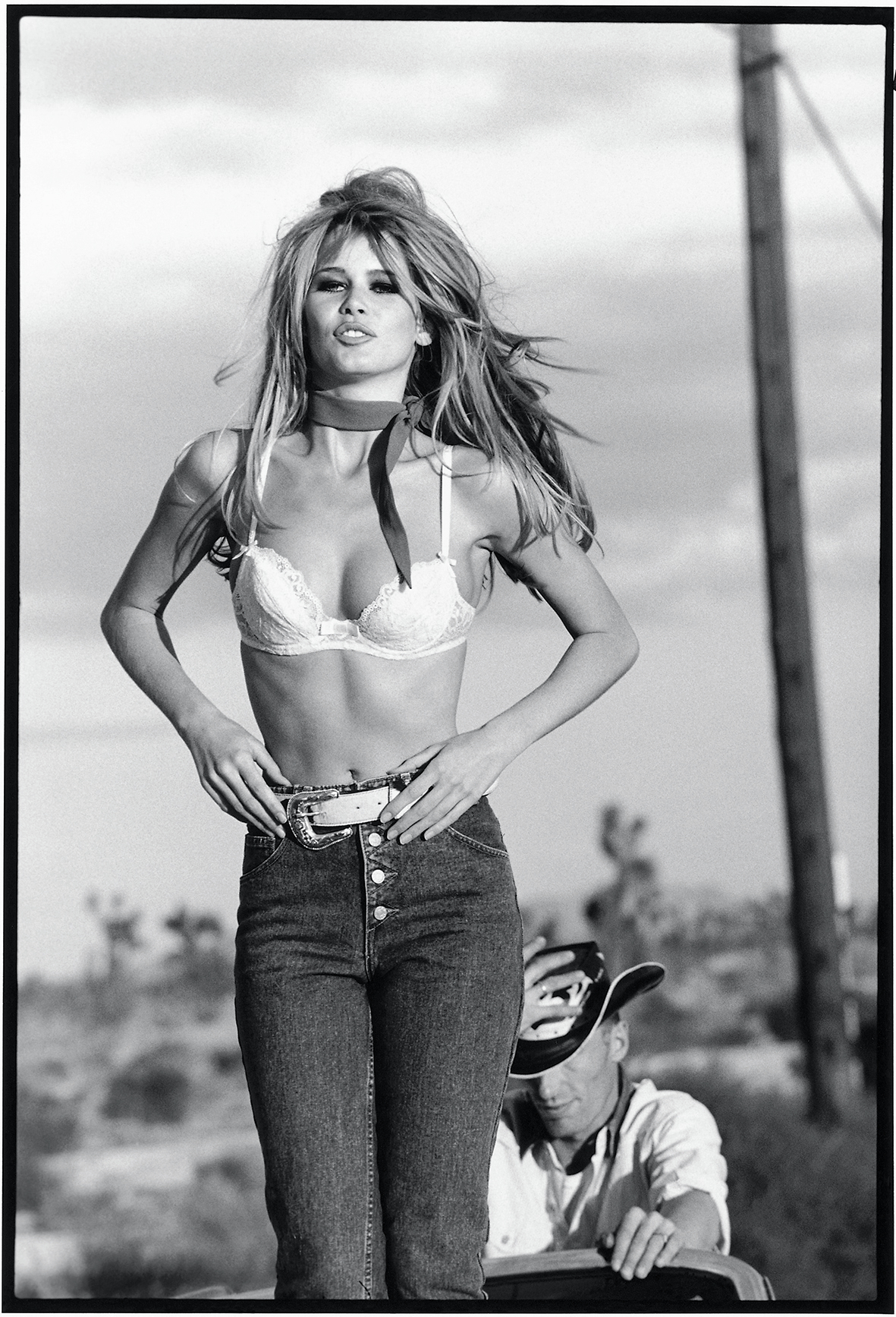
Some of the women you’ve cited as influences are Sofia Loren, Marilyn Monroe, Brigitte Bardot, all of whom represent slightly exaggerated versions of womanhood. Can you talk about how those chimeric influences from your teenage years show up in your work?
Well, talking about the actresses, of course I grew up with these movies. I just love how these women were so larger-than-life, so beautiful and so glamourous, and they make you dream. This is always something that comes back in my pictures. I love to put the woman on a pedestal and make her look really gorgeous and really desirable, but also really strong and self-assured. They assume their sexuality, but they know what they’re doing and they have fun with it. That’s always very, very important to me.
It’s also natural to me, because that’s how I want to be. That’s how I want to see women. And you know, there is always a certain performance I like, too. I don’t like my objects to be static. I love them to play a role in my pictures. It’s not just like a portrait or, “Oh, you’re beautiful.” I love to bring a little bit of emotion into the picture, a little mystery, a little glitter, a little sparkle, a little fantasy, glamour, but also a little dishevelment. It’s not the perfect glamour; it’s like the glamorous woman in the world. She’s lived, she’s been running, she’s been dancing, she’s been drinking, she has sex, whatever. You know? It’s not just a statuesque kind of woman. It’s a woman who lives.
Something you’ve talked about in previous interviews is that ordinary women often tell you they want to be photographed by you and seem to relate to your pictures. What do women see in your photos that they want to see in themselves?
I think it’s a kind of a sensuality. They don’t feel objectified. They feel like it’s going to bring out the personality of the woman, and I think maybe women like that. There is a bit of depth in the sensuality.

Being a beautiful woman who could, at the same time, have their life in their hands—that is how I always saw my women.
One of the things that comes up a lot when people talk about your work is this concept of women being sexy and powerful at the same time. Historically, those two concepts have been kind of either/or. How do those ideas work together for you?
I think throughout history we talk a lot about emancipation, but when you look at movies, the woman looked always powerful. Like Brigitte Bardot: She was super sexy, flirty, but she had things in control. You see that in lots of Hollywood movies, actually: The woman had things in control and they were powerful. So being a beautiful woman who could, at the same time, have their life in their hands—that is how I always saw my women. Having control over their life and using their beauty and using their intelligence to get what they want.
I was always inspired by women like this, but also just my friends and the people I hang out with. I love the strong side, full of positivity and, you know, dealing with problems, of course. You can be sad one day but it’s good to have the strength to get over it and bring out positiveness. That’s always how I saw my women. I don’t like really the sad woman, siting in the corner. That’s not the image I want to project.
I hate to be gendered about it, but what’s coming to mind is fetishizing the sad woman, and I think that’s done more by men.
Mmm, not really. You see it a lot in fashion. To look sad is really cool in fashion photography. And I understand that’s the fashion, but I don’t want to be sad. I don’t want to show my women sad. Nobody wants to be sad. But that’s just the way I see it.
Is resilience a quality that’s important to you?
Yeah, yeah, of course. I always say, the night comes and washes away things and you wake up as a fresh person the next day. You feel like a new person, you can see life different again and you can attack the day in a different way. I feel like the night is always a good help to get over things.
Correct me if I’m wrong, but I don’t believe I’ve seen many plus-sized women in your photos. What are your thoughts on the move toward greater inclusivity in fashion photography?
I always like kind of roundish girls, curvy girls. I never really was too much into skinny-skinny. I think it’s great to have women with all different personalities and different shapes. I was maybe one of the first photographers to show different genders. And it just depends on the girl. I don’t want to have a girl just because she is plus-sized. If I like her personality, if I think she is interesting and, you know, I can see what I want to do with her, of course. I think it’s great that fashion goes there and shows that everybody has their beauty.
Jumping topics, some of your shoots with Playboy have been iconic, including your nude shoot with Pamela Anderson that ran in our Jan/Feb 2016 issue. What was that like for you? What did you want to accomplish with that shoot?
I loved Pamela, and I was with her a lot. She was such a big, big figure in photos for Playboy and such a big friend of Hugh Hefner, so it was an iconic moment—iconic place, iconic lady. It was great to follow Pamela Anderson because she knew all her little favorite places in the Mansion. I even had the pleasure to spend a little moment with Hugh Hefner, who came out for a moment, and Pamela together. So I’m very happy that I had that last moment with him.
We’re in an era now where women appear nude or nearly nude all the time online. What do you think the role of your own work is now—and as someone who has worked with us, what do you think the role of a publication like Playboy is?
It’s funny because there is so much censorship going on, but actually the girls like to show themselves. It’s very interesting. And for a magazine, I think it’s great to show women and maybe create more fantasies, create something which makes women dream. Show them something different; show them something new, or show them something which inspires them—and, you know, which could change their life a little bit or give them an idea for an adventure. Not just nudity or pretty women, but something more.
That seems like the direction you have always gone.
Yeah, exactly. I love to tell stories, and I want to see stories. This is why I loved Helmut Newton—because he always had this story in the picture. You look at it like, “Huh, what is really going on here?” You can look at it for a long time. Your fantasy girl. And it’s really stimulating. So that’s, I think, what is good to show.