Your bag is empty.
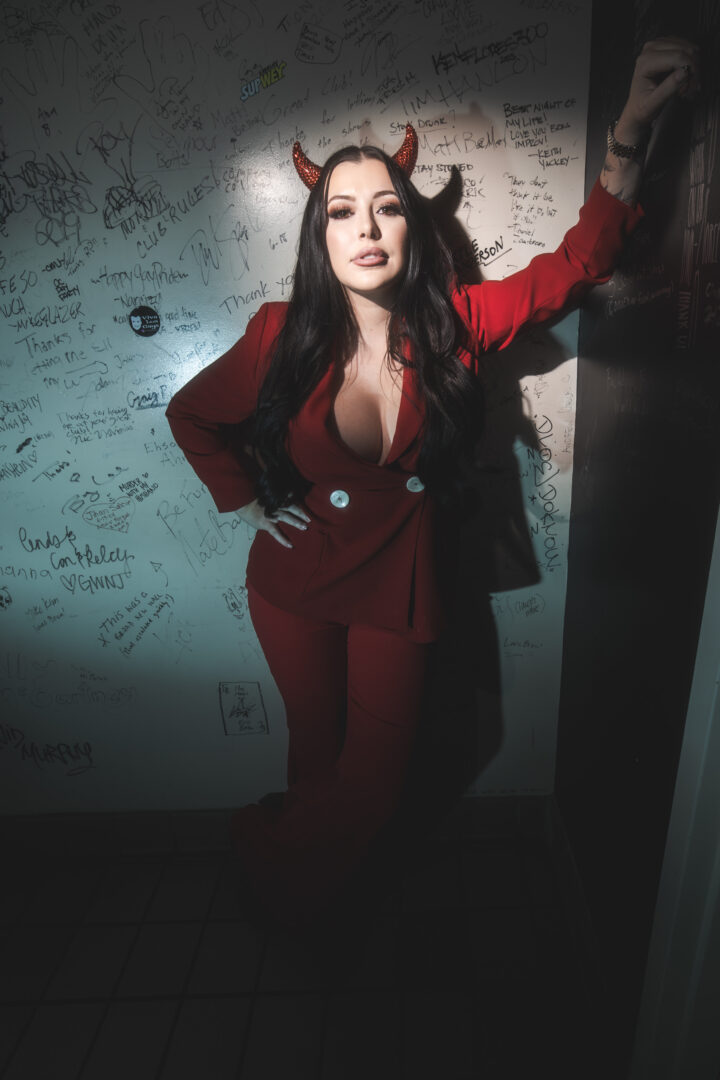
Three years after becoming the world's social-media siren, Lindsey Pelas is flipping the script

The private jet was on fire, and Lindsey Pelas felt certain she was going to die. It was 2015, and she was flying to Los Angeles from Colorado with Dan Bilzerian, the brawny “King of Instagram” who’d helped her go viral the year before. After meeting her at the Playboy Mansion (she’d appeared on our Playboy Plus website in 2014), Bilzerian had produced a slow-motion video of Pelas jogging in a drastically under-sized tank top. It garnered more than 10 million YouTube views and catapulted her from bartending to cashing in on Instagram, where she now has 7.7 million followers, and eventually led to her own highly rated podcast—but first let’s return to the burning jet.

It was accelerating down the runway when the brakes caught fire.
“The pilot was like, ‘Everybody off the plane!’” recalls Pelas. The aircraft screeched to a halt and the passengers made it out unharmed, but the trauma lingered. “It’s the most horrifying thing when you think you might actually die,” she says.
To be honest, I love to feel like a peacock flaunting my feathers.
Now 27, Pelas would never have predicted she’d end up on a private jet, let alone nearly perish aboard one. She grew up in backwoods Loranger, Louisiana and was raised by a “super redneck” mom and a dad who has lost at least one boat to a hurricane. In grade school she weaned herself off the regional twang by mimicking the characters on Barney & Friends. As a sassy teenager voted “most ambitious” in high school, she landed an academic college scholarship, and when she transferred to Louisiana State University to pursue a history degree, Pelas supported herself with a full-time job at Hooters.
“Customers are mean because you’re pretty, and they’re mean because they think you’re there to be their slave,” she says. “Someone called me a slut to my face, and my general manager literally threw him out. I was like, ‘Oh, I finally got one!’”

Other stories from that period don’t end as well. While at LSU, Pelas was assaulted in a bar. “A guy grabbed underneath my skirt,” she says. “He grabbed me—I mean grabbed me on my vagina, enough to be like, Oh my God. I was like, ‘What the fuck are you doing?’ The guy acted like, ‘Oh yeah, just did that.’ ” When she went to security, one of the bouncers replied, “Well, are you over it?” She left sobbing and with a migraine. The intensity of the assault, paired with the callous response—“the good-old-boy system,” she calls it—still infuriates and dumbfounds her.
Nevertheless, Pelas refused to change how she presents herself. She’s a proud and increasingly vocal feminist, even though she’s often accused of reinforcing certain obvious if outdated stereotypes.
“To be honest, I love to feel like a peacock flaunting my feathers.”
“A lot of people would say, ‘You being sexy all the time is contributing to this idea that that’s your only value.’ I really deeply thought about that—am I a hypocrite?” She goes on: “To be honest, I truly love to feel like a peacock flaunting my feathers. And I don’t think that asks for me to be demeaned.”

There’s something undeniably genuine about the way she works complex feelings into a clear feminist stance. She exudes a sticks-and-stones realness, and her no-nonsense poise suggests a lifestyle that has evolved since her flaming-jet days. (She’s currently more interested in lying low, working and hitting the gym.) Over a two-hour conversation she barely breaks eye contact to check her phone. For all her magnetism, Pelas is a great listener, so it follows that she’s a natural-born interviewer.
Eyes Up Here, the podcast Pelas launched this past spring, showcases the same sharp wit she deploys on Twitter. If it seems ironic that a woman who became famous for her breathtaking appearance would choose a nonvisual medium, well, that’s the point. It’s right there in the title.

During lively interviews with models, actresses and internet entrepreneurs, Pelas frequently asks guests to share their own experiences combating sexism. They seldom surprise her—they’re too close to her own—but after years of facing catcallers, trolls and worse, she maintains an open heart.
“The internet has become such an easy place to be evil and mean,” she says, “but it’s also a place where people who didn’t have a voice get to share their stories.” Pelas pauses, summoning a conclusion that, like her decision to start a podcast, is nicely counterintuitive. “I feel like the most beautiful part of the internet is learning to treat each other better.”