Your bag is empty.
The comedian tells Playboy about 'Disenchantment,' and why he's saving three tabs of acid
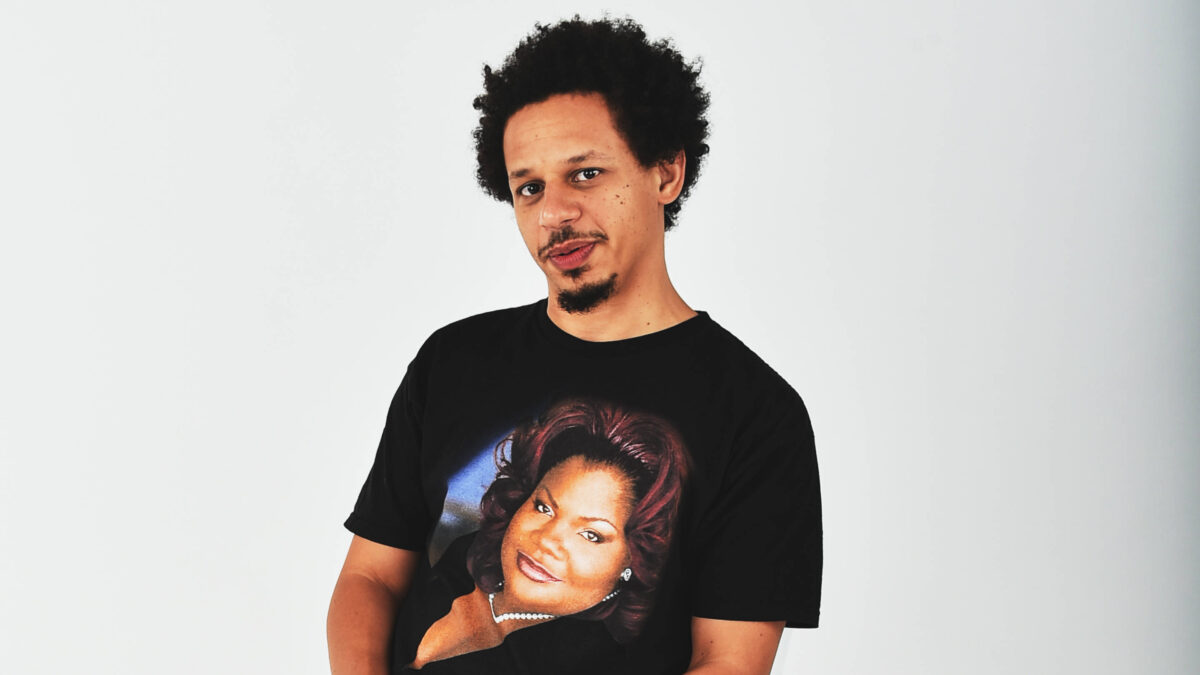
It’s a Monday afternoon, and Eric Andre is on the road again. Last weekend, the comedian-turned-actor performed a pair of sold-out stand-up shows in Phoenix, Ariz. A week before that, he was on-stage in Sacramento, Calif. Tonight, he’s joining his friend Moshe Kasher in Los Angeles for a comedy show benefitting Multidisciplinary Association for Psychedelic Studies (MAPS), a non-profit dedicated to researching psychedelic drugs. Andre’s a fan of psychedelics, but says he doesn’t do them nearly enough anymore, save for the occasional microdose.
“I have three hits of acid that I’ve been saving for a special occasion,” he tells Playboy. He’d like to do them somewhere spiritual, like Joshua Tree, Calif., or Sedona, Ariz. The problem is finding the time to leave town when he doesn’t have a professional obligation. “I’m kind of getting trigger-shy in my old age. I work all the time, and an acid trip takes so long.”
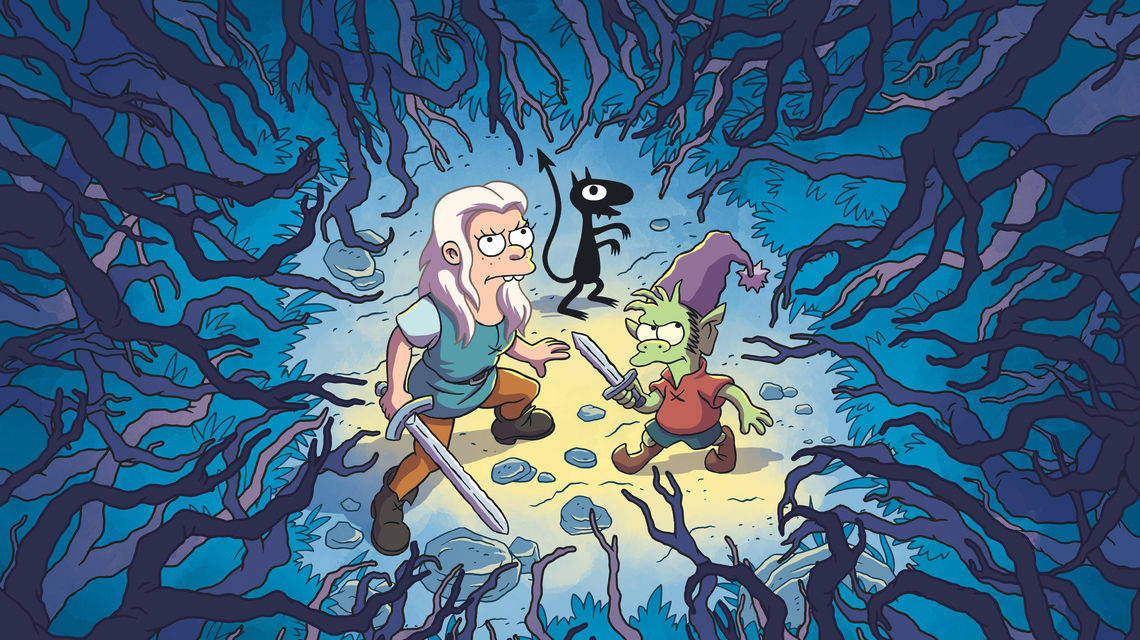
“Old age” is actually only 35 (which makes Andre still technically a millennial), but working all the time is hardly an exaggeration. Mostly 4 Millennials, the prank show he produces for his writing partner and comedy protégé Derrick Beckles—“We look and act incredibly similar, so people confuse us all the time,” Andre says—premiered on Adult Swim last month. Disenchantment—the animated Netflix series that gives Andre his first lead role as a voice actor, playing Luci, the inner demon of a medieval princess (voiced by Broad City’s Abbi Jacobson)—dropped on Friday. And Disney’s CGI and live-action Lion King reboot, for which Andre will voice a hyena named Azizi, alongside the likes of Seth Rogen, Donald Glover, Keegan-Michael Key and an obscure vocal talent named Beyoncé (maybe you’ve heard of her?), is slated to hit theaters next year. But to Andre, his now-budding career as a voice actor always seemed like a long shot.
“I got an email from my agent, and I almost didn’t audition because I never book these things,” he says of his role in Disenchantment, a raunchy fairy tale—emphasis on the sex, drugs and every kind of medieval murder you can imagine—from The Simpsons’ creator Matt Groening. “I kept seeing Matt’s name in the email, and I was like, ‘Well, why not give it a shot? What’s the worst that can happen?’”
Working with Groening, Andre says, was “a total dream come true” because to him, The Simpsons was always more than just a TV show. “I grew up on The Simpsons and worship at The Simpsons. That’s like my Bible,” he says. “It shaped my worldview, and it shaped the way I think about comedy, how I approach comedy in its absurdism.”
Andre rose to fame in 2012 with a self-titled Adult Swim talk show that lampooned the very concept of a talk show, from its live band (comprised of senior citizens); to its desk and armchair set-up (which Andre frequently smashed to pieces); to its sound effects (nonsensical laugh tracks, gunshots and alarms) and a sidekick (played by Hannibal Buress), who often hovered awkwardly over guests, occasionally while munching on, say, a head of lettuce. “For the first couple of seasons, I would always ask people, ‘Who would you rather have sex with, your mom or your dad?’” Andre says. “’Both’ is always my answer.”
Plenty of comedians have a backup plan, in case the whole stand-up thing doesn’t work out, but for Andre, comedy was the backup plan. He graduated from Berklee College of Music in 2005 and became disillusioned with the music industry after realizing that it’s “either poverty, or you’re just making horrendous Lady Gaga bullshit,” he says.
“I know virtuosic singers, guitar players, songwriters, composers that were, like, totally broke and unemployed, and I knew really tacky, boy-band bubblegum pop schmucks [doing] Mickey Mouse Club bullshit, and they were making millions,” says Andre. With comedy, “I think if you’re great, you will have a career, and I think if you are not good, you will not have a career.”
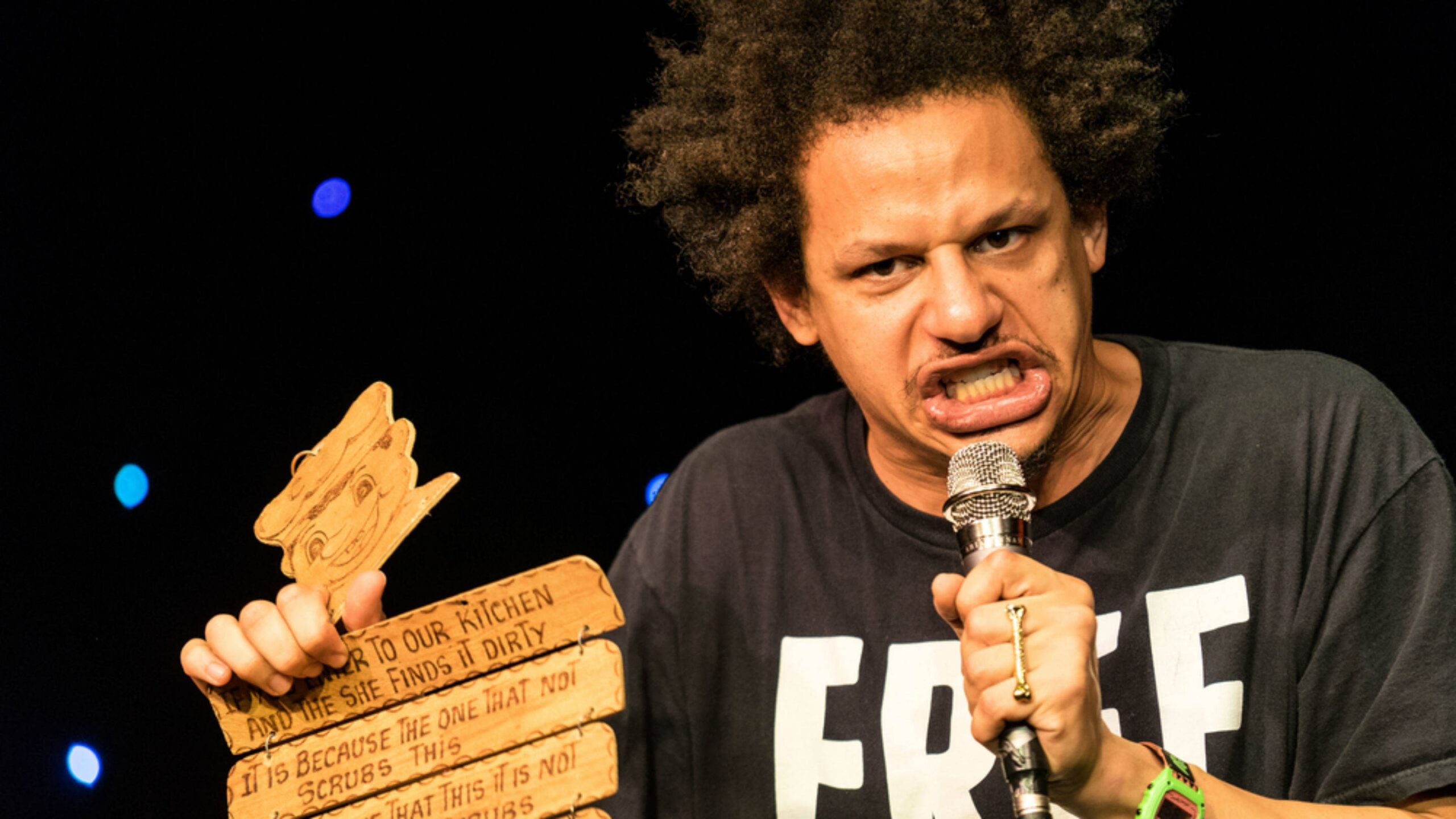
Of course, not everyone finds Andre’s caustic humor amusing. Two years ago, he took his slapstick routine to the Republican National Convention and got booed off the stage after telling far-right conspiracy theorist and shock jock Alex Jones, “I want you to have sex with my wife” (Andre isn’t married, but says he’s currently dating a chef). “I think we’re in the same America that existed before the election,” says Andre. “That bigotry and hatred is as American as apple pie, and it’s like, you know, part of our history, so it doesn’t vanish overnight. I don’t know, it’s fucking depressing.”
That doesn’t mean Andre agrees with Facebook, YouTube and Spotify’s decisions to ban Jones from their platforms earlier this month. “I believe in freedom of speech, and that means freedom of speech for all people, including those with viewpoints I don’t share or believe in,” Andre says. “Censorship makes me worried because then it’s a little Orwellian. I don’t know. It’s like, who’s doing the censoring, and why are their viewpoints superior?”
“I found a [meditation] teacher I liked, and realized that all of my idols, very successful people, do it and attribute their success to it.”
Part of Andre’s shtick is that he not only indulges his own nihilistic impulses—nudity was a regular occurrence on The Eric Andre Show—but also that he invites his guests to partake in the chaos: He encouraged Jack Black to do whippets on the show, asked Wiz Khalifa to be his hype man and prompted Tyler the Creator to destroy his set. His background as a professional instigator, of course, makes his latest role as an inner demon on Disenchantment all the more fitting. What do his own inner demons tell him to do? “They tell me to burn things and worship the devil,” Andre jokes.
He keeps his demons (and his anxiety) at bay with transcendental meditation, which he practices twice daily—20 minutes before breakfast, and 20 minutes after dinner. “I found a teacher I liked, and realized that all of my idols, very successful people, do it and attribute their success to it,” he says. He’s also working on “an album of nonsense”—an experimental, instrumental noise recording—he hopes to release at the end of the year, he says, though it’s not always easy to tell when he’s joking.
A more resonant metaphor for his inner demons, he says, is the Freudian model of the id versus the ego and the superego. It’s about “having a constant balance within your mind and your life on knowing when to indulge and give in to your vices,” he says. “Or when to behave and sober up and be more disciplined.” Or, you know, when to go to the desert and drop acid.