Your bag is empty.

Some of Hollywood’s greatest—and most notorious—productions started life in the pages of PLAYBOY; from 'The Hustler' to 'The Hurt Locker,' these are their stories
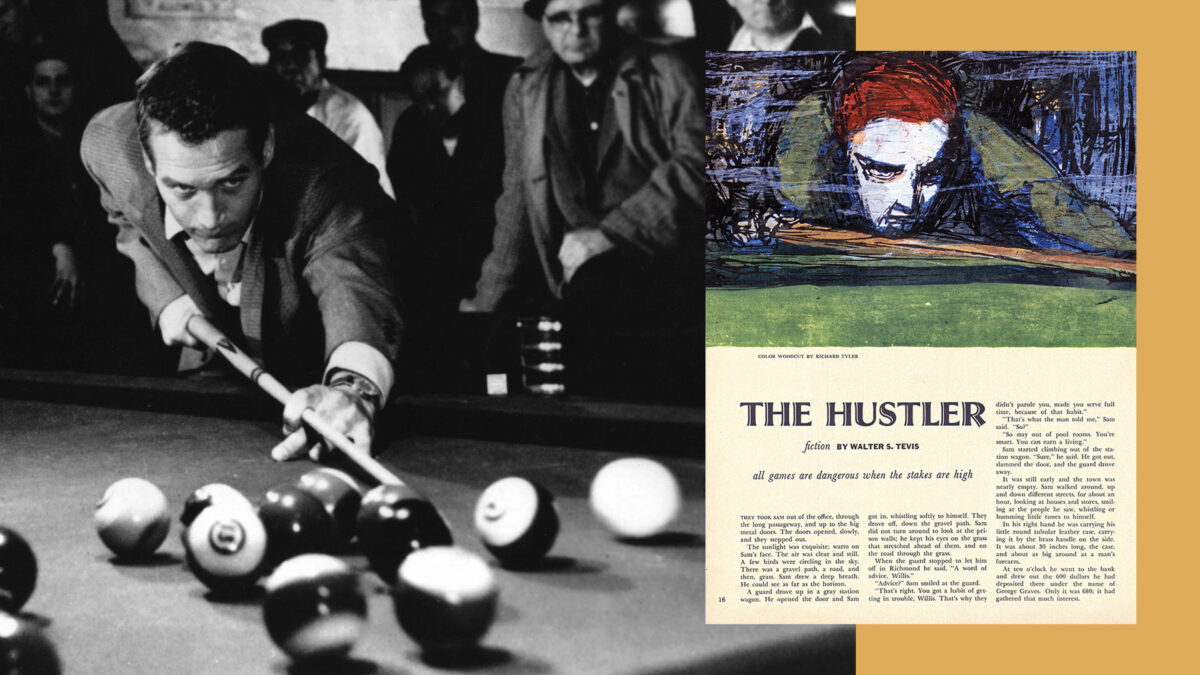
Hollywood may be awash in adaptations, sequels, prequels and reboots, but we can’t complain about the many times it has turned to PLAYBOY for source material. The films that have sprung from works of short fiction or non-fiction originally published in these pages span five decades and genres as diverse as science fiction, sports, horror and…however you’d classify a Charlie Sheen biker flick.
Here’s a look at our favorite cinematic classics and curios that began life as original PLAYBOY stories.
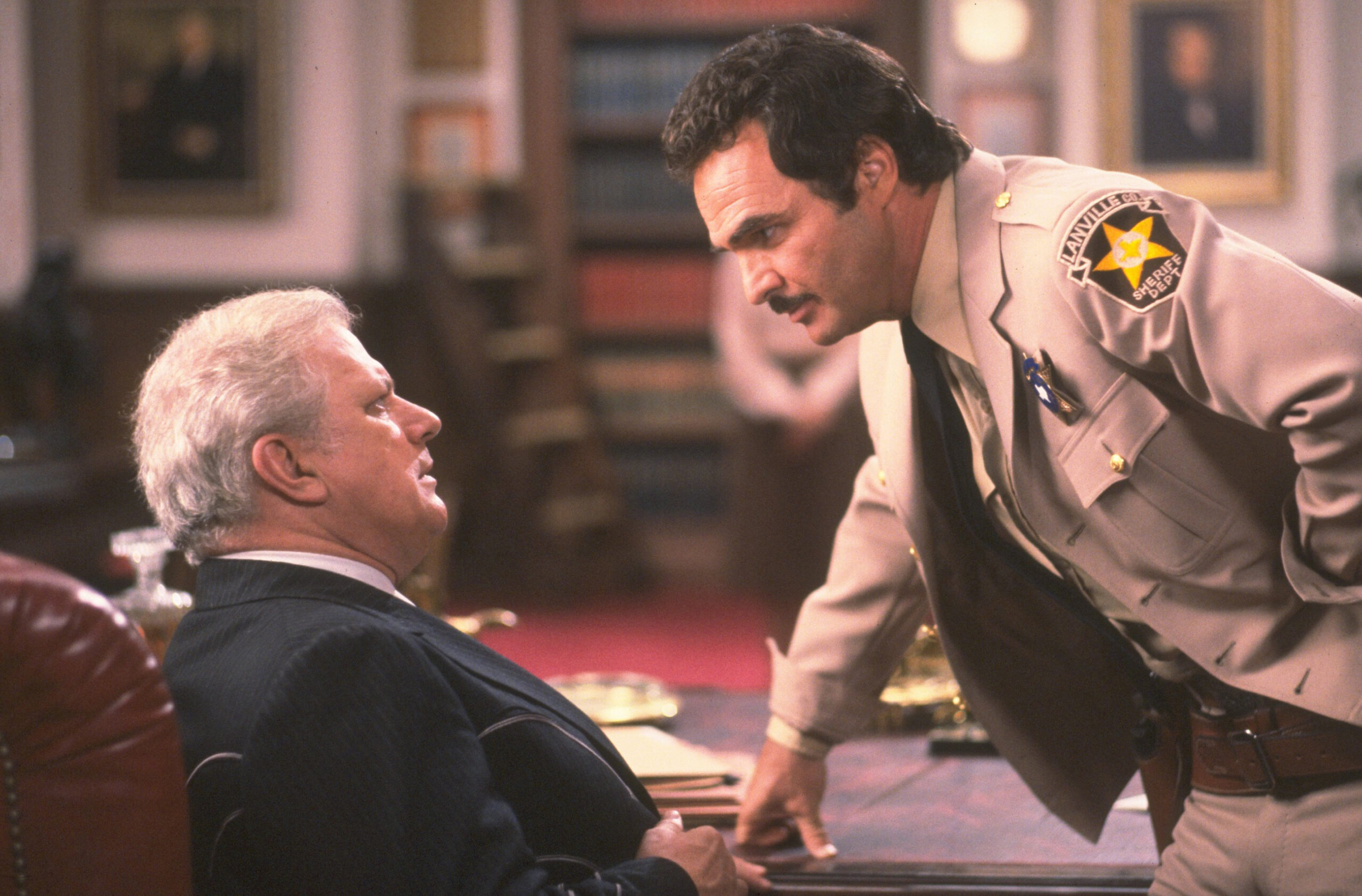
The Hustler, Walter S. Tevis’s short story about a pool shark stalking dangerous prey, exceeds the “nice jolts” promised by our January 1957 issue’s Playbill. Richard Tyler’s accompanying illustration reflects the boldness with which protagonist Sam Willis tries to redraw his life, while Tevis’s tale belies the foolhardy—and in this case fatal—belief that a fresh start can altogether change a person or erase their vulnerabilities.
The 1961 film of the same name rechristens Sam as Fast Eddie Felson and lets him live, albeit with damning consequences. Paul Newman tapped reservoirs of resignation and regret to create the indelible character, but years later he faulted his own performance, telling PLAYBOY in 1983 that he felt he had been “working too hard, showing too much”—the lament of an idol without an Oscar. Four years later, he got one—for reviving Fast Eddie in 1986’s The Color of Money, another film based on a Tevis story. As Fast Eddie says, “The balls roll funny for everybody, kiddo.”
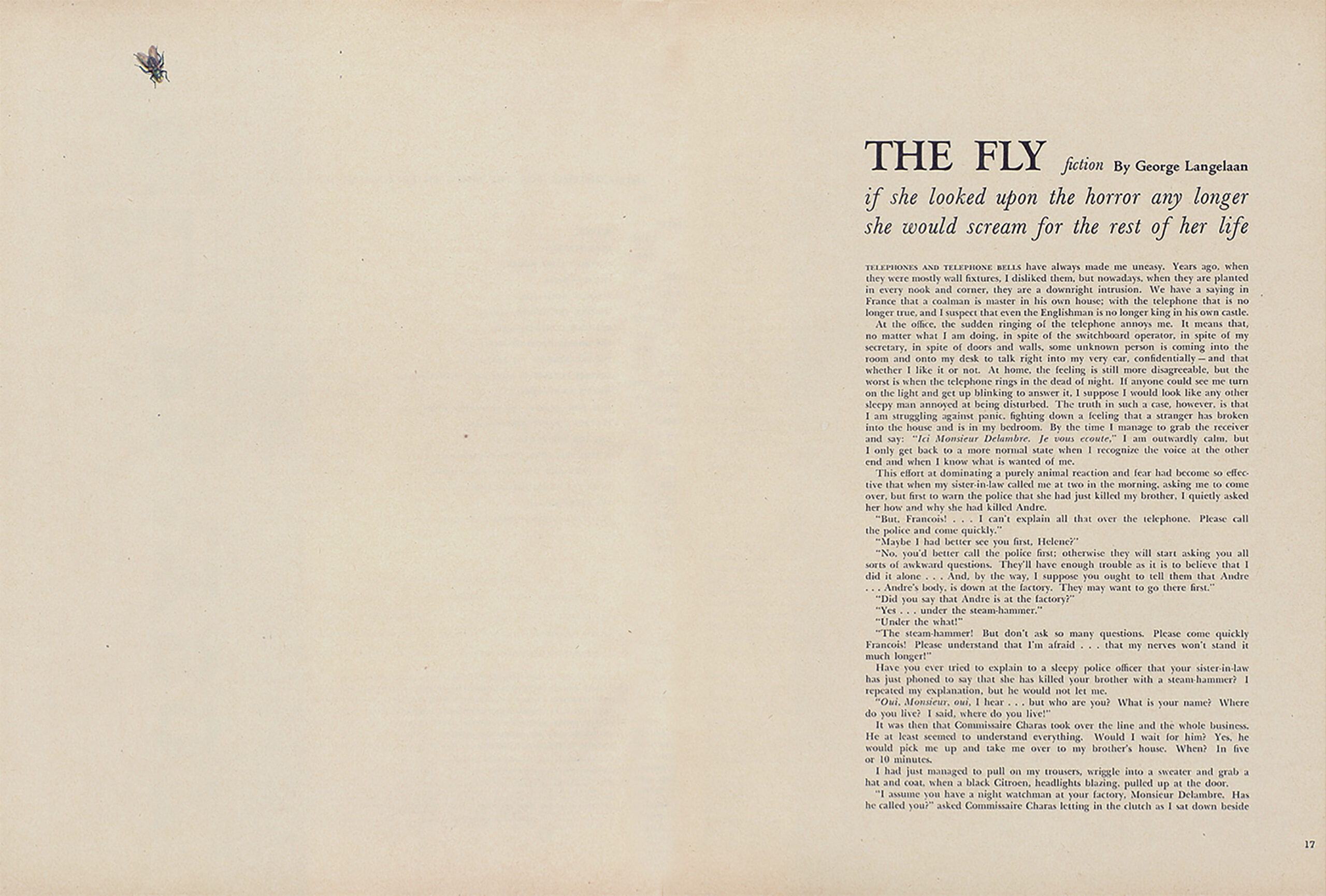
Paris-born British author George Langelaan’s classic The Fly (June 1957) introduces readers to a scientist who accidentally fuses his genes with a housefly and mutates into a man-insect hybrid. The narrator’s anxieties about technology, government secrecy and self-transformation may well have reflected Langelaan’s own: As a spy in World War II, he underwent facial reconstruction to make his features less conspicuous.
Prioritizing lore over gore, the 1958 film based on the PLAYBOY story is most famous for its human-fly screaming “Help me!” as a hungry spider advances. The movie shies away from Langelaan’s harsher themes, justifying even the most horrifying outcomes of scientific exploration as manifest destiny. Langelaan’s vividly gruesome but unexpectedly tender approach is more accurately captured in David Cronenberg’s dark, operatic version of The Fly (1986), starring Jeff Goldblum. Unrelentingly disgusting and unforgettably somber, its climax tragically evokes the Langelaan line “No matter how awful the result of your experiment or accident, you are alive, you are a man, a brain…and you have a soul.”
Ray Russell, PLAYBOY’S first fiction editor, commissioned strong yarns for the magazine while spinning some himself, including Sardonicus, a horror story that Stephen King dubbed “perhaps the finest example of the modern Gothic ever written.”
A morbidly witty story about a doctor lured by a lost lover to cure her titular husband’s ghoulish perma-grin, Sardonicus (January 1961) was the perfect cinematic fit for producer-director William Castle, who came to consider Mr. Sardonicus (for which Russell wrote the screenplay) among his finest productions. The B-movie king of gimmicks such as skeletons dangling from theater rafters and seats rigged to rumble, Castle countered Columbia Pictures’ demand for a happier ending with a “Punishment Poll”: Just as the movie reaches its climax, Castle himself appears onscreen, ostensibly to give the audience the opportunity to decide Sardonicus’s fate. Thumbs up? Life. Thumbs down? Death. Castle tabulates the “votes” and declares, smiling, “No mercy? So be it.” Most film historians agree Castle never shot a merciful outcome, certain that crowds would choose condemnation—a notion, like the story, worthy of chuckles and chills.
There are no triple-dog dares in Jean Shepherd’s Red Ryder Nails the Hammond Kid, Ralphie’s teacher is named Miss Bodkin, and Ralphie sucks on soap not for swearing but for breaking a window. For fans of holiday-movie mainstay A Christmas Story, this feels all wrong. But Shepherd knew that the details in his sweet-silly sketches of a Midwestern middle-class childhood were transposable; that’s why so many readers loved them. So it’s only natural that 1983’s A Christmas Story, co-written by Shepherd and partially adapted from his December 1965 PLAYBOY piece, switched up specifics. Both Red Ryder and the movie feature a struggle with a department store Santa. Absent from A Christmas Story, though, is Shepherd’s lament for Depression-era deprivation, in which a store is “floor after floor of shiny, beautiful, unattainable treasures.”
For fans of the film, reading the story today creates something of a feedback loop of nostalgia, Shepherd’s imagination somehow inextricable from our own. His prose effortlessly cues up visions of the film’s scenes. It also makes clear just how adeptly co-writer and director Bob Clark—once panned for the sex comedy Porky’s—adapted far less lusty anecdotes of innocence lost.
Without PLAYBOY there would be no Steven Spielberg as we know him.
Suspense and horror master Richard Matheson often cackled at what passed for civilization and how easily the cracks within it widened into chasms. Of the nine short stories he penned for PLAYBOY, two were made into films.
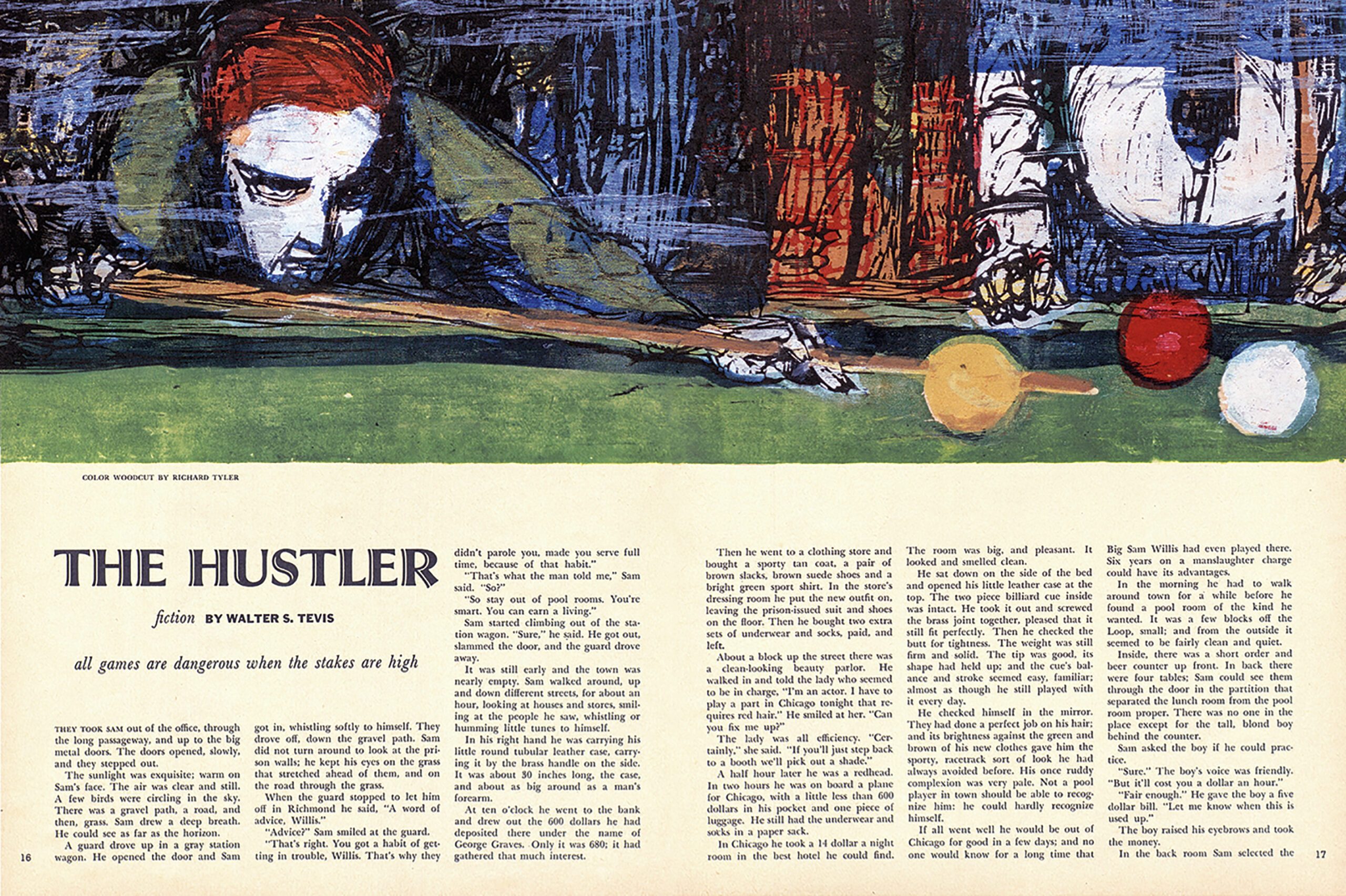
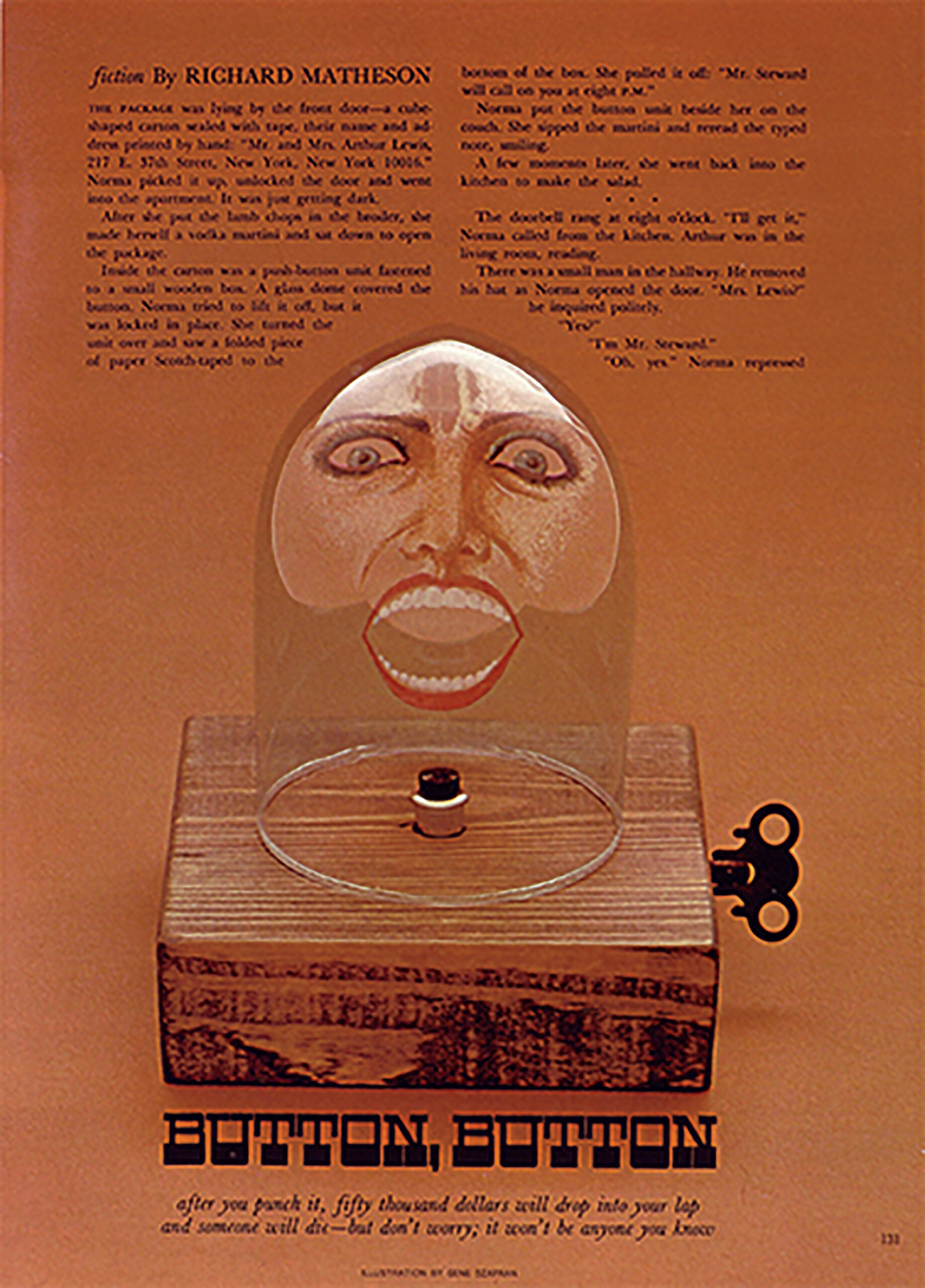
In June 1970’s Button, Button, a couple is offered $50,000 simply for pushing a button. The catch: If they push it, a stranger will die. With single-sentence paragraphs that slyly foreshadow an abyss-gazing conclusion, Matheson upends the comforts we take for granted. Unfortunately, director Richard Kelly’s 2009 adaptation, The Box, fussily overcomplicates the premise (adding NASA, aliens and wormholes) for an effect that feels more derivative than dastardly.
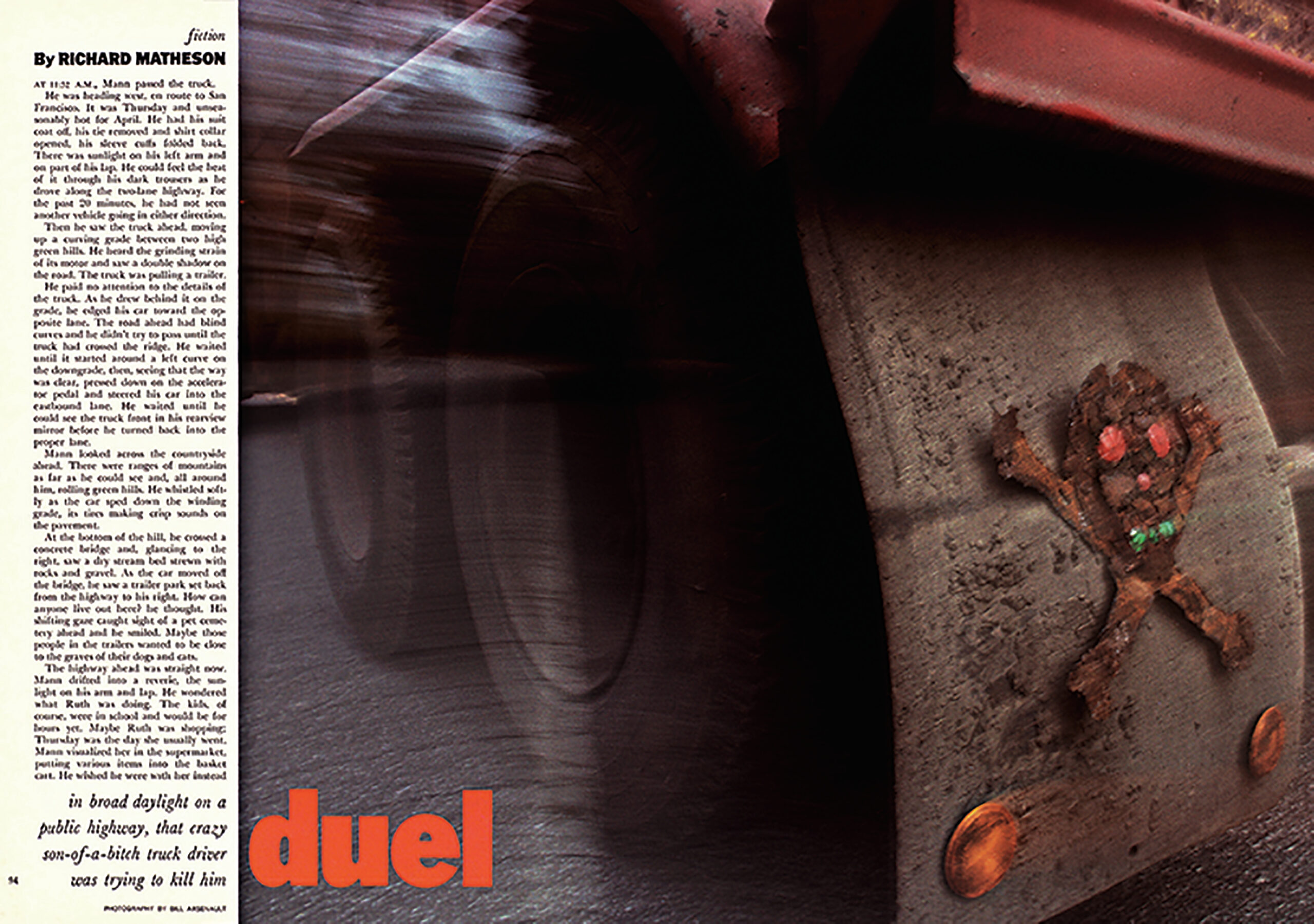
Meanwhile, it’s safe to say that without PLAYBOY there would be no Steven Spielberg as we know him. Reading Matheson’s April 1971 short story, Duel, was “one of the few times I ever picked up PLAYBOY without looking at the pictures,” Spielberg told fellow filmmaker Edgar Wright in an interview this year. For his directorial debut of the same name, Spielberg cut by half Matheson’s own, already sparse adaptation of the story—about a nebbish everyman pursued by a homicidal truck driver—and made a 74-minute, high-speed spectacle on which he staked his claim to Jaws and a peerless
legacy. Not lost in Spielberg’s quest for economy: Matheson’s warning that the line between entropy and the everyday is easily crossed.
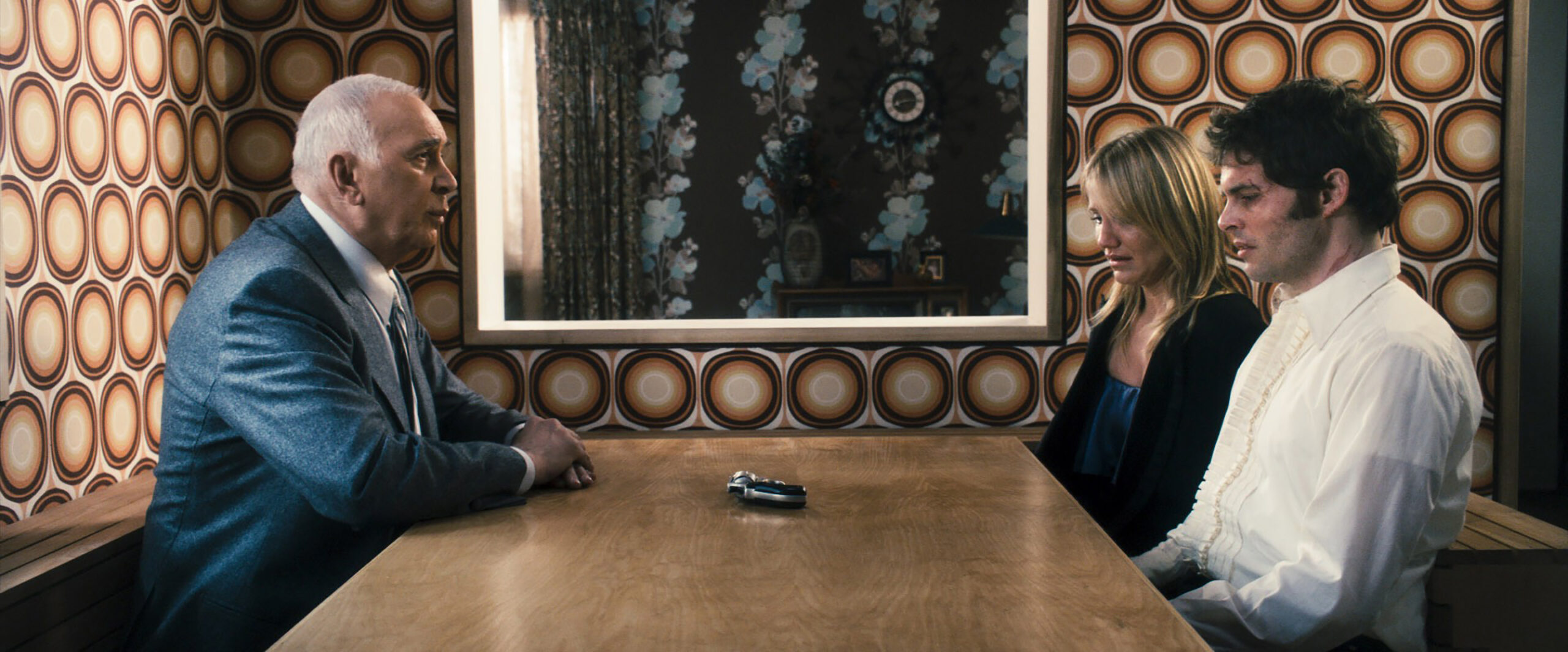
“Singing Burt Reynolds” and “biker Charlie Sheen” sound like odd descriptors for films about cops confronting their codes of conduct, but then these two adaptations stray furthest from their original PLAYBOY sources.
Larry L. King’s The Best Little Whorehouse in Texas took an indirect route to the silver screen. After his short story appeared in the April 1974 PLAYBOY, King helped reimagine it as a musical that became a Broadway hit and led to Universal Pictures buying the film rights. The 1982 movie features saccharine show tunes and none of the original story’s Watergate-era ire for the “professional meddlers and candy-assed politicians” who shuttered a brothel—and King loathed it. He felt Reynolds was ill-suited to the role of Sheriff Ed Earl Dodd and, just weeks before the premiere, took to PLAYBOY’S pages to chide “Uncle Burt” for turning the film into “Smokey and the Bandit Go to a Whorehouse.”
Even more superficial is 1994’s Beyond the Law, based on Undercover Angel, Lawrence Linderman’s July 1981 profile of a policeman who infiltrated the Hells Angels motorcycle club. The real Dan Black lost his family, gained a speed addiction and served time for armed robbery, as recounted by Linderman. Charlie Sheen’s surrogate, Dan Saxon, suffers nightmares, boasts hair extensions and fails to prevent a murder. Black served as a consultant to the film; odds are his rehabilitation wasn’t as simple as removing his shirt and retreating into the desert, as Sheen does in the film’s final scene.
Mark Boal is arguably the poet laureate of the Iraq war’s emotional toll, with incisive journalistic examinations of how machismo can turn malignant.
In his May 2004 PLAYBOY article, Death and Dishonor, Boal reports on the aftermath of the brutal murder of Army Specialist Richard Davis. The reluctance of military officials to probe Davis’s disappearance prompted his retired staff-sergeant father to investigate; ultimately, the father’s lifelong dedication to the service was sledgehammered to its studs. Boal has a story credit (alongside writer-director Paul Haggis) on the 2007 adaptation, In the Valley of Elah, which focuses less on Dishonor’s frustration with manipulated truth and more on the minutiae of military service give-and-take. Nevertheless, the film, and Tommy Lee Jones’s Oscar-nominated turn in it, captures the blind-siding speed with which dishonesty can dismantle one’s dignity.
Boal took solo reins to write 2009’s The Hurt Locker, a fictional account inspired by his September 2005 article, The Man in the Bomb Suit, and a nearly month-long embed in Iraq with the U.S. Army’s 788th Ordnance Company—bomb-defusing technicians who are five times more likely to die than other soldiers. Boal’s article conveys the adrenalized addiction to that “morbid thrill.” His Academy Award-winning script for the surprise best-picture Oscar winner mainlines it—along with nerve-shearing tension and the idea that delivering containment from chaos is a job well done.
Besides their PLAYBOY provenance, these films have something else in common: They all wade into the murk of American morals and values—examining how they’re established, exploited and eradicated—and how they can evolve. As the villain of The Box dispassionately decrees, “There are always consequences.”
From the July/August 2018 PLAYBOY.