Your bag is empty.
From creature features to splatter flicks to psychological thrillers, Playmates add a special delight to fright films
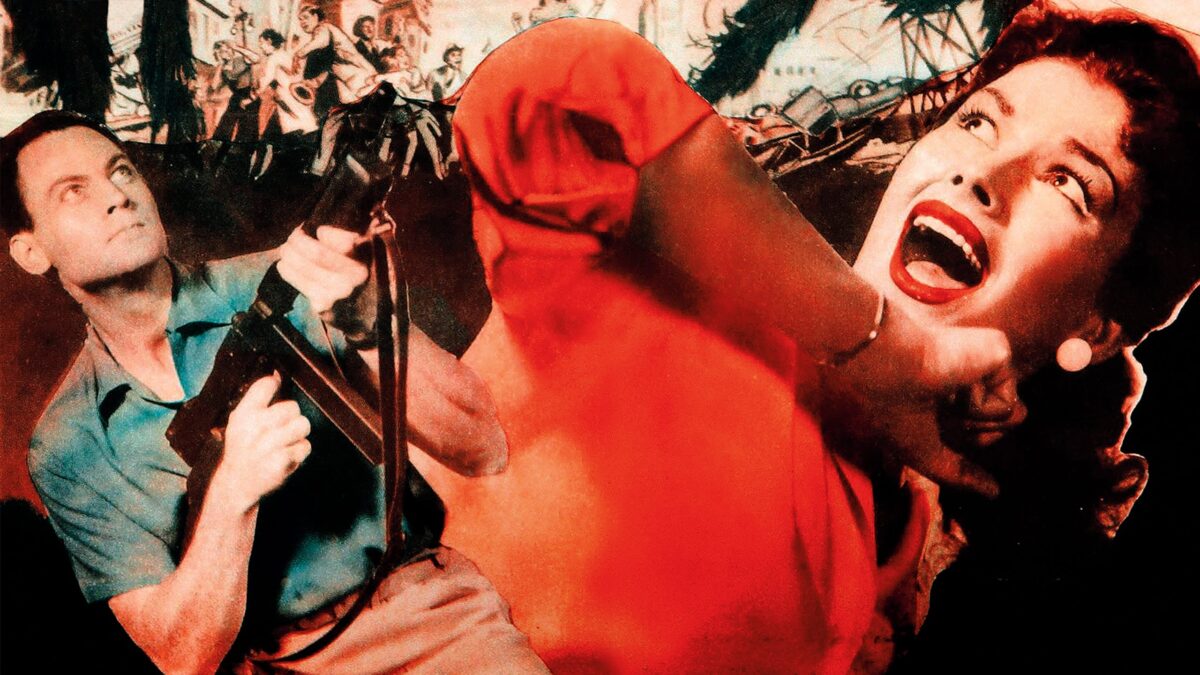
In 1963, B-movie producer David F. Friedman visited the Playboy Club in Miami, looking for a beautiful woman with a big mouth. Friedman and his partner, director Herschell Gordon Lewis, had decided to get out of the crowded nudie-films market and create something new: the world’s first gore film. For a small but memorable role in the project, Blood Feast, they needed an actress with a kisser large enough to facilitate a low-budget special effect: a sheep’s tongue that would be ripped out by their movie’s maniac in a scene that, despite its extreme camp factor, would go on to scandalize audiences.
That night at the club, Friedman did find an orally endowed actress in the form of Playboy Bunny Astrid Olson. He met someone else too: Connie Mason, who was set to be PLAYBOY’s June 1963 Playmate.
Olson took the mouthy part; Mason signed on to star in Blood Feast and in Friedman and Lewis’s follow-up—the 1964 Southern splatter-fest Two Thousand Maniacs!—and for the first time ever a horror movie was marketed to audiences using an actress’s Playmate status as enticement. Under blood-drip lettering and a lurid illustration, the Blood Feast poster showed Mason with the come-on “You read about her in PLAYBOY!” The promo for Two Thousand Maniacs!—tagline, “Gruesomely Stained in Blood Color!”—promised “Connie Mason, PLAYBOY’s Favorite Playmate.”
Audiences went for it, turning Blood Feast into a smash hit that earned $4 million against its tiny $24,500 budget. Mason maintained a sense of humor about the gig. “It’s all about sacrificing beautiful young virgins to Egyptian deities. You know, a typical, everyday kind of story,” she said in the article accompanying her Playmate pictorial. “I’m rather proud of the fact that at the end of the show I’m still healthy, while every other girl is either dead or horribly mutilated.”
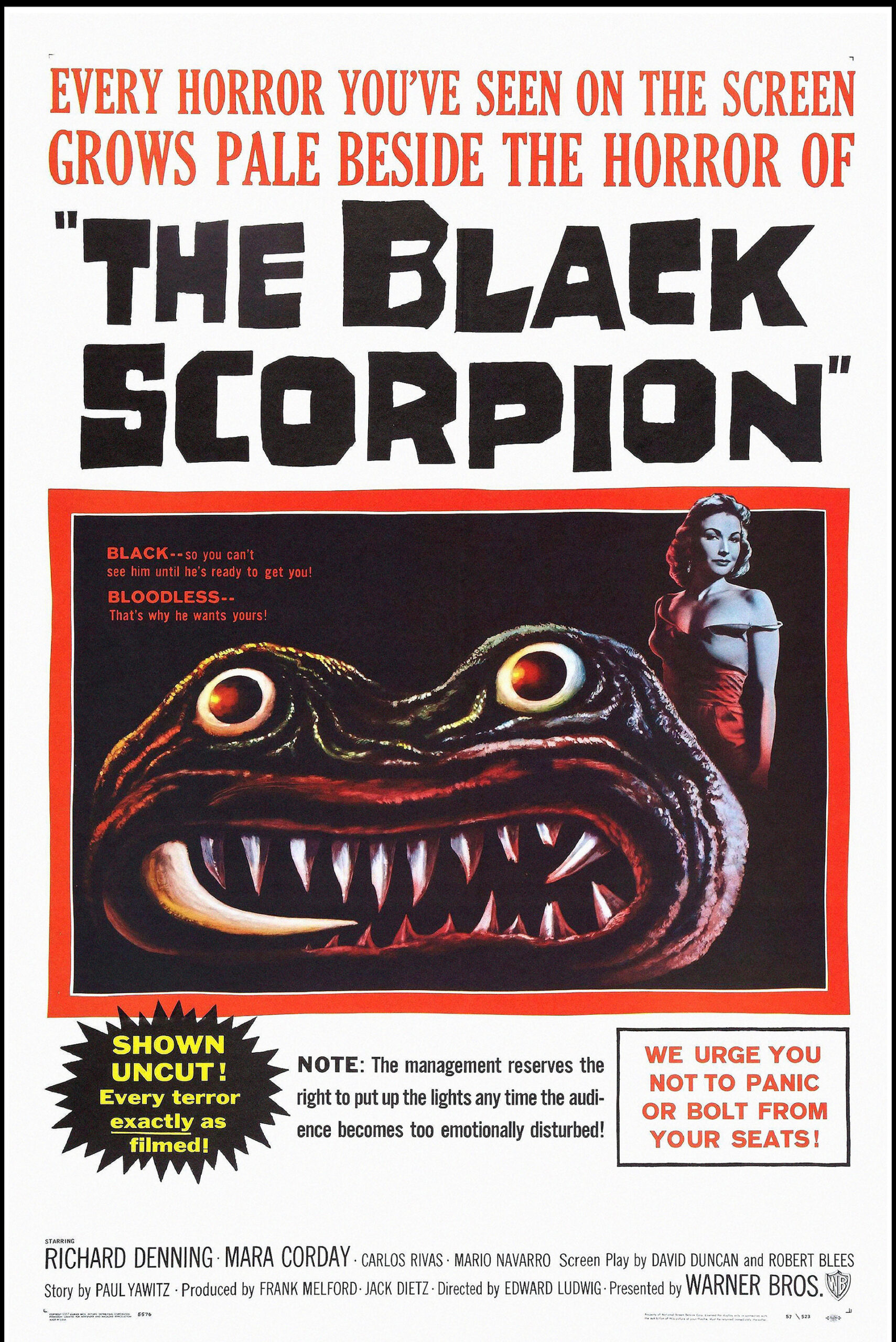
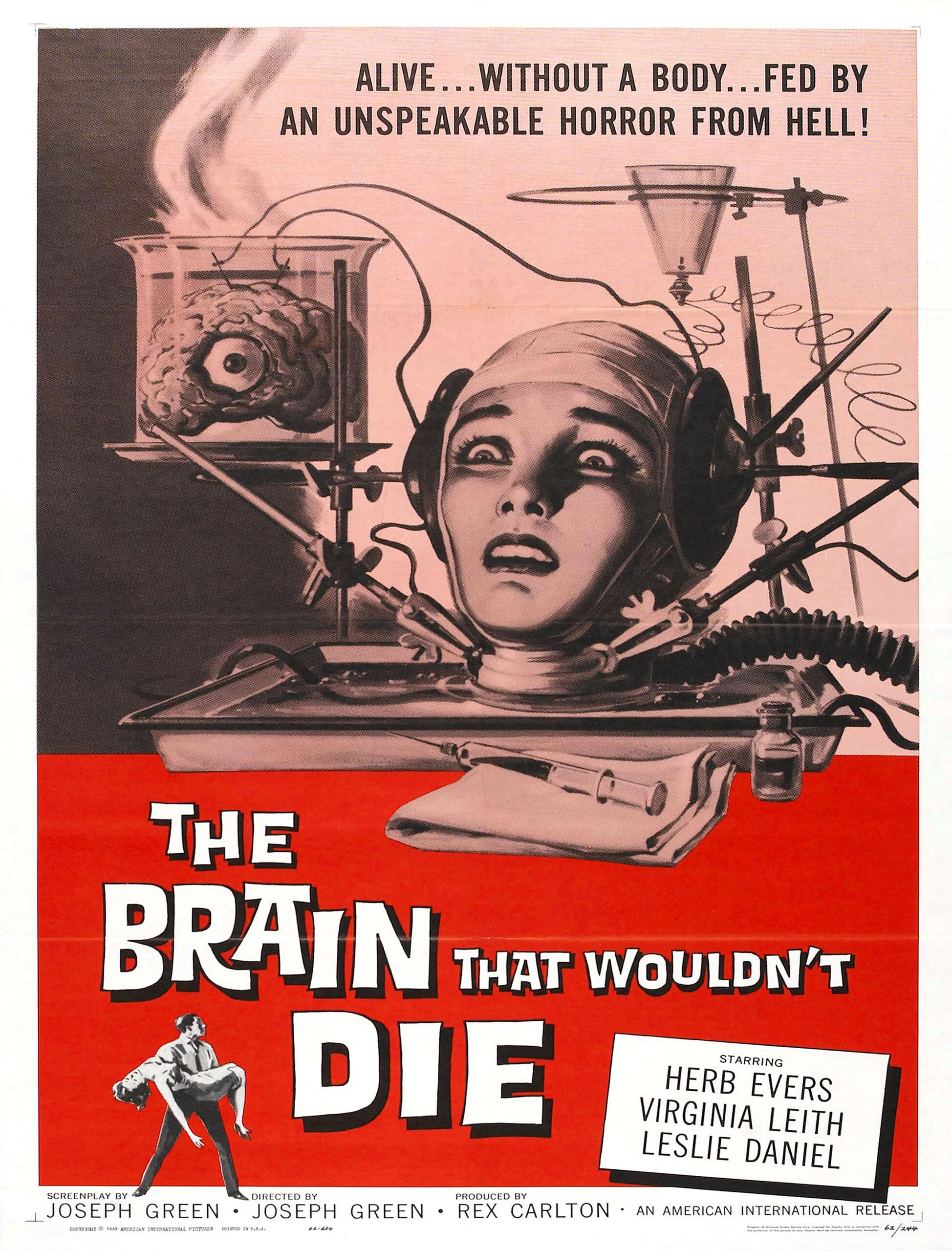
Although it was a milestone in modern horror-movie history, Blood Feast was not the first fright film to feature a Playmate. Centerfolds Mara Corday (October 1958), Marilyn Hanold (June 1959) and Yvette Vickers (July 1959) had blazed that trail in the 1950s and early 1960s in sci-fi-tinged B-thrillers including Tarantula!, The Black Scorpion, The Giant Claw, Attack of the 50-Foot Woman and The Brain That Wouldn’t Die. Unlike later Playmates, who tended to establish themselves as models before breaking into acting, Corday and Vickers actually made most of their movies before appearing in the magazine.
Playmate Joan Staley, on the other hand, seemed to step out of her November 1958 Centerfold and directly into a successful acting career. She was also the first Playmate to leave her mark on the psychological thriller genre, playing the bowling alley waitress menaced by Robert Mitchum in 1962’s much-lauded Cape Fear.
Perhaps the most critically acclaimed horror movie to feature a Playmate is 1968’s Rosemary’s Baby. Victoria Vetri’s part is small, but it may be the cleverest use of a Playmate in any film, horror or otherwise. Appearing under the stage name Angela Dorian—which she often used in her acting and modeling work, including her September 1967 Playmate and 1968 Playmate of the Year pictorials—Vetri plays a recovering addict named Terry Gionoffrio. When Mia Farrow’s Rosemary meets Gionoffrio in a basement laundry room, the former sheepishly apologizes for staring, saying, “I’m sorry, I thought you were Victoria Vetri, the actress.” “That’s all right,” says Vetri-as-Dorian-as-Gionoffrio. “A lot of people think I’m Victoria. I don’t see any resemblance.” Five minutes later, the character is dead on the sidewalk, having delivered her multilayered meta moment.
Another highlight from the annals of Playmate horror cinema is 1969’s The Witchmaker, later known as The Legend of Witch Hollow and The Witchmaster. It’s remembered today, if at all, mainly for the scintillating performance by two-time Playmate Marguerite Empey (May 1955 and February 1956), billed under her married name, Diane Webber. Webber plays a witch (“the Nautch of Tangier”) who twice belly dances for her coven. If writer-director William O. Brown was looking to pad out the running time, he found the perfect filler in the spellbinding Webber. It’s a shame she appeared in only one other horror film, Sinthia: The Devil’s Doll, directed by psychotronic-film fan favorite Ray Dennis Steckler.
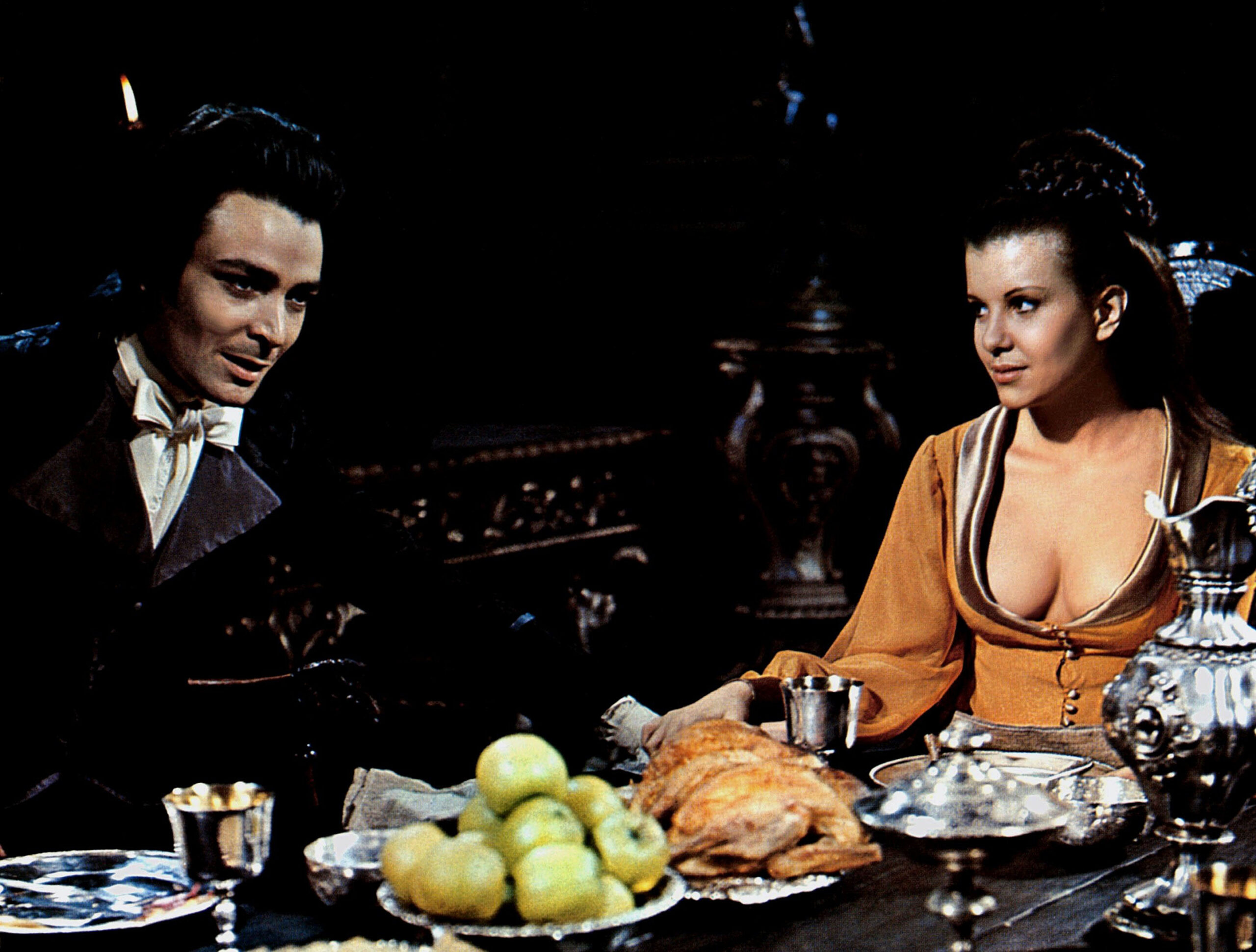
Smart producers like Friedman and Lewis realized that Playmates gave them access to a built-in audience. When Harry Fine saw Mary and Madeleine Collinson—the first identical-twin Playmates—in the October 1970 PLAYBOY, he decided to build a film around them. The craziest thing about the result, 1971’s Twins of Evil, from legendary horror house Hammer Films, is that it’s actually good, and the Collinson twins are downright mesmerizing as orphaned sisters who are coveted by their vampire uncle.
As the home-video market took off and producers realized they could make a buck on practically any low-budget horror movie, they hired more PLAYBOY scream queens than ever before, with more than two dozen Playmates appearing in various fear films through the 1980s and 1990s. Movies with multiple Playmates include 1980’s gruesome Motel Hell, featuring Rosanne Katon (September 1978) and Monique St. Pierre (1979 Playmate of the Year), and 1992’s grisly Auntie Lee’s Meat Pies with Pia Reyes (November 1988), Teri Weigel (April 1986) and Ava Fabian (August 1986). But it’s a 21st century flick—the 2003 horror spoof Scary Movie 3, starring 1994 Playmate of the Year Jenny McCarthy and February 1990 Playmate Pamela Anderson—that offers perhaps the most Playmate celebrity power.
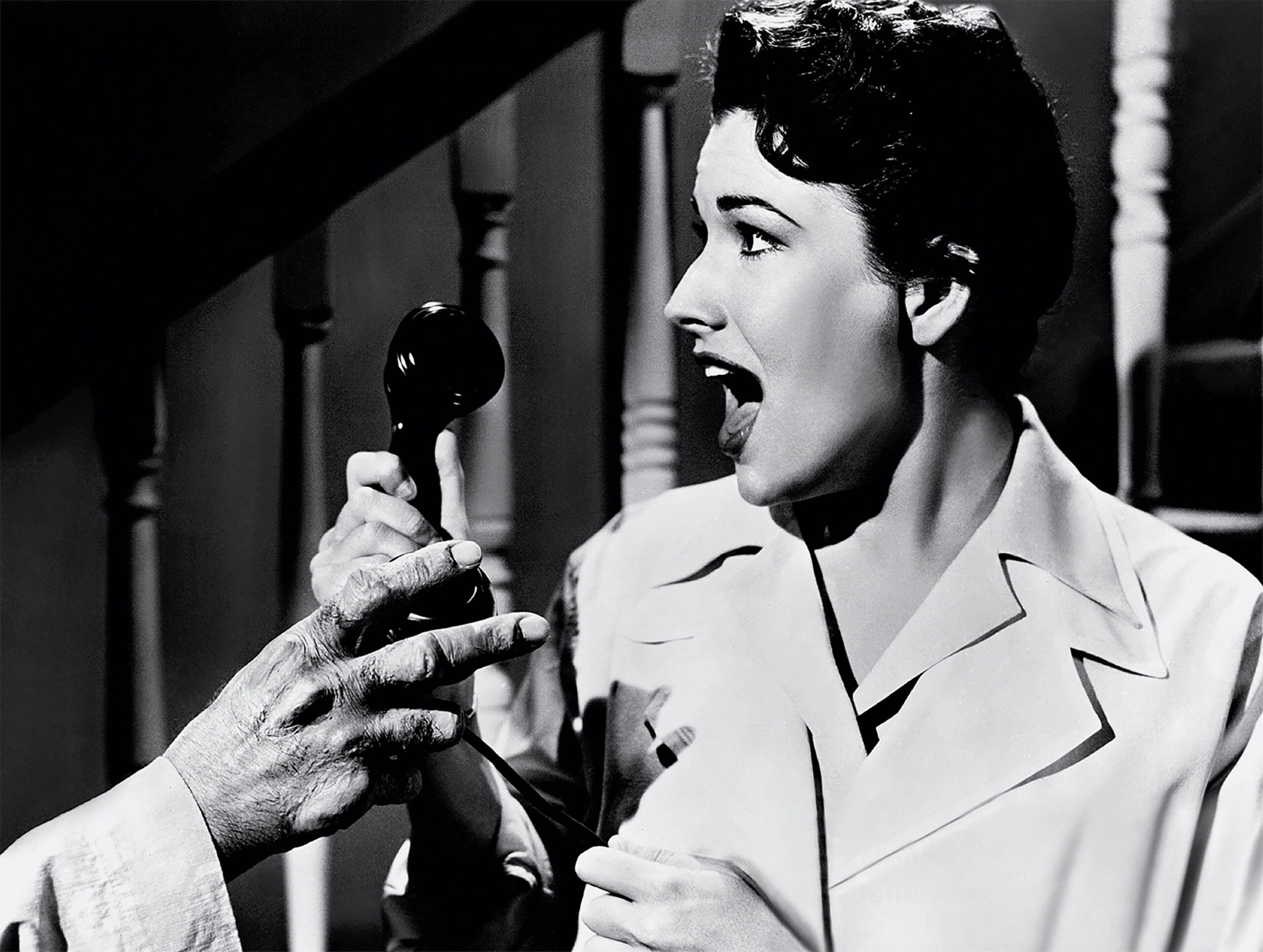
“Back in the 1980s and early 1990s, the T&A genre—B-movies, C-movies—was enormously popular,” remembers February 1986 Playmate Julie McCullough. “A lot of times they just wanted naked or half-naked girls running through scenes with attractive bodies and attractive faces.”
But McCullough—best known for her role on TV’s Growing Pains and her later stand-up comedy career—had some interesting parts in horror and sci-fi during that era. She’s also the only Playmate to appear in two generations of horror cinema: She had a small part in the ahead-of-its-time 1988 remake of The Blob, and she played a newscaster in 2013’s absurdist megahit Sharknado and the subsequent mockumentary Sharknado: Heart of Sharkness.
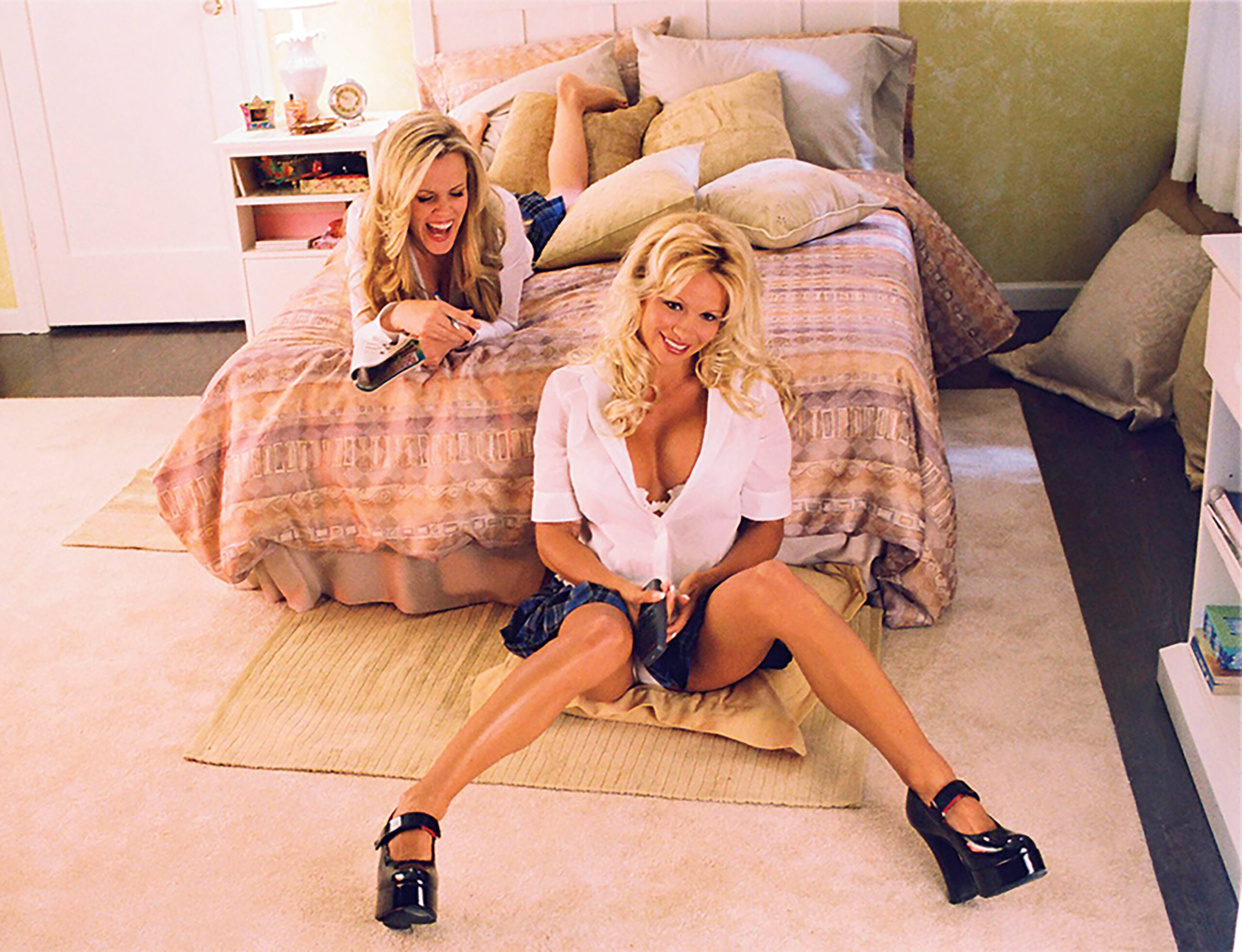
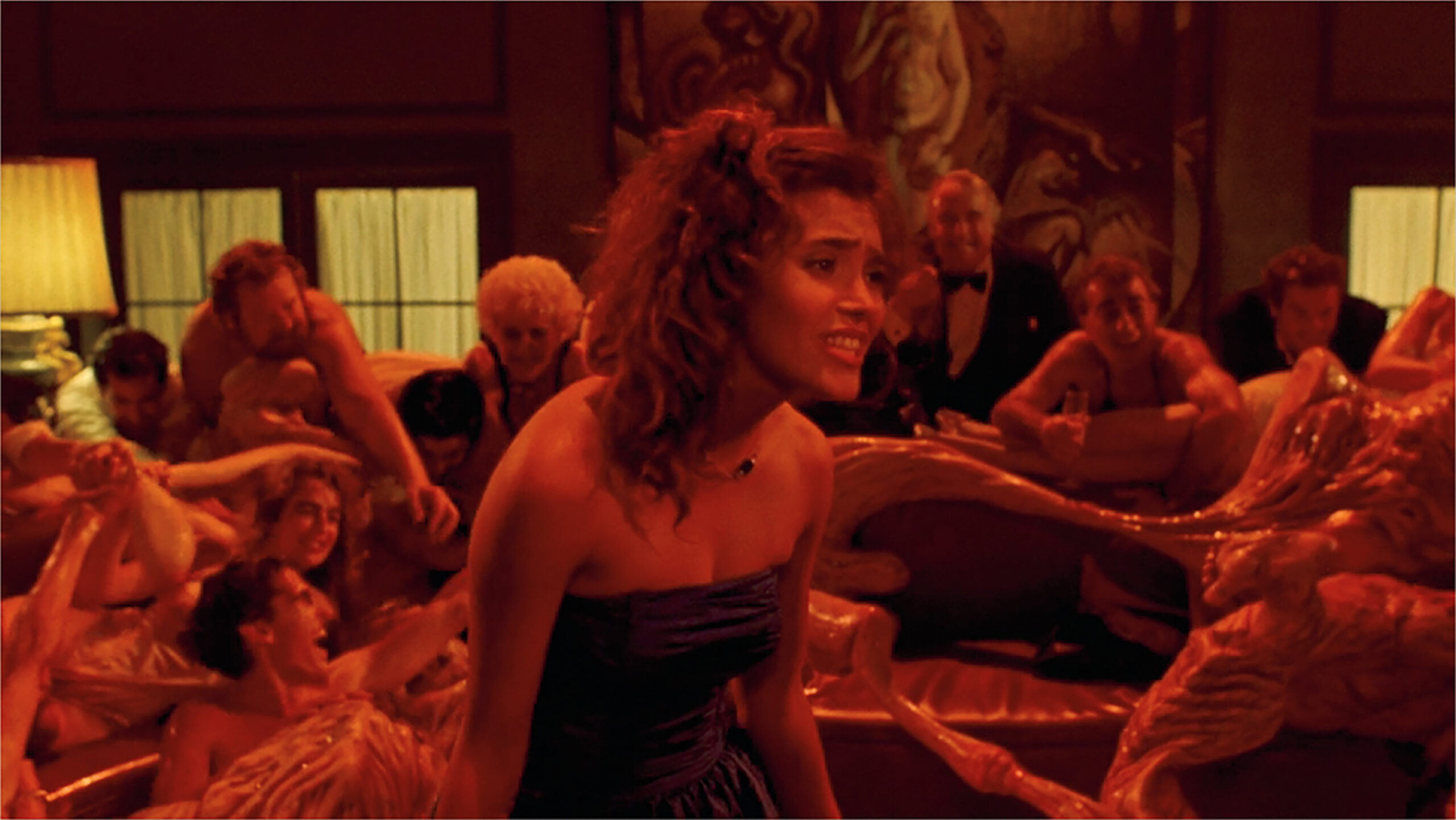
Another Playmate to land a one-of-a-kind role was Devin DeVasquez, who nabbed a lead in the vicious 1989 cult film Society from director Brian Yuzna, producer of the acclaimed 1980s H.P. Lovecraft films Re-Animator and From Beyond. A black-hearted piece of social satire about the rich literally eating the poor, Society features perhaps the most bonkers ending of any fright film—a latex-and-lube body-horror set piece that would make David Cronenberg blush.
“It’s the strangest movie I’ve ever done or seen,” says DeVasquez. “When I read the script, I thought, How on earth are they going to put this on the screen?” The film became a classic; nearly three decades later, DeVasquez is still invited to Society screenings, including one she’ll attend this September in Scotland, where she will also participate in a question-and-answer session.
So why is it that Playmates are still called on to bring their style, sex appeal and mystique to some of Hollywood’s darkest, weirdest and most frightening films? The answer, McCullough says, can be found in a classic formula: “It’s beauty and the beast.”