Your bag is empty.
Brian Karem reveals which of his colleagues in the White House are being strategically iced out
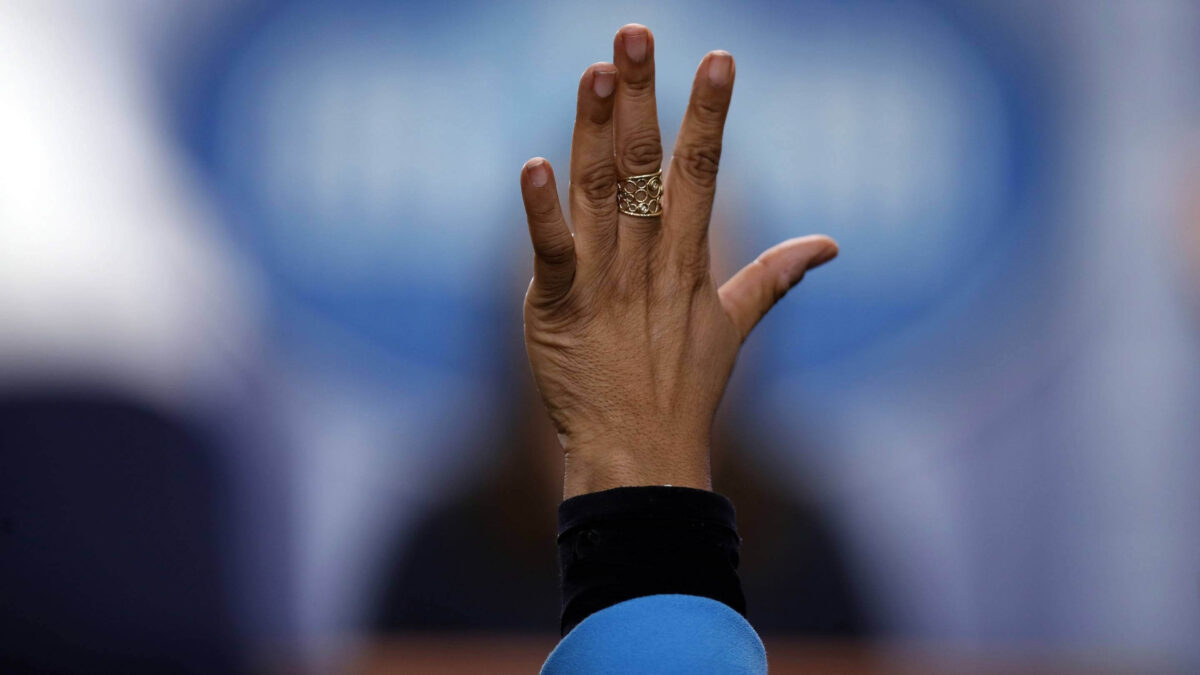
The first thing you must understand is there is no physical list. None at all. It’s all in our head—or in their heads.
I know this because White House Deputy Press Secretary Raj Shah told me so Tuesday. There is no definitive “enemies” list of reporters who won’t be called on during press briefings or who are otherwise unliked. There is no definitive list of “friends” among reporters who the White House will call on in press briefings.
A printed, or handwritten or otherwise circulated list does not exist on paper, the Internet or hyperspace. Mind you, there is a known list of reporters the White House doesn’t like as well as a known list of favorite news outlets; these outlets always get the only two questions in a joint news conference with foreign dignitaries or get a guaranteed question during the now infrequent news briefings. But the White House swears it isn’t written down anywhere.
We all know who the administration views as an enemy and as a friend, and they act on it every day.
Even so, take notice: Fox News will always get a question in at a news briefing. The Daily Caller and OAN television are frequently called upon. John Gizzi from NewsMax always gets to ask a question—and John and other outlets the president favors ask very good questions. Still, some voices are silenced by this administration.
Favoritism among media outlets is not unique to Donald Trump’s presidency—though, like many other things, Trump loves to take it to extremes. CNN? The most hated name in news networks, according to the president, has earned a special seat of scorn at the president’s table. But CNN is not alone.
Also on the informal list White House staffers have alluded to are outlets and reporters not considered merely painful, but tolerable for the administration. Some reporters are often winced at because they are pointed and cogent in their questions. Major Garrett of CBS has been mentioned as a tough questioner, along with Peter Alexander, Hallie Jackson of NBC and Steve Portnoy of CBS radio, among others, though everyone from former press secretary Sean Spicer to the current staffers think most members of the “mainstream media” automatically dislike the president and show him contempt.
I’m there to get the president’s answers. He was the one elected to office. Not the White House staff.
The president and his staff disavow any responsibility for hard feelings despite their actions to the contrary.
Meanwhile, as the interactions between the press and the president and his staff have dissipated during the last few months, fewer and fewer of us are getting to ask questions. That’s a fact noticed by everyone in the press briefings.
Reporters who routinely could be counted on to ask a question during a half-hour briefing—and are merely there doing their jobs—get no chance in the current 20-minute briefings. Adding insult to injury, we all have to routinely wait upward of an hour to be a part of these briefings. Some never get to ask a question of either the press secretary or the president.
Among those reporters who have fewer attempts to ask cogent questions, there are those who the White House truly scorns. I am one of those. The knock on me is that I yell out questions. I’m rude. I’m unprofessional because I won’t sit down and be quiet, and I’m routinely accused of only wanting to make waves to get on television. When the press corps sits waiting and waiting for a briefing—or an announcement to explain when the 2 p.m. briefing will actually take place—I’m also the one who walks back to the press offices and gives the staff grief for their tardiness. Some of the Christians on the staff also don’t like Playboy even though they routinely ask me about “Playboy parties.” They still don’t like me—but they’re curious.
As for the questions I ask that they won’t answer, I’ve been told those are “trash.” When I walk back into the press offices to express concern about 100 people waiting for an hour to be part of a 20-minute briefing, I’m told to “go back and wait.” I was also once told, “Why should we tell you. You’re just gonna go out and tell everyone else.” A Captain Obvious moment at its best or its worst depending on your viewpoint.
“You’re not the worst,” I’ve also been told. “You are just rude, but you ask substantive questions.” So I have that going for me.
It is just amazing to me that the White House staff thinks I care what they think or that somehow I and others must bow to them, particularly when their duplicitous nature is on display for the world to see.
I’ve asked a variety of questions I consider pointed and concern the president’s policy or lack thereof, and while I try to be courteous, I will ultimately ask a question I believe to be important when no one else asks it.
I have shouted these out to the president and his staff. It is as important to ask the question as it is to get an answer, sometimes more so. Other reporters considered to be rude or combative or arrogant, according to the press staff, include American Urban Radio Networks’ April Ryan, though Sarah Huckabee Sanders did try to bake a pie and make amends with Ryan around Christmas time. Still, Ryan asked the president if he was a racist and the administration didn’t like that. She also asked about Stormy Daniels a few weeks ago; since then, Ryan has been living life on the outside. She got her first chance in several weeks on Wednesday and didn’t hesitate, launching into the administration on a series of questions regarding police brutality.
Jonathan Karl from ABC has also garnered a laurel of shame from the White House for being combative, “rude” and is “another one who yells” at the White House. But the biggest sinner in the eyes of the administration remains CNN and Jim Acosta. According to several White House staffers, they’re convinced Acosta will soon sprout horns, cackle uncontrollably and join the cast of Lucifer in the lead role next season if he doesn’t head to the nether regions to take over Hades as its chief resident.
“I despise him,” more than one press staffer has said before they go on to describe him as narcissistic, unprofessional and a “belligerent loudmouth.” Mind you, I’d wear those labels as badges of honor and I’m sure they don’t bother Jim, who knows how much he’s loved by the White House.
This comes from a White House that routinely scorns impartiality and rewards loyalty to the president above all else and from staffers who have little understanding of what the press corps is supposed to do. They’re more interested in the appearance of propriety and a docile give-and-take than the reality of the battle ongoing between the press and the chief narcissist who has stained the Oval Office. Young reporters, in turn, are coming of age in this “new normal” environment that is anything but normal. That’s the frightening part.
The late Helen Thomas once told me that nothing should keep you from asking the president a question you want to ask. He is responsible to the people, and we have the privilege of asking the questions for the people. “Our job is to challenge the president, challenge him to explain policy, justify decisions, defend mistakes, reveal intentions for the future and comment on a host of matters about which his views are of general concern,” Sam Donaldson wrote in Hold On, Mr. President. “I have one goal: to find out what’s really going on at the White House.”
Taking that role seriously means at times you will appear to be rude, especially when the president and/or members of his administration use home-field advantage to shut you down and keep your voice from being heard.
While the president is deserving of respect for his position, he is not entitled to worship or fealty. And that is all this president wants and demands. It is proper for the White House to try and put its best foot forward. It isn’t immoral nor wrong to do so. But as reporters, we will cut against that grain to discern what is real. That is the part this president and his staff refuse to accept.
Doing the job is extremely difficult at the best of times. These are not the best of times. The president drew the line early by calling us the enemy of the people and routinely still refers to us as fake news even as he consumes the news and manipulate those who report it.
Thomas also often told me as a young reporter that the open press conference with the president is the best way to hold a president accountable to the public. Trump has had but one solo news conference in his entire time in office and has never spent any appreciable time in front of the press in the briefing room, the lone exception being the day he poked part of his body into the room for two minutes before ducking out again after taking one or two questions from OAN’s Trey Yingst.
Those of us who’ve seen presidents come and go—my first trip to this circus being with Ronald “Rasta Ronnie” Ray-Gun—I’m used to favoritism and have sat and watched as Donaldson, Thomas, Sarah McClendon, Dan Rather and others got badgered and bludgeoned for doing what we all do today. To their credit, they gave as good as they got.
Make no mistake why we are there: to ask questions of the president. I do enjoy my interactions with the White House press staff, especially when they’re late to briefings, yelling at me to stop asking questions, grabbing me and laying hands on me at the stake out area. I’m particularly enthralled when I go back into the press offices to ask them when their 2 p.m. briefing will take place (as it is now nearly 3 p.m.) but I admit after a while, this excitement wears on me.
I’m there to get the president’s opinions and his answers. He was the one elected to office. Not the White House staff.
I and every other reporter deserve to see the president more than we’ve seen him. Don’t play the “wounded duck syndrome,” to quote Dabney Coleman in Modern Problems, and gripe about the way I ask you a question. Don’t get upset when you limit the question-and-answer session in a news briefing to under 20 minutes, and I shout out a question about the transgender military ban when you haven’t been asked a question on that subject or said anything about it on the day the president made it public.
Don’t get upset when Ryan asks you about racism or Stormy Daniels. Don’t get upset when Karl questions your answer when it’s obvious the answer given is in direct opposition to known facts. Don’t get upset with Acosta when he tries to hold your feet to the fire. And bottom line, quit being the melting snowflake the president’s minions claim their opponents are.
These are the big leagues. This is the president of the United States. He was elected by the people of the electoral college. He is responsible to all of us. He has no mandate due to a landslide election victory. By the slimmest of margins, he came to power in a divisive nation and continues to divide us with his every action, beginning with his divisive nature concerning the press.
This isn’t about us. We’re merely there to ask pointed questions. That they refuse to call on those of us who push the hardest while questioning our motives and our methods says far more about them than us.
In the end, there needs to be no written “enemies list.” We all know who the administration views as an enemy and as a friend, and they act on it every day. That list may indeed only exist in their heads, but it is as real as if it were cast in stone and as telling as a Stormy Daniels movie.