Your bag is empty.

On the new app Read Me, users turn to literature to get laid.

“It’s a party for a dating app, anything could happen,” one woman says to her friend, passing her a free drink with a devious gleam in her eye. “It’s the performative male app,” the friend shoots back, deadpan.
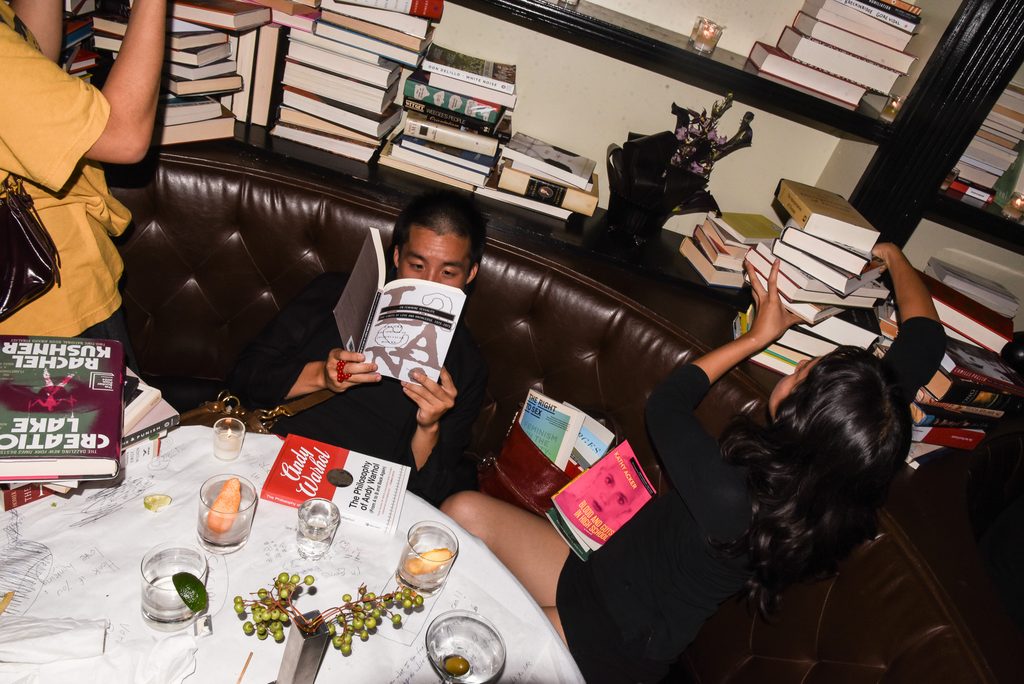
We’re at the launch party for Read Me, a new dating app from the creators of Co-Star. The premise behind it is simple: that what we enjoy reading gets to the crux of who we are—and that, in a dating environment marked by dissatisfaction and disposability, people are seeking deeper way to connect. “Literary taste is useful because it reveals something without giving everything away,” says trend forecaster Emily Segal, the head of brand at Read Me. “It gives you a glimpse of someone’s interior life while leaving room for mystery, curiosity and surprise—that is, it gives you access to the erotic.”
Theoretically, I’m a perfect spokesperson for the app: I met the person I’m dating now through Substack, where we connected over writing and shared interests. I’m not the only one finding love through (news)letters: The Cut Personals promise love through a few well-chosen sentences, and independent writers like Miranda July are matchmaking their readers on Substack, drawing on the same principle Read Me reflects: that shared community and intellectual interests might offer another way of finding romantic connection.
If the line outside their launch party is any indication, there’s certainly an interest. With more than 700 RSVPs, the event is packed—thanks, in part, to a host committee including writer-socialites like Marlowe Granados and Caroline Calloway, who’s been tapped as the brand’s creative director, as well as Biz Sherbert and Sam Cummins, two-thirds of the hit fashion podcast Nymphet Alumni.
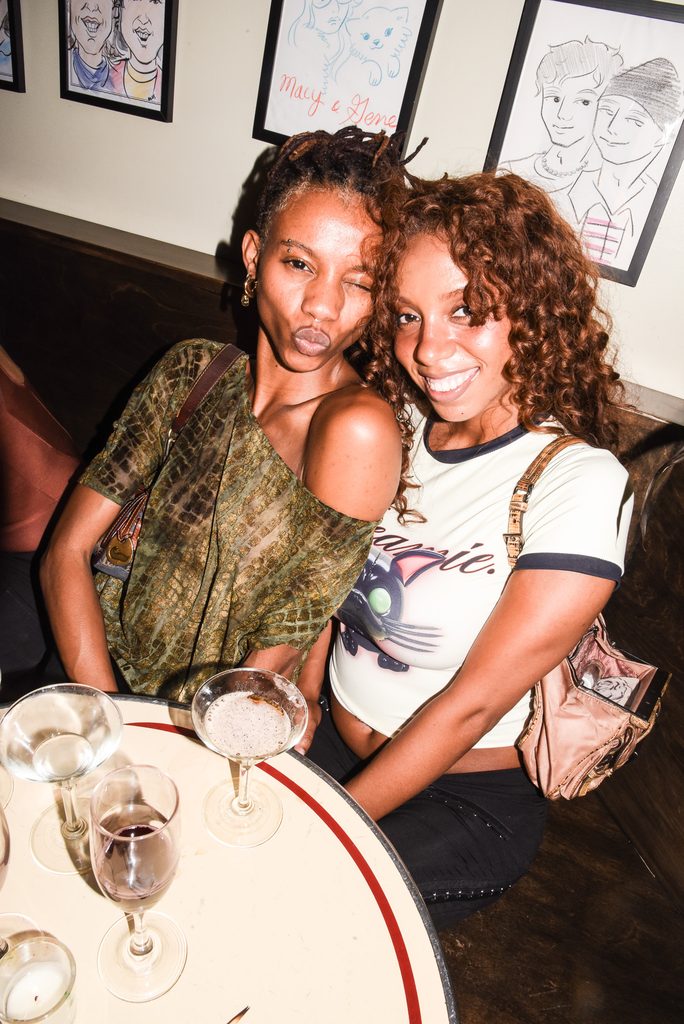



Inside, everyone is sipping free martinis, passing around free books, and discussing the app. “The algorithm’s really good,” says writer Zoey Greenwald, who worked for the astrology app Co-Star and was part of the team brought over when its CEO, Banu Guler, founded Read Me. “I took the quiz about what book to read, and it said my favorite book would be Rent Boy by Gary Indiana—and my favorite book is Rent Boy by Gary Indiana.”
Later, I experience the quiz she’s talking about: a 25-question survey designed to glean not just what literary passages you like (or “hate the least”) but also a broader sense of your personality, sorting you into one of 12 archetypes. The quiz is what differentiates the app from the personal ads of yore, lending the whole thing a sheen of self-discovery. After choosing between passages of literature, the app asks me about my motivations for reading, with possible answers like “to explore new world and ideas,” “to intimidate non-readers,” “to get a break from my own problems,” “something to do on the beach,” and “I’m functionally illiterate.” Together, these inform its insights on who I am, how I love, and what I need, suggesting new books I might like and questions to ask on a first date.
I’m a bit skeptical about using these questions to inform broader conclusions about my personality. But for now, the drinks are flowing, and I have a few questions of my own. “What’s a book that—if someone told you they’d read it—would make you want to fuck?” I ask one of the event’s attendees, Susana Meija Edison. “48 Laws of Power,” she says, not missing a beat. “What?” I exclaim, shocked. As it turns out, she misheard the question. “I thought you said, what’s a book that would make me say ‘What the fuck.’”
Amused at the misunderstanding, I decide to start asking people that question instead. “If someone read, like, The Subtle Art of Not Giving A Fuck by Mark Manson, that would give me the ick,” says journalist Alana Pockros, noting that Paula Fox’s psychological crime novel Desperate Characters would win her heart. Another writer, Tobias Hess, tells me that Ten Rules for Life by Jordan Peterson would be a dealbreaker. “I think I’d be put off if they liked How to Win Friends and Influence People,” chimes in Noelle Perdue, another journalist. “Anything David Foster Wallace,” a stranger says.

Celina Reboyras agrees that books like Infinite Jest, or anything intended to flex your intellect, are a hard no. “With men, it’s so performative, and we just tolerate it,” she sighs. “At the same time, I’d still prefer he be reading, like, Susan Sontag or Marxist politics. I know it may be performative, but at least then he went through the trouble to perform something I like.”
I can’t help but notice that the books that serve as immediate “icks” tend to fall into one of two categories: acclaimed works by male novelists, associated with try-hard intellectual prowess, or self-help books about how to be more likeable and successful, which convey a sense that someone may be trying too hard to manipulate other people’s impression of them. There’s an underlying anxiety here about performativity that’s hard to get away from—because even if the books we read say something about who we are, it’s unclear whether the people using literature to find love will be honest about what they actually like.
At the party, in conversation with Gaby Del Valle, I hear a story about how—after fucking a guy—she took a look at his bookshelf. “On the first shelf were self-help books like Atomic Habits, but the second shelf was full of books by Ottessa Moshfegh and Sally Rooney. I thought that was cool, until he said ‘That’s my male manipulator shelf.’ I never saw him again.”
As a few people at the party point out, what you read is perhaps less important than how you read it. “Like, yes, I might find it off-putting if someone liked Walter Isaacson’s book on Elon Musk,” says the editor of a literary journal, who asked to remain anonymous. “But there are valid reasons to read books you might not like, or that intellectually challenge you. The only thing that would really turn me off is if they said they’d read no books.”
Banu Guler, the app’s founder, agrees. Personally, she says she’d be charmed to find out a lover had read Gravity and Grace, a collection of spiritual aphorisms gathered from the notebooks of French Mystic and philosopher Simone Weil. “But I don’t think there’s any book that would prevent me from fucking somebody,” she says. “As long as they’re reading.”