Your bag is empty.

Bryan Mills and his "particular set of skills" can be seen as Round 1 in Boomers v. Millennials
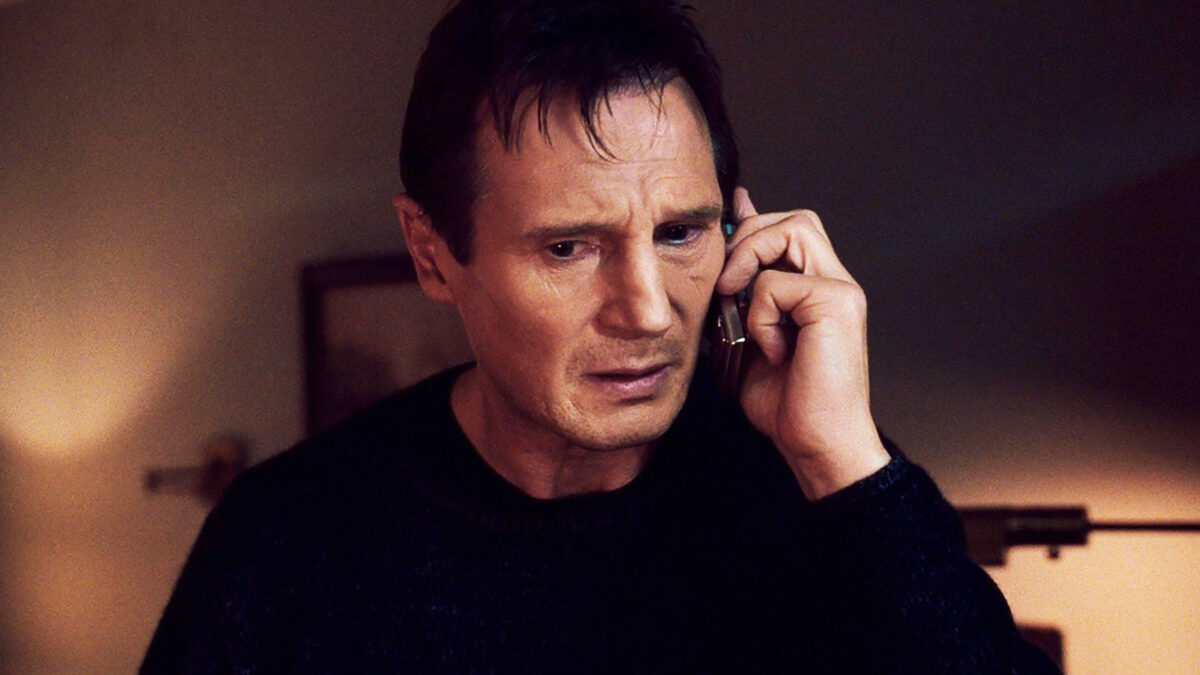
Of the countless memes parodying the infamous “I will find you, and I will kill you” speech from the kidnapping thriller Taken, the best is probably a 2012 video by New York City-based sketch-comedy group Captain Hippo, where a regular dad (and not an ex-CIA operative) gets the call from his missing kid. “Were you just taken? Jeez,” mutters Dad on the phone. He tries searching Google for “where is my son?” and gets zero results. “This is not worth it,” Dad declares, sitting in traffic.
It’s funny because we know Regular Dad. At least, better than we do Liam Neeson’s Bryan Mills, the special forces-trained hero of Taken, who has access to a stockpile of weapons, a private plane at a moment’s notice and whose best friends happen to be skilled analysts able to quickly decrypt audio and uncover info about European crime syndicates. (Why Bryan’s equally formidable security pals don’t join him in tracking down his missing child is anyone’s guess.)
Bryan’s whole life revolves around the daughter that his estranged wife and her new husband won’t allow him to see—the same daughter that gets kidnapped basically as soon as she arrives at her hotel when traveling to Paris. As a former “preventer” for the U.S. government (as in, the guy who prevented bad things from happening), he’s extra upset because he should’ve known what was coming.
Most dads probably see themselves as Bryan, with or without the “particular set of skills” he threatens to use against the people who took his kid. Because what kind of father isn’t going to fight for what’s theirs? Especially in January 2009 when the movie was released, amidst a recession during which Americans were losing everything: their jobs, their homes, their sense of identity. Maybe that’s why Taken—which even Liam Neeson admitted, in a 2014 interview, that he thought was headed straight to DVD and was just going to be a “little side road” from his regular career—instead became a massive hit, earning nearly 10 times its original budget at the box office and transforming then-55-year-old Neeson from the guy who played Oskar Schindler, into Jason Bourne. Or, well, Bryan Mills.
Neeson would reprise his role twice more—in Taken 2 and 3—and then about a half-dozen times as different versions of the same character in Unknown, The Grey, Non-Stop, A Walk Among the Tombstones and last year’s The Commuter. Sure, he’s played action heroes before (don’t forget this is the man who trained both Obi-Wan Kenobi and Batman), but this was different. Taken helped signal a paradigm shift for the entire film industry: Not only was it now bankable for middle-aged actors to start making shoot-‘em-up action movies (Kevin Costner in 3 Days to Kill, Sean Penn in The Gunman, Nicolas Cage in basically anything after 2006), but it also helped green-light action stars of any age to appear on-screen.
Look at The Expendables and RED. Both films came out a year after Taken, both films are about veteran commandos who get reluctantly pulled back into the action after being set up, and both star a bevy of 50-plus age actors (Bruce Willis, Dolph Lundgren, Eric Roberts, John Malkovich and Richard Dreyfuss, among others) all gunning at one another. By the time Expendables 3 hit theaters four years later, the trilogy’s ringleader, Sylvester Stallone, was 68. Arnold Schwarzenegger will be throwing the leather jacket and shades back on at 72 when he appears in Terminator 6 this November. And as Harrison Ford joked in a panel for Blade Runner 2049 at San Diego Comic-Con in 2017, his new life’s mission has become rebooting every major film franchise he’s starred in. When the fifth Indiana Jones film arrives in theaters on July 9, 2021, it’ll be four days shy of Ford’s 80th birthday.
These aren’t even the oldest guys in the room. Robert Redford played a bank robber at age 82 in last year’s The Old Man & the Gun (although he announced it would be his last role); meanwhile, Clint Eastwood, who directed and starred in The Mule, about a Korean War vet becoming a drug courier for the Sinaloa Cartel, is 88 years old and shows no signs of slowing down. The catchphrase is no longer Danny Glover groaning that he’s “too old for this shit” (by the way, Glover was only 41 in the first Lethal Weapon); the message has become guys like Willis and Stallone gearing up for another Die Hard and Rambo, to let us know that they “still got it.”
Audiences don’t seem to care that many of our modern action films are being headlined by the same actors that headlined them 30 or 40 years ago. Part of the reason may be that, with so many movies relying on heavy CGI instead of, you know, engaging storylines and characters we actually care about—recent offenders include Venom, Pacific Rim: Uprising and just about every DC Universe movie besides *Wonder Woman—*society looks to the action flick’s heyday, from the late 1970s to the early ‘90s, for answers. And who better to solve the problem now than the heroes who solved it back then?
“Taken demonstrates that, for all our hero’s ass-kicking skills developed over a lifetime of kicking ass, what our guy wants most is just to be welcomed in. Like a regular dad.”
Another reason may be that seeing movies with aging actors on screen who still have fight in them mimics the real-life narrative of audience members in their 50s, 60s and older being equally active, either seeking busy post-retirement lives or pushing retirement away entirely. If Tom Cruise can jump out of an airplane over a hundred times for Mission: Impossible—Fallout at age 56, it means there’s nothing baby boomers can’t do, right? In many of these films (Taken, RED and the latest installments of Die Hard, Terminator and Indiana Jones), the bad guys also happen to be substantially younger. It’s Boomers v. Millennials, and they’re not just trying to demonstrate that they can keep up with the current generation—they’re setting out to prove they’re still the best. Even if it means the action sequences are too ridiculous to believe (A Good Day to Die Hard) or the older actors have to be spared from actually doing any action themselves because they really are too old for this shit (Blade Runner 2049).
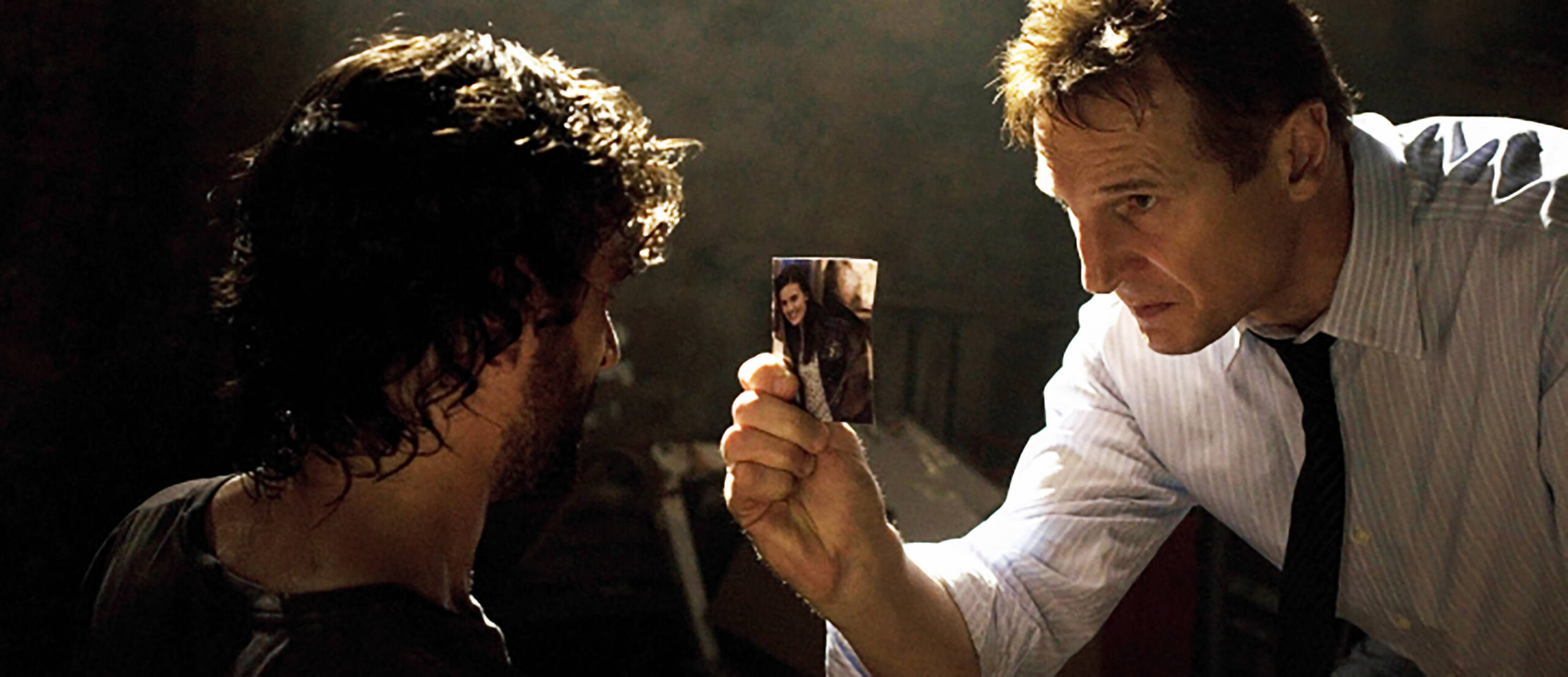
Which brings us back to the insight of Taken. Yes, it was the movie that helped launch a (proverbial) thousand movies about middle-aged guys going after the thugs who kidnapped their kid, or taking revenge for their murdered loved ones, or deciding to seek justice for some past wrong. But beyond all this, Taken was also the movie about a man who felt left out of his teenage daughter’s life and who was trying to make a connection. The most telling scene in the film comes early on: Bryan takes a photo with his daughter at her birthday party, then goes home to add the picture to a small scrapbook filled with similar photos taken from previous birthday parties. The only way he can watch her grow up is through these annual snapshots, ceremoniously preserved in the most depressing photo album ever, with “Happy Birthday Kim” printed on the front.
Compare that to later, where Bryan has not only wiped out the bad guys and saved his daughter, but he’s now a part of her life. He’s become the cool dad who has the “in” with a pop star he helped rescue earlier in the film, who offers Kim tips on how to achieve her dream of becoming a singer. Taken demonstrates that, for all our hero’s ass-kicking skills developed over a lifetime of kicking ass, what our guy wants most is just to be welcomed in. Like a regular dad. At the ending, Bryan’s finally there, and he’s cherished—but most importantly, he’s relevant.